



Table of Contents
- 1. A Common Yakiniku Dilemma: What is the Difference Between “Regular” and “Premium” Kalbi?
- 2. The Truth Behind the Menu: Demystifying Kalbi Cuts in Standard Yakiniku Restaurants
- 3. Why Does Premium Kalbi Make You Feel Heavy? The Science of Beef Fat and Melting Points
- 4. Kuro5’s Unconventional Approach: Serving “Wagyu Ribeye” Instead of Standard Short Ribs
- 5. Never Frozen! Kuro5’s Absolute Obsession with “Fresh, Non-Frozen (生) Wagyu”
- 6. Art in Butchering: How Our Chefs Manually Divide Ribeye into Distinct Gourmet Parts
- 7. Ultimate Tenderness: The Miracle of Our Signature “Otoko Jo-Kalbi” (Ribeye Heart)
- 8. Direct Comparison: 3 Key Differences Between Standard Kalbi and Kuro5’s Ribeye
- 9. 10 to 15-Second Repeated Grilling: The Secret to Unleashing Raw Wagyu’s Full Flavor
- 10. Conclusion: Experience the Ultimate Yakiniku Journey at Kuro5 Tonight
1. A Common Yakiniku Dilemma: What is the Difference Between “Regular” and “Premium” Kalbi?
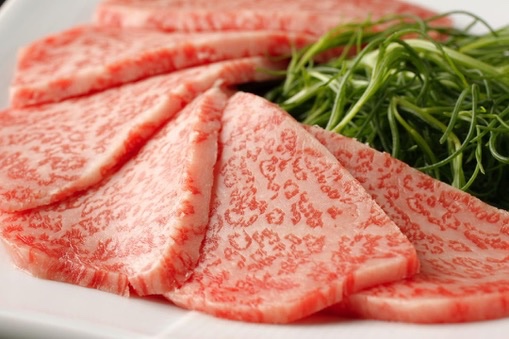
Hello everyone. I am Sondo from Kuro5.
When you visit a yakiniku restaurant and look at the menu, there is one question that almost everyone encounters: What is the actual difference between “Regular Kalbi” and “Premium (Jo) Kalbi”?
You might decide to treat yourself and order the “Premium” option, only to find that the marbling is so intense that after just a few slices, you feel overly full or experience stomach heaviness. On the other hand, ordering the “Regular” version might result in meat that is slightly tough or chewy, leaving you somewhat unsatisfied. It is easy to assume that higher price simply equals better taste and lower price means average quality. However, the line between regular and premium yakiniku involves deeper factors: the specific cut of beef, the precision of butchering, and the state of preservation—whether the meat is frozen or completely fresh.
Today, I will explain the differences in beef cuts and grading standards used by typical yakiniku restaurants. More importantly, I will share the unique approach we take at Kuro5 to redefine the “Kalbi” experience for our guests. By the end of this article, you will look at yakiniku menus in a whole new light and know exactly which cut will satisfy your palate tonight.
2. The Truth Behind the Menu: Demystifying Kalbi Cuts in Standard Yakiniku Restaurants
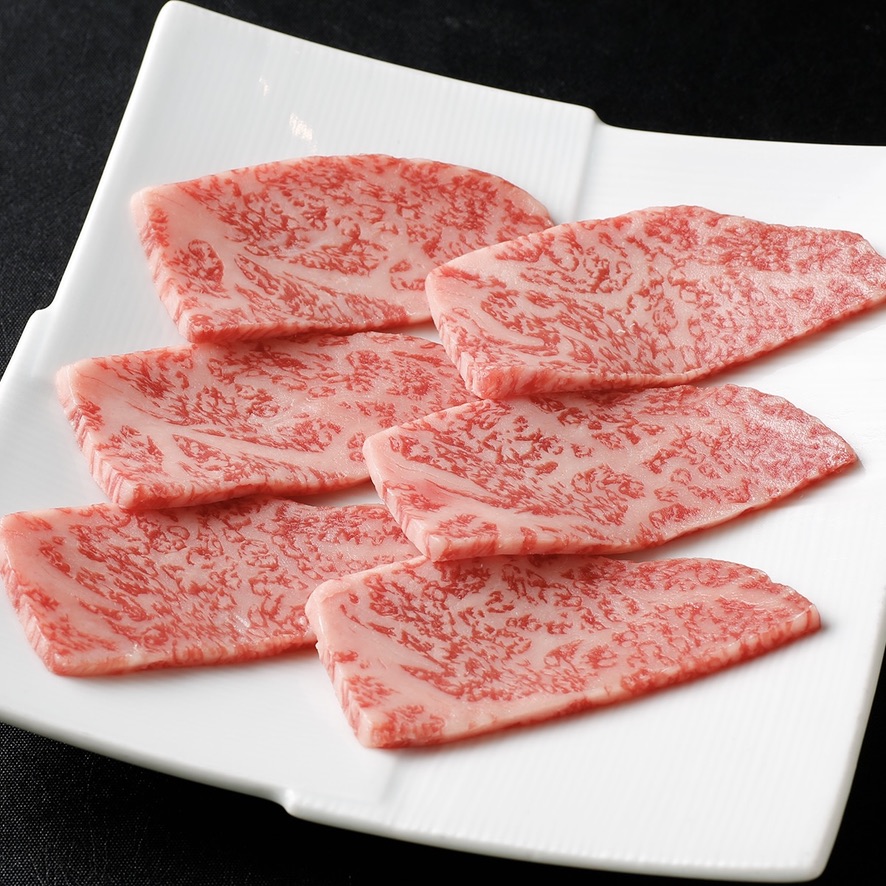
First, let us clarify what the word “Kalbi” actually means. In Korean, Kalbi translates to “rib,” and in the context of yakiniku, it refers to the short rib (beef belly or plate). However, the beef belly is a large section, and the texture and fat distribution vary significantly depending on the exact area.
Standard yakiniku restaurants divide the beef belly into various sections and classify them into “Regular” and “Premium (Jo)” based on marbling, tenderness, and appearance.
Cuts Used for “Regular Kalbi”:
Typically, restaurants use the lower section of the beef belly, known as “Tomobara.” Tomobara features alternating layers of red meat and fat, which is the classic appearance of short ribs. While it has a deep beef flavor and sweet fat, it comes from an active muscle area, meaning it contains some connective tissue and is somewhat chewy. Therefore, it is usually sliced thin or scored with a knife to make it easier to eat.
Cuts Used for “Premium (Jo) or Special (Tokujo) Kalbi”:
For premium selections, restaurants select tender, marbled, and rare cuts such as the “Sankakubara” (triangle chuck rib) located near the shoulder, or the “Kainomi” (flap meat) closer to the loin. In particular, “Sankakubara” is considered the king of short ribs due to its gorgeous snowflake-like marbling (sashi), offering a melt-in-your-mouth tenderness. Since only a small amount can be harvested from a single cow, it is highly valued and reserved for premium or special menus.
In short, standard restaurants distinguish these cuts by toughness and marbling: the active, slightly chewy Tomobara becomes “Regular Kalbi,” while the tender, beautifully marbled Sankakubara or Kainomi becomes “Premium Kalbi.”
3. Why Does Premium Kalbi Make You Feel Heavy? The Science of Beef Fat and Melting Points
Many yakiniku lovers face a common frustration: “Premium Kalbi is incredibly tender and delicious, but I can only eat a few pieces before feeling heavy.” As we get older, this feeling of stomach heaviness or heartburn after eating marbled short ribs becomes more common. There is a clear scientific explanation for this.
The culprit is the fat composition and melting point of short rib cuts. The fat in the beef belly is designed to protect internal organs, making it dense and high in saturated fatty acids. The melting point of this belly fat is between 45°C and 50°C (113°F to 122°F), which is significantly higher than the average human body temperature of 36.5°C (97.7°F). When grilled over charcoal, the fat melts and tastes delicious initially, but once it enters the stomach and intestines, it cools down and solidifies again, making it very difficult and slow for the body to digest.
As the fat remains in the stomach for an extended period, the stomach secretes excess acid, leading to heartburn and heaviness. This prevents you from enjoying a full, satisfying meal. This led us to ask: “Is it possible to serve Kalbi that is rich and delicious, yet light enough to eat without stomach discomfort?” Kuro5’s answer was to change the cut of beef entirely.
4. Kuro5’s Unconventional Approach: Serving “Wagyu Ribeye” Instead of Standard Short Ribs
At Kuro5, our goal is to deliver a yakiniku experience where the very first bite is spectacular, and the final bite is just as clean and delicious. To achieve this, we cannot serve heavy belly fat that causes stomach discomfort. This is why we made the unconventional decision: Kuro5 does not use beef belly for our Kalbi menu.
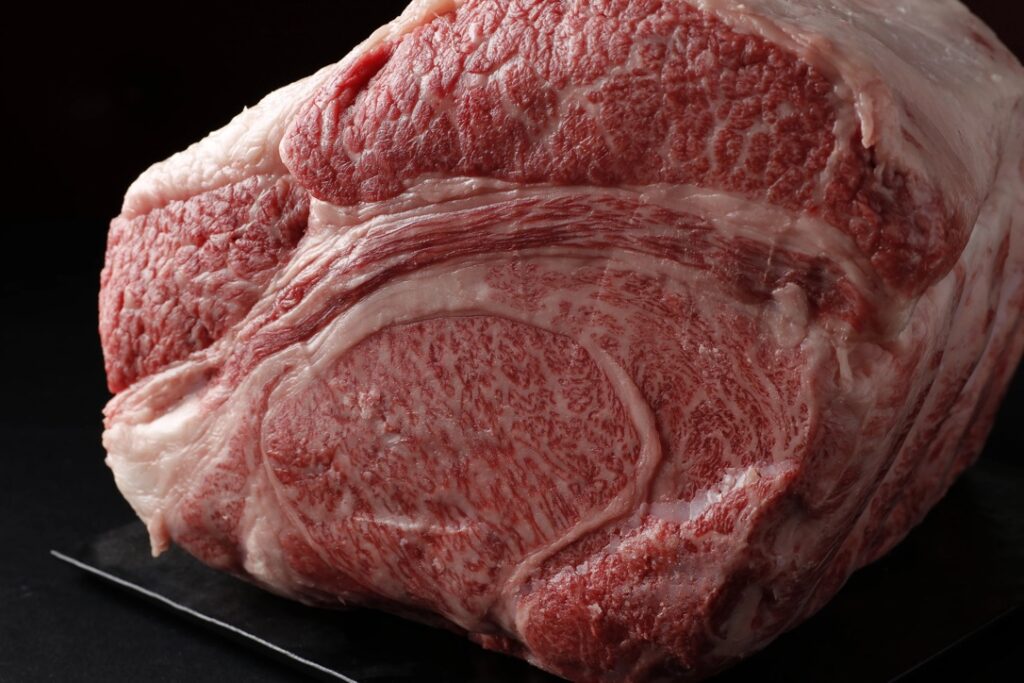
Instead, we use “Wagyu Ribeye” (Rib-Loin), a premium cut from the back of the cow located between the sirloin and chuck eye, for our Kalbi dishes.
The fat in Wagyu ribeye is rich in unsaturated fatty acids (such as oleic acid), which gives it a melting point lower than human body temperature (around 36°C or 97°F). The moment you put it in your mouth, the marbling dissolves smoothly, leaving only a sweet aroma and rich beef flavor without any greasy residue.
Because the fat does not solidify in your digestive system, it is digested smoothly, allowing you to enjoy a full meal without feeling heavy. By choosing Wagyu ribeye, we combine beautiful marbling, fine meat texture, and a light aftertaste. This is why Kuro5’s Kalbi offers a melt-in-your-mouth texture that is completely different from typical short ribs.
5. Never Frozen! Kuro5’s Absolute Obsession with “Fresh, Non-Frozen (生) Wagyu”
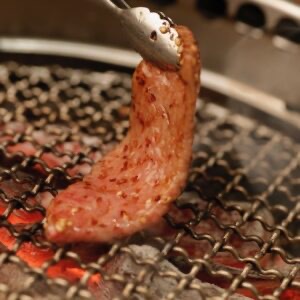
Beyond our choice of beef cuts, the most critical element of Kuro5’s yakiniku is our commitment to serving “Fresh, Non-Frozen (生) Wagyu.”
Many typical yakiniku restaurants prioritize cost reduction and inventory control by purchasing frozen beef blocks, thawing them, and slicing them for service. However, freezing beef turns its internal moisture into large ice crystals, which tear the meat’s cellular walls. When the meat is thawed, these damaged cells release their natural juices, along with blood, in a process called “drip.”
This drip contains the key flavor elements of the beef, such as amino acids and glutamic acids. Frozen meat that has lost its natural juices will dry out when grilled, resulting in a fibrous and flat taste, regardless of how much marbling it has.
Kuro5 sources only fresh, never-frozen Black Wagyu from trusted suppliers. We transport it under strict refrigeration (0°C to 2°C) to protect the cell structure. Because the meat has never been frozen, it retains all its natural juices. The moment it hits the grill, the heat seals the moisture inside. The explosion of rich flavor when you take a bite is a direct result of our strict commitment to fresh, non-frozen beef.
6. Art in Butchering: How Our Chefs Manually Divide Ribeye into Distinct Gourmet Parts
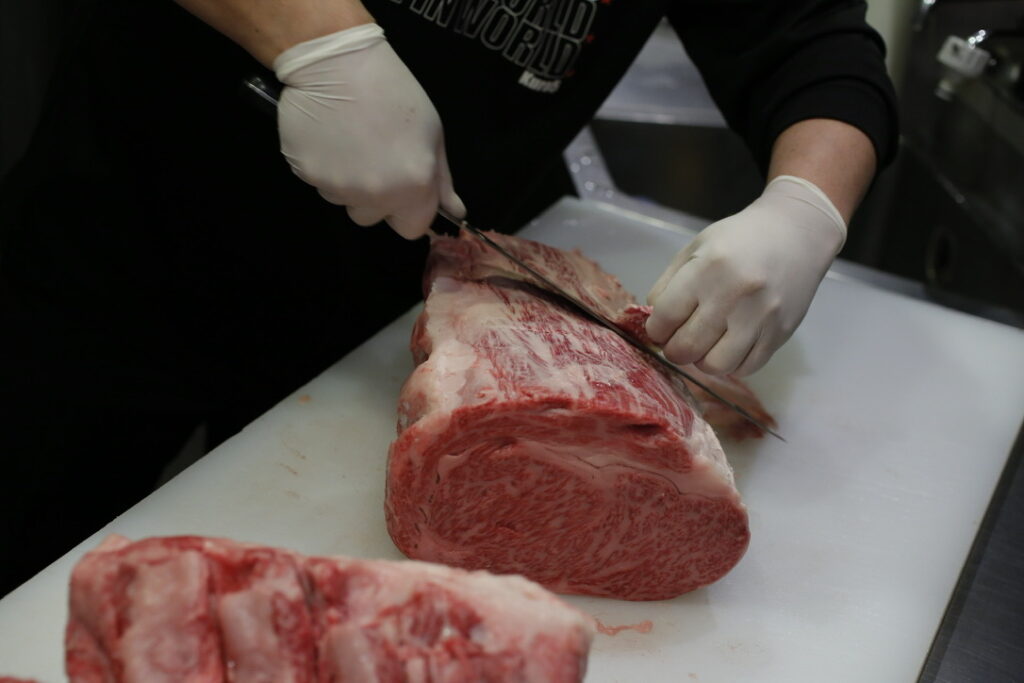
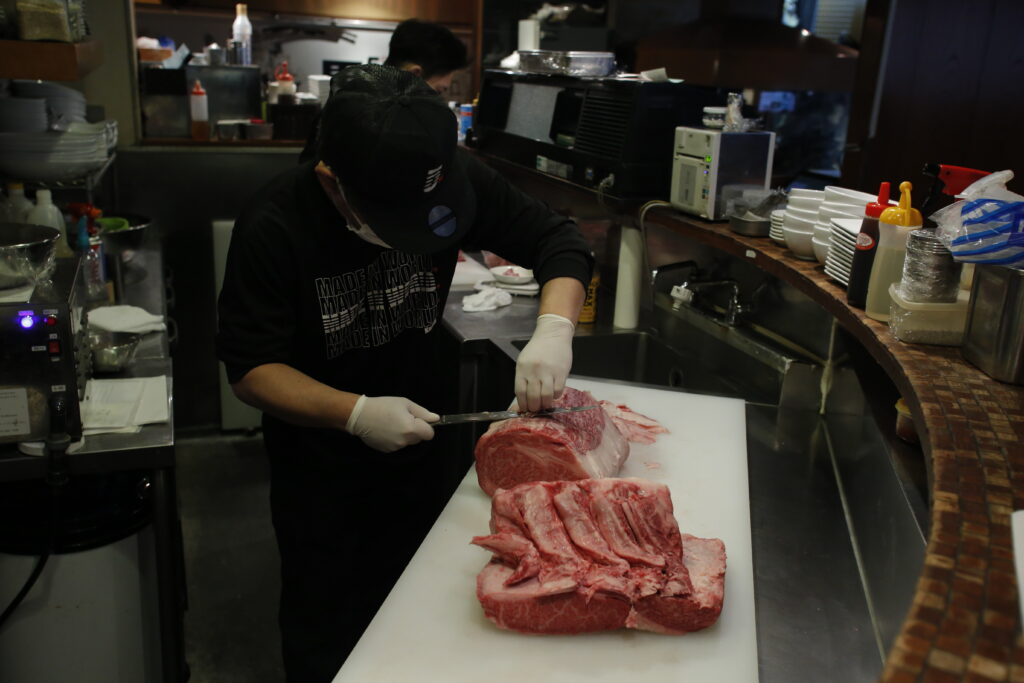
We do not simply slice our fresh Wagyu ribeye using a machine. Ribeye is a complex muscle group with varying textures and fat layers. Our skilled chefs examine the direction of the grain and hand-carve the ribeye into distinct, individual sections:
・Ribeye Heart (Rib-Shin):
The center of the ribeye, featuring the most uniform and delicate marbling. Since it comes from a low-movement muscle, the fibers are incredibly fine, making it so tender that it requires almost no chewing. We recommend enjoying this section with salt to appreciate its natural sweetness.
・Maki (Rib Cap):
A crescent-shaped cut that wraps around the Ribeye Heart. It is highly marbled, offering a rich and sweet flavor. We grill this cut with our special soy-based sauce to caramelize the sugars and fat.
・Getabara (Rib Finger):
Meat cut from between the ribs. Because it sits close to the bone, it has a concentrated beef flavor and is highly juicy. Grilling it over high charcoal heat brings out its full, robust flavor.
・Kaburi:
The outer layer of the ribeye. While slightly firmer than the center, it has a pleasant chew and releases deep beef flavor as you chew.
・Enpitsu:
An ultra-rare, pencil-like strip found deep inside the ribeye. It combines the tenderness of tenderloin with the sweetness of ribeye. It is a secret menu item that is rarely listed but highly prized.
By hand-butchering each part, our chefs bring out the unique textures and flavors of the ribeye, offering an array of distinct experiences in a single menu selection.
7. Ultimate Tenderness: The Miracle of Our Signature “Otoko Jo-Kalbi” (Ribeye Heart)
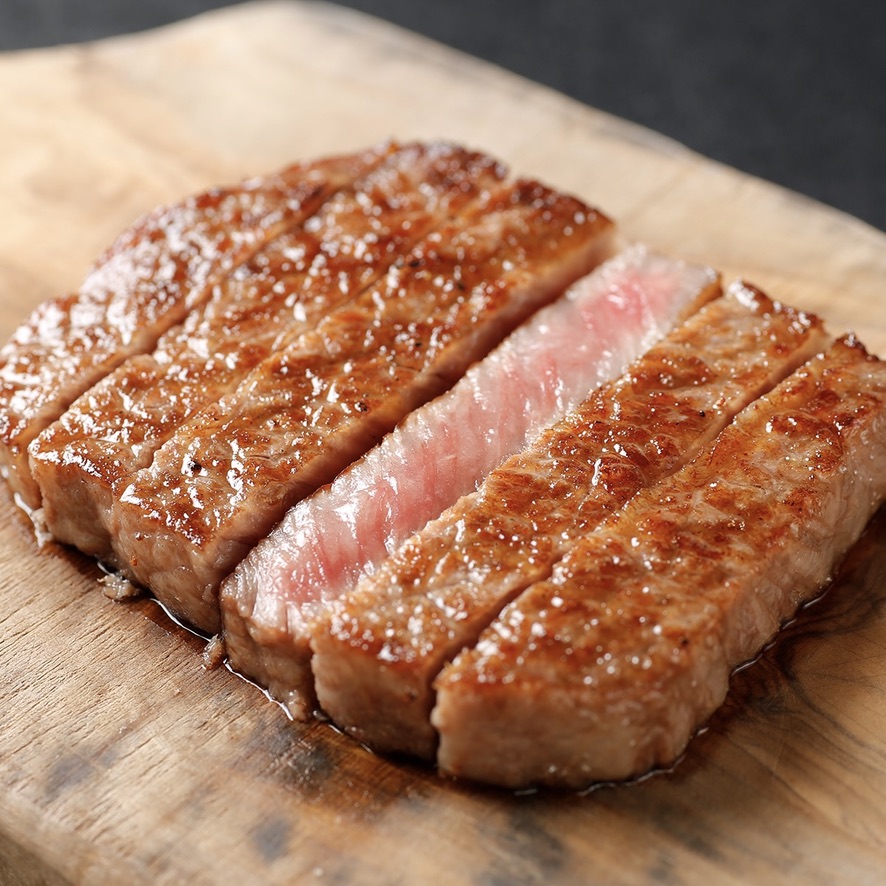
Using the finest part of the ribeye—the Ribeye Heart—we slice it into thick blocks to create Kuro5’s signature dish: “Otoko Jo-Kalbi” (Premium Ribeye Heart).
Typical yakiniku restaurants slice premium short ribs very thin because the heavy fat makes thick cuts difficult to eat. However, because Kuro5 uses the light and melt-in-your-mouth Ribeye Heart, we can serve it in thick, steak-like portions.
We grill this thick cut over binchotan charcoal, searing the outside while keeping the inside rare and juicy. When you bite into a piece, the meat fibers separate effortlessly without resistance. The extreme tenderness of our thick-cut Otoko Jo-Kalbi is only possible because we use fresh, never-frozen Wagyu Ribeye Heart, preserving the natural structure of the meat.
8. Direct Comparison: 3 Key Differences Between Standard Kalbi and Kuro5’s Ribeye
3 Key Differences: Standard Kalbi vs Kuro5 Kalbi
1. The Cut (Ribeye vs Belly):
- Standard: Uses beef belly (Tomobara/Sankakubara). Extremely rich, but has a high melting point fat that can cause stomach heaviness.
- Kuro5: Uses premium Wagyu ribeye (Rib-Loin). The fat melts at body temperature, offering a clean, melt-in-your-mouth flavor.
2. Storage State (Fresh vs Frozen):
- Standard: Often frozen, leading to flavor loss (drip) during thawing and a dry texture.
- Kuro5: Strictly fresh (non-frozen) Black Wagyu, keeping the meat cell structure intact for maximum juiciness.
3. Service and Butchering:
- Standard: Machine-sliced and grilled by the customer, often leading to uneven cooking.
- Kuro5: Hand-carved into distinct cuts by our chefs, and grilled for you by our staff (Full-Attend style) to ensure the perfect sear.
9. 10 to 15-Second Repeated Grilling: The Secret to Unleashing Raw Wagyu’s Full Flavor
Even the finest fresh Wagyu ribeye can be ruined by improper grilling. Ribeye has a high fat content, and if left unattended on the grill, the melting fat will trigger flare-ups, charring the meat and drying it out. To prevent this, Kuro5 uses a Full-Attend style, where our trained staff grill the meat directly in front of you.
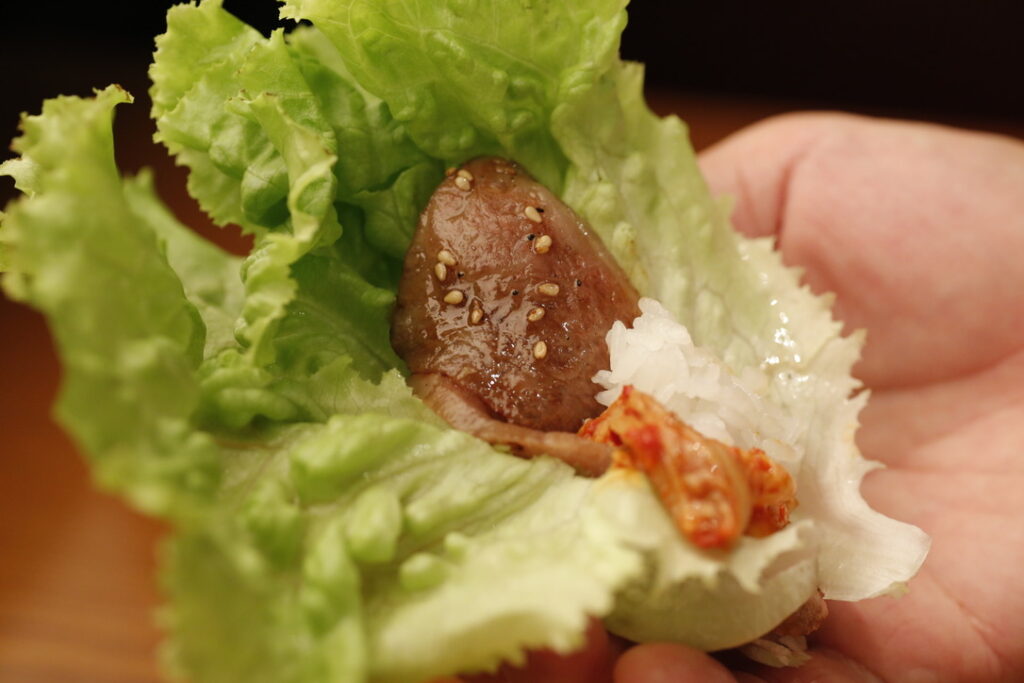
Our grilling method relies on “10 to 15-second repeated grilling.”
Instead of letting the meat sit on the grill, we flip it every 10 to 15 seconds. This constant movement uses the meat’s own melting fat to “oven-grill” the surface, creating a crispy exterior while sealing the juices inside, keeping the center rare and tender. The result is a smoky, juicy piece of Wagyu cooked to perfection.
The Best Ways to Enjoy Our Cuts:
Our thick-cut “Otoko Jo-Kalbi” is seasoned simply with salt and pepper. We recommend taking the first bite plain, and then adding a touch of truffle salt and garlic chips. The aroma of truffle and the crunch of garlic complement the sweetness of the Wagyu, creating a beautiful flavor combination.
For our standard Wagyu ribeye slices, try grilling them with sauce and eating them with a generous amount of fresh wasabi and soy sauce. The wasabi cuts through the richness of the fat, leaving a refreshing aroma. Since the fat is high-quality, it neutralizes the heat of the wasabi, allowing you to enjoy only its clean fragrance.
10. Conclusion: Experience the Ultimate Yakiniku Journey at Kuro5 Tonight
While “Regular” and “Premium” Kalbi are typically defined by fat levels, Kuro5 redefines the category by using fresh Wagyu ribeye, hand-butchered by our chefs and cooked to perfection by our staff.
If you have avoided Kalbi in the past due to stomach heaviness, we invite you to try our Wagyu ribeye and signature “Otoko Jo-Kalbi.” You will be amazed by its clean finish and tender texture.
At our branches in Ikebukuro and Shinjuku Kabukicho, our staff are ready to grill your meat to perfection. We look forward to welcoming you for an unforgettable Wagyu experience tonight.
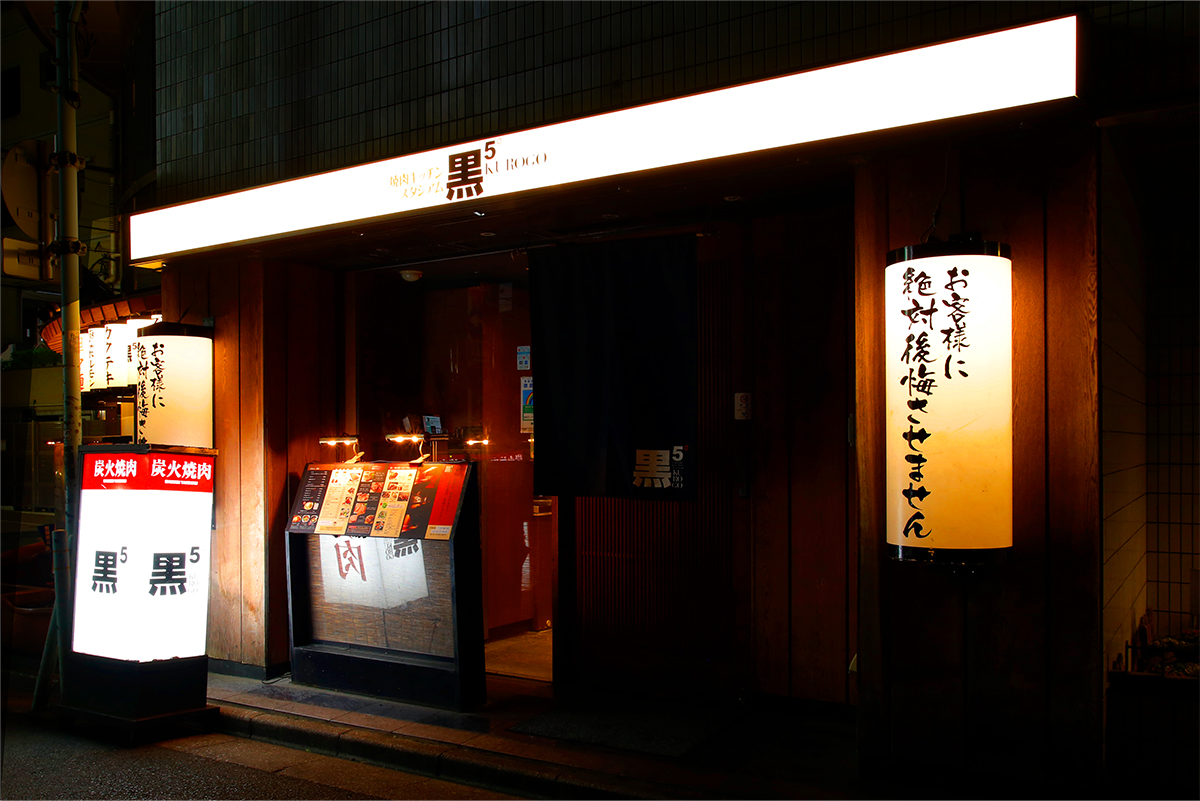
- Sumibi Yakiniku Kuro5 Honten (Main Branch)
1F Nishi-Ikebukuro Bill, 2-46-3 Nishi-Ikebukuro, Toshima-ku, Tokyo / 5 min walk from JR Ikebukuro Station - Sumibi Yakiniku Kuro5 Higashiguchi (East Exit Branch)
1F Tsukiji Bill, 1-42-16 Higashi-Ikebukuro, Toshima-ku, Tokyo / 3 min walk from JR Ikebukuro Station East Exit - Sumibi Yakiniku Kuro5 Kabukicho Branch
1F Sankyo Akagawa Bill, 2-21-4 Kabukicho, Shinjuku-ku, Tokyo

