
When choosing a Yakiniku restaurant, have you ever wondered whether grilling over charcoal or gas, or using a wire mesh or iron plate, makes the real difference?
Hello, everyone. This is Sondo, the Store Manager of Kuro5.
While Yakiniku is a simple concept, the equipment and tools used to cook the meat vary greatly from shop to shop. Some places use gas roasters with flat iron plates, while others prepare charcoal七輪 (shirin) with wire grids. While most people naturally focus on the beef brand or the marbling of the cuts, it is actually how the heat is applied that decides the ultimate flavor of the meat.
Table of Contents
- 1. Have you ever wondered which grilling setup makes Yakiniku taste best?
- 2. Intense Heat and Far-Infrared Effects: Why Charcoal Outshines Gas
- 3. Controlling Fat and Sauce: The Decisive Differences Between Mesh and Plate
- 4. Searing in Juiciness: Kuro5’s Formula for Taste and Comfort
- 5. Enjoy a Perfectly Seared, Flawless Wagyu Dinner in Ikebukuro
Even if you source the highest quality Wagyu, using the wrong grilling setup can ruin its potential. On the other hand, understanding the science of grilling allows you to unlock a depth of flavor that is truly remarkable.
Today, I would like to delve into the scientific differences between charcoal vs. gas and grid mesh vs. iron plate, and share the ultimate combination we have built at Kuro5.
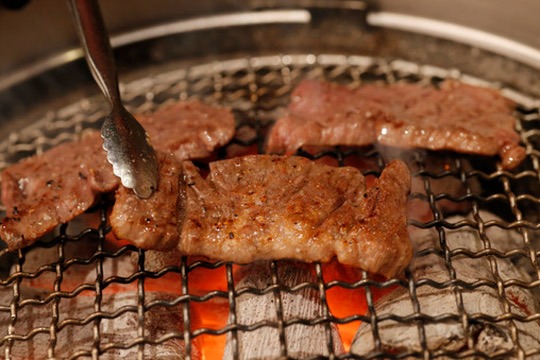
800°C Heat and Far-Infrared Radiation: Why Charcoal is in a Class of Its Own
Many Yakiniku enthusiasts swear that charcoal makes meat taste better. This isn’t just an opinion—it is backed by clear culinary science.
The differences between charcoal and gas lie in the type of heat and moisture levels produced during combustion.

- Intense Far-Infrared Radiation for Juicy 火入れ (Sear): Charcoal burns at extremely high temperatures of over 800°C, emitting powerful far-infrared radiation. While gas flames heat the air around the meat (convection), far-infrared waves directly vibrate the molecules inside the meat, heating it from within. This allows the center to cook quickly and evenly while locking in all the natural juices.
- No Moisture Output: Gas combustion releases a significant amount of water vapor. This moisture forms a thin film on the meat surface, making it difficult to achieve a crisp, caramelized crust. Charcoal, however, releases zero moisture, drying the surface instantly to seal in the flavor and create a beautifully caramelized exterior.
- The Heavenly “Charcoal Aroma” (燻香): When fat drips from the grid onto hot glowing charcoal, it vaporizes into an appetizing, aromatic smoke. As this smoke rises, it wraps around the meat, adding a unique, rich smoky flavor that gas roasters simply cannot replicate.
While gas roasters offer stable, easily controlled heat that is convenient for casual dining chains, nothing compares to charcoal when it comes to elevating the delicate sweetness of Wagyu fat.
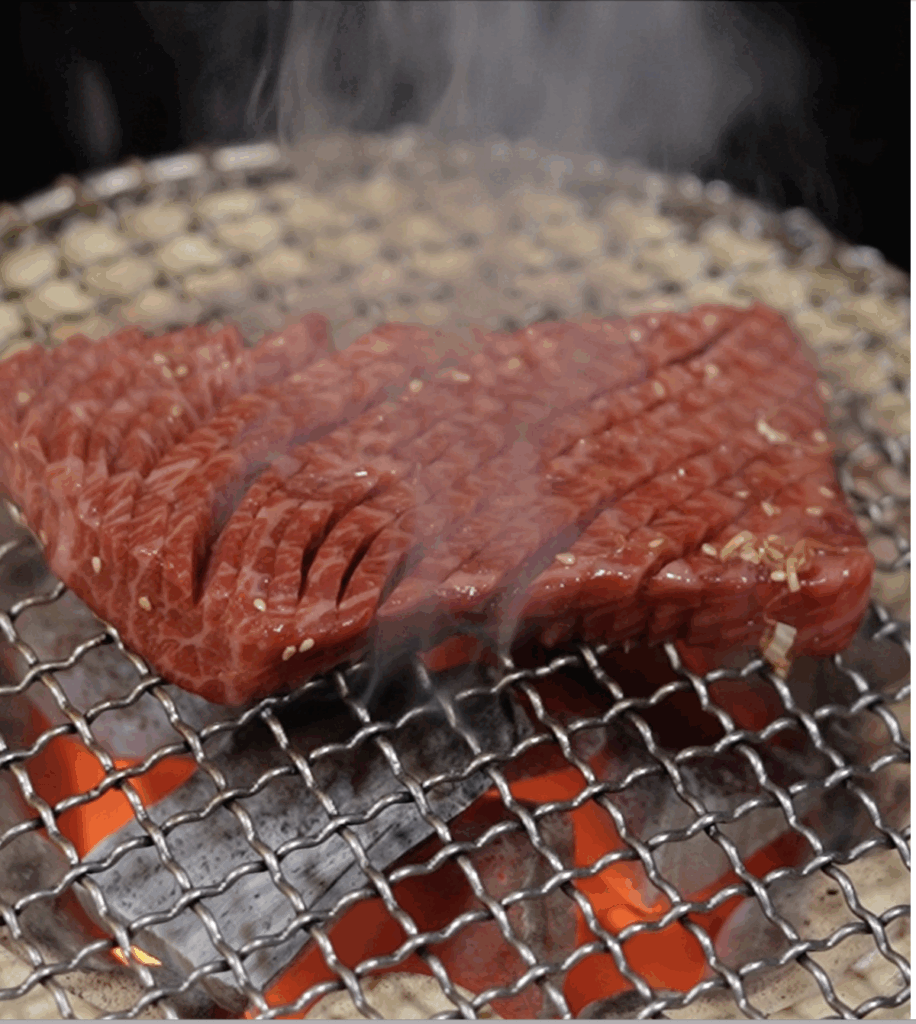
Fat Management and Burned Sauce: Wire Grid Mesh vs. Iron Plate
Next, let’s compare the grilling surfaces: the flat iron plate and the wire grid mesh. Each has its strengths depending on the meat cut and seasoning.
An iron plate is excellent for heat retention, distributing heat slowly and evenly across the surface. This is perfect for thick steaks or simple salt-seared cuts where you want to retain every drop of fat. However, for sauce-marinated (tare) Yakiniku, the sauce pools on the plate and burns instantly, turning bitter and sticking to the meat.
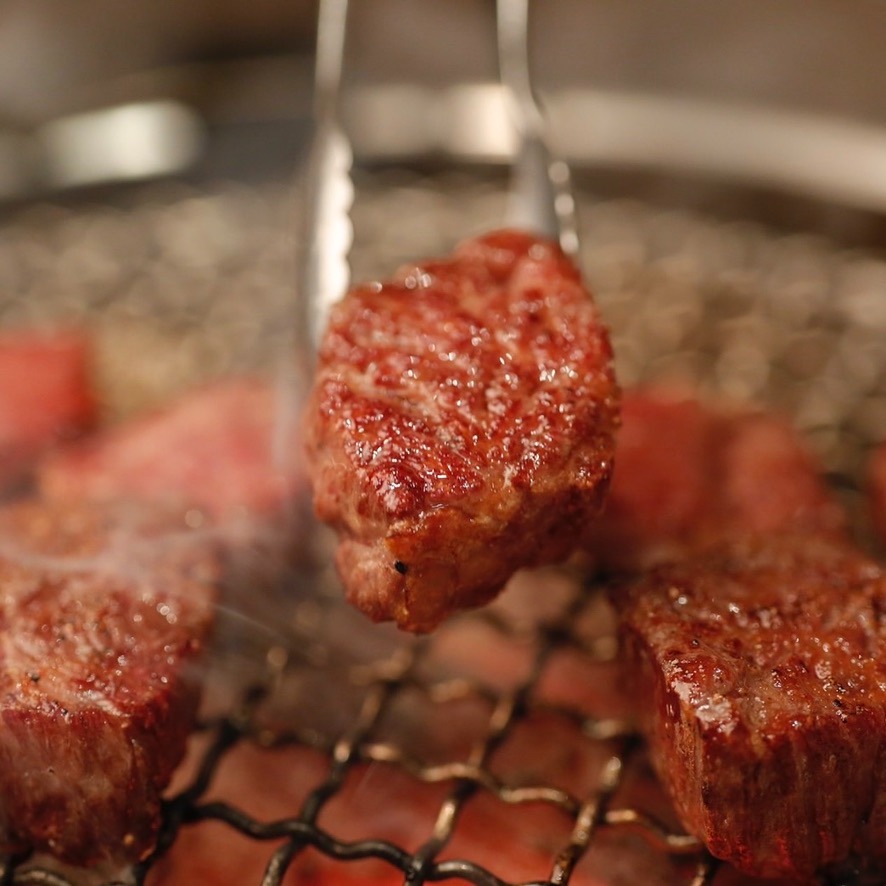
In contrast, the wire grid mesh (網焼き) we use offers three major advantages for Yakiniku:
- Preventing Burned Bitterness: When cooking marinated meats, excess sauce drips through the mesh openings. Because the actual contact area between the metal and the meat is very small, the caramelized sauce doesn’t coat the meat in a bitter black crust, preserving its clean flavor.
- Draining Excess Fat: Even the finest Wagyu fat can become heavy if it pools on a flat plate. A wire mesh allows excess fat to drain away, preventing stomach heaviness while creating the perfect amount of aromatic smoke as the fat hits the heat source below.
- Quick and Clean Mesh Swaps: When a mesh becomes dirty, our staff can swap it out instantly. There is no need for guests to scrape off burnt grease, ensuring a smooth, uninterrupted dining flow.
“Binchotan × Grid Mesh × Down-draft Roaster × Full-Attend”: Kuro5’s Formula
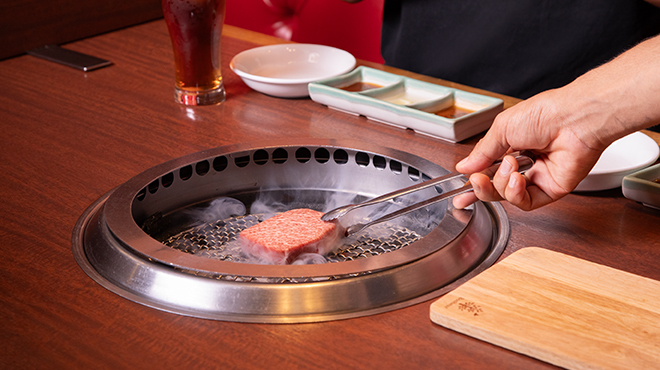
To deliver the absolute best dining experience, Kuro5 combines “Binchotan Charcoal × Wire Grid Mesh × Down-draft Smoke-Free Roasters × Full-Attend Table Service”.
Using intense Binchotan charcoal inside down-draft tables is technically difficult due to airflow and heat controls, which is why most restaurants avoid it. However, we wanted to combine the unparalleled flavor of charcoal with a comfortable, smoke-free space where guests can converse without odors clinging to their clothes.
We overcame this challenge by introducing our “Full-Attend” service style. Our trained staff manages the intense Binchotan heat right at your table, flipping the meat every 10 seconds to ensure the surface is beautifully seared while the inside remains tender and juicy.
Experience a Flawless Wagyu Dinner in Ikebukuro
Depending on what equipment you use and who cooks the meat, the exact same Wagyu cut will taste entirely different.
At Kuro5, we select the perfect combination of Binchotan charcoal and wire grid mesh, and place our professional grillers at your service to guarantee 100% of the meat’s potential.
We invite you to experience the science of grilling in a comfortable, smoke-free environment with your loved ones.
Tonight, at our Ikebukuro Main Branch (Honten), East Exit Branch (Higashiguchi), and Shinjuku Kabukicho Branch, we are ready with freshly lit Binchotan charcoal and the finest Wagyu selection, waiting to welcome you.
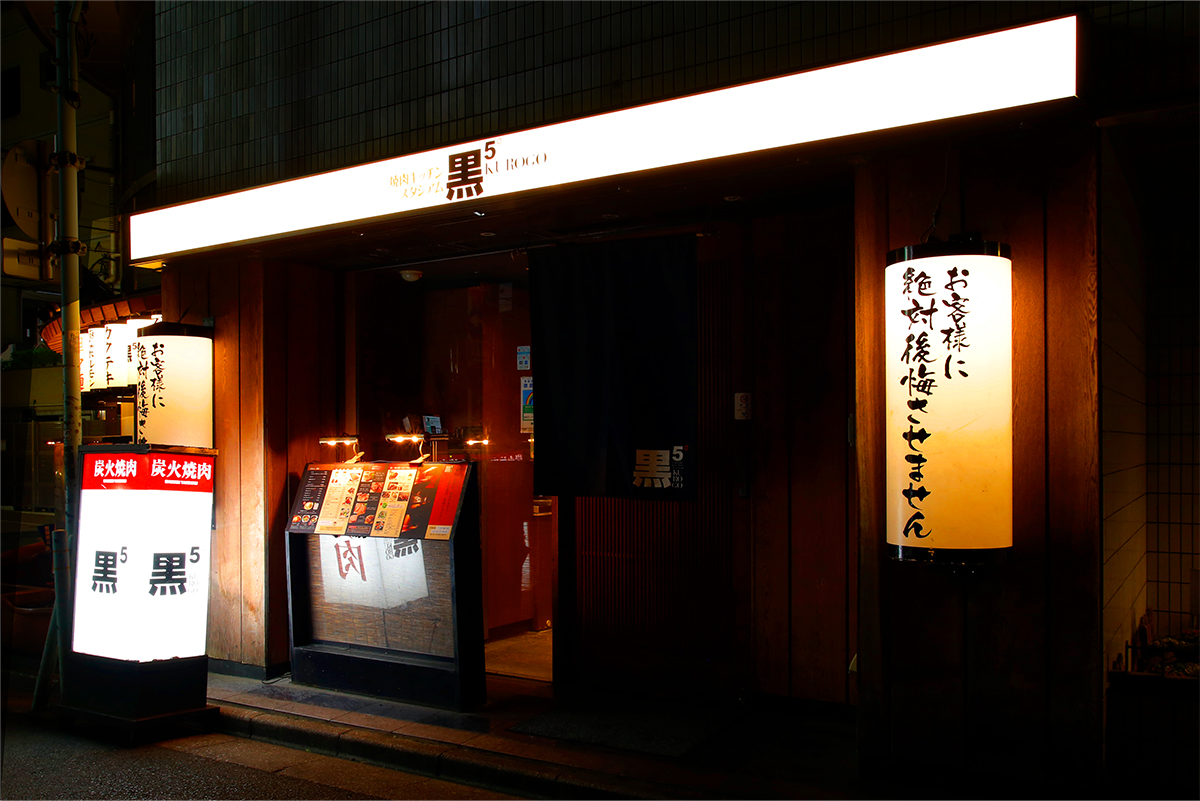
- Charcoal Yakiniku Kuro5 Main Branch (Honten)
1F Nishi-Ikebukuro Bill, 2-46-3 Nishi-Ikebukuro, Toshima-ku, Tokyo / 5 min walk from JR Ikebukuro Station - Charcoal Yakiniku Kuro5 East Exit Branch (Higashiguchi)
1F Tsukiji Bill, 1-42-16 Higashi-Ikebukuro, Toshima-ku, Tokyo / 3 min walk from JR Ikebukuro Station East Exit - Charcoal Yakiniku Kuro5 Kabukicho Branch
1F Sankyo Akagawa Bill, 2-21-4 Kabukicho, Shinjuku-ku, Tokyo

