
Have You Ever Been Moved by the Exquisite Juiciness of Freshly Grilled Harami?
Hello everyone. This is Kuro5’s Sondo.
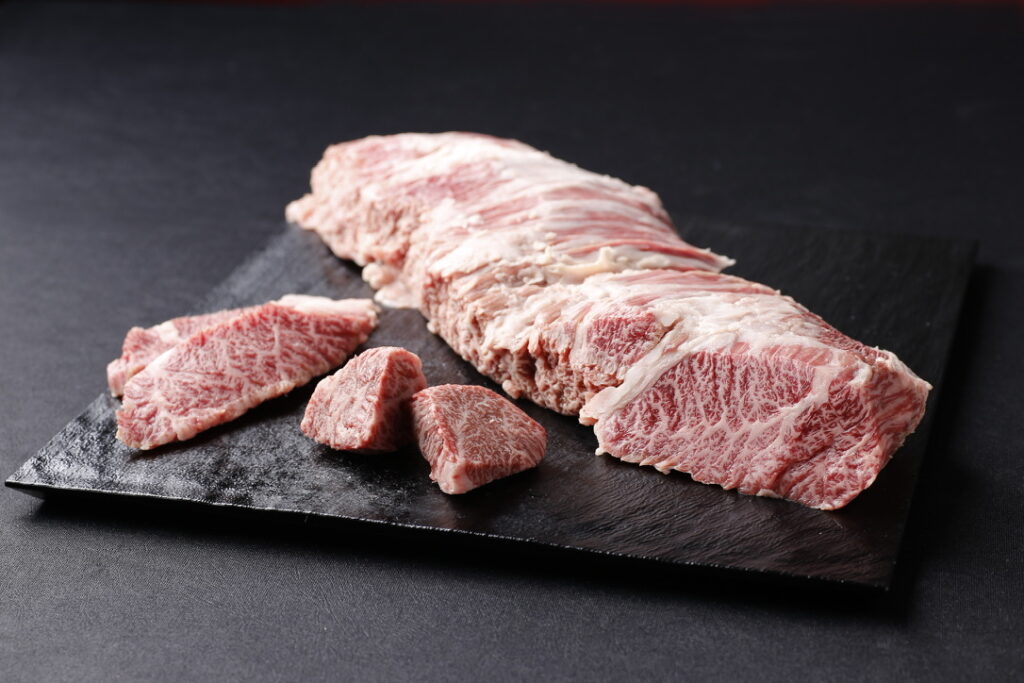
When you visit a yakiniku restaurant, one of the most popular cuts that many people order as a starter, or as the main star of the dinner, is “harami” (skirt steak). The moment you put the freshly grilled, aromatic harami into your mouth, you experience a crisp, tender bite, followed immediately by an overflow of rich, deep flavor and savory meat juices. That moment of pure bliss is the true essence of yakiniku.
Table of Contents
- 1. Have You Ever Been Moved by the Exquisite Juiciness of Freshly Grilled Harami?
- 2. The Uniqueness of Harami and the Absolute Superiority of Kuro5’s Fresh, Non-Frozen Harami
- 3. The Precision Craftsmanship of Chef’s Hand-Scored Slits (Kakushi-Bocho)
- 4. Three Major Benefits and the Scientific Rationale of Kakushi-Bocho
- 5. Maximize the Preparation: “Perfect Heating” with Binchotan Charcoal Full-Attend Grilling
- 6. For that Single Bite of Emotion, We Await You Tonight with Our Finest Harami
However, you might have also had the disappointing experience at another restaurant where the harami felt a bit fibrous, tough to chew, or carried a dry texture and an off-flavor. In reality, harami is a very delicate and highly individual cut. Depending on how it is handled, its taste and texture can differ like night and day. It is an extremely difficult cut to prepare correctly.
Since our founding, Kuro5 has adhered to unique standards to deliver the “true flavor of harami” to our guests. The pillars of this commitment are sourcing fresh, never-frozen, pure domestic “raw (nam-a) harami” and applying the hand-scoring technique called “Kakushi-Bocho” (hidden cuts) to each slice before it reaches the grill. Today, we would like to share a behind-the-scenes look at our kitchen and explain the scientific secrets behind how we make this meat incredibly tender.
The Uniqueness of Harami and the Absolute Superiority of Kuro5’s Fresh, Non-Frozen Harami
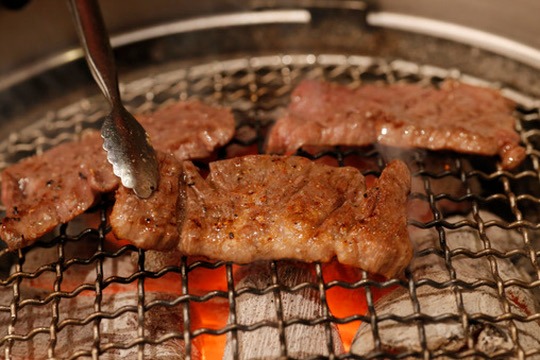
Before diving into our preparation techniques, let us first explain the unique characteristics of the harami cut. While it has a beautiful red color resembling lean red meat (正肉), harami is anatomically categorized as offal (specifically, the diaphragm muscle). The back side of the diaphragm is called harami, and the thicker rib side is called sagari, but both are highly active muscles that control the animal’s breathing.
Because of this constant movement, harami has thick, well-developed muscle fibers and is exceptionally rich in iron (myoglobin). This is the source of harami’s uniquely deep, savory flavor and richness. However, these thick fibers also mean that if you simply slice and grill it without preparation, the fibers will remain tightly bound, resulting in a tough, rubbery texture.
Furthermore, many casual yakiniku restaurants use imported harami that has been frozen for long-distance transport. When meat is frozen, the water inside expands into large ice crystals, shredding the delicate cell membranes of the beef. Upon thawing, these broken cells release their vital moisture and amino acids as a red liquid called “drip.” Frozen harami that has lost its drip dries out easily when grilled, and its fibers tighten up further. The unpleasant smell often associated with offal also stems from this cell damage during the freeze-thaw cycle.
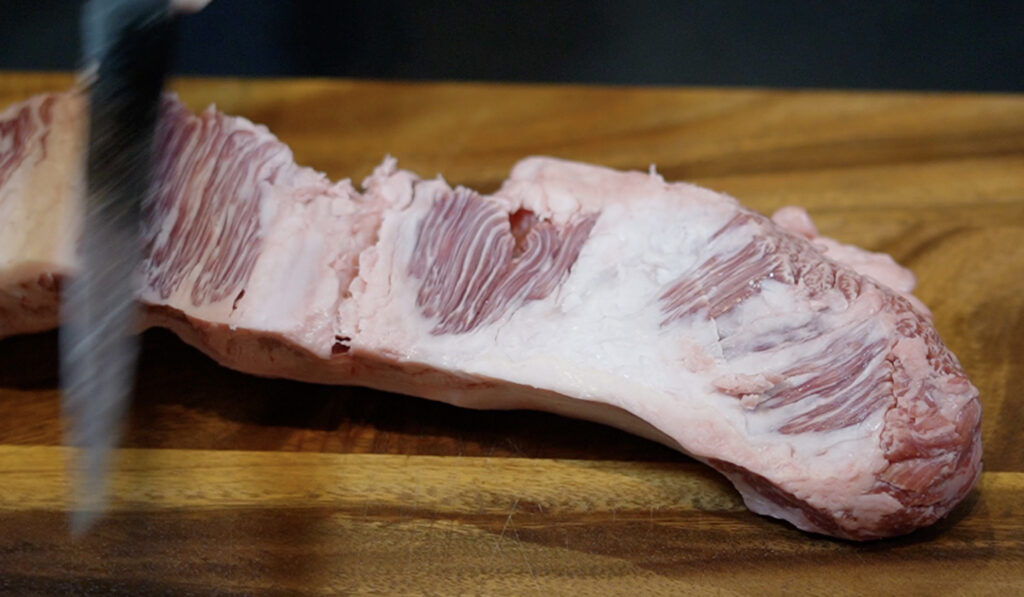
For this reason, Kuro5 strictly sources “raw domestic harami” under constant chilled management, never allowing it to freeze. Because the raw harami is never frozen, its cells remain completely intact. When we cut the meat, it retains all its natural moisture and umami within its structure. Only with this high-potential raw meat can the chef’s scoring technique achieve 100% effectiveness.
The Precision Craftsmanship of Chef’s Hand-Scored Slits (Kakushi-Bocho)
The most critical step in unlocking the meat’s potential is the final stage of preparation: the insertion of “Kakushi-Bocho” (hidden cuts) by our chefs. Kakushi-bocho is a traditional Japanese culinary technique where fine incisions are made on the surface of ingredients so they remain inconspicuous after cooking. In yakiniku, no other technique makes such a definitive difference in the final result.
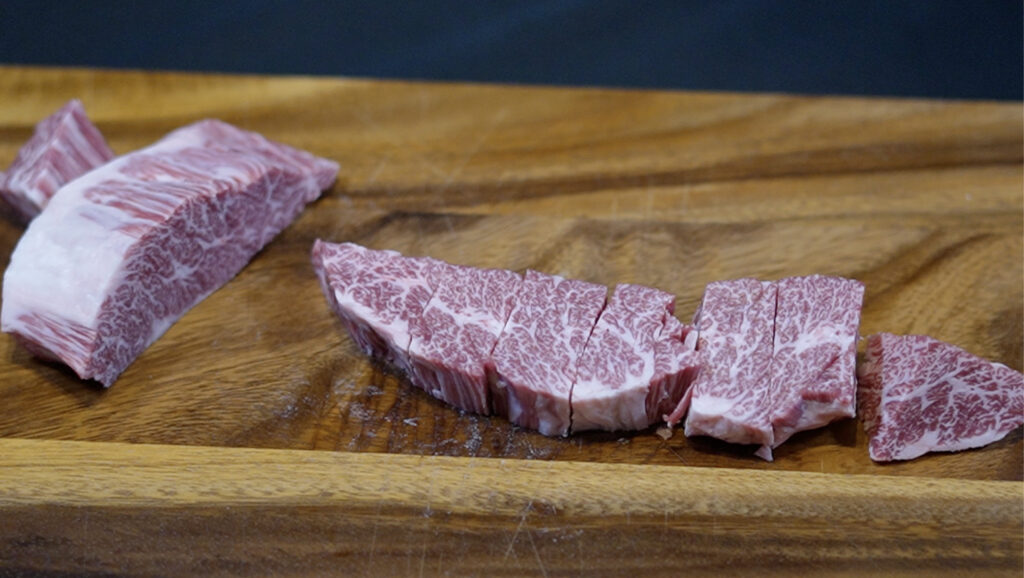
In the Kuro5 kitchen, the chef instantly reads the direction of the muscle fibers in each piece of meat through touch and sight. Slicing parallel to the fibers is useless; the incisions must run diagonally or perpendicular to the grain. Furthermore, the depth of these cuts is controlled down to the millimeter. If they are too shallow, the effect of severing the fibers is lost. If they are too deep, the meat will fall apart on the grill, allowing the precious juices to leak out. Evaluating the thickness and elasticity of each cut, the chef delicately adjusts the pressure on the knife to insert beautiful, evenly spaced slits exactly to the target depth, such as half or two-thirds of the meat’s thickness.
This process can never be automated by a machine. Each piece of domestic Wagyu harami has a different fat distribution, fiber thickness, and elasticity. The exquisite slits can only be achieved by an experienced craftsman who feels the unique character of the meat in their hands and adjusts the path of the knife slice by slice. The beautiful, decorative pattern on the surface of our raw harami is not just for visual appeal; it is a calculated functional design created by our chefs.
Three Major Benefits and the Scientific Rationale of Kakushi-Bocho
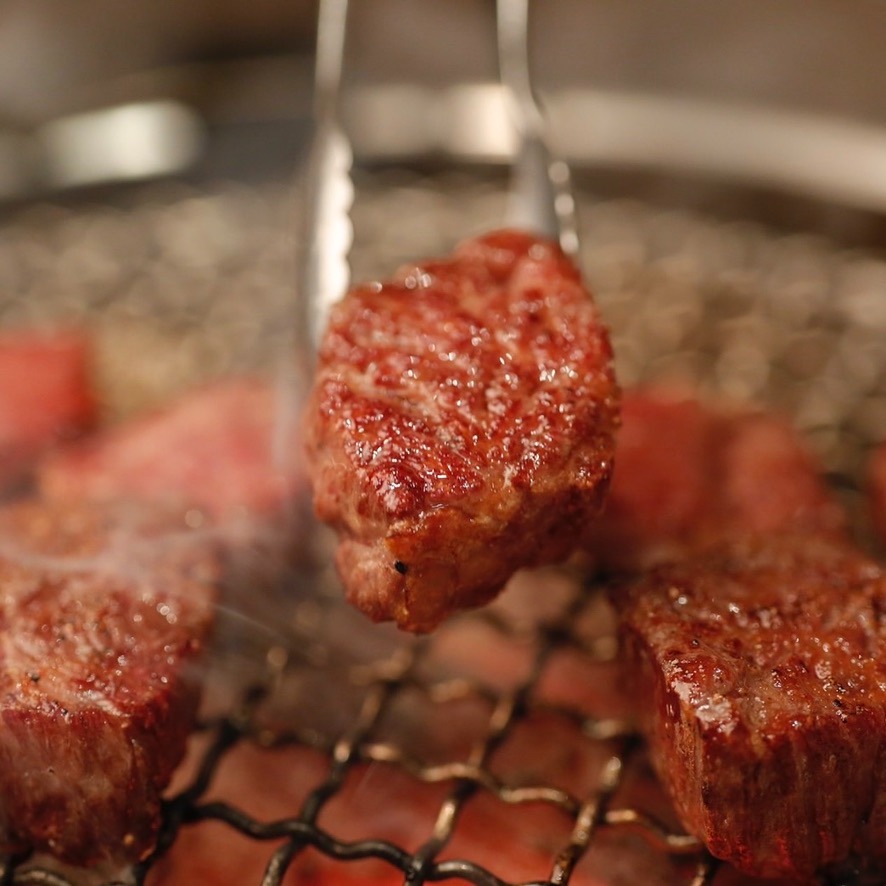
So, what scientific and practical improvements does this delicate hand-scoring bring to the dining experience? There are three major benefits:
Benefit 1: Melt-in-the-Mouth Tenderness by Severing Fibers
As mentioned, harami is a tough diaphragm muscle that tends to remain chewy if left unprepared. By making countless diagonal slits across the fibers, the tough muscle structures are finely severed. When our guests put the meat into their mouths, the teeth enter smoothly, allowing them to chew through the slice with minimal effort. The tenderness that surprises our guests—feeling almost like premium tenderloin—is produced by this physical severing of the fibers.
Benefit 2: Rapid Heat Conduction for Locking in Meat Juices
The longer beef is heated, the more its proteins coagulate, squeezing out moisture and making the meat dry and tough. However, heating a thick slice of raw harami evenly to its core normally takes time. This is where the slits show their true power. By creating 무数の incisions, the surface area exposed to heat increases dramatically. The intense heat and far-infrared rays of the charcoal instantly penetrate deep into these slits, rapidly raising the core temperature. This allows us to sear the outside while quickly bringing the inside to a perfect medium-rare, minimizing overall cooking time. Consequently, we prevent thermal moisture loss (cooking loss) and lock the rich juices entirely inside the meat.
Benefit 3: Maximizing Sauce Adhesion and Charcoal Aroma
Compared to flat slices, harami with countless slits has a vastly larger surface area. This allows Kuro5’s secret homemade marinade to coat the meat evenly and sink deep into the crevices. Furthermore, during grilling, the drippings of fat hit the charcoal and rise as an aromatic smoke that wraps around the meat. The crevices created by the slits capture this smoky aroma and marinade perfectly, fusing them with the rich juices of the meat. The complexity of flavors and the impact when you bite into the meat are elevated to a completely new level.
Maximize the Preparation: “Perfect Heating” with Binchotan Charcoal Full-Attend Grilling
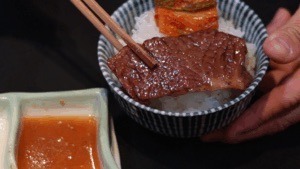
No matter how carefully we select the meat and how perfectly we score it in the kitchen, if it is overcooked to a char or grilled on weak fire, all that effort goes to waste. Because fresh, raw domestic harami is never frozen, it retains high moisture levels and requires very delicate heat management.
This is why Kuro5 has strictly maintained its “Full-Attend” service since its inception, with our staff grilling the meat perfectly right in front of our guests. The charcoal grills at our tables are filled with glowing, premium Binchotan charcoal. Unlike gas burners, Binchotan releases zero moisture during combustion, allowing us to crisp the exterior while the powerful far-infrared rays heat the inside evenly and rapidly.
Our professional staff understand the precise timing to place the meat on the grill, when to flip it as the slits open, and the exact golden moment when the internal juices rise to the surface. We grill each piece to perfection without compromise. The finished harami is aromatic from the charcoal smoke, the slits are plumply opened, and the interior retains a beautiful, juicy medium-rare pinkness. Guests only need to enjoy the meat the moment it is served on their plates. We never let a poor grill ruin your dining experience.
For that Single Bite of Emotion, We Await You Tonight with Our Finest Harami
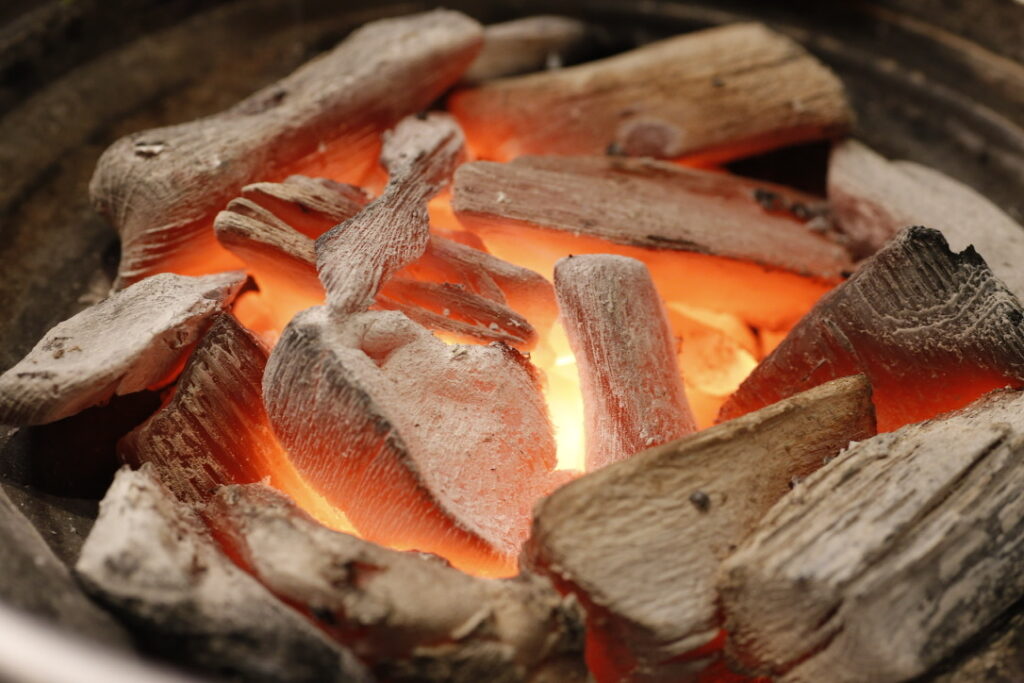
In an era where dining out is becoming a premium experience, we want our guests to enjoy the meat they pay for in its most delicious form. From the kitchen prep where the chef sharpens their knife and speaks with the grain of the meat, to the tableside service where our staff control the fire, everything is done for the single goal of seeing our guests smile and say, “Delicious!”
Kuro5’s raw harami is not just a tasty piece of meat; it is a masterpiece of our passion and technique. The next time you dine with us, please take a moment to appreciate the craftsmanship behind its tenderness and juiciness. We believe it will make your experience even richer.
Tonight, at our Ikebukuro Honten, Ikebukuro East Exit, and Shinjuku Kabukicho locations, we have our perfectly prepared raw harami and glowing Binchotan charcoal ready for you. We look forward to welcoming you for your special dinners, family gatherings, or nights out with friends.
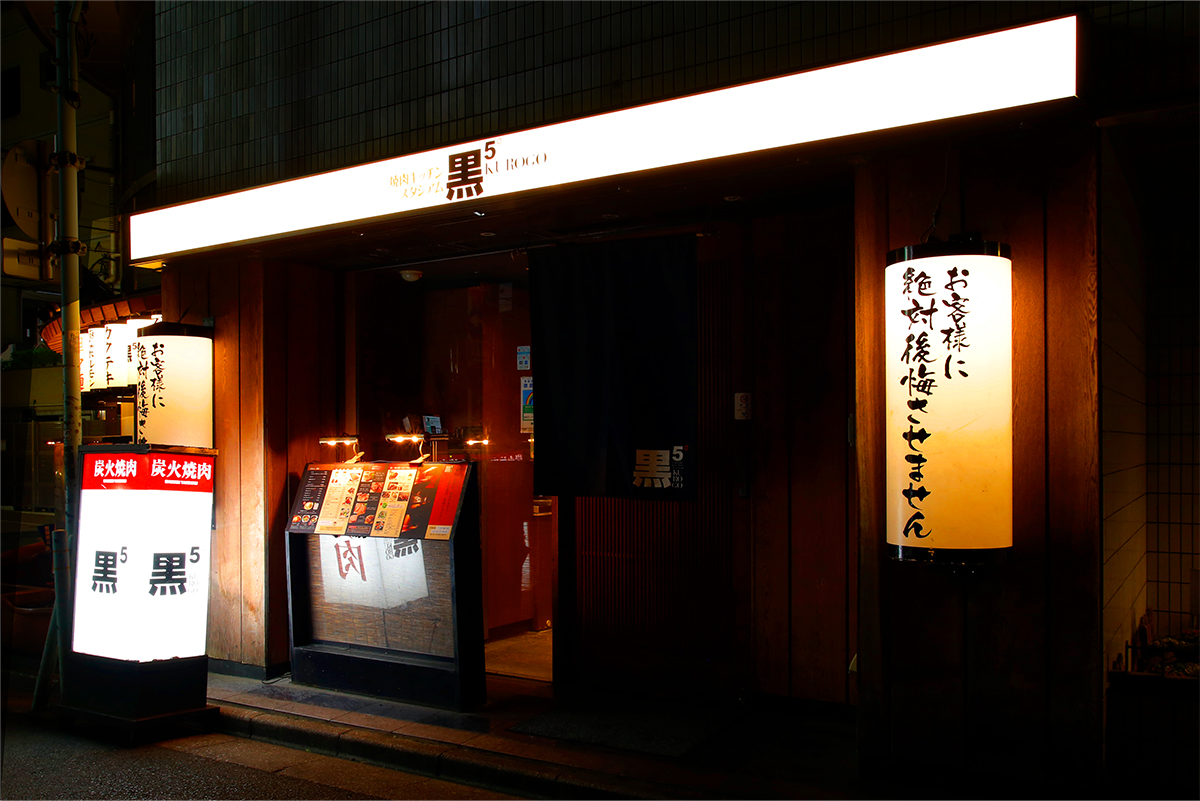
- Charcoal Yakiniku Kuro5 Honten
Nishi-Ikebukuro Bill 1F, 2-46-3 Nishi-Ikebukuro, Toshima-ku, Tokyo / 5 min walk from JR Ikebukuro Station - Charcoal Yakiniku Kuro5 Higashiguchi
Tsukiji Bill 1F, 1-42-16 Higashi-Ikebukuro, Toshima-ku, Tokyo / 3 min walk from JR Ikebukuro Station East Exit - Charcoal Yakiniku Kuro5 Kabukicho
Sankyo Akagawa Bill 1F, 2-21-4 Kabukicho, Shinjuku-ku, Tokyo

