
Table of Contents
- 1. Why Does the Same Beef Taste Different? The Vital Importance of Grilling in Yakiniku
- 2. Binchotan vs. Gas Roasters: The Scientific Reason Why Charcoal Yakiniku is Superior
- 3. Far-Infrared Radiation and Smoke Infusion: The 2 Core Benefits of Charcoal Grilling
- 4. Is “Flip Only Once” a Myth? The Science of the “10-15 Second Frequent Flipping” Rule
- 5. How Frequent Flipping Locks in Beef Juices: The Physics of Thermal Convection
- 6. Born from Preventing Burnt Meat: The Origin of Kuro5’s Signature “Full-Attend Style”
- 7. “Quiet Hands” that Respect Conversation: The Professional Etiquette of Kuro5 Staff
- 8. Managing Intense Binchotan Heat and Smoke: The Real Value of Pro Grilling
- 9. Comparison: 3 Key Differences Between Gas Self-Grilling and Kuro5’s Full-Attend Charcoal Style
- 10. Conclusion: Experience the Ultimate Charcoal-Grilled Yakiniku at Kuro5 Tonight
Hello everyone, this is Sondo from Kuro5.
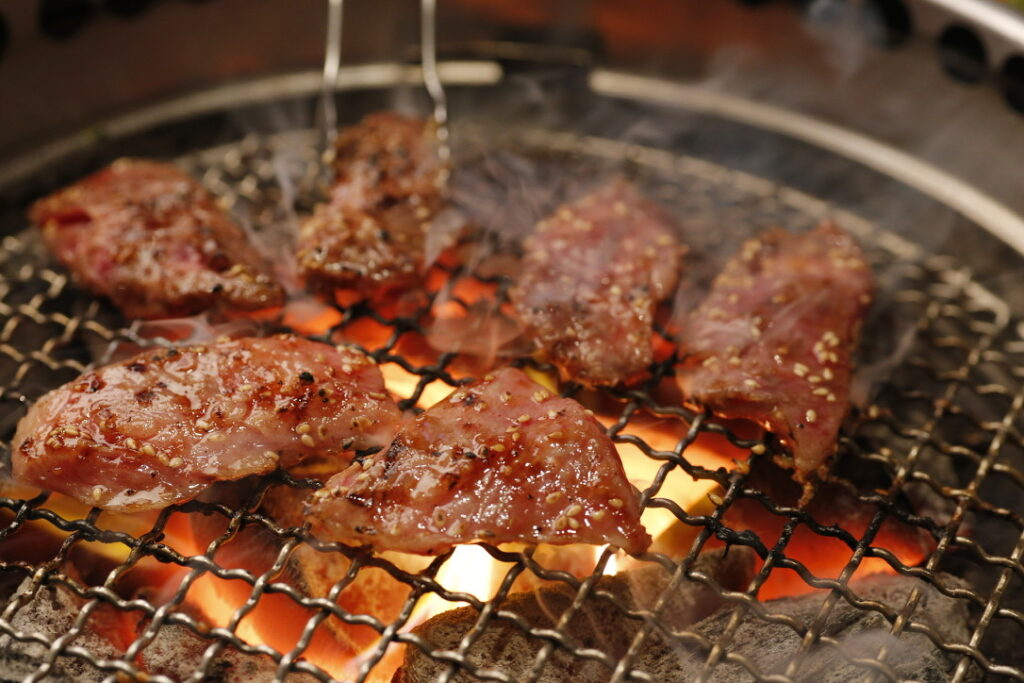
Have you ever visited a yakiniku restaurant, ordered premium cuts of beef, and ended up with dry, overcooked meat after grilling it yourself? Or perhaps you have accidentally burnt the meat, ruining what should have been a luxurious dining experience. You might also think that yakiniku tastes the same no matter who grills it, as long as the meat quality is high.
In reality, the deliciousness of yakiniku is not decided by beef quality or sauce alone. The type of “heat” you apply and the “technique” you use during the grilling process represent the essential fire-control quality required to unlock 100% of the beef’s potential. No matter how premium the Wagyu is, poor grilling can turn it into a dry, rubbery texture. Conversely, with the correct technique, the meat remains incredibly juicy, tender, and flavorful. Today, I would like to share the scientific truths behind correct yakiniku grilling, the differences between gas and charcoal, and Kuro5’s signature “full-attend style,” where our trained staff grills every slice of meat for you at your table.
1. Why Does the Same Beef Taste Different? The Vital Importance of Grilling in Yakiniku
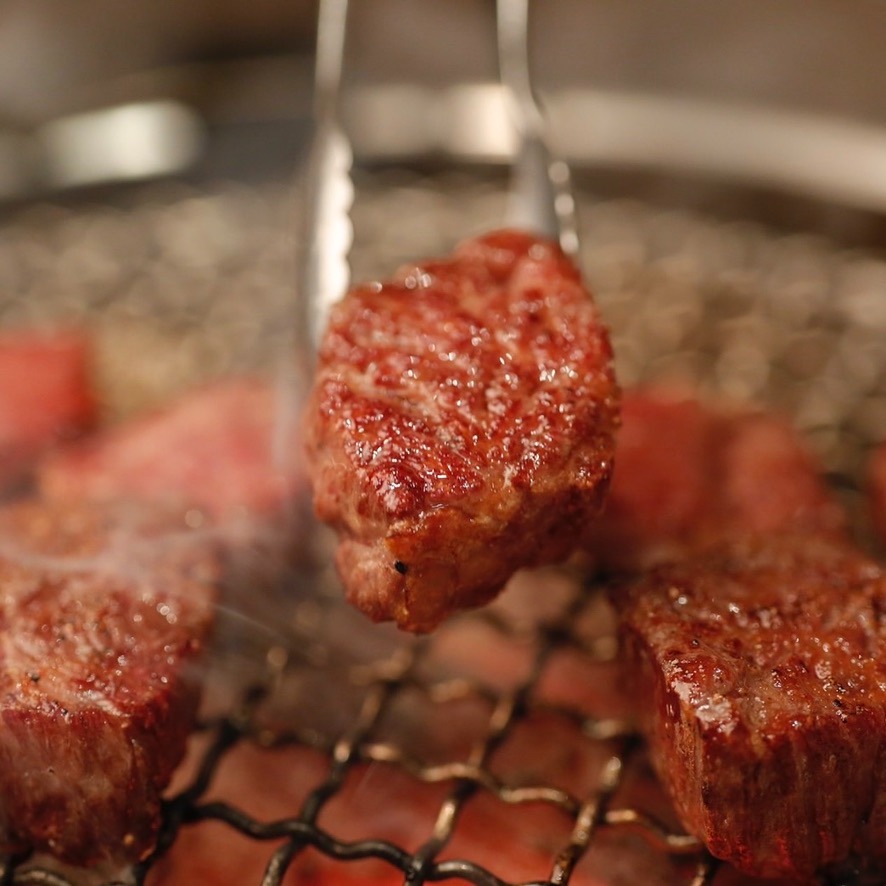
First, let us address the fundamental question: why does the same cut of beef taste entirely different depending on how it is grilled? The answer lies in how the water (juices), protein, and fat within the beef react to heat.
Beef is composed of approximately 60% to 70% water, which holds the amino acids, glutamic acids, and natural sugars that give the meat its savory umami. When beef is exposed to heat, its proteins begin to coagulate. Once the temperature passes a certain threshold, the muscle fibers contract rapidly, squeezing the juices out of the cells. If you grill one side for too long or move the meat around constantly, the juices escape and drip through the grate, leaving the meat dry and flavorless. Therefore, the core of yakiniku grilling is moisture control: heating the meat evenly to its center without contracting the fibers or letting the savory juices escape. Understanding this concept transforms yakiniku from simple cooking into a culinary art.
2. Binchotan vs. Gas Roasters: The Scientific Reason Why Charcoal Yakiniku is Superior
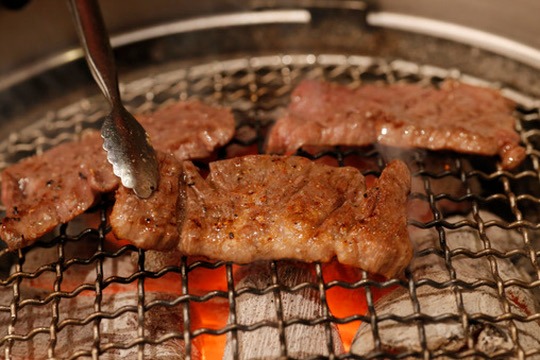
When grilling yakiniku, the two main heat sources are gas roasters and charcoal (Binchotan). Many restaurants choose gas roasters because they ignite at the push of a button, maintain stable heat, and simplify restaurant operations. While gas is efficient, charcoal—especially premium Binchotan charcoal—is far superior for unlocking the deep flavors of high-quality beef.
The difference lies in how heat is transferred. When gas burns, it produces a significant amount of water vapor as a byproduct. This means gas roasters grill the meat in a slightly humid heat, making it difficult to achieve a crisp, caramelized surface. Binchotan charcoal, however, burns completely dry. It applies pure, intense heat to the beef, evaporating surface moisture instantly and accelerating the Maillard reaction (where amino acids and sugars react under high heat to create a rich, savory aroma and crust). This dry heat is the secret behind the crispy, caramelized exterior that locks in the meat’s inner juices.
3. Far-Infrared Radiation and Smoke Infusion: The 2 Core Benefits of Charcoal Grilling
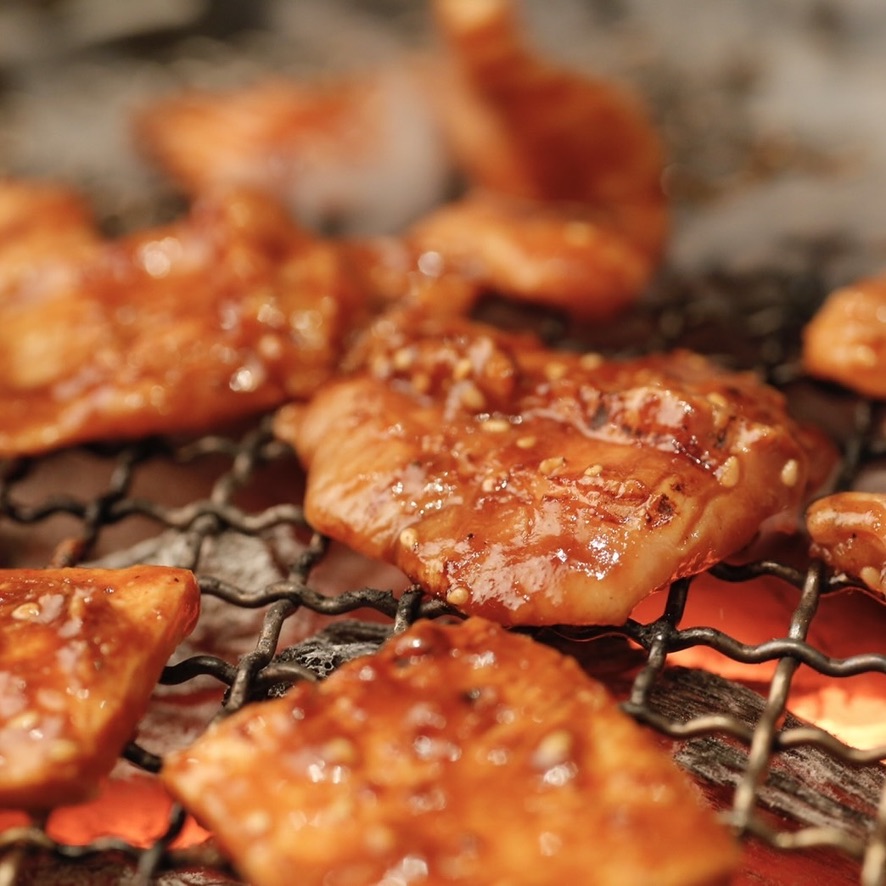
Additionally, the Binchotan charcoal we use at Kuro5 offers two major scientific advantages that gas roasters cannot replicate.
Benefit 1: Powerful Far-Infrared Radiation
When heated, Binchotan charcoal emits high-density far-infrared radiation. While gas heat relies on hot air convection to warm the surface of the meat, far-infrared waves penetrate directly into the meat’s structure. This cooks the beef evenly from the inside out without burning the surface. It allows for a professional “crispy outside, tender inside” finish, keeping the juices locked within the delicate Wagyu fibers.
Benefit 2: Natural Smoke Infusion (燻香)
When raw Wagyu is placed on the grill, its rich fats melt and drip directly onto the white-hot Binchotan charcoal below. The moment the fat hits the 800°C charcoal, it vaporizes into a aromatic smoke. This smoke rises and wraps around the meat, infusing it with a complex, savory charcoal aroma. In gas grills, the fat simply falls onto a metal tray or water pan, producing no such flavor enhancement. This natural smoke infusion acts as a delicious, smoky seasoning that adds incredible depth to every bite.
4. Is “Flip Only Once” a Myth? The Science of the “10-15 Second Frequent Flipping” Rule
A common culinary belief is that you should only flip meat once while grilling. However, this rule only applies to thick steaks cooked in a covered pan where heat circulates evenly. For open-grill yakiniku, leaving the meat on one side for too long is the quickest way to ruin it.
When you grill one side of a thin slice of beef on an open grate, the juices rise to the top (unheated) surface, where they evaporate or drip away when the meat is finally turned. This dries out the meat. To prevent this, Kuro5 practices a method of frequent flipping every 10 to 15 seconds. By turning the meat at short, rhythmic intervals, we distribute heat evenly to both sides, allowing the internal temperature to rise steadily. This frequent turning creates a gentle, steaming effect on the open grill, preventing the proteins from contracting too quickly and keeping the savory juices locked inside.
5. How Frequent Flipping Locks in Beef Juices: The Physics of Thermal Convection

Let us look closer at the physics of how this “10-15 second frequent flipping” technique preserves the beef’s natural juices.
When beef is heated from below, the moisture at the bottom expands and moves upward toward the cooler surface. If you leave it unturned, this moisture pools on the top and escapes. However, if you flip the meat just as the juices begin to rise, the heated side is now on top and the cooler side is on the bottom. The heat from below pushes the moisture back toward the center of the meat. By repeating this process, the juices continuously circulate within the center of the slice rather than escaping. Furthermore, the melting fats coat the surface of the meat, creating a natural barrier that prevents evaporation. This thermal convection is what makes the meat incredibly juicy when you bite into it.
6. Born from Preventing Burnt Meat: The Origin of Kuro5’s Signature “Full-Attend Style”
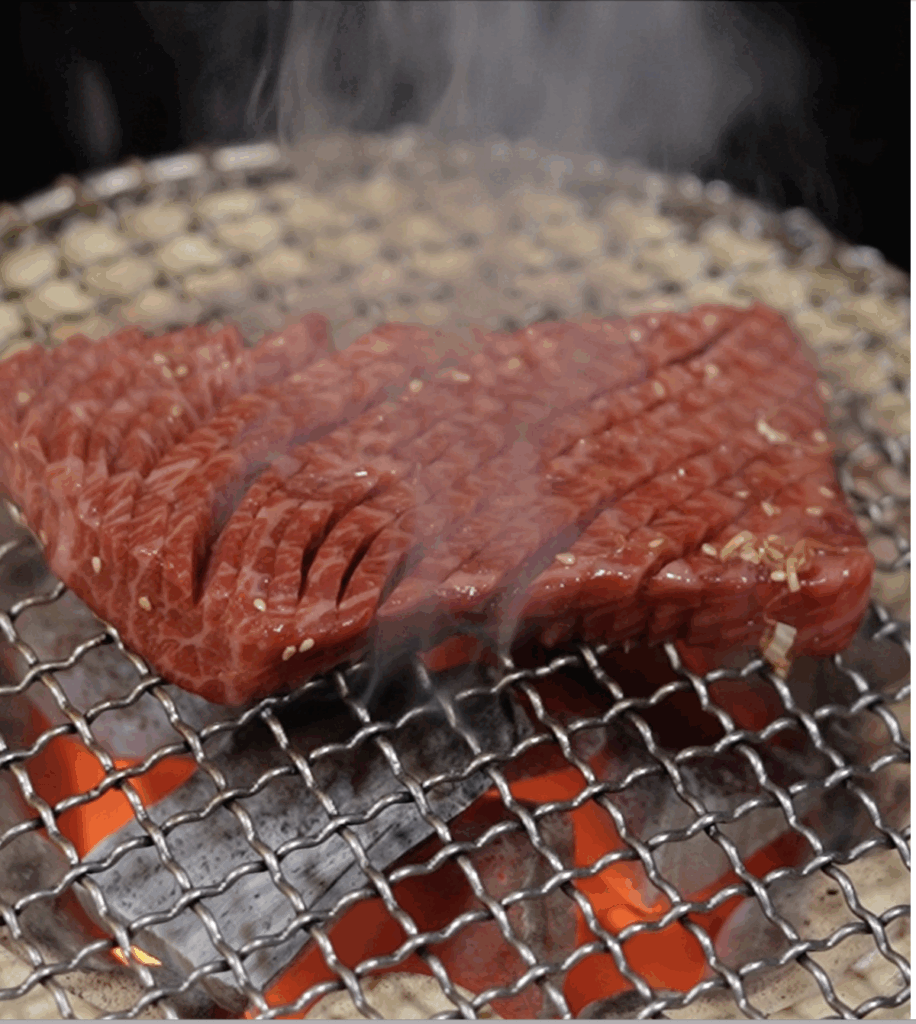
While the “10-15 second flipping” method is highly effective, executing it perfectly while managing Binchotan heat is difficult for customers who want to relax and enjoy their dinner. This is why Kuro5 established our “full-attend style,” where our staff grills all the meat for you.
This system was born during our early days in 2008 at our original 7-tsubo (23-square-meter) shop in Ikebukuro. One evening, the owner noticed a customer struggling to grill fatty Horumon (offal), which was catching fire and burning. The owner stepped in, saying, “Excuse me, let me show you how to grill Horumon!” and took the tongs, turning the pieces constantly until they were grilled to a perfect, caramelized finish. The customer was amazed by the texture and flavor, noting it was the best Horumon they had ever tasted. This realization—that correct grilling can double the value of the meat—became the foundation of Kuro5’s service style.
7. “Quiet Hands” that Respect Conversation: The Professional Etiquette of Kuro5 Staff

Having a staff member stand at your table and flip meat every 10 seconds can feel intrusive if not done with care. It could disrupt a business dinner or an intimate conversation. To prevent this, Kuro5 staff are trained in the art of “quiet hands” (静かな手さばき).
Our staff operates with minimal movement and absolute silence. We minimize the sound of tongs hitting the grate, flipping the meat so smoothly that guests often do not notice we are there. We observe the flow of your conversation, stepping in to turn the meat and distribute it to your plates without interrupting your evening. Serving as a quiet, attentive presence allows our guests to focus entirely on their companions and their dining experience.
8. Managing Intense Binchotan Heat and Smoke: The Real Value of Pro Grilling
There is also a practical reason for professional grilling. Kuro5 utilizes downdraft smokeless roasters (下引き無煙ロースター) to draw smoke away instantly, keeping the air clean and preventing odors from clinging to your clothes.
However, combining these roasters with high-heat Binchotan charcoal concentrates intense far-infrared heat around the grill. Grilling over this heat for a long period can be uncomfortable for guests. Our staff is accustomed to this environment, adjusting the meat’s position based on the subtle temperature zones of the charcoal. We also adjust the grilling time to suit each specific cut—such as rolling thin Shinshin slices to retain moisture, or cooking fatty Kalbi over high heat to render the fat and crisp the edges. Our service protects guests from the heat while ensuring every slice is enjoyed at its absolute best.
9. Comparison: 3 Key Differences Between Gas Self-Grilling and Kuro5’s Full-Attend Charcoal Style
3 Key Differences Between Gas Self-Grilling and Kuro5’s Style
1. Heat Quality and Flavor:
- Gas Self-Grilling: Humid heat can steam the meat, making it harder to develop a savory caramelized crust.
- Kuro5 (Charcoal): Dry, 800°C Binchotan heat and far-infrared radiation sear the exterior instantly while keeping the inside tender and juicy.
2. Grilling Method and Juice Retention:
- Gas Self-Grilling: Leaving the meat unturned allows valuable juices to escape from the top surface and evaporate.
- Kuro5 (Charcoal): Frequent flipping every 10-15 seconds circulates moisture within the meat, preserving its natural juices.
3. Dining Environment and Aroma:
- Gas Self-Grilling: Lacks the smoky charcoal aroma. Guests must constantly monitor the grill, distracting them from their conversation.
- Kuro5 (Charcoal): Dripping fat vaporizes on the Binchotan to create a flavorful smoke (燻香). The staff manages the grilling, allowing guests to relax and talk.
10. Conclusion: Experience the Ultimate Charcoal-Grilled Yakiniku at Kuro5 Tonight
Yakiniku is often viewed as a simple cooking style of placing meat on a hot surface. However, beneath this simplicity lies a delicate balance of heat transfer, protein coagulation, moisture circulation, and smoke science.
At Kuro5, our team is trained in these principles. We source fresh, non-frozen Wagyu, prepare it with expert care, and apply precise fire control over premium Binchotan charcoal at your table. We invite you to experience the difference that professional grilling makes—from the rich, smoky aroma to the burst of natural juices in every bite.
Tonight, let us manage the grill while you enjoy your dinner and conversation. We look forward to welcoming you at our locations in Ikebukuro Honten, Higashiguchi, and Kabukicho, with our premium meats and hospitality ready.
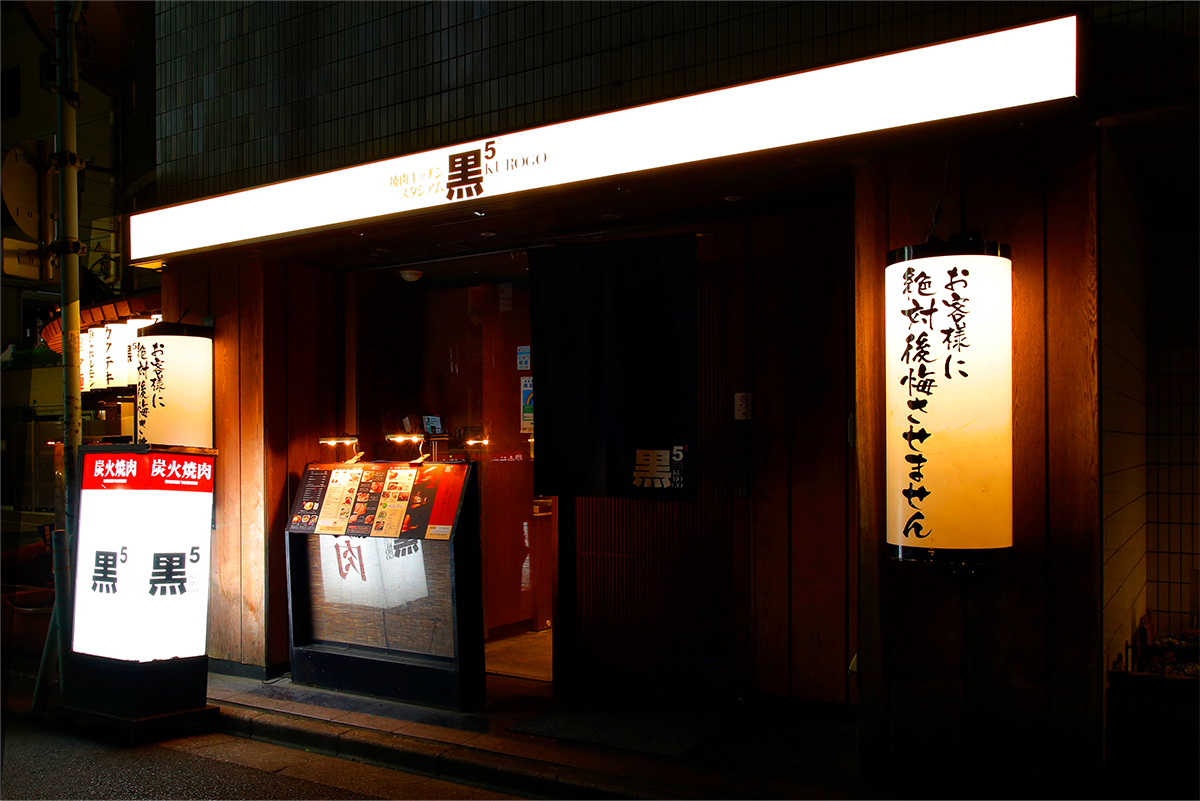
- Charcoal Yakiniku Kuro5 Honten
1F Nishi-Ikebukuro Bldg, 2-46-3 Nishi-Ikebukuro, Toshima-ku, Tokyo / 5 min walk from JR Ikebukuro Station - Charcoal Yakiniku Kuro5 Higashiguchi
1F Tsukiji Bldg, 1-42-16 Higashi-Ikebukuro, Toshima-ku, Tokyo / 3 min walk from JR Ikebukuro Station East Exit - Charcoal Yakiniku Kuro5 Kabukicho
1F Sankyo Akagawa Bldg, 2-21-4 Kabukicho, Shinjuku-ku, Tokyo

