
Table of Contents
- 1. A Rare Cut That Delights Yakiniku Connoisseurs: What Exactly is Tomosankaku?
- 2. Anatomizing the “Shintama” (Round): Tomosankaku’s Position and Name Origin
- 3. Beautiful Marbling on Round Meat? The Unique Characteristics of Tomosankaku
- 4. Elegant Melting Fat: The Nutritional Appeal of Tomosankaku
- 5. Kuro5’s “Premium Loin”: Sourcing and Preparing the Finest Tomosankaku
- 6. Overcooking is Strictly Prohibited: Tips for Sealing in Juices Over Charcoal
- 7. Why Fresh Wasabi is Better Than Egg Yolk: The Golden Combination of Special Tare and Wasabi
- 8. The Ultimate Simplicity of Salt: Experiencing Natural Beef Sweetness Directly
- 9. Comparison: 3 Differences Between Tomosankaku and Shinshin (Upper Loin)
- 10. Conclusion: Experience the Melting Texture of Tomosankaku at Kuro5 Tonight
Hello everyone, this is Sondo from Kuro5.
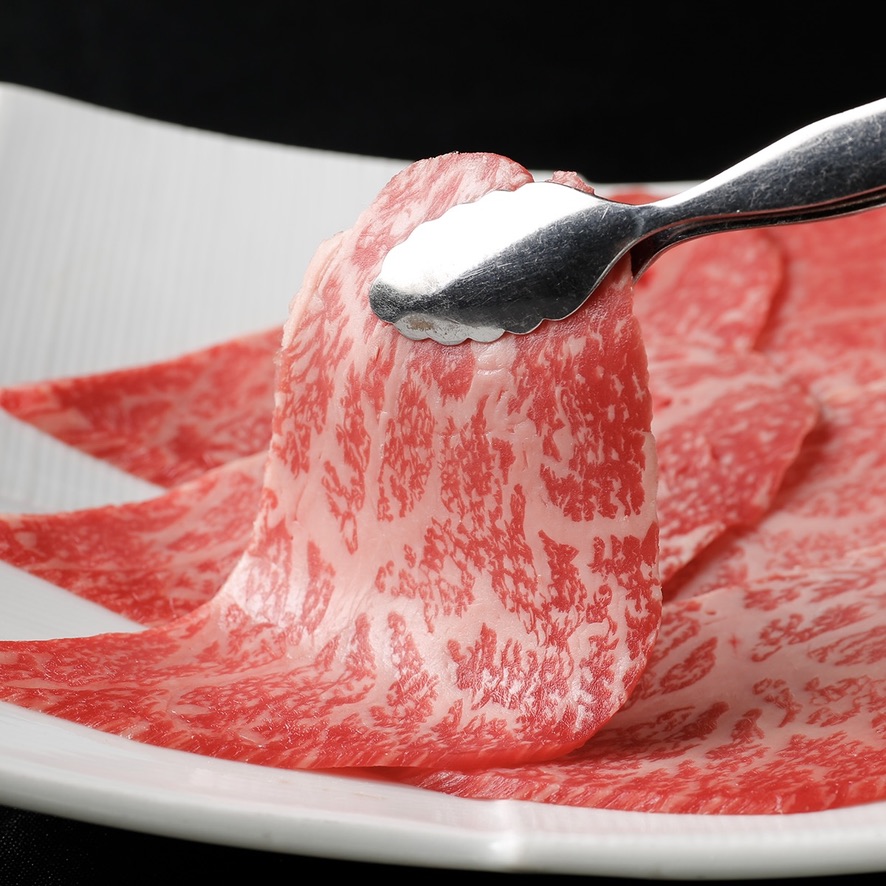
As you browse the menu at yakiniku restaurants, you may notice the name “Tomosankaku” alongside familiar favorites like Kalbi and Loin. Among yakiniku enthusiasts, Tomosankaku is celebrated as a premium rare cut that is highly sought after. However, many guests wonder what part of the cow it comes from, how it differs from standard loin or rib cuts, and how to grill and enjoy it at its best.
Although Tomosankaku is classified as “round” (thigh) meat, it features a fine, dense marbling that reverses the typical lean, firm image of round cuts. It balances the deep flavor of lean beef with the sweet, delicate melting profile of high-quality Wagyu fat, offering a tender texture that melts in the mouth. Today, I would like to explain the anatomical features of Tomosankaku, its name origin, the secrets behind Kuro5’s “Premium Loin” preparation, our charcoal grilling techniques, and the best ways to enjoy this cut.
1. A Rare Cut That Delights Yakiniku Connoisseurs: What Exactly is Tomosankaku?
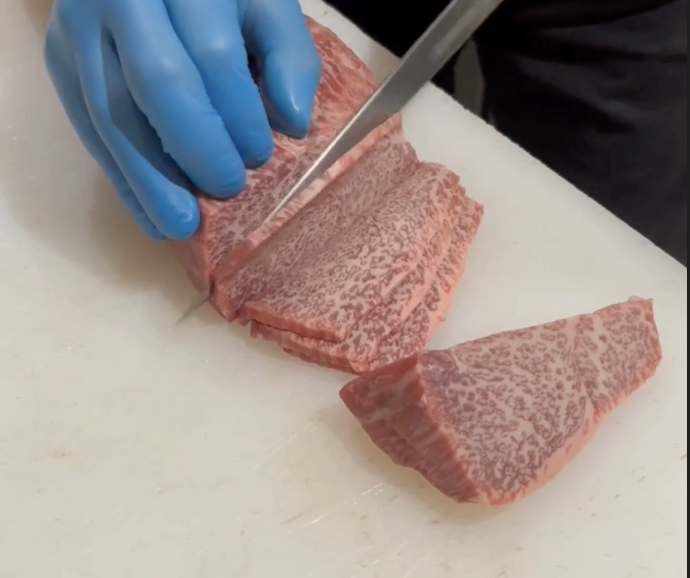
First, let us examine why Tomosankaku holds such high appeal for yakiniku diners.
Beef cuts are generally divided into marbled portions (like sirloin or ribeye) that offer rich fat sweetness, and lean portions (like tenderloin or round) that highlight deep red meat flavor. Marbled cuts are tender but can feel heavy to eat in large quantities, while lean cuts are healthy but can toughen if cooked too long.
Tomosankaku combines the best qualities of both. It possesses the deep beef flavor characteristic of round meat, paired with fine marbling that rivals premium ribeye or loin. This results in a tender texture that melts in the mouth while remaining light and clean on the palate. Sourced at only a few kilograms per cow, it is an extremely rare delicacy that is difficult to find at standard restaurants.
2. Anatomizing the “Shintama” (Round): Tomosankaku’s Position and Name Origin
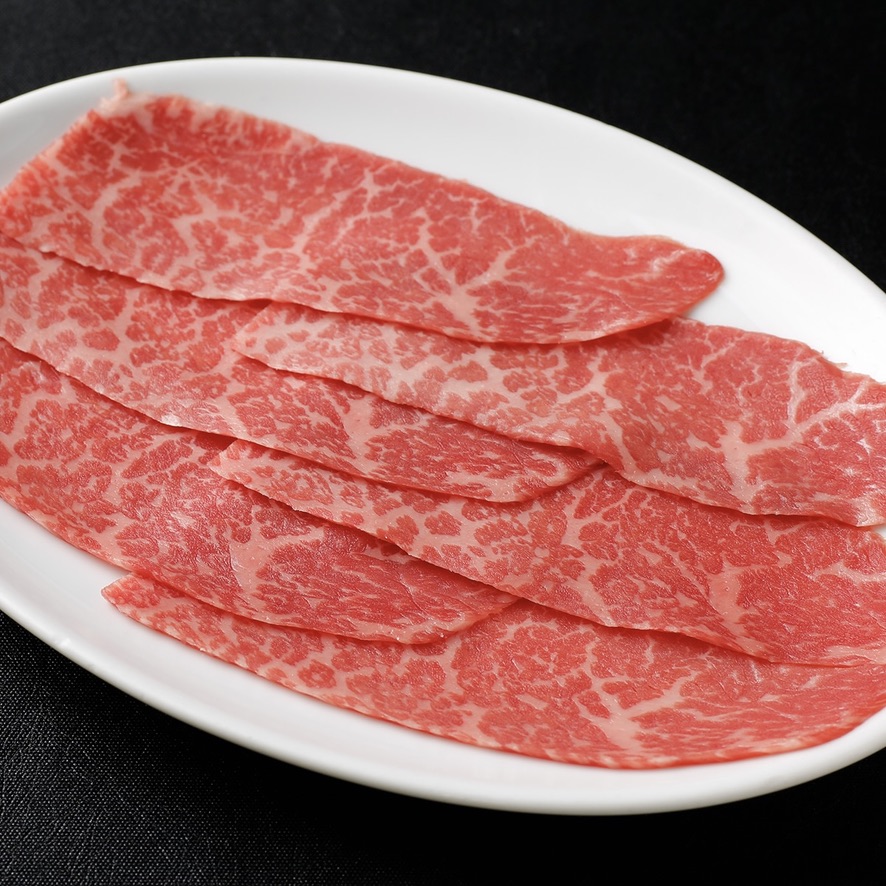
Where is Tomosankaku located on the cow? Let us examine its anatomical position.
The large muscle block located at the base of the hind leg, stretching from the inner thigh down to the knee, is referred to as the “Shintama” (round). This large portion is divided into sub-cuts with distinct features: “Tomosankaku,” “Shinshin,” “Kamenoko,” and surrounding muscles.
Tomosankaku is located at the lower portion of the Shintama block, close to the hind leg bone. Because this trimmed cut forms a triangle, chefs named it “Tomo (hind leg) Sankaku (triangle).” In western Japan, it is sometimes called “Hiuchi” (after its resemblance to a flintstone), but refers to the same cut. Despite its proximity to active leg muscles, the bone structure encourages the formation of fine marbling in this specific section.
3. Beautiful Marbling on Round Meat? The Unique Characteristics of Tomosankaku
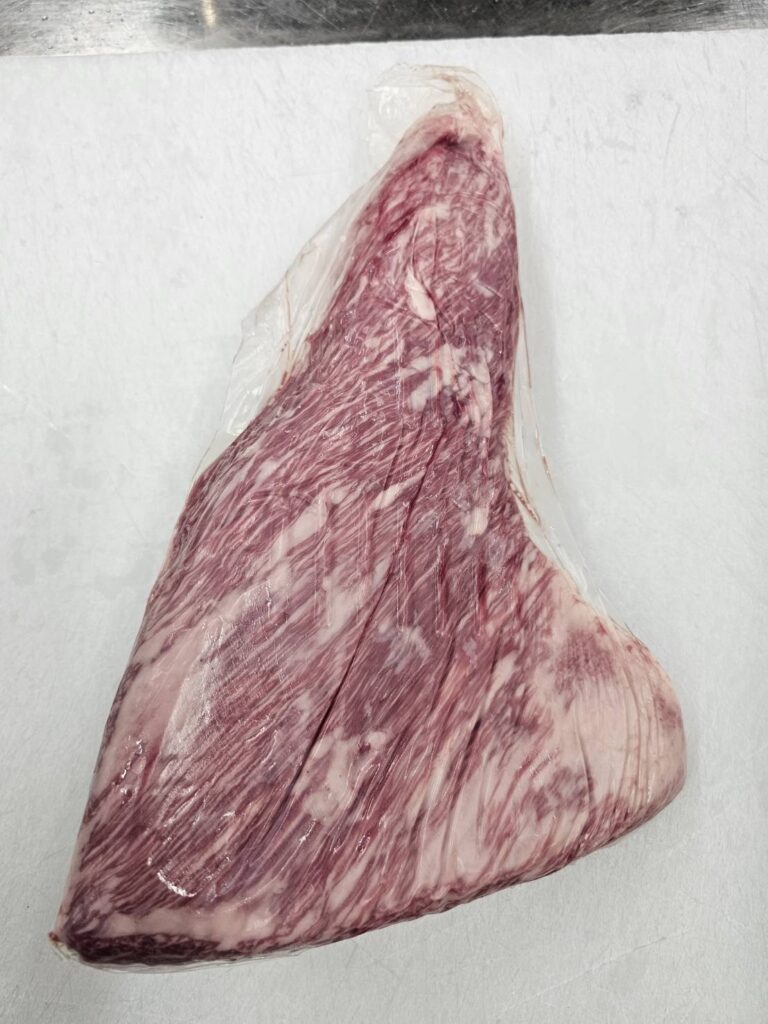
Many diners associate “round meat” with lean, firm beef typically used for roasting or stews. However, the marbling and bright pink color of fresh Tomosankaku often surprises first-time guests.
The defining feature of Tomosankaku is the harmony between rich lean beef flavor and delicate Wagyu marbling.
Because it is located near the active leg muscles, the grain of the meat remains fine, yielding a deep savory beef profile (glutamic acid and other amino acids) as you chew. Concurrently, the fine fibers are marbled with Wagyu fat rich in oleic acid. When heated, this fat melts and coats the fibers, producing a tender texture and smooth mouthfeel that is rare for round meat.
4. Elegant Melting Fat: The Nutritional Appeal of Tomosankaku
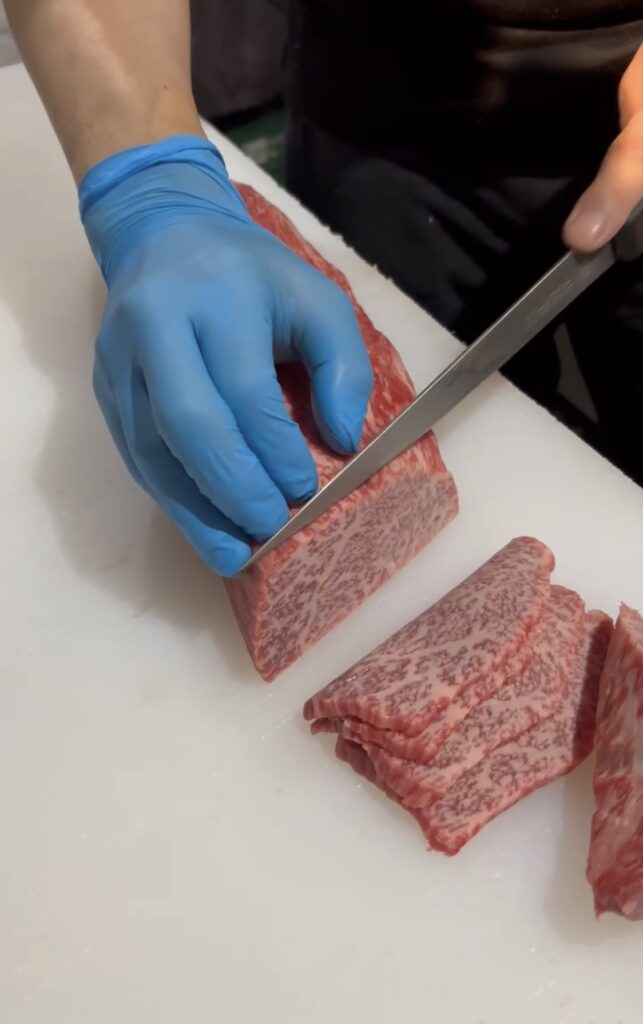
Despite its marbling, Tomosankaku never leaves you feeling heavy. This light profile comes from the quality of Wagyu fat and its nutritional properties.
The fat in Wagyu Tomosankaku contains high levels of oleic acid (monounsaturated fat), which has a melting point (15°C to 25°C) lower than human body temperature (36°C). When placed in the mouth, the fat melts, releasing its sweet aroma (Wagyu-ko) without leaving a greasy coating.
As part of the round cut, it is also rich in proteins, B-vitamins, and minerals like iron. For diners who want to enjoy rich marbling without the heaviness or high calories of standard rib cuts, Tomosankaku serves as an excellent, nutrient-dense choice.
5. Kuro5’s “Premium Loin”: Sourcing and Preparing the Finest Tomosankaku
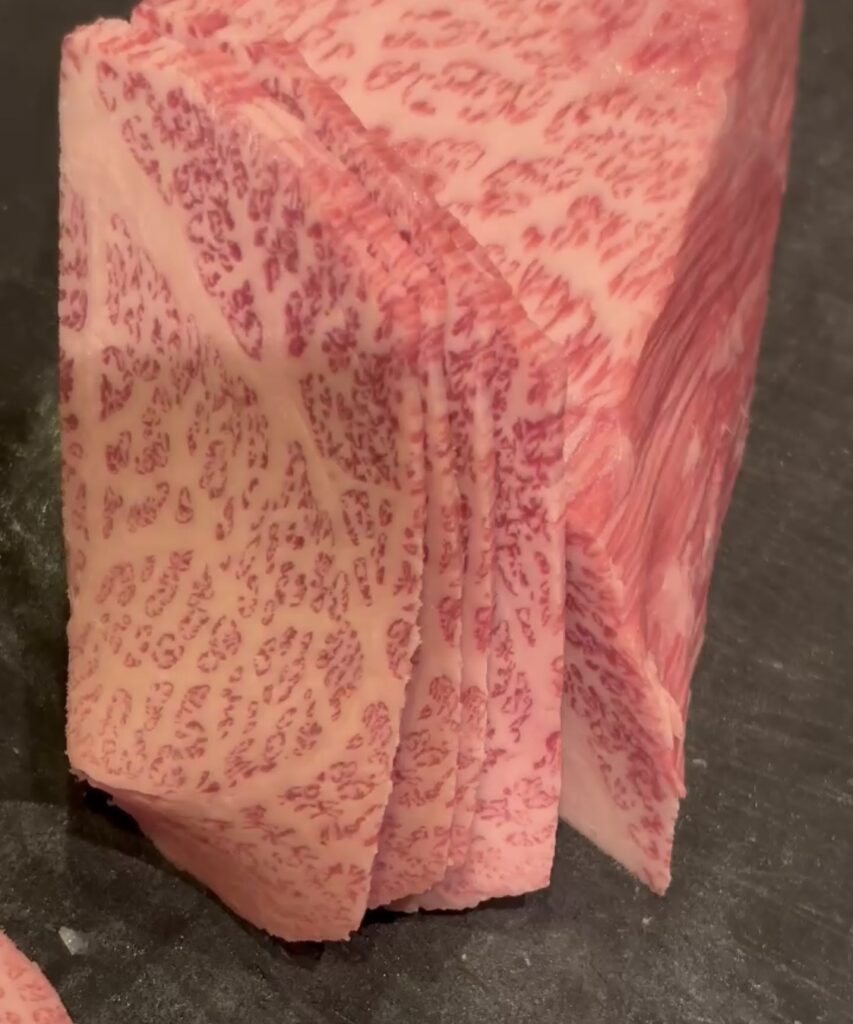
At Kuro5, we source exclusively fresh (never-frozen) A5-rank domestic Wagyu Tomosankaku to preserve its quality. We serve this premium cut under the name “Premium Loin” (特選ロース).
Because our beef is never frozen, the cell walls remain intact, preserving natural juices and preventing drip loss. This ensures the beef retains its flavor and moisture when it reaches your table.
Our chefs trim away excess connective tissue and hard outer fat. We then slice the Tomosankaku into wide, thin sheets (yaki-sukiyaki cut) perpendicular to the grain of the meat, ensuring the marbling melts smoothly upon cooking.
6. Overcooking is Strictly Prohibited: Tips for Sealing in Juices Over Charcoal
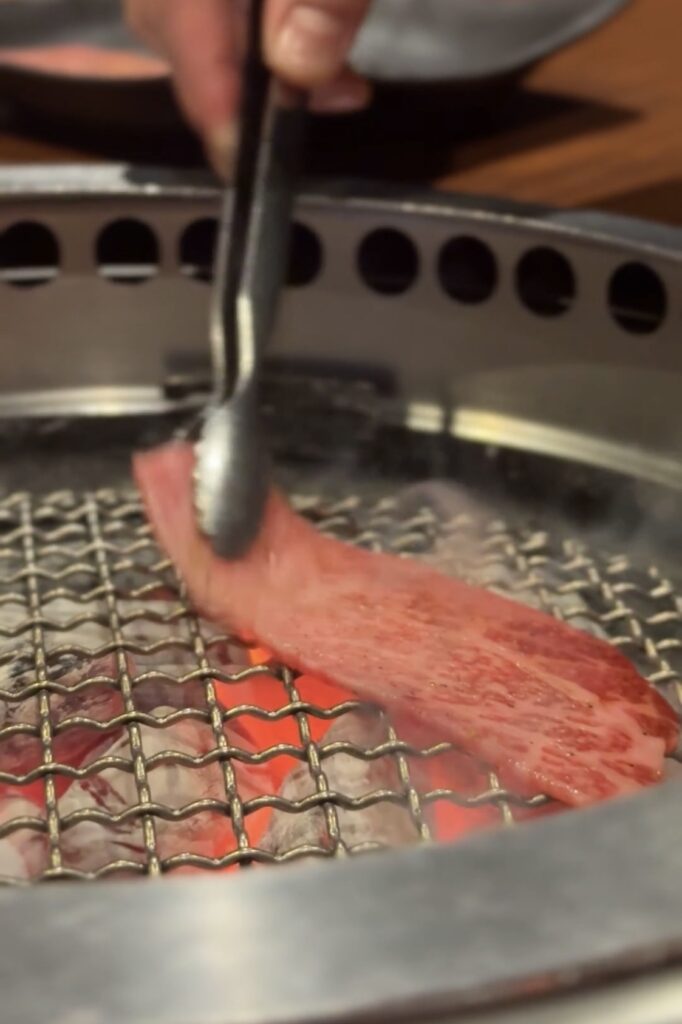
Because Tomosankaku is served in wide, thin slices, overcooking it will melt away the sweet fat and dry out the fibers. Keeping it on the grill too long ruins its quality.
Our recommended method is a fast sear over high charcoal heat for only a few seconds per side.
Place the wide slice over high Binchotan heat (800°C+). As soon as the fat begins to glisten on the surface (about 3 to 5 seconds), flip it and sear the other side lightly (about 2 to 3 seconds) before serving. This rapid sear melts the fat while keeping the center tender and juicy. Kuro5 staff grills this cut for you at your table to ensure perfect results.
7. Why Fresh Wasabi is Better Than Egg Yolk: The Golden Combination of Special Tare and Wasabi
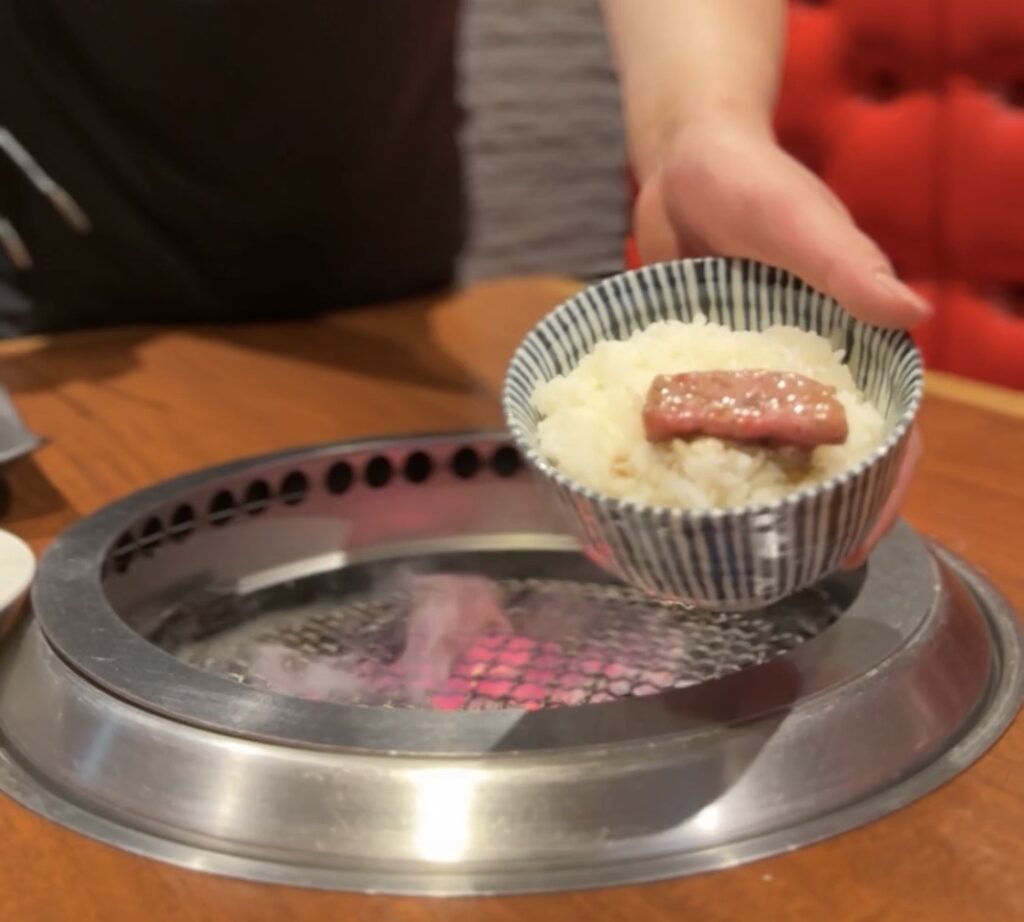
Many yakiniku restaurants serve tri-tip and thin loin cuts with a sweet sauce and raw egg yolk in a sukiyaki style. While delicious, Kuro5 recommends pairing our sweet tare with fresh wasabi instead of egg yolk.
We coat the Tomosankaku in our house-made sweet tare before grilling. Once seared over charcoal to caramelize the tare, we serve it with a touch of grated wasabi on top.
The oleic fats in Wagyu and the sweetness of our tare coat the palate, neutralizing the sharp heat of the wasabi. This leaves only the fresh, clean aroma of the wasabi, balancing the sweet fat and tare for a savory bite that is highly addictive.
8. The Ultimate Simplicity of Salt: Experiencing Natural Beef Sweetness Directly
While sweet tare and fresh wasabi is our signature pairing, we also recommend ordering Tomosankaku with salt to appreciate its natural flavor.
We grill the salted cut lightly and serve it with a touch of sea salt and a squeeze of fresh lemon. This simple seasoning highlights the rich amino acids of the lean beef and the clean sweetness of the Wagyu fat.
At Kuro5, you can choose between tare and salt depending on your preference. We recommend starting with salt to appreciate the beef’s natural qualities, and moving to tare with wasabi to enjoy its rich, caramelized finish.
9. Comparison: 3 Differences Between Tomosankaku and Shinshin (Upper Loin)
Differences Between Tomosankaku and Shinshin
1. Marbling and Fat Sweetness:
- Tomosankaku: Features the richest marbling in the Shintama block, offering sweet fat and a melting texture.
- Shinshin: Located at the center of the Shintama block. It contains lower fat and highlights a tender, lean meat texture.
2. Cut and Grilling Style:
- Tomosankaku: Sliced into wide, thin sheets (yaki-sukiyaki cut) and seared quickly for a few seconds per side.
- Shinshin: Cut thicker and rolled over the grate (rolling grill method) to seal juices inside the lean meat.
3. Recommended Seasoning:
- Tomosankaku: Best enjoyed with sweet tare and fresh wasabi to balance the rich marbling.
- Shinshin: Best enjoyed with sea salt, pepper, or light wasabi soy sauce to preserve its delicate lean flavor.
10. Conclusion: Experience the Melting Texture of Tomosankaku at Kuro5 Tonight
If you associate round cuts with firm, dry meat, we invite you to experience Wagyu Tomosankaku. Its combination of lean beef flavor and fine marbling, seared over charcoal, provides an excellent yakiniku experience.
Enjoy our signature fresh Tomosankaku as “Premium Loin,” hand-sliced by our chefs and seared by our staff at your table.
Please visit Kuro5 Honten, Higashiguchi, or Kabukicho tonight. Recreate these tips at home or join us at our tables to enjoy our signature cuts and hospitality.
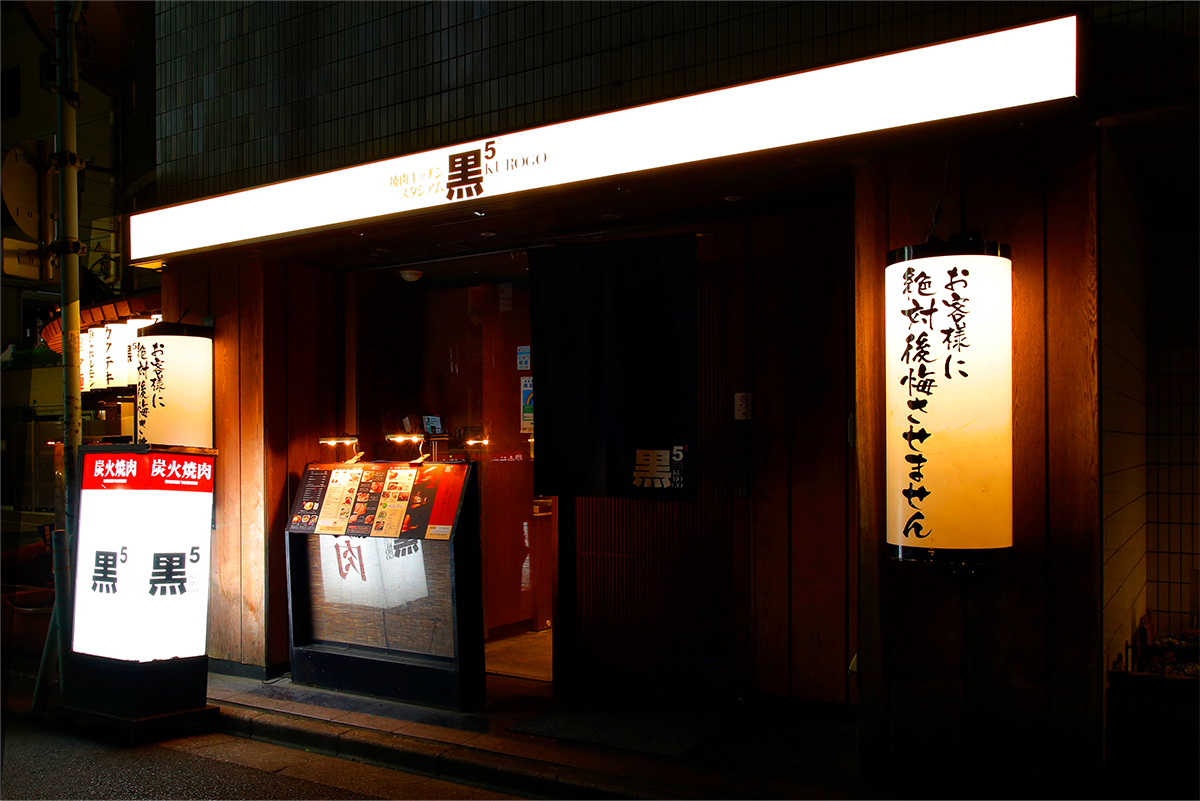
- Charcoal Yakiniku Kuro5 Honten
1F Nishi-Ikebukuro Bldg, 2-46-3 Nishi-Ikebukuro, Toshima-ku, Tokyo / 5 min walk from JR Ikebukuro Station - Charcoal Yakiniku Kuro5 Higashiguchi
1F Tsukiji Bldg, 1-42-16 Higashi-Ikebukuro, Toshima-ku, Tokyo / 3 min walk from JR Ikebukuro Station East Exit - Charcoal Yakiniku Kuro5 Kabukicho
1F Sankyo Akagawa Bldg, 2-21-4 Kabukicho, Shinjuku-ku, Tokyo

