



Table of Contents
- 1. A Classic Yakiniku Question: How Do Charcoal and Gas Heat Alter the Sear?
- 2. The Physics of Gas Combustion: The Hidden Release of Moisture and Its Impact
- 3. Zero Moisture from Charcoal: Dry Heat Creating a Crispy, Juicy Crust
- 4. Sealing in Umami Instantly: The Power of Far-Infrared Radiation
- 5. Engaging the Senses: The Magic of Dripping Fat and Charcoal Smoke
- 6. Unrivaled Heat Output: Why Kuro5 Settle on Ultra-Hot Binchotan Coals
- 7. A Challenge for Amateurs: Why Our “Full Attend” Service is Essential
- 8. Slicing with Grilling in Mind: Custom Cuts Calculated for Ultra-High Heat
- 9. Comparison: 3 Key Differences Between Charcoal Grilling and Gas Roasters
- 10. Conclusion: Experience Authentic Charcoal Yakiniku at Kuro5 Tonight
Hello everyone, this is Sondo from Kuro5.
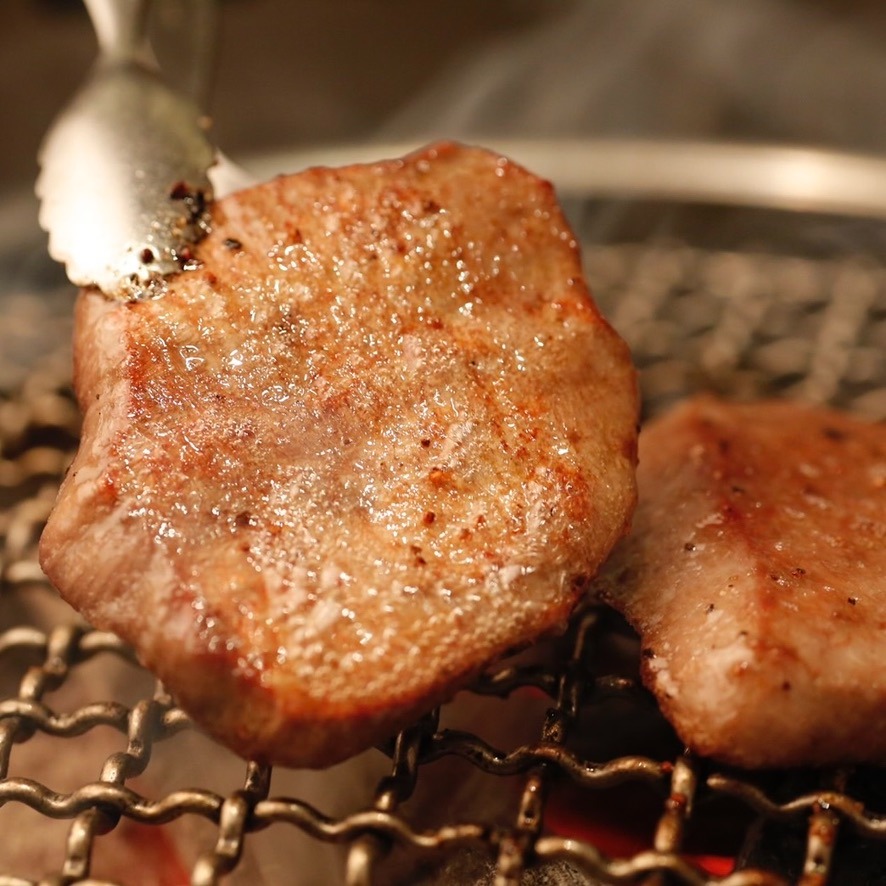
When heading out for yakiniku, you might see “Charcoal Grilled Yakiniku” on the sign and feel that charcoal-cooked meat somehow tastes better. On the other hand, you might prefer gas roasters for their ease of heat adjustment and lower smoke. Choosing between charcoal and gas is one of the most important decisions that defines a restaurant’s concept.
In fact, the difference in how meat cooks over charcoal compared to a gas roaster is not just a matter of dining atmosphere. From physical and chemical perspectives, there is a clear scientific difference. From the surface texture and internal juiciness of the meat to the smoky aroma released when you take a bite, the heat source changes the dining experience. Today, I would like to explain the scientific differences between charcoal and gas, their respective properties, and why Kuro5 insists on using ultra-hot Binchotan coals paired with our professional table-side “Full Attend” grilling service.
1. A Classic Yakiniku Question: How Do Charcoal and Gas Heat Alter the Sear?
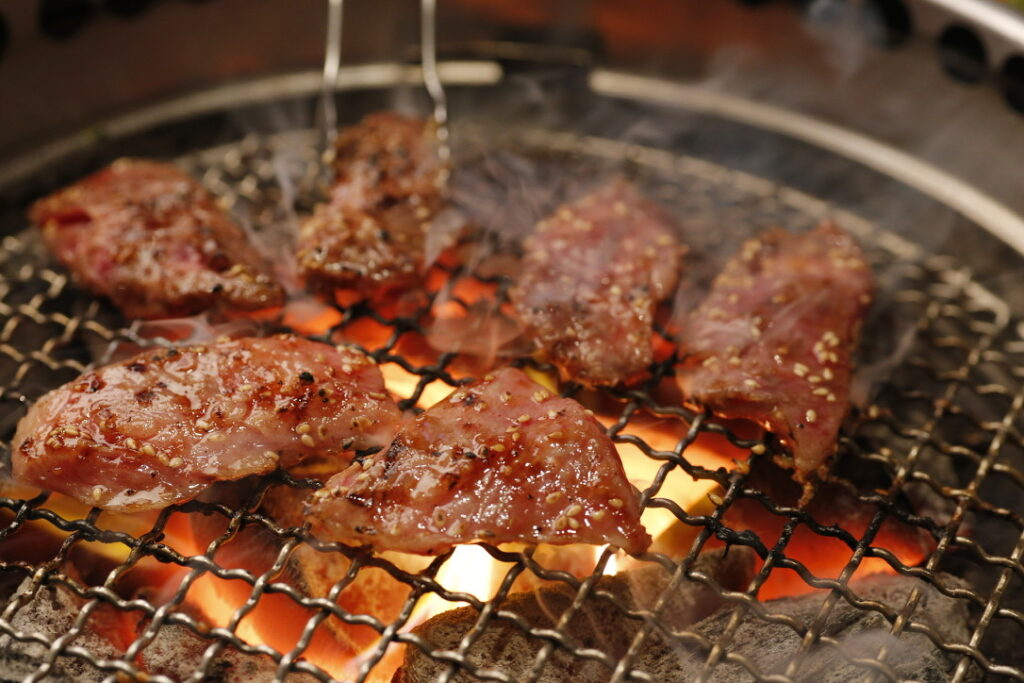
Why does changing the heat source alter the flavor of the beef so significantly?
Cooking beef is not simply a matter of heating it. The way heat is transferred (conduction, convection, and radiation) and the compounds released during combustion shape how the meat cooks. Whether your grilled beef turns out dry and firm, or boasts a crispy surface with a tender, juicy center, depends on the physical and chemical properties of the heat source. Let us begin by examining the behavior of gas roasters.
2. The Physics of Gas Combustion: The Hidden Release of Moisture and Its Impact
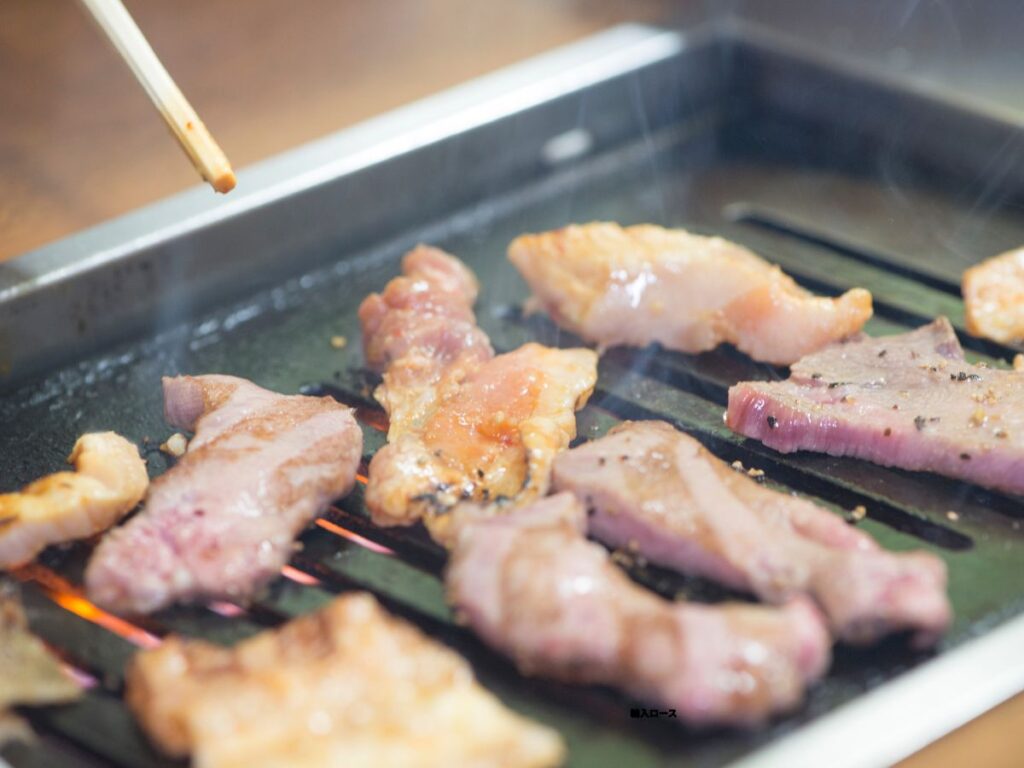
Gas roasters are widely used in many restaurants for their ease of operation. However, when it comes to searing premium beef, gas combustion carries a chemical drawback: combustion releases significant moisture.
The fuels used in gas roasters, such as natural gas (methane) or propane, are hydrocarbons. When these gases combine with oxygen and burn, the chemical reaction produces carbon dioxide (CO2) alongside water vapor (H2O) (e.g., CH4 + 2O2 → CO2 + 2H2O). This means that a gas flame is constantly releasing a stream of water vapor directly toward the grill grate.
This water vapor creates a mild steam-cooking effect on the meat. The surface moisture cannot evaporate quickly, preventing the exterior of the beef from searing rapidly. Consequently, it takes longer to develop a caramelized crust, allowing the internal savory juices (water and umami amino acids) to drain onto the drip pan, leaving the meat dry.
3. Zero Moisture from Charcoal: Dry Heat Creating a Crispy, Juicy Crust

In contrast, charcoal grilling follows a different physical process. The primary advantage of charcoal is that its combustion releases zero moisture.
Charcoal is produced by heating wood in the absence of oxygen, driving off moisture and volatile compounds to leave behind carbon (C). When carbon burns, the chemical reaction produces only carbon dioxide (C + O2 → CO2), with no water vapor released.
This dry, ultra-high heat evaporates surface moisture instantly, causing the proteins on the meat’s surface to coagulate and form a protective barrier that seals in savory juices. This creates a crispy, caramelized exterior while keeping the interior tender and juicy.
4. Sealing in Umami Instantly: The Power of Far-Infrared Radiation
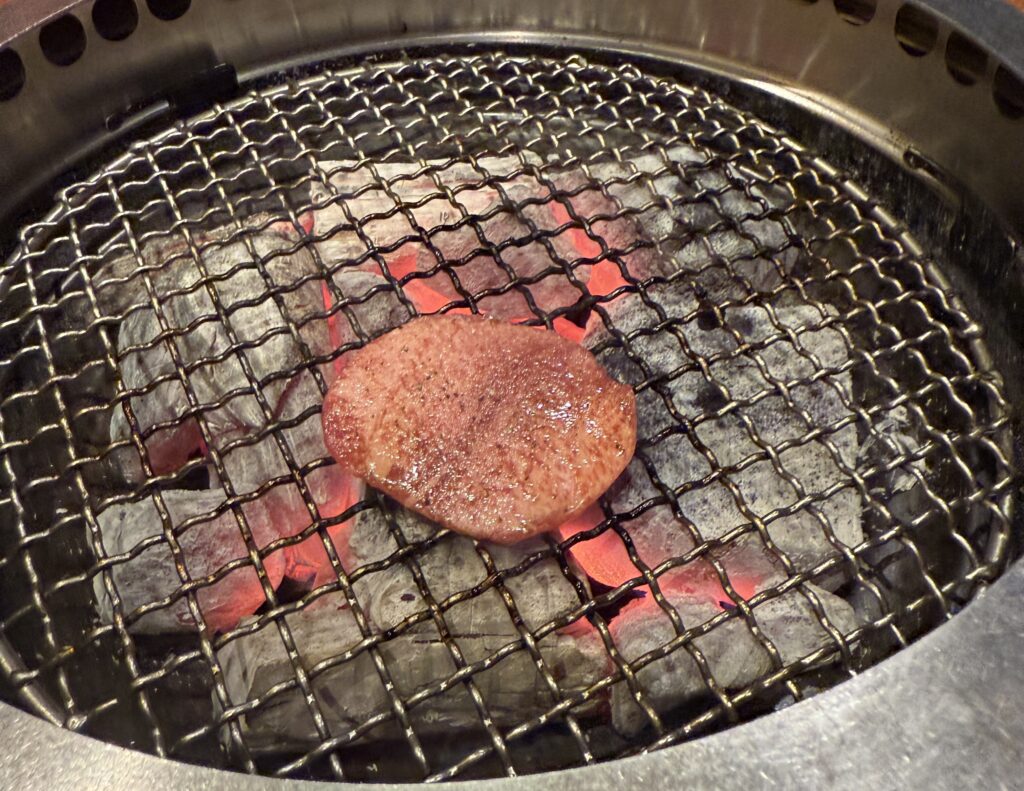
Another scientific reason charcoal-grilled yakiniku tastes delicious is the impact of far-infrared radiation.
Gas roasters cook meat primarily through convection heat (heated air moving over the surface), which slowly transfers heat to the center. This slow process can overcook the exterior before the interior is heated. In contrast, glowing Binchotan coals emit high levels of far-infrared radiation.
Far-infrared waves penetrate the meat’s surface to vibrate water molecules directly inside, heating the interior and exterior simultaneously. This speeds up the cooking process, preventing muscle fibers from contracting too tightly and squeezing out juices, which yields a tender bite.
5. Engaging the Senses: The Magic of Dripping Fat and Charcoal Smoke
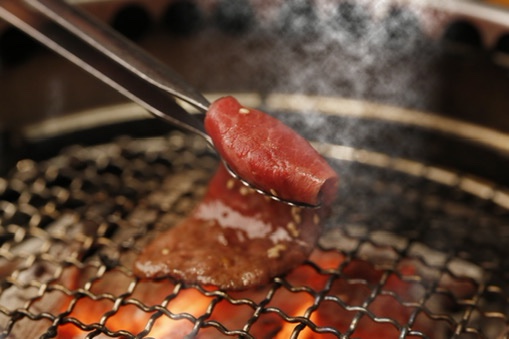
The final touch of charcoal cooking is the rich, smoky aroma (Maillard reaction products) that enhances the flavor of the beef.
When beef is grilled over charcoal, melting fat drips onto the hot coals, vaporizing instantly into a savory smoke that coats the meat. This smoky aroma, combined with the caramelization of the sugars and proteins in the sauce (Maillard reaction), produces a rich flavor profile that cannot be replicated on a gas roaster.
6. Unrivaled Heat Output: Why Kuro5 Settle on Ultra-Hot Binchotan Coals

To maximize these charcoal cooking benefits, Kuro5 sets a strict standard: we prepare our coals to be exceptionally hot before they reach your table.
Many guests notice the intense heat when the coals are set in our tableside roasters. We heat our premium Binchotan coals to a glowing red (around 800°C to 1000°C) to ensure a high-speed sear.
We use this intense heat to caramelize the surface of our domestic A5-rank Kuroge Wagyu immediately, sealing in the sweet fats and juices before they can escape. This rapid sear is essential to highlighting the quality of fresh Wagyu.
7. A Challenge for Amateurs: Why Our “Full Attend” Grilling Service is Essential
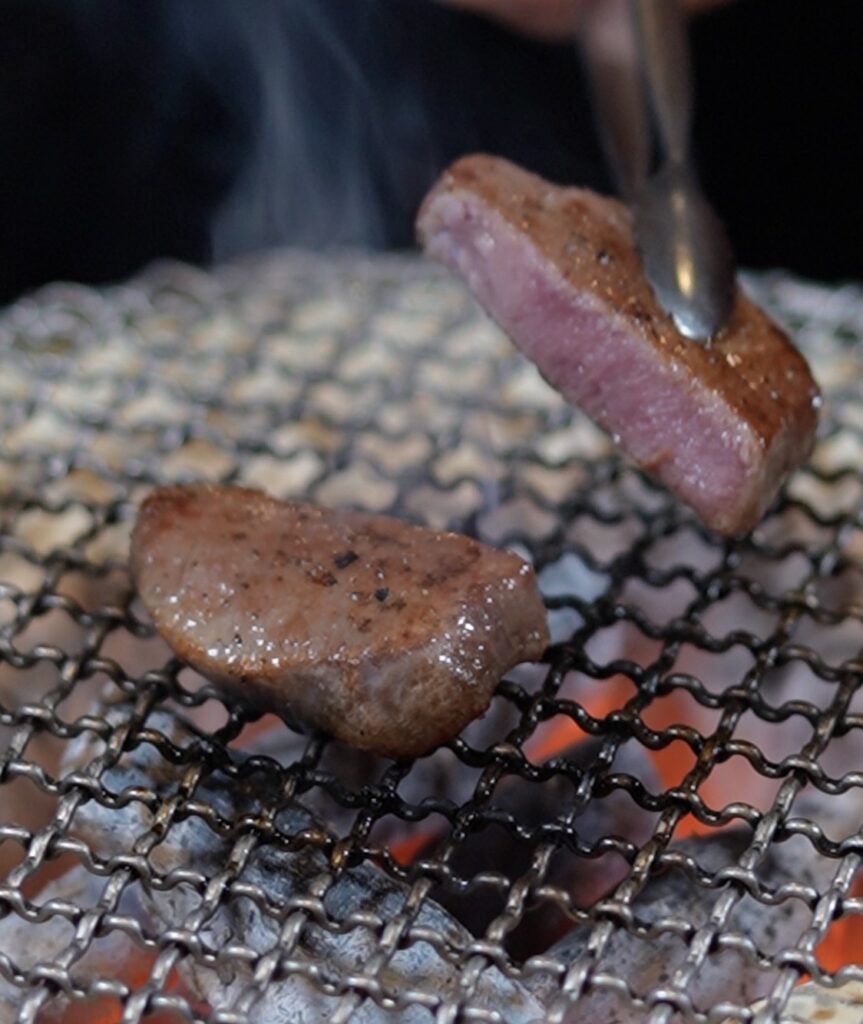
However, managing ultra-high heat charcoal presents a challenge: it is very easy to burn the meat if you are not careful.
A few seconds too long on an 800°C+ grill can char premium beef, ruining its flavor. Controlling the sear based on thickness, marbling, and fiber structure requires experience and constant attention.
To ensure perfect results, Kuro5 staff grills the beef for you at your table (our Full Attend service). Our grilling staff completes a rigorous training program, learning to manage the heat by grilling and tasting cuts, including overcooked pieces, to understand how heat levels affect flavor. Staff must receive店長 approval before serving guests at our tables.
8. Slicing with Grilling in Mind: Custom Cuts Calculated for Ultra-High Heat
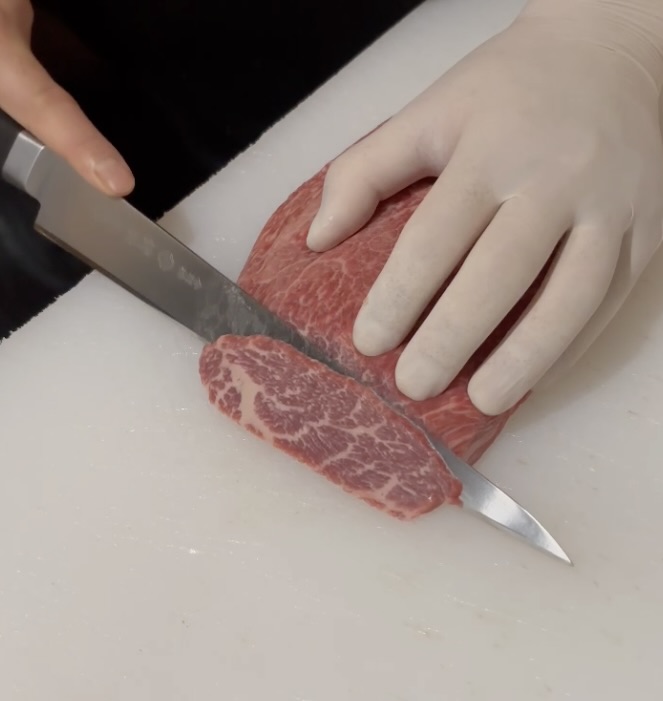
The synergy between our grilling service and ultra-high heat begins during prep.
Our chefs slice each cut based on how it will be seared. For example, our thin-cut Tomosankaku is sliced to melt its fat over a rapid 3-to-5-second sear. For thicker cuts like Harami or Shinshin, we slice them thicker to allow staff to roll them over the grate (rolling grill method), creating a pocket of juice at the center.
Because each cut is designed for our ultra-high heat Binchotan and tableside service, they reach their peak flavor when grilled by our staff.
9. Comparison: 3 Key Differences Between Charcoal Grilling and Gas Roasters
Charcoal Grilling vs. Gas Roasters
1. Moisture Production During Combustion:
- Gas Roasters: Release water vapor during combustion, creating a steam-cooking effect that prevents rapid searing and allows juices to drain.
- Charcoal Grilling: Pure carbon combustion releases zero moisture, evaporating surface water instantly to lock in savory juices.
2. Heat Transfer and Far-Infrared Radiation:
- Gas Roasters: Rely on convection heat to cook from the outside in, which can dry out the exterior before the center is heated.
- Charcoal Grilling: Emits far-infrared radiation to heat the interior and exterior simultaneously, preserving tenderness and moisture.
3. Smoky Aroma and Flavor Integration:
- Gas Roasters: Fat drains away without contacting the flames, offering minimal smoky aroma.
- Charcoal Grilling: Dripping fat vaporizes on the hot coals, coating the beef in a savory smoke that integrates with seared sauces.
10. Conclusion: Experience Authentic Charcoal Yakiniku at Kuro5 Tonight
The differences in flavor between charcoal and gas are shaped by combustion chemistry, moisture release, and radiation properties.
Charcoal’s dry heat, far-infrared radiation, and smoky aromas work together to create an excellent yakiniku experience.
We invite you to visit Kuro5 Honten, Higashiguchi, or Kabukicho tonight. Enjoy our fresh Wagyu seared by our staff over our signature ultra-hot Binchotan coals, and experience our hospitality.
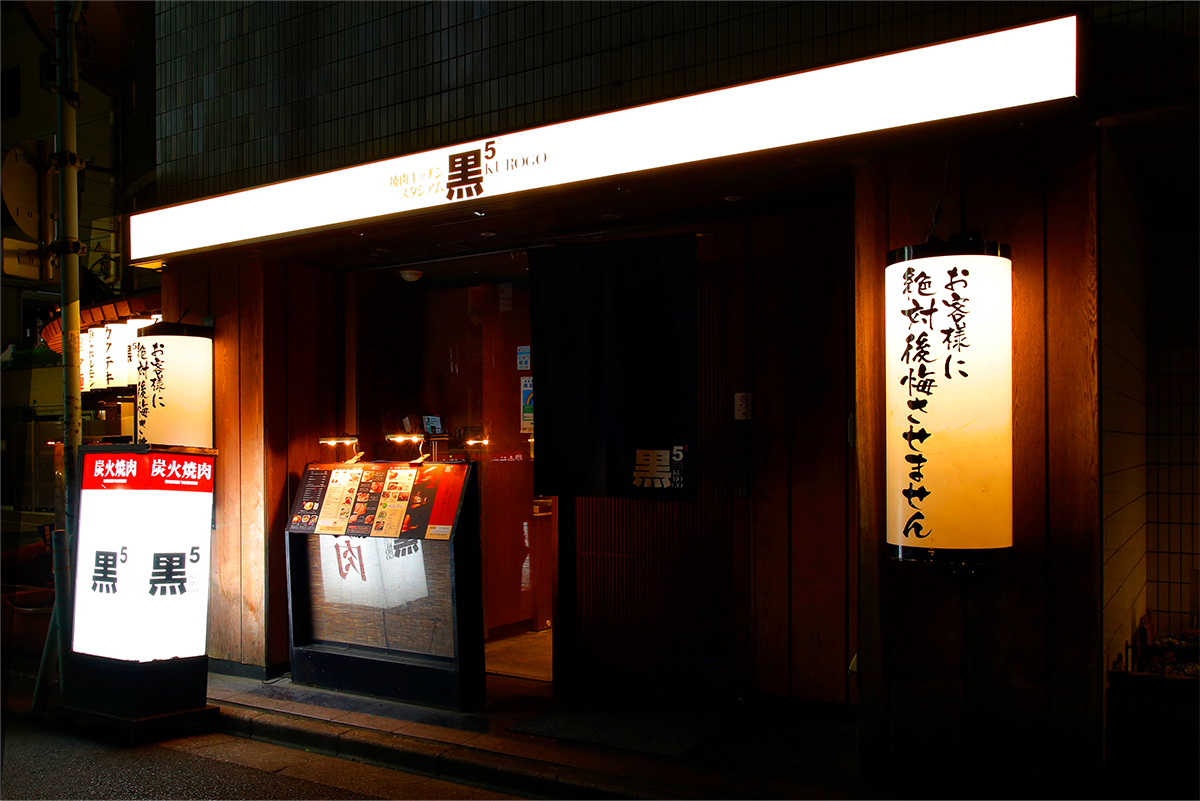
- Charcoal Yakiniku Kuro5 Honten
1F Nishi-Ikebukuro Bldg, 2-46-3 Nishi-Ikebukuro, Toshima-ku, Tokyo / 5 min walk from JR Ikebukuro Station - Charcoal Yakiniku Kuro5 Higashiguchi
1F Tsukiji Bldg, 1-42-16 Higashi-Ikebukuro, Toshima-ku, Tokyo / 3 min walk from JR Ikebukuro Station East Exit - Charcoal Yakiniku Kuro5 Kabukicho
1F Sankyo Akagawa Bldg, 2-21-4 Kabukicho, Shinjuku-ku, Tokyo

