Introduction: The Roots of Yakiniku Culture Cultivated in the Entertainment District
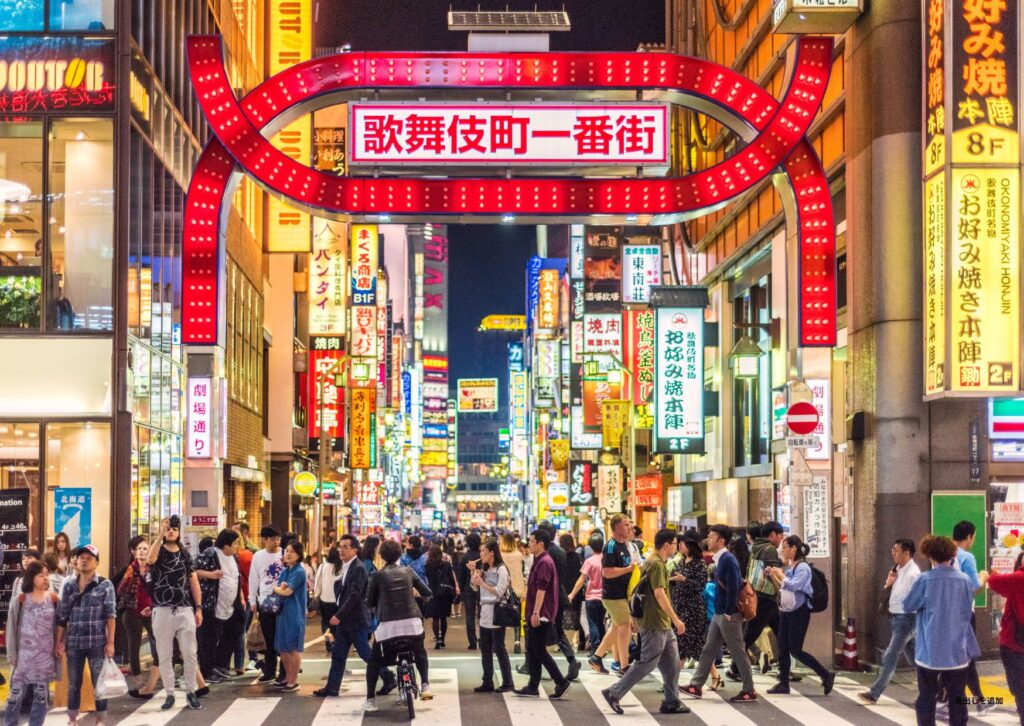
The Yakiniku (Japanese BBQ) culture rooted in Kabukicho, Shinjuku, Tokyo, is more than just a culinary trend. It is deeply intertwined with Japan’s post-war history. The origin of Yakiniku dates back to the turmoil following World War II, when first-generation Zainichi Koreans began procuring and cooking cheap cuts of beef and pork offal-items often considered “cast-offs” (Horumon)-in local black markets.[1]
This food culture took hold based on the strong foundation of the Zainichi Korean community, particularly around the Shinjuku area and adjacent to Kabukicho, evolving into a unique “stamina food” essential to the district’s vibrant nightlife.
Chapter 1: The Lineage of Long-Established Stores in Shinjuku’s Yakiniku Dawn
Even before Kabukicho matured into a full-fledged entertainment district, several long-established restaurants in the Shinjuku area had already established their dominance, laying the foundation for future commercial development.
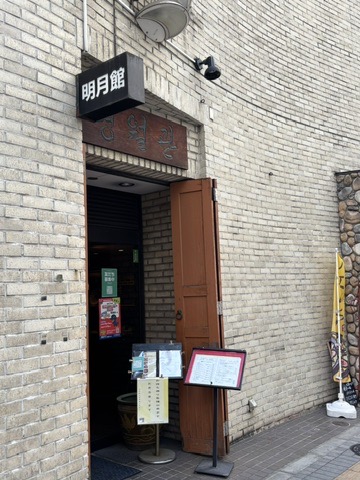
• Meigetsukan (Founded 1946):
Located in Shinjuku West Exit, Meigetsukan is cited as one of the “oldest Yakiniku restaurants in Tokyo”.[2] The fact that such a massive restaurant, spanning three floors and over 200 seats, was established so soon after the war highlights the immense underlying demand for meat and suggests the existence of a stable meat distribution route managed by the contemporary Zainichi Korean community.[2]
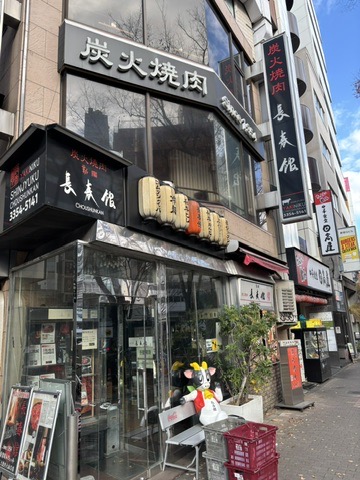
• Choshunkan (Founded 1954 – Showa 29):
Choshunkan also ranks among Tokyo’s oldest Yakiniku establishments, having started in 1954 in a small, four-table space in a building near Shinjuku South Exit.[3] Initially, its reputation grew among demanding taxi drivers working late hours.[3] This indicates that Yakiniku functioned not just as a luxury but as a vital “stamina meal” for the core segment of the night workforce, forming the prototype for the “night economy” that would later sustain Kabukicho’s Yakiniku industry.
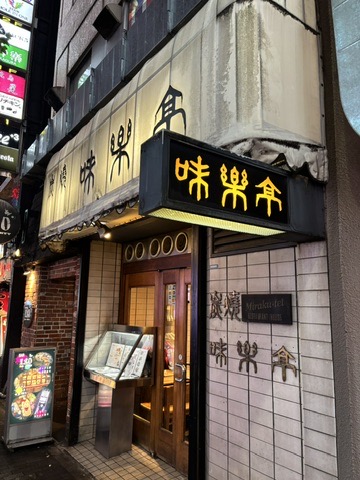
• Mirakutei: The Originator of Spicy Yakiniku:
Located on Kuyakusho-dori (City Hall Street), **Mirakutei** is a long-established restaurant with over 60 years of history, beloved in Kabukicho’s deeper areas and known as the “originator of spicy Yakiniku.” Its signature style of serving sweet and spicy marinade with customizable heat levels has long catered to the intense flavor preferences unique to this locale.
Chapter 2: Key Players Who Changed History: Koei and the Horumon Revolution
In the history of Kabukicho’s Yakiniku, the most significant structural change, which profoundly influenced the modern market, was the establishment of the specialized Horumon (offal) barbecue format by Koei Co., Ltd.
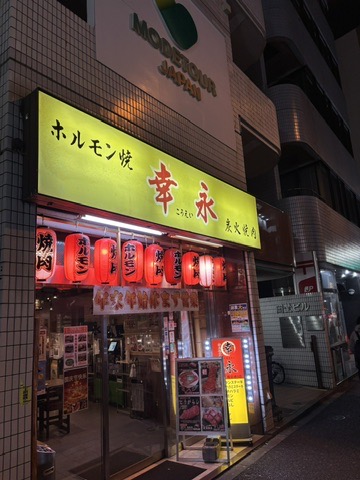
• Horumon Yaki Koei (Relaunched April 1996):
The restaurant was relaunched from the founder’s mother’s original kimchi and side dish store on Okubo Dori (Shokuan Dori).[4, 5] The massive hit of its signature dish, “**Goku Horumon**” (Extreme Horumon), revolutionized the industry by elevating offal-previously a side offering-to a main course, sparking the subsequent Horumon boom in Japan.[4]
• BSE Crisis and the Advantage of Specialization:
The BSE (Mad Cow Disease) crisis in September 2003 dealt a severe blow to the Japanese beef market.[5] However, specialized Horumon restaurants like Koei suffered relatively less damage. Since they had already earned customer trust before the crisis, their sales rebounded quickly.[5] Furthermore, Horumon likely functioned as an alternative choice for consumers avoiding red meat, decisively solidifying the status of offal specialists in the Kabukicho market.[5]
Chapter 3: Jojoen and the Establishment of the Luxury Yakiniku Market
Founded in 1976, Jojoen redefined Yakiniku, elevating it from mass cuisine to a “special occasion meal” through premium ingredients, meticulous service, and opulent interior design. Jojoen fully leveraged its luxury brand strategy within Kabukicho.
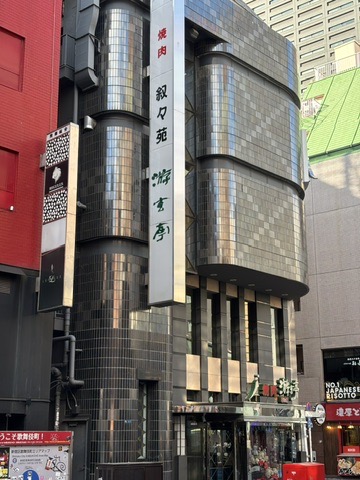
• Jojoen Yugentei Shinjuku: Located in the “Jojoen Building” in Kabukicho 1-chome, the “Yugentei” concept focuses on providing the highest quality ingredients and heartfelt hospitality, catering to the district’s high-value entertainment and hosting needs. The venue offers private rooms and party rooms equipped for up to 24 guests , serving expensive Kaiseki courses (e.g., Chateaubriand Course at 27,000 yen). With operating hours until 3:00 AM the following morning, it perfectly aligns with the core after-hours business of Kabukicho .
Jojoen’s success symbolizes the market’s maturation into two distinct poles: the “popular/specialized” Horumon stores (Koei) and the “luxury/hosting” Wagyu stores (Jojoen).
Chapter 4: Business Dynamics Unique to the Entertainment District and Diversification of the Luxury Route
The specific commercial environment of Kabukicho-the “Night Town”-has strongly influenced the business strategies and offerings of Yakiniku restaurants, driving the diversification of the luxury sector.
4.1 Diversification of the Luxury Wagyu Route
Yakiniku restaurants are integral to the nightlife ecosystem, serving as venues for “hosting” and “after-hours” gatherings for establishments like host and hostess clubs.
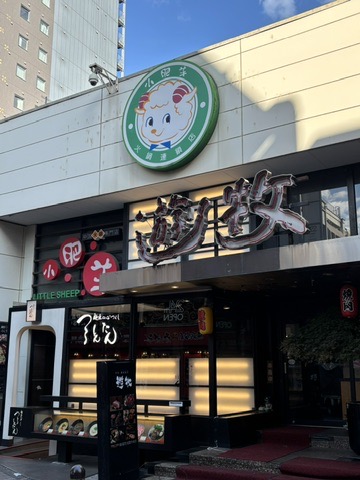
• Yuboku: Whole-Carcass Purchase of Yamagata and Yonezawa Beef:
**Yuboku**, ideally located three minutes on foot from Seibu Shinjuku Station, focuses on whole-carcass purchasing of premium Wagyu like Yonezawa and Yamagata beef. With late-night operations until 5:00 AM (L.O. 4:00 AM) , it has been popular for high-value banquets and catering to the night residents of Kabukicho since approximately a decade ago .
• Yakiniku Kurogo Kabukicho Store:
**Yakiniku Kurogo Kabukicho Store**, a specialist in A5 Rank Wagyu founded in Ikebukuro in 2008 , opened its Kabukicho location on November 5, 2015 . Operating until 5:00 AM the next morning, it remains deeply rooted in the nightlife economy while consistently offering high-quality Wagyu .
• Shabu-Jo and the Nightlife Food Culture:
While not Yakiniku, **Shabu-Jo**, a sister brand of Jojoen specializing in Shabu-Shabu and Sukiyaki, also contributes to Kabukicho’s luxury dining scene. Offering A5 Kuroge Wagyu and featuring private rooms , it is highly popular for expensive hosting and after-hours use by hostesses and hosts.[6]
4.2 Commercial Risks Unique to the Entertainment District
While Kabukicho offers high profit potential, it has historically struggled with unscrupulous “rip-off” practices. This environment strongly impacts trust in the dining sector.
Such problematic venues often employ tactics like “Name Sacrifice,” where they use misleading names similar to legitimate neighboring restaurants or famous chains [5], or “Address Laundering,” where they change their façade but continue illegal practices at the same registered location.[5] This commercial context actually elevates the relative value of established, trusted brands like Meigetsukan, Koei, and Jojoen, as customers seek reliability to mitigate risk.[5]
Chapter 5: Reorganization of the Modern Kabukicho Yakiniku Market
Since the 2020s, major urban redevelopment, notably the opening of the Tokyu Kabukicho Tower [7], has dramatically altered the district’s demographics. The Yakiniku market is now characterized by fierce competition and polarization.
• Extreme Polarization of Business Models:
The market is fragmenting into a low-price route targeting tourists and younger demographics (e.g., the relaunch of “Yakiniku Horumon Oideya” with all-you-can-eat options [8]) and a high-end specialization route focusing on quality and advanced cooking techniques (e.g., “Shinjuku Yakiniku Horumon Inoue 2nd Store” offering specialized dishes like Kuroge Wagyu Hitsumabushi and chilled Horumon ).
Kabukicho Yakiniku maintains its post-war roots as mass cuisine while having successfully navigated the waves of “premiumization” and “specialization” driven by key players like Jojoen and Koei. The market’s continuous evolution reflects the chaotic energy and commercial dynamism of Kabukicho itself.
List of Important Stores in and Around Kabukicho (Founding & Status)
| Store Name | Founding Year/Open Date | Location (Shinjuku Area) | Historical Significance/Notes | Current Status |
|---|---|---|---|---|
| Meigetsukan | 1946 | Shinjuku West Exit | One of the oldest in Tokyo. Large-scale establishment symbolizing post-war Yakiniku adoption. | Operating |
| Choshunkan | 1954 (Showa 29) | South Exit → Shinjuku 3-chome | One of the oldest in Tokyo. Grew in popularity supported by late-night workers (taxi drivers). | Operating (Relocated/Renovated) |
| Jojoen | 1976 | Shinjuku (Kabukicho/Halk, etc.) | Established the luxury Yakiniku brand. Deployed “Yugentei” in Kabukicho to meet high-end hosting and banquet needs. | Operating |
| Horumon Yaki Koei | 1996 (Relaunch) | Shokuan Dori Area | Key player who changed the history of Kabukicho Yakiniku, driving the Horumon boom with “Goku Horumon.” | Operating |
| Sumibiyaki Shinjuku Ryuen | March 1, 2003 | Deep Kabukicho (Near Host Clubs) | Strategically located to cater to the luxury hosting demands of the nightlife district. | Operating |
| Yakiniku Kurogo Kabukicho Store | Nov 5, 2015 (Kabukicho Store) | Kabukicho 2-chome | A5 Wagyu specialist founded in Ikebukuro (2008). Operates until 5 AM, meeting late-night demand. | Operating |
| Yuboku | Unknown (Long-established) | Kabukicho 2-chome | Whole-carcass purchase of Yamagata/Yonezawa Beef. Popular high-end Wagyu specialist operating until 5 AM. | Operating |
| Mirakutei | Over 60 years ago (Long-established) | Kabukicho (Near City Hall St.) | Known as the “originator of spicy Yakiniku.” Has operated in the deep entertainment district for years. | Operating |
| Shabu-Jo | Unknown | Kabukicho 2-chome | Jojoen’s sister brand (Shabu-Shabu/Sukiyaki). Private rooms make it popular for high-end hosting/after-hours use by hostesses. | Operating |
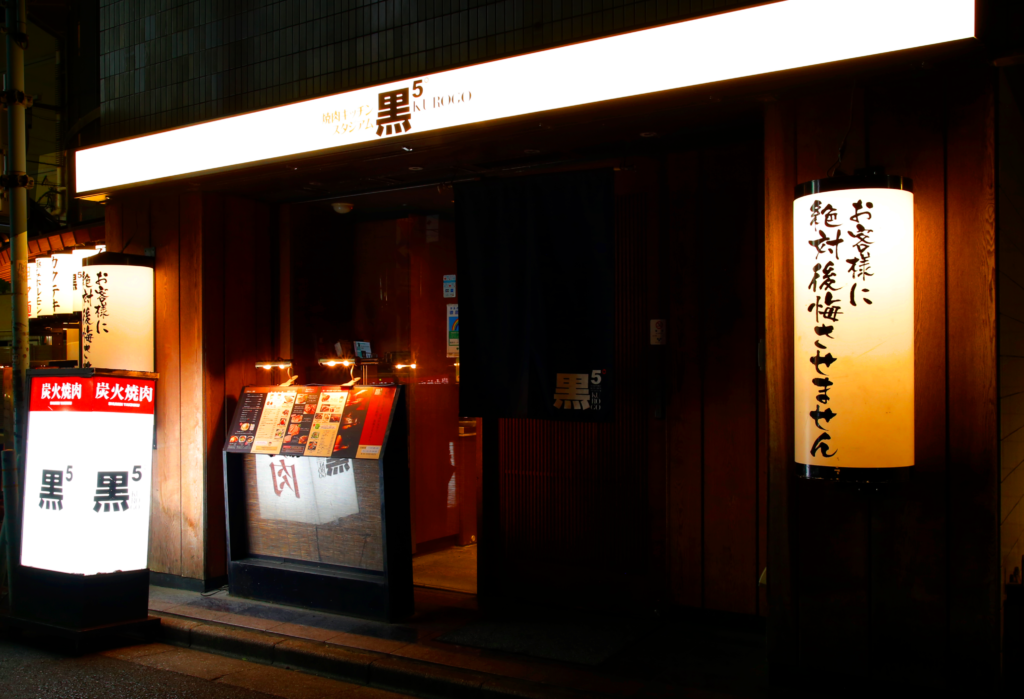
Wagyu Yakiniku Kuro5
IKEBUKURO Main Restrant
1F Shima 100 building ,2-46-3, Ikebukuro, Toshima-ku , Tokyo 171-0014
https://en.kuro5.net/restaurant/honten
Wagyu Yakiniku Kuro5
IKEBUKURO East Exit Restrant
2F Need Building, 1-42-16 Higashi-Ikebukuro, Toshima-ku, Tokyo 170-0013
https://en.kuro5.net/restaurant/higashiguchi
Wagyu Yakiniku KURO5
Kabukicho
1F Sankei Building, 2-21-4 Kabukicho, Shinjuku-ku, Tokyo
https://en.kuro5.net/restaurant/kabukicho
Official Instagram: @kuro5yakiniku

