



“So, should we start with Kalbi or Harami?”
Ideally, this is the first conversation you have when opening a menu at a Yakiniku restaurant.
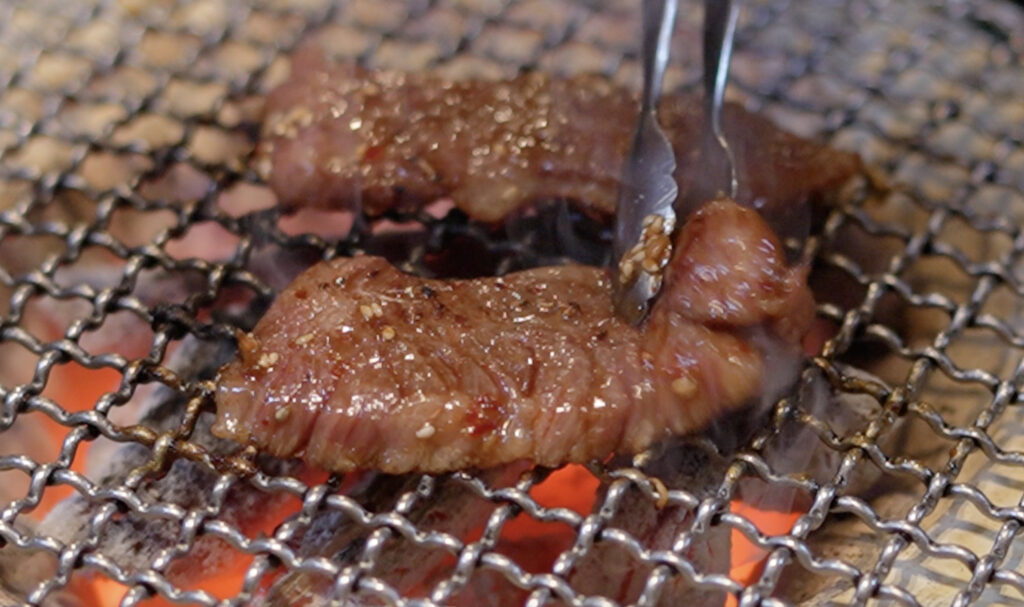
“Kalbi” (Short Ribs), the king of Yakiniku, and “Harami” (Skirt Steak), which has gained immense popularity in recent years.
While both are excellent choices that go perfectly with rice, surprisingly few people can clearly explain the decisive difference between the two.
“Somehow, Kalbi is fatty, and Harami is lighter?”
“I heard Harami is healthier, but is that true?”
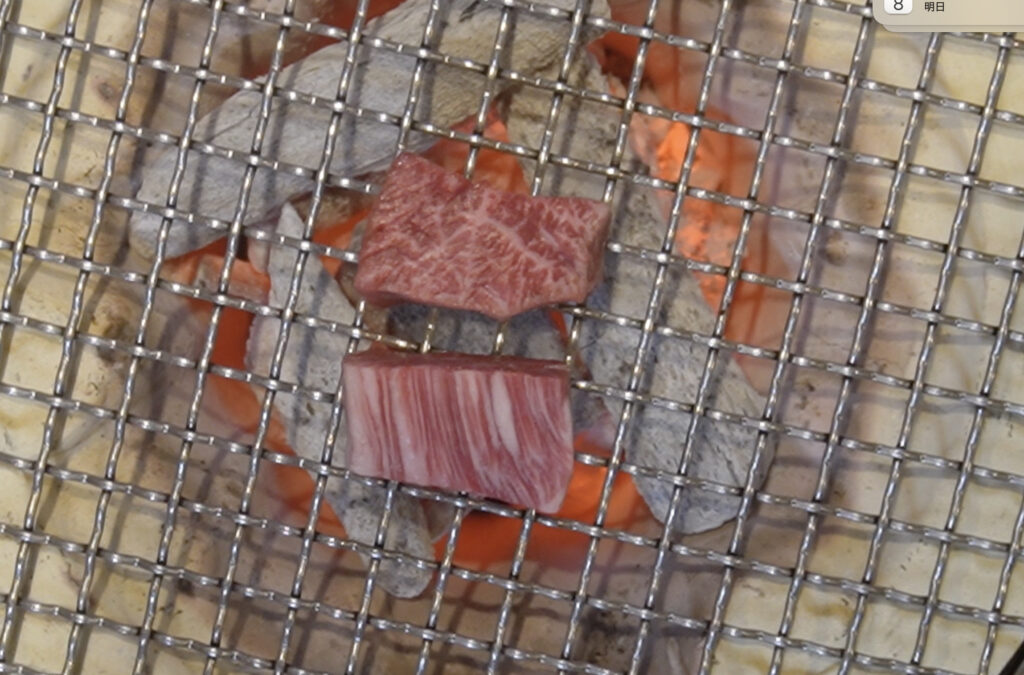
Actually, not only are the taste and fat content different, but these two belong to completely different “genres of meat.”
In this article, we will explain the differences between “Harami” and “Beef Bara” (generally served as Kalbi) from a professional perspective to make your Yakiniku experience even more delicious.
[Difference #1] The True Identity of the Cuts | A Big Wall Between “Meat” and “Offal”
They both look like red meat. However, in the classification used by butchers and experts, they are clearly distinguished.
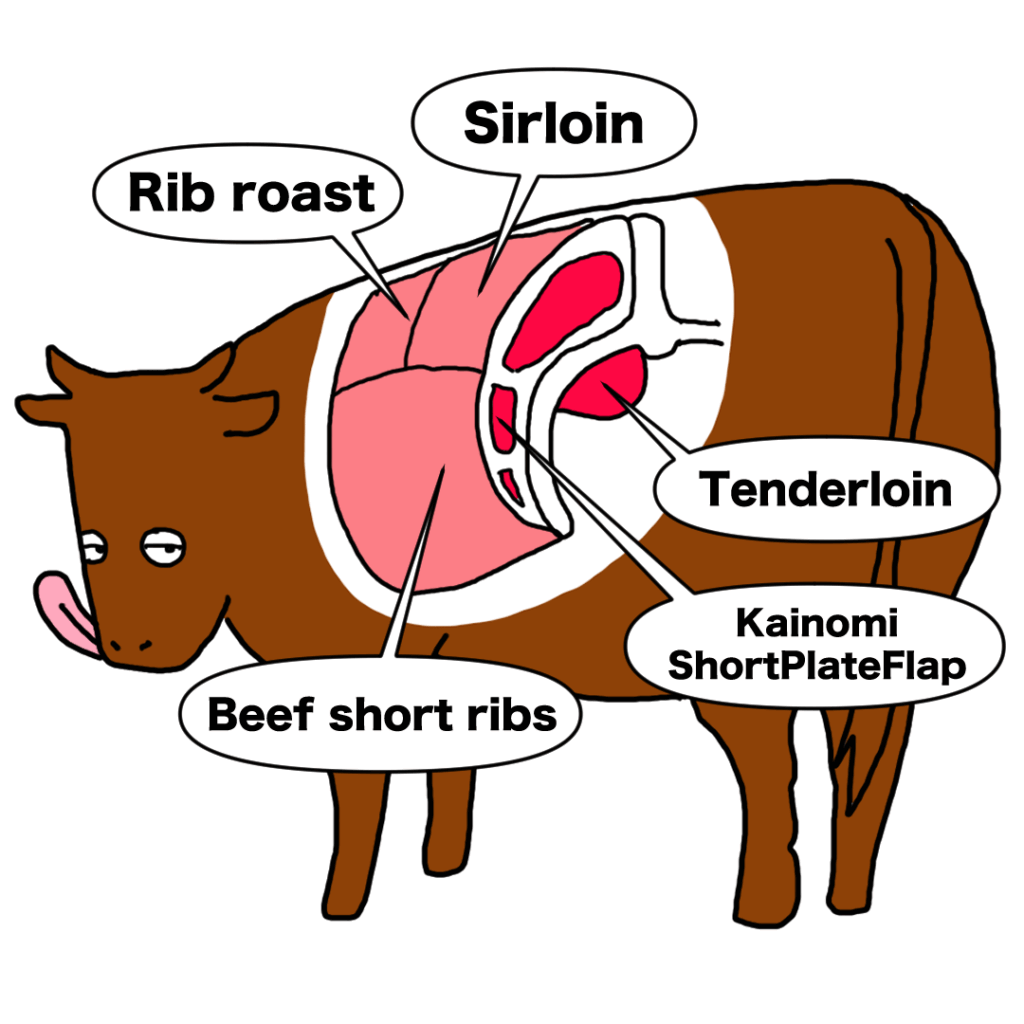
Beef Bara (Kalbi) is “Meat”
The beef “Bara” meat generally served as “Kalbi” comes from the stomach area (muscles around the ribs).
It is called “Bara” because it comes from the rib cage (Abara). Classification-wise, it is genuine “Boneless Meat” (Seiniku), just like Sirloin or Round.
Since it is a muscle that protects the body, it tends to accumulate fat, characterized by a rich, fatty umami.
Harami is “Offal” (Horumon)
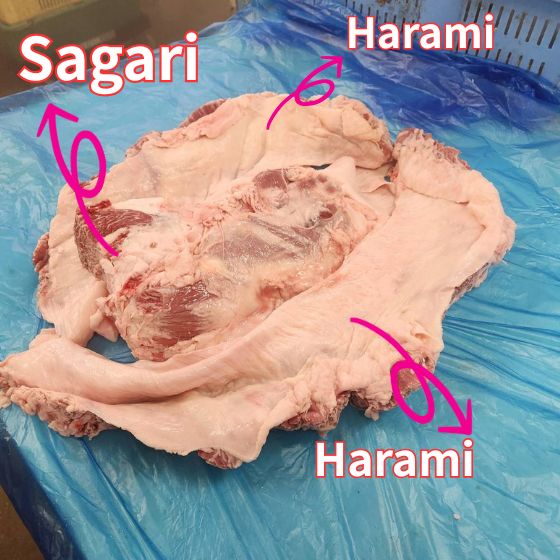
On the other hand, Harami is the muscle of the cow’s diaphragm.
The diaphragm is the part that moves every time the cow breathes. Classification-wise, it falls under “Offal” (Horumon/Variety Meat), just like Liver or Intestines.
Many people are surprised, asking, “Wait, Harami is offal!?” but it is true.
Because it looks exactly like red meat and doesn’t have a strong organ-meat flavor, it is treated like “meat.” However, it is technically a muscle derived from organs.
Harami’s unique “texture where fibers unravel” and “deep umami” are characteristics born from the fact that it is a muscle constantly moving for respiration.
[Difference #2] Taste and Texture | “Sweetness of Fat” vs. “Umami of Meat”
Since their origins are different, naturally, their tastes differ as well.
Knowing the personality of each cut allows you to order according to your mood that day.
The Appeal of Beef Bara (Kalbi): Explosive Fat
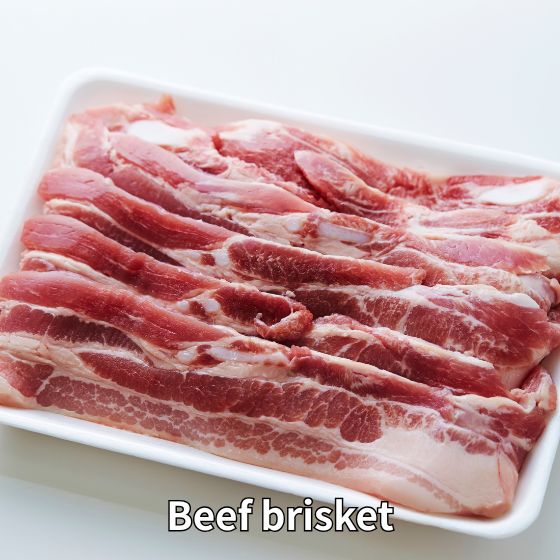
The charm of Beef Bara is, without a doubt, the “sweetness of the fat.”
Because it easily develops marbling (Sashi), the fat melts when cooked and spreads juicily in your mouth.
It pairs exceptionally well with sauce (Tare), giving you that intense satisfaction of “I’m eating Yakiniku!”
It is the best partner when you want to shovel down white rice or crave a punchy flavor.
The Appeal of Harami: Unraveling Texture and Meat Flavor
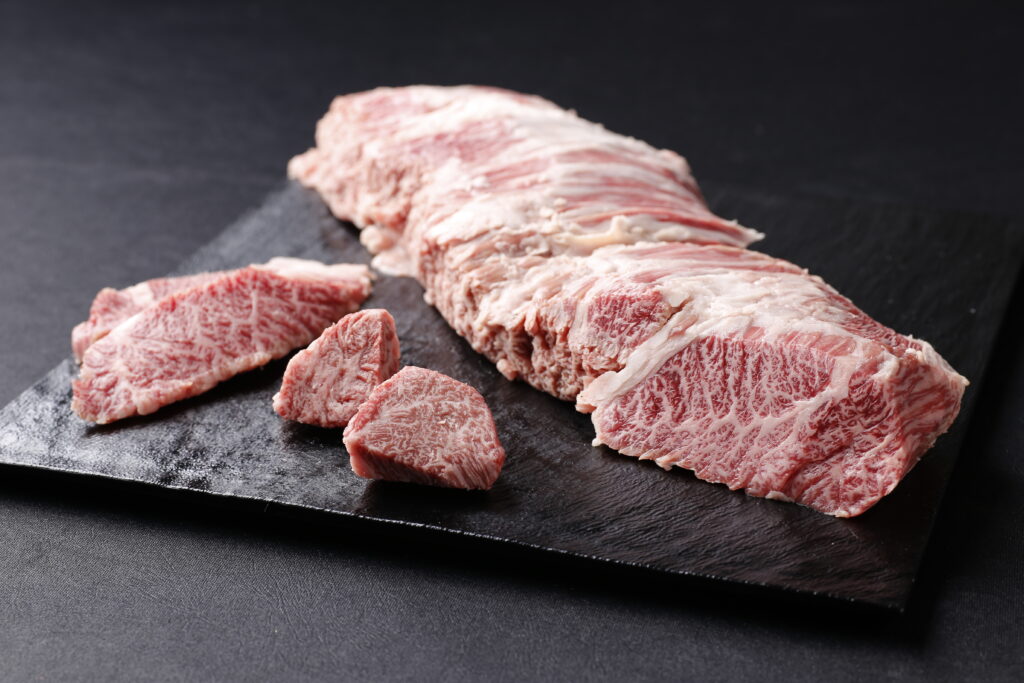
In contrast, the charm of Harami lies in its “depth of umami” and “great texture.”
While it has less of the heavy fat found in Beef Bara, it contains appropriate marbling, so it is never dry.
Its biggest feature is that the fibers are coarse and soft. When you chew, the fibers unravel, and the rich taste of the meat itself overflows.
Harami fulfills the sophisticated desire: “I’m not in the mood for heavy grease, but I want the juiciness of meat.”
[Difference #3] The Truth About Calories | Is Harami Really Healthier?
We often hear people say, “I’m on a diet, so I’ll skip the Kalbi and stick to Harami.”
Harami has a strong image of being healthy, but what is the reality?
The conclusion is that “there is no dramatic difference in calories themselves.”
Depending on whether it is imported beef or Wagyu, comparing calories per 100g reveals that Harami contains a surprising amount of fat, so it is not a low-calorie ingredient like chicken breast.
However, the “quality of the fat” is slightly different.
The fat in Beef Bara (Kalbi) melts easily, is rich, and plentiful. In contrast, Harami’s fat is nestled between muscles and tends to drip off moderately when grilled.
Also, since Harami has a rich flavor, there is the merit that you can feel satisfied even with a smaller amount.
Rather than just looking at “numerical calories,” it is a fact that many people feel Harami is gentler on the stomach in terms of “not feeling heavy.”
Pro Tips! How to Grill Each Cut Deliciously
If the characteristics of the parts are different, the delicious way to grill them also changes.
When nurturing your meat on the grill, try to be conscious of the following points.
For Beef Bara (Kalbi): “Drop the Fat and Make it Crispy”
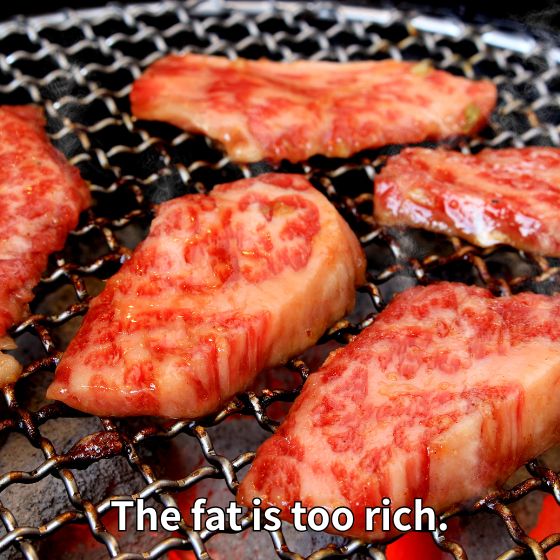
With fatty Beef Bara, if you grill it too much, the fat drops and causes flare-ups (a “fire” state), causing soot to stick and ruining the flavor.
The point is to let the excess fat render while grilling the surface until crispy and fragrant.
The best time to eat is when the fat becomes transparent and the surface looks glossy, without overcooking the inside.
For Harami: “Grill Thoroughly to Loosen Fibers”
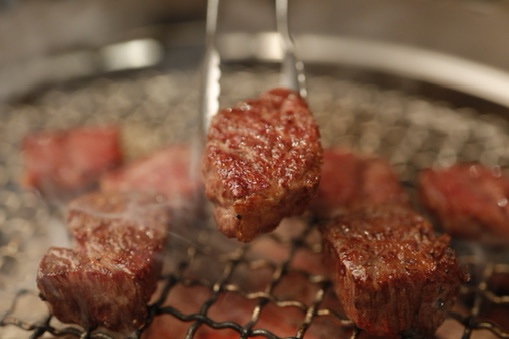
If Harami is too rare, a unique raw texture may remain.
We recommend searing the surface firmly, then grilling it slowly to cook the inside, almost as if rolling it.
When the internal temperature of the meat rises, the collagen fibers loosen, becoming surprisingly soft.
Please grill it lovingly, turning it over many times so as not to burn it.
Kuro5’s Commitment | “That’s Why We Don’t Use ‘Bara’ for Our Kalbi”
So far, we have talked about general “Beef Bara (Kalbi)” and “Harami.”
Finally, please allow us to share a little about the commitment of “Yakiniku Kuro5.”
Generally, if you order “Kalbi” at a Yakiniku restaurant, “Beef Bara” (as explained above) will be served.
However, the “Kalbi” on Kuro5’s menu is not Beef Bara.
Actually, at Kuro5, we use “Rib Roast” (Ribulose) as our Kalbi.
Why Rib Roast Instead of Bara?
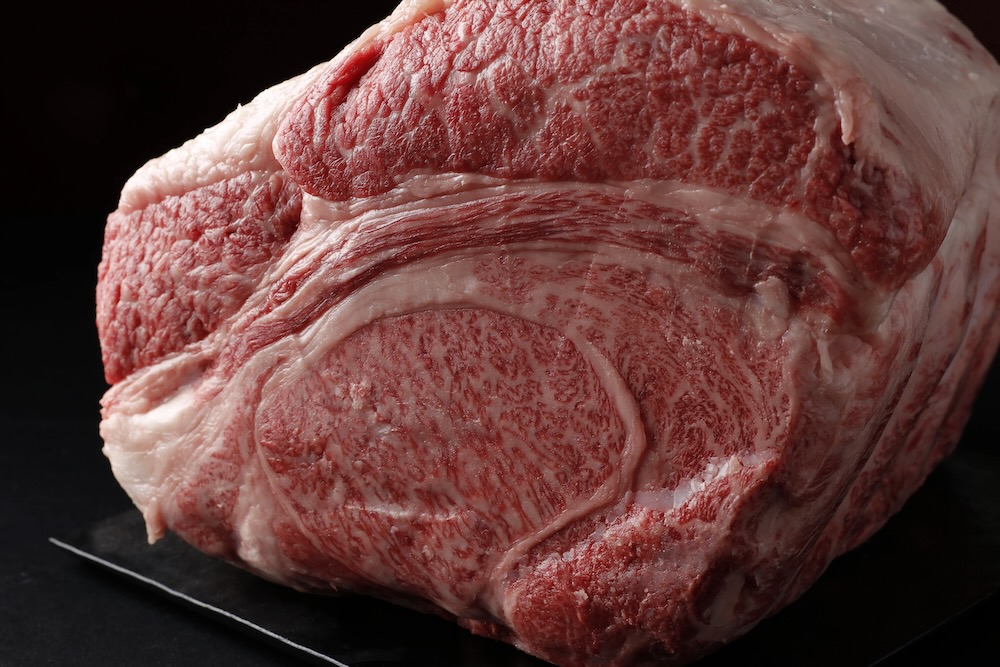
At the time of our founding, we thought:
“Wagyu Bara meat is certainly delicious, but isn’t the fat too strong to eat many slices?”
“We want people to enjoy Yakiniku deliciously until the very end without getting a heavy stomach.”
That is why we chose the high-grade cut “Rib Roast,” which is more refined than Bara meat and has a perfect balance of red meat and fat.
Kuro5’s Kalbi has melt-in-the-mouth fat sweetness, yet the aftertaste is surprisingly light.
It is our greatest pride that customers who said, “I graduated from Kalbi because it’s too heavy,” smile and say, “I can eat as much as I want of this Kalbi!”
An Extraordinary Love for Harami
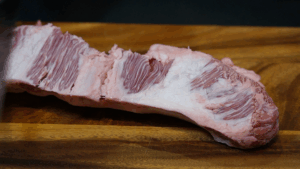
And then, Harami.
At Kuro5, we also handle “Kuroge Wagyu Harami” (limited quantity), which is extremely difficult to procure.
Cut thickly, it is grilled to perfection right in front of the customer by our staff in a “Full Attend” style.
Grilled slowly with the far-infrared rays of charcoal and turned over many times, the Harami releases a cascade of juicy meat juices the moment you bite into it.
It is an experience that fills your mouth with happiness, leaving no room to think about “differences from Beef Bara.”
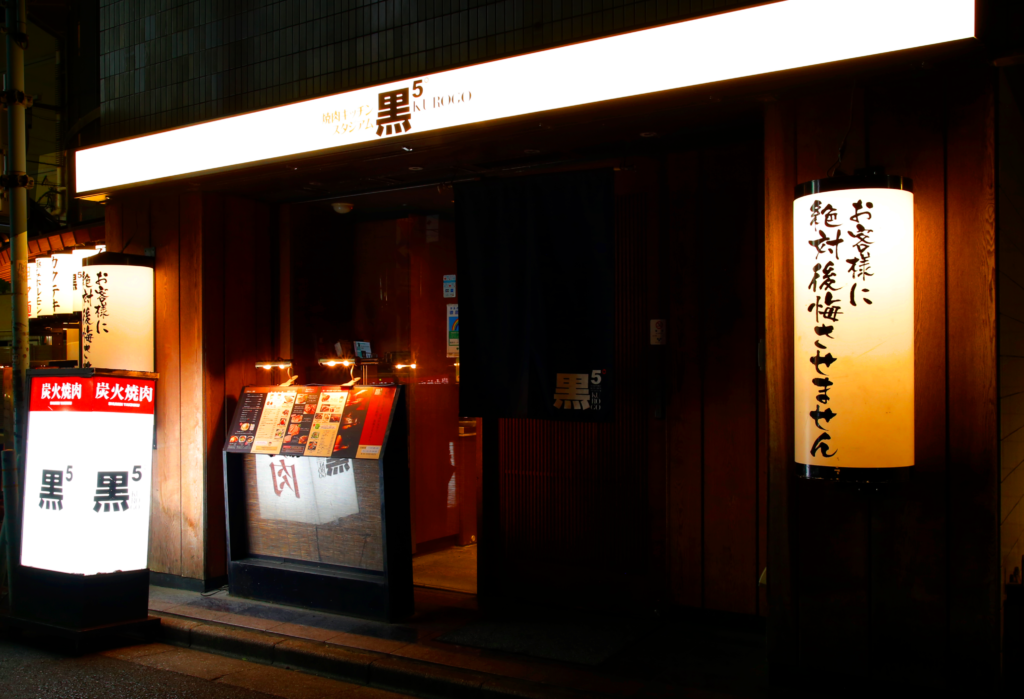
Please come and taste it once at our Ikebukuro or Kabukicho locations.
Wagyu Yakiniku Kuro5
IKEBUKURO Main Restrant
1F Shima 100 building ,2-46-3, Ikebukuro, Toshima-ku , Tokyo 171-0014
https://en.kuro5.net/restaurant/honten
Wagyu Yakiniku Kuro5
IKEBUKURO East Exit Restrant
2F Need Building, 1-42-16 Higashi-Ikebukuro, Toshima-ku, Tokyo 170-0013
https://en.kuro5.net/restaurant/higashiguchi
Wagyu Yakiniku KURO5
Kabukicho
1F Sankei Building, 2-21-4 Kabukicho, Shinjuku-ku, Tokyo
https://en.kuro5.net/restaurant/kabukicho
Official Instagram: @kuro5yakiniku

