Walking into a Yakiniku restaurant, the scent of charcoal and searing meat greets you instantly. It’s the signal that a good night is about to begin. You start with the classic Tan-Shio (Salted Tongue), move on to the kings of red meat like Kalbi and Loin, and everything is going according to plan.
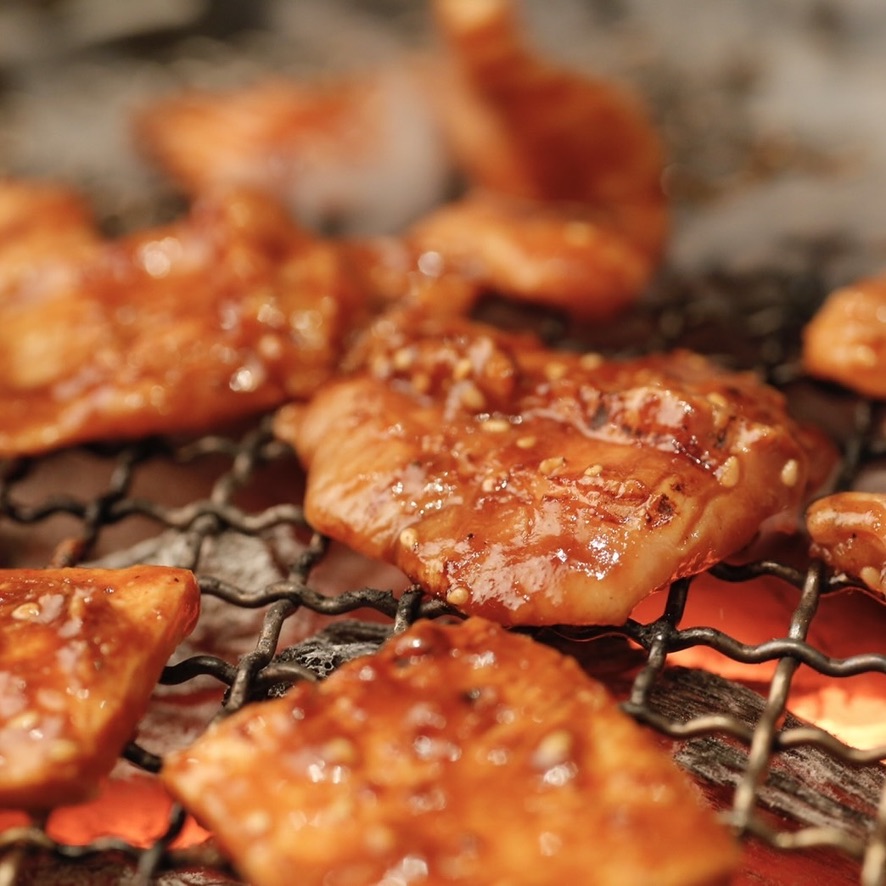
But then, as the meal enters its middle phase, you hit a crossroads. You find yourself staring at the “Offal” (Horumon) section of the menu.
“Do I want the explosion of rich fat from Hormon to pair with my rice?”
“Or do I want the crispy, addictive texture of Mino to sip my drink with?”
These two are the titans of what we call “White Meat” in the Yakiniku world. While both are essential to the culture, their personalities are complete opposites. Hormon shakes your brain with its sweet, melting fat, while Mino impresses the connoisseur with its refined, deep texture. Understanding the difference between these two will make your Yakiniku experience infinitely more entertaining.
In this article, we’ll dig deep into the identities of “Mino” and “Hormon” (Small/Large Intestines) and explore why they are the perfect partners for both alcohol and rice. By the time you finish reading, you’ll likely be opening your phone to book a table.
1. What is Mino? The “Shellfish-like” Texture Perfect for Drinking
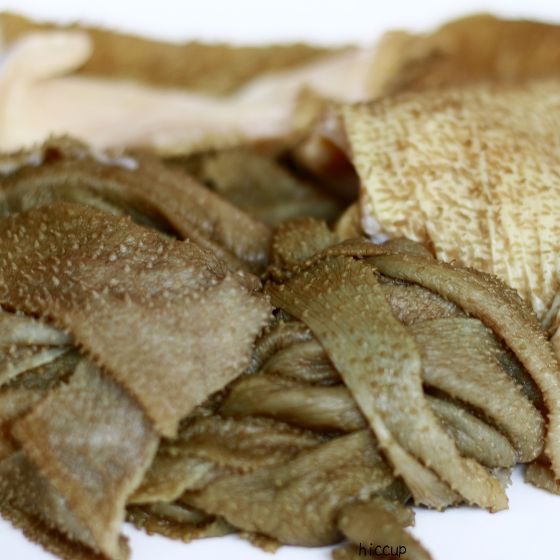
Let’s start with the heavyweight of the white meat world: Mino. Among Yakiniku experts, there is a saying: “It begins with Mino and ends with Mino.” That is how deep this cut goes.
The Strong Muscle of the “First Stomach”
Mino refers to the first of a cow’s four stomachs, known as the Rumen. Cows are ruminants, meaning they constantly digest tough grass. To do this, the first stomach works hard to churn and grind the food.
Imagine a stomach that works out every day. Naturally, the muscle becomes incredibly strong. That unique, crisp—almost crunchy—texture is proof of a healthy cow. By the way, the name “Mino” comes from its resemblance to a traditional Japanese straw raincoat, also called a “Mino.” The naming sense of our ancestors is quite poetic, isn’t it?
The Difference Between Regular Mino and “Jo-Mino” (Superior Mino)
On the menu, you will often see “Jo-Mino” (Superior/Upper Mino). Is this just a fancy rank? Not quite.
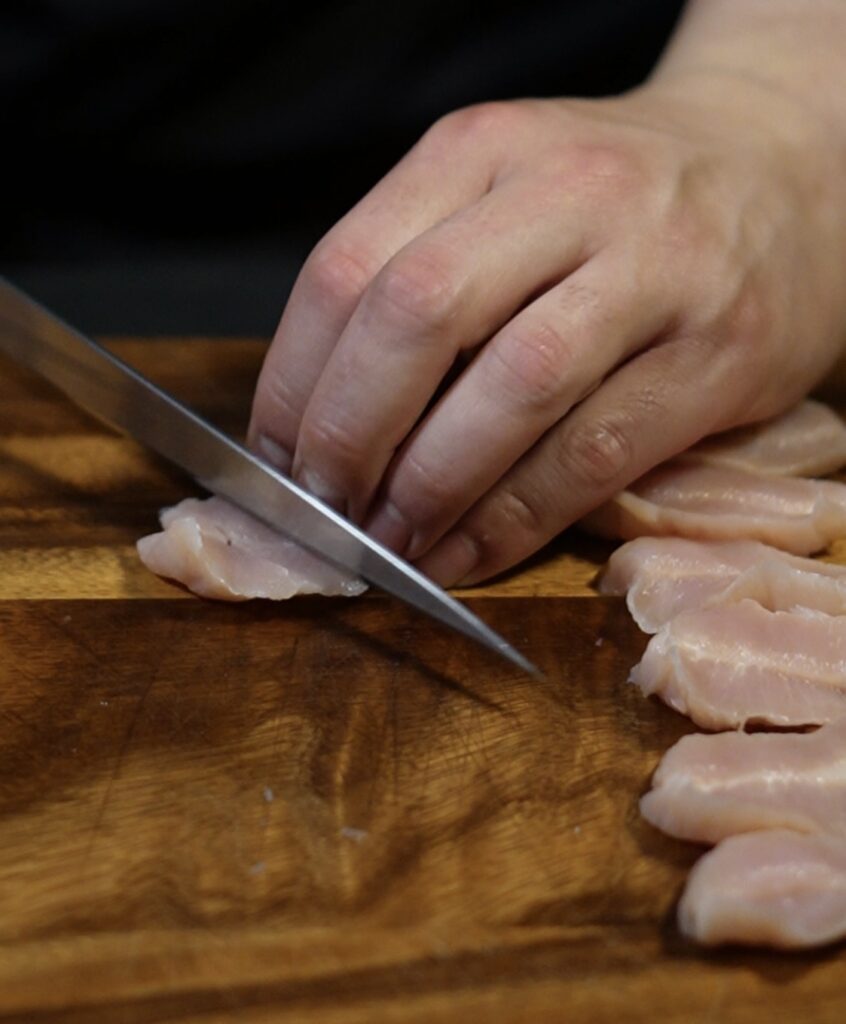
This isn’t just about grading. Jo-Mino refers specifically to the thickest, central part of the wall, sometimes called the “Mino Sandwich,” which contains a layer of sweet fat between the muscles. The amount available from a single cow is very limited.
While regular Mino has a harder, chewier texture, Jo-Mino is surprisingly tender. When sliced correctly by a chef, it bites through cleanly. It’s often compared to the texture of a high-quality scallop. If you see “Jo-Mino” on the menu, take it as a sign to order immediately.
A Clean Taste that Loves Alcohol
The greatest feature of Mino is that it lacks the strong “gamey” smell often associated with organ meats. It is clean and mild, making it a versatile partner for drinks.
Salted Mino × Lemon Sour / Highball
Lightly grilled with salt and sesame oil. Squeeze a little lemon on it and pop it in your mouth. The savory, almost oceanic flavor spreads with a satisfying crunch. Wash it down with a cold, carbonated Lemon Sour or Highball. Because it isn’t oily, your palate is constantly reset, creating a dangerous loop where you can drink forever.
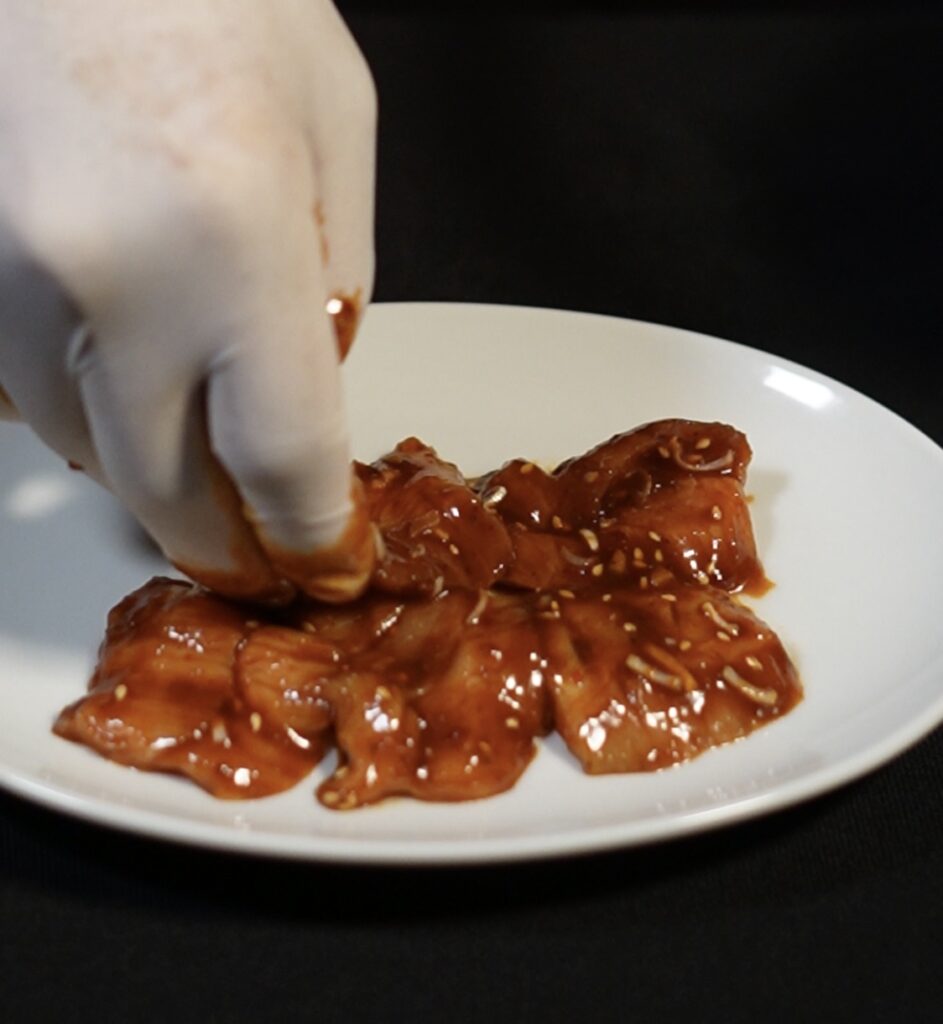
Miso Mino × Red Wine / Shochu
On the other hand, Mino marinated in rich Miso sauce is a different beast. The aroma of slightly charred miso calls for a full-bodied Red Wine or Shochu on the rocks. The more you chew, the more flavor comes out. This is truly Yakiniku for adults.
2. What is Hormon? The “King of Fat” that Demands Rice
In the opposing corner, we have the King of Fat: Hormon. Generally, when you order “Hormon” at a Yakiniku restaurant, you are served Small Intestine (Copchan) or Large Intestine (Shimacho).
The Entertainment of Fat: Small Intestine (Copchan)
This is the cut most commonly served as simply “Hormon.” It is also known as “Marucho” when served in its tubular shape. Its defining characteristic? The overwhelming amount of sweet fat.
The moment you place it on the grill, the fat sizzles and drops onto the charcoal, sending up a pillar of fire. That visual excitement is part of the charm. The fat that melts in your mouth is like a natural sauce—rich, creamy, and addictive.
Balance of Chew and Umami: Large Intestine (Shimacho)
Shimacho (Striped Intestine) is named for its striped appearance. Compared to the small intestine, it has less fat and a thicker skin (mucosa).
It offers a perfect balance of that signature “chewy” texture and moderate fatty sweetness. It’s loved by those who say, “I want the flavor of Hormon, but the small intestine is a bit too heavy for me.”
The Magic that Stops Neither Rice nor Beer
Hormon is “guilty” because it refuses to choose between rice and alcohol. It demands both.
First, let’s talk about rice. You take a piece of grilled Hormon, dip it heavily in the sauce, and “bounce” it once on your bowl of white rice. This ritual is the highlight of Yakiniku. Eating the sauce-soaked rice with the rich fat is perfection.
But the true essence of Hormon lies in the wash-down. Taking that rich, oily mouthfeel and flushing it away with an ice-cold draft beer. The bitterness and carbonation of the beer reset the heaviness of the fat, tightening your throat and preparing you for the next bite. This “Fat × Beer” cycle is the engine that generates energy for tomorrow.
3. Which One Are You Tonight?
Still undecided? There is no wrong answer. The best choice depends on your mood, your energy level, and what you are drinking.
Recommendations for “Team Mino”
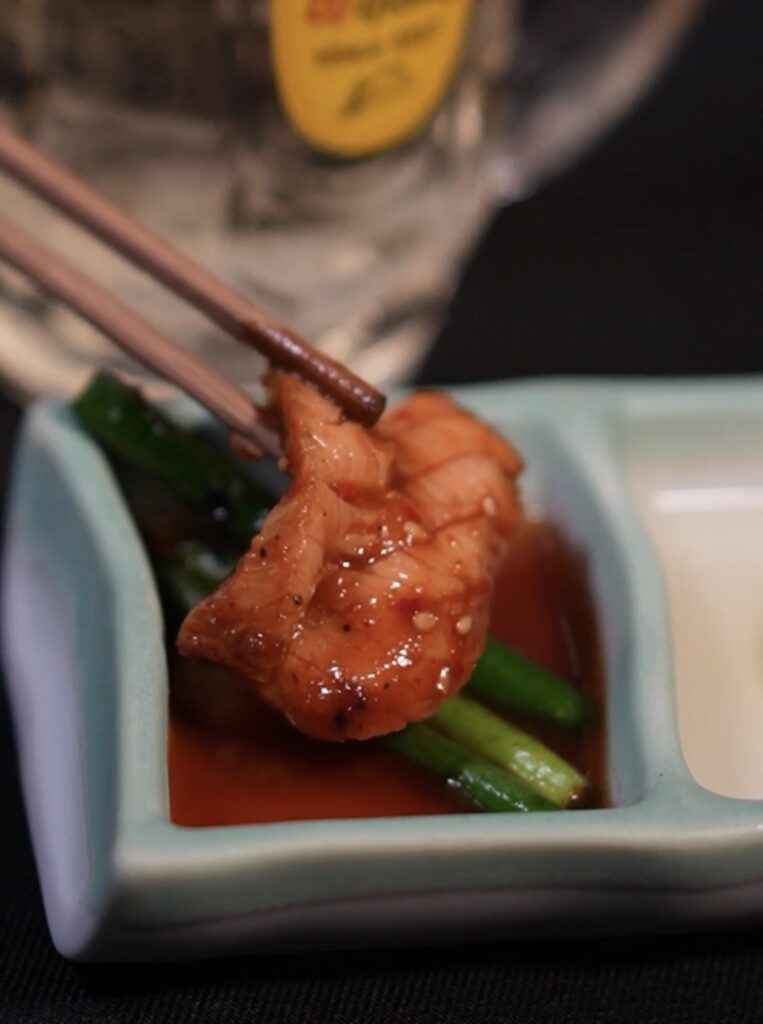
* You want to pace yourself for a second venue (bar hopping).
* You are switching from beer to Sake or Wine.
* You want something light and healthy.
* You are a “texture fetishist” who enjoys the act of chewing.
Mino is high in protein, low in calories, and rich in Vitamin B12. It’s the perfect ally for a guilt-free Yakiniku night.
Recommendations for “Team Hormon”
* You want to spoil yourself today.
* You are tired from work and need a power charge.
* You want to drink Draft Beer or Hoppy aggressively.
* You believe “Yakiniku is nothing without Rice!”
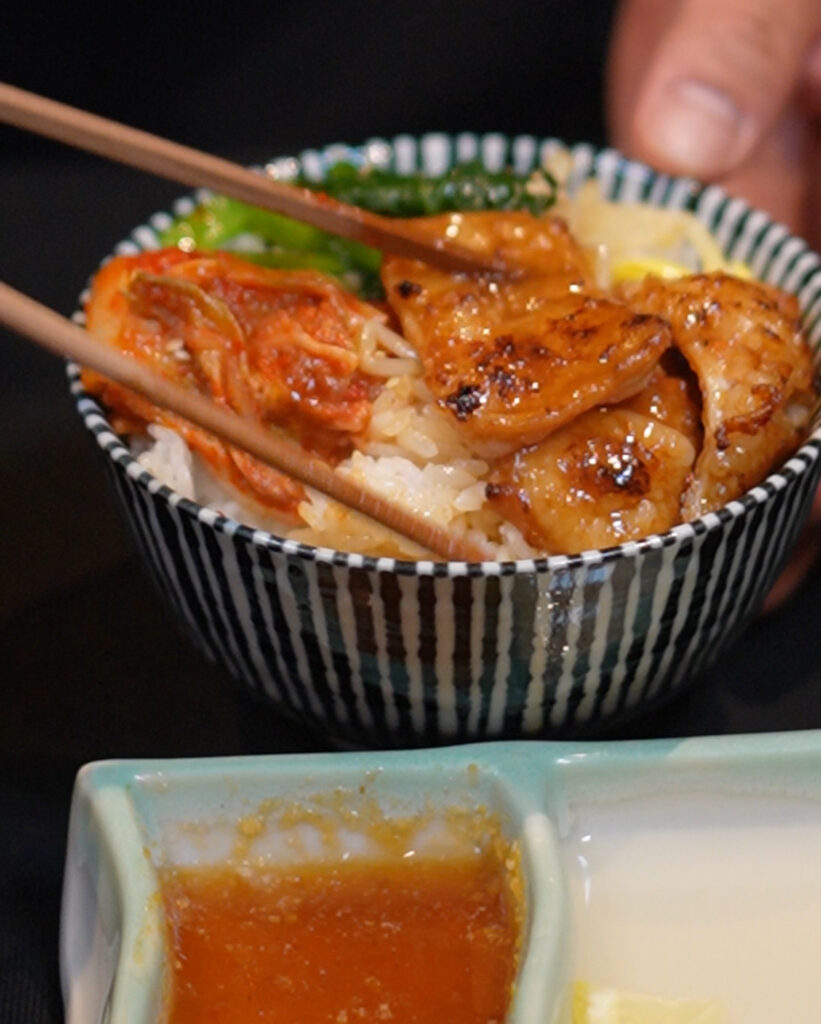
The lipids in Hormon are a source of energy, and the collagen responsible for its texture is abundant. When you need stamina, choose Hormon without hesitation.
4. The Art of Grilling: Why “Fat First” is Correct
Grilling offal is an art form. While many textbooks say “start with the skin,” we at Kuro5 believe in the opposite.
The “Fat First” Philosophy
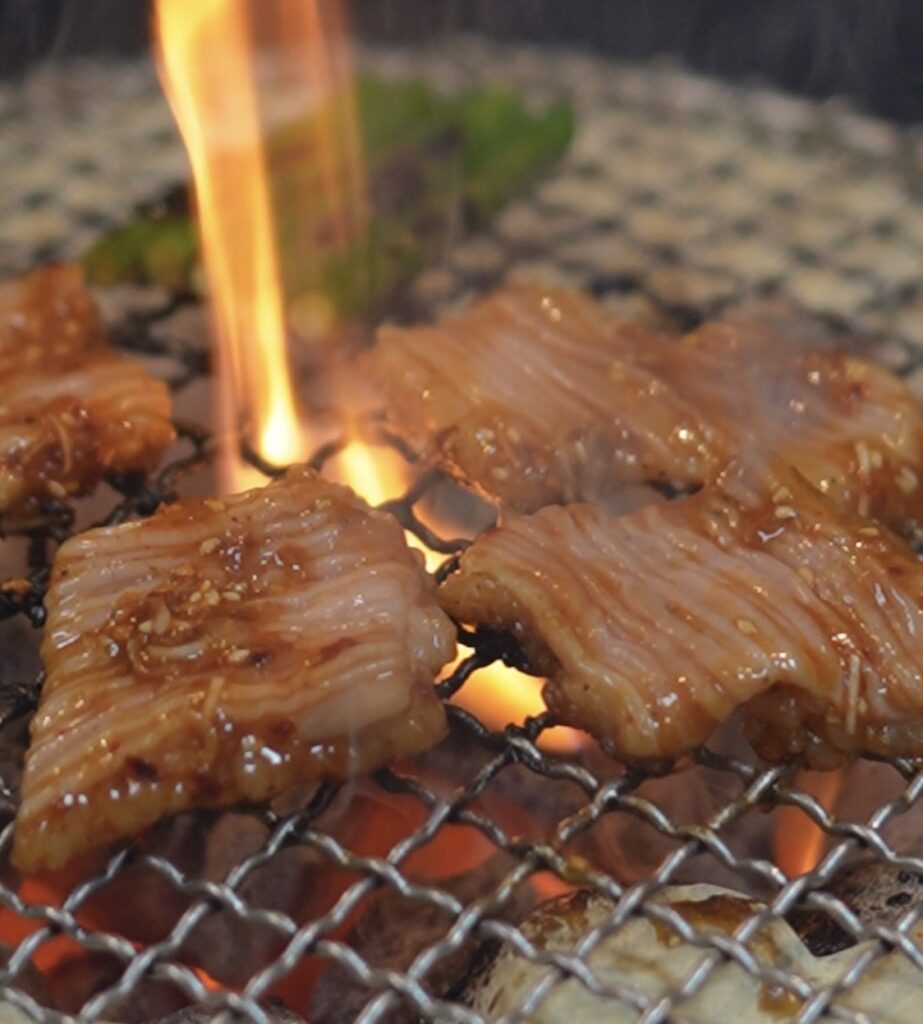
“Grill the fat side first.”
This is the secret to unlocking the true potential of high-quality Hormon. The fat in premium Wagyu offal is pure Umami. If you start with the skin and grill slowly, that precious fat often melts away and drips down before it can be enjoyed. What a waste!
By placing the fat side directly on the high heat of Bincho charcoal first, we sear the surface instantly. This creates a crispy, caramelized coating that locks the sweet juices inside. The result? A crispy exterior and a melting, juicy interior.
Why “Full Table Service” Matters
“But if I grill the fat first, won’t it cause a huge fire and burn?”
Exactly. That is why this technique is so difficult for customers to do alone. And that is why Kuro5 insists on “Full Table Service” (We grill for you).
Our staff are experts at managing the fire. We know exactly how to sear the fat without burning it, and how to control the flare-ups. You don’t need to worry about “When do I eat this?” We will serve it to your plate at the exact moment of perfection.
5. Summary: The Depth of Yakiniku Lies in the Offal
If cuts like Kalbi and Loin are the “Flowers” of Yakiniku, then Mino and Hormon are the “Roots.” They provide the depth and culture.
Finding your favorite texture, your preferred grilling level, and your perfect pairing changes the meal from simple eating to an intellectual experience.
Experience the Best “White Meat” at Kuro5
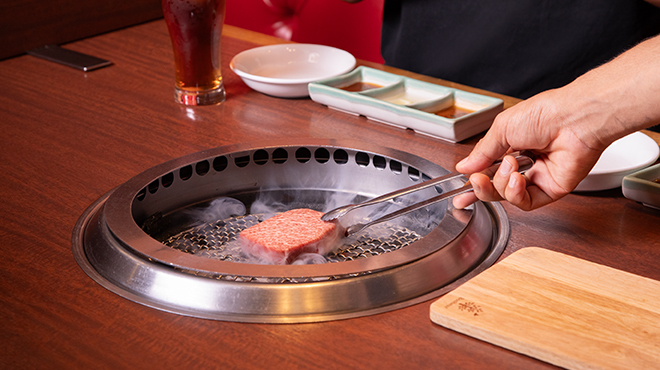
If you are looking for the true taste of offal in Ikebukuro or Kabukicho, please visit Yakiniku Kuro5.
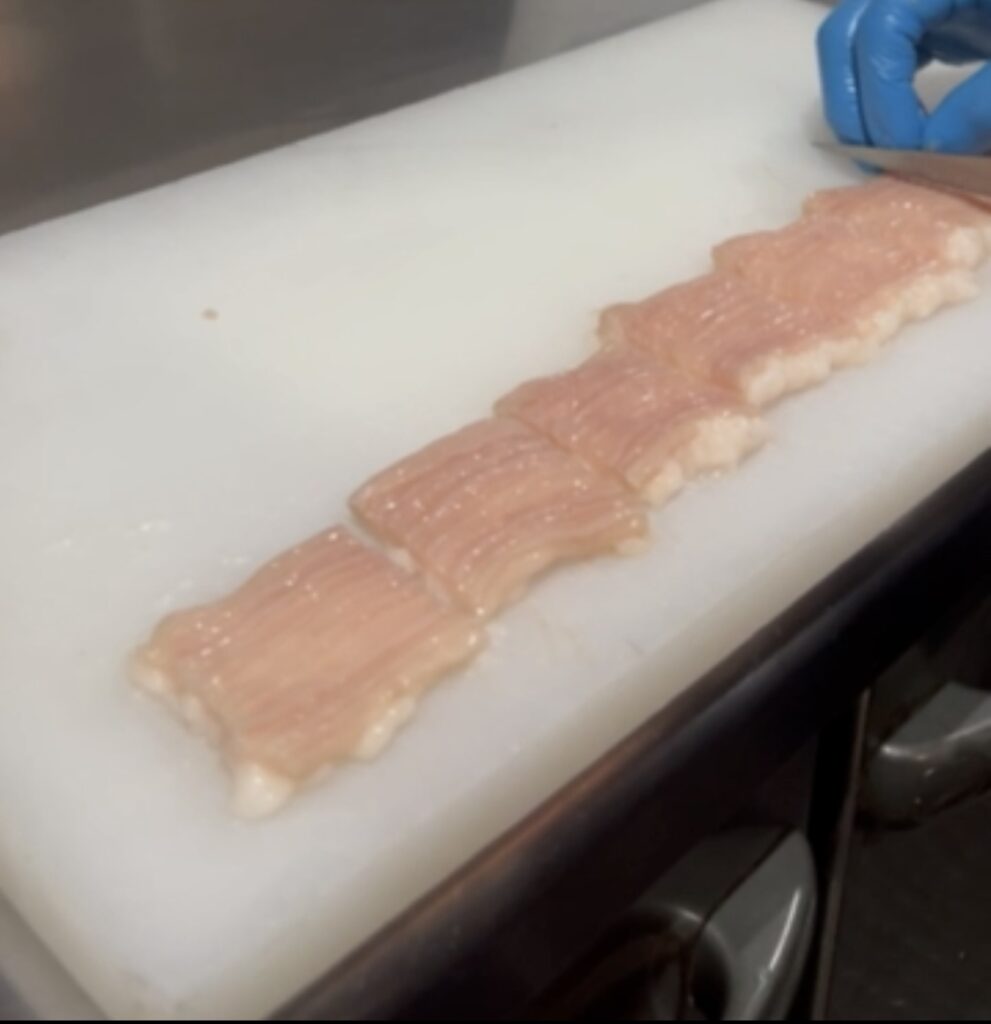
We source A5-rank Wagyu and apply uncompromising preparation techniques. For offal like Mino and Hormon, freshness and preparation are everything. We promise a clear taste with zero odor and a texture perfected by hidden knife cuts.
Most importantly, Kuro5 is famous for its “Full Table Service” style.
We use the challenging “Fat First” technique to maximize the flavor of the Hormon. Crispy skin, sweet fat, crunchy Mino—we create the perfect bite right in front of your eyes.
Come taste the “Knowledge of Yakiniku.” The ultimate pairing for your beer and rice is waiting for you.
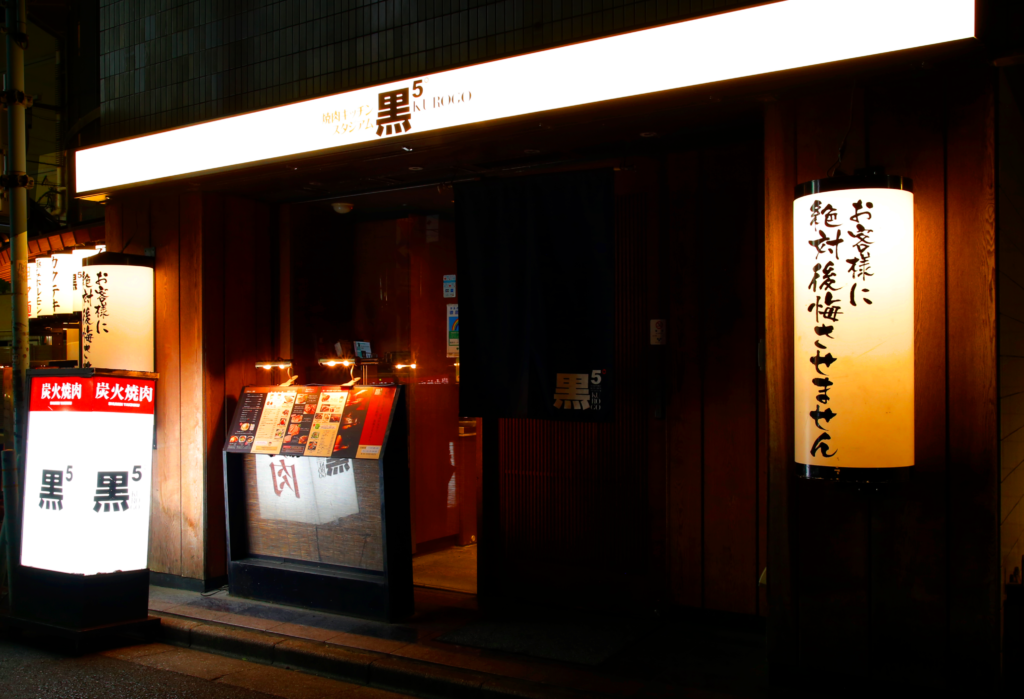
Wagyu Yakiniku Kuro5
IKEBUKURO Main Restrant
1F Shima 100 building ,2-46-3, Ikebukuro, Toshima-ku , Tokyo 171-0014
https://en.kuro5.net/restaurant/honten
Yakiniku Kuro5 Ikebukuro Honten (Main Store)
Address: Cima 100 Bldg 1F, 2-46-3 Ikebukuro, Toshima-ku, Tokyo 171-0014
Access: 5 min walk from JR Ikebukuro Station West Exit
Hours: 17:00 – 24:00 (L.O. 23:30)
Open Everyday
Yakiniku Kuro5 Ikebukuro East Exit
Address: Need Bldg 2F, 1-42-16 Higashi-Ikebukuro, Toshima-ku, Tokyo 170-0013
Access: 5 min walk from JR Ikebukuro Station East Exit
Hours: 17:00 – 24:00 (L.O. 23:00)
Open Everyday
Yakiniku Kuro5 Kabukicho
Address: Sankei Bldg 1F, 2-21-4 Kabukicho, Shinjuku-ku, Tokyo
Access: 5 min walk from Seibu-Shinjuku Station / 7 min walk from Shinjuku-Sanchome Station
Hours: 18:00 – 5:00 Next Day (L.O. 4:00)
Open Everyday

