
Table of Contents
- 1. Gas vs. Charcoal: The Secret of the Flavor Difference Everyone Feels
- 2. The King of Heat Sources: Why Kuro5 Insists on “Binchotan” Charcoal
- 3. Dual Infrared Radiation: The Science of Sealing Juices and Grilling to Plump Perfection
- 4. Dry Heat with Zero Water Vapor: The “Moisture Science” That Sets Charcoal Apart from Gas
- 5. The Magic of “Smoky Aroma” Created by Dripping Fat
- 6. Unleashing 120% of Charcoal’s Power: Kuro5’s Tableside “Yaki-Bugyo” Grilling Service
- 7. Welcoming You Tonight with the Finest Charcoal and Wagyu
Gas vs. Charcoal: The Secret of the Flavor Difference Everyone Feels
Hello everyone. This is Kuro5’s Sondo.
For all meat lovers, dining at a yakiniku restaurant is an irreplaceable moment of bliss. And one of the most critical elements that determines the final taste of your grilled meat is the “heat source” used to cook it. Modern yakiniku shops generally fall into two categories: those that grill over gas roasters and those that grill over real charcoal.
“Somehow, meat grilled over charcoal just tastes better than gas…”
“I love that signature charcoal-grilled aroma and the incredibly plump texture…”
Many of our guests feel this difference intuitively. However, very few can explain exactly why grilling over charcoal changes the taste so dramatically. In reality, this “flavor difference” is not a psychological trick or a matter of ambiance; it is a physical and chemical reality backed by solid scientific evidence.
The energy characteristics of the heat emitted by charcoal, the chemical substances produced during combustion, and the reactions that occur when meat fat drips onto the hot embers all play a role. These phenomena intertwine with high precision to deliver a grilled finish that gas fire can never replicate. Today, I would like to take a scientific look behind Kuro5’s commitment to charcoal grilling.
The King of Heat Sources: Why Kuro5 Insists on “Binchotan” Charcoal
Not all charcoal is created equal. The inexpensive mangrove charcoal or soft black charcoal often used for home barbecues lights easily but burns at lower, unstable temperatures while producing a lot of soot, ash, and bitter tar compounds.
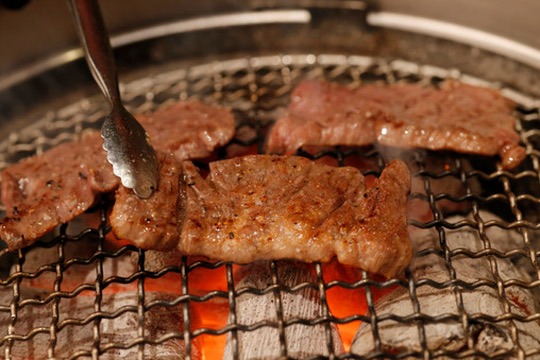
In contrast, Kuro5 exclusively uses “Binchotan” (Japanese white charcoal), widely considered the absolute pinnacle of charcoal.
Binchotan is made by carbonizing extremely dense Ubame oak logs at temperatures exceeding 1,000 degrees Celsius. This intense production process burns away virtually all impurities, leaving behind a block of nearly pure carbon. Consequently, Binchotan itself produces absolutely zero smoke or unpleasant odor when burning.
Furthermore, Binchotan burns at exceptionally high temperatures. When it reaches a stable, glowing ember state (known as okibi), the surface temperature of the charcoal reaches 800 to nearly 1,000 degrees Celsius. Maintaining this intense, steady heat without fluctuation provides the ideal environment for cooking meat. This clean, odorless, high-temperature heat source is the first essential step in drawing out the pure, unadulterated flavor of premium Wagyu.
Dual Infrared Radiation: The Science of Sealing Juices and Grilling to Plump Perfection
The primary scientific reason charcoal-grilled yakiniku tastes superior lies in how heat is transferred. Gas cooking relies mainly on convective heat—hot air currents generated by the flame. Charcoal cooking, however, heats via “infrared radiation” (radiant heat) emitted from the glowing red embers.
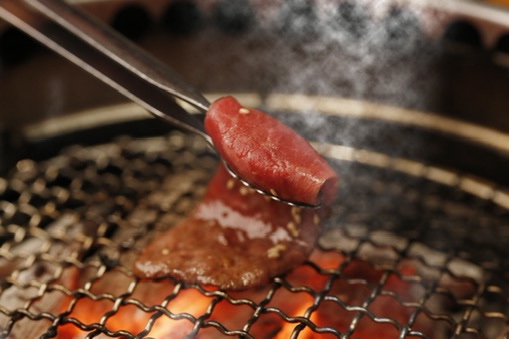
Infrared radiation doesn’t heat the surrounding air; instead, it directly excites the water and protein molecules inside the meat, generating heat directly within the food. Furthermore, Binchotan charcoal emits two distinct types of infrared waves: far-infrared and near-infrared, each performing a unique and crucial role.
First, “far-infrared” rays are absorbed at the very surface of the meat and instantly convert into heat. The moment the meat touches the grill, this powerful energy rapidly sears the exterior, creating a tight “umami barrier” of coagulated proteins. This barrier prevents precious meat juices and flavorful amino acids (such as glutamic acid and inosinic acid) from escaping.
Second, “near-infrared” rays have shorter wavelengths, allowing them to penetrate deeper into the meat (up to several millimeters). This energy travels directly into the interior, warming the center evenly without overcooking or burning the surface. The combination of these two infrared effects ensures that the outside is beautifully seared and crisp, while the inside remains incredibly juicy, plump, and tender—the ultimate texture for yakiniku.
Dry Heat with Zero Water Vapor: The “Moisture Science” That Sets Charcoal Apart from Gas
A crucial but often overlooked difference between gas and charcoal is the amount of moisture (water vapor) produced during combustion.
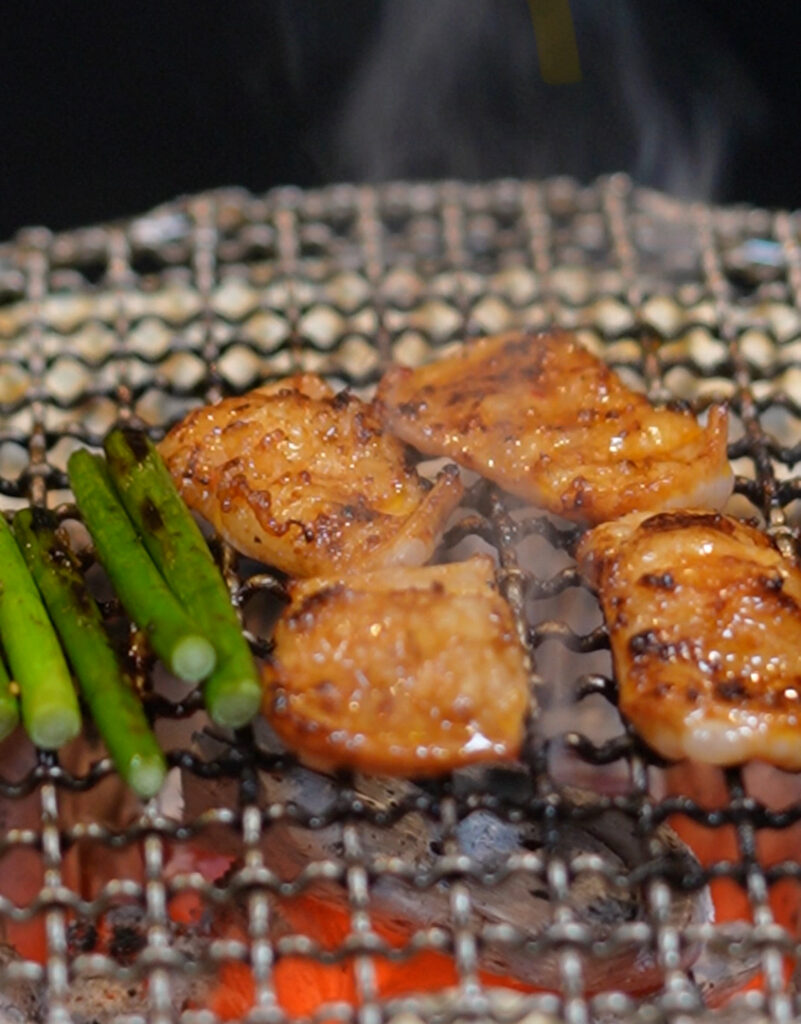
Gas fuels like propane or natural gas consist of hydrocarbons (carbon and hydrogen). When these gases burn, they undergo a chemical reaction where hydrogen combines with oxygen to form water (H2O), releasing a massive amount of water vapor. In essence, grilling meat over a gas flame is like steaming the surface of the meat with hot moisture. This water vapor condenses on the meat, slowing down the surface temperature rise and resulting in a damp, soggy exterior.
In contrast, Binchotan is nearly pure carbon (C). When carbon burns, it reacts with oxygen to form only carbon dioxide (CO2). Since it contains virtually no hydrogen, it generates zero water vapor. Grilling over charcoal is therefore a cooking method that uses dry, intense heat with almost 0% moisture.
This dry heat instantly evaporates surface moisture, allowing the surface temperature to rise rapidly and trigger the “Maillard reaction.” This chemical reaction occurs when proteins, amino acids, and sugars combine under high heat, creating a deep brown sear and producing complex, savory flavor compounds. The light, crispy bite and deep, mouth-watering aroma of charcoal yakiniku are only possible because of this dry heat source.
The Magic of “Smoky Aroma” Created by Dripping Fat
Charcoal yakiniku stimulates our senses and whets our appetite through the magic of “smoke infusion” (kun-en effect).
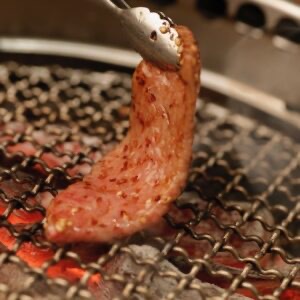
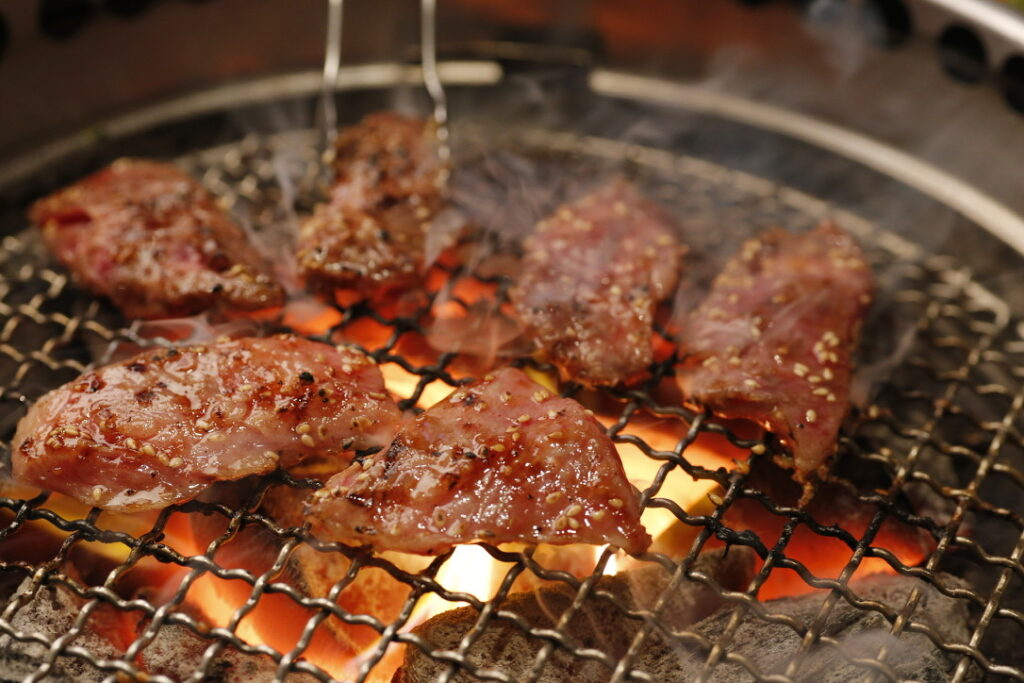
As premium Wagyu grills on the wire mesh, the intense heat melts its high-quality fat (rich in unsaturated fatty acids), causing it to drip down. In a gas roaster, this fat falls into a water tray below, ending the process. But on a charcoal grill, the fat drips directly onto the red-hot Binchotan embers.
At temperatures above 800 degrees Celsius, the dripping Wagyu fat instantly vaporizes, turning into a rich, flavorful white smoke. This smoke rises and wraps around the meat, clinging to the seared surface and infusing the muscle fibers with a deep, caramelized wood-and-fat aroma. This natural smoking process adds a complex, savory layer of flavor that gas grills simply cannot replicate. The irresistible scent that greets you right before your first bite is the result of this beautiful collaboration between Wagyu fat and hot charcoal.
Unleashing 120% of Charcoal’s Power: Kuro5’s Tableside “Yaki-Bugyo” Grilling Service
Even with the finest Binchotan charcoal and perfect science, the wrong grilling time will ruin the meat. The speed at which you flip the meat, how you navigate the hot and cool zones of the grill, and the exact moment you pull the meat off vary with each cut’s thickness and fat content.

To ensure you experience the meat at its absolute peak, Kuro5 does not ask guests to grill their own meat. Instead, our highly trained staff serve you tableside in our signature “Yaki-Bugyo” (grill master) style, grilling each slice to perfection right before your eyes.
For instance, we grill marbled kalbi over the intense direct heat zone to melt away excess fat while infusing it with rich smoke. Conversely, for delicate cuts like harami and loin, we utilize the steady infrared rays to roast the center gently, sealing in every drop of juice. By combining scientific heat control with professional execution, we ensure that every bite of Wagyu reaches its maximum culinary potential.
Three Scientific Reasons Why Binchotan Charcoal Grilling Tastes Superior
- Juice-Locking Infrared Heat: Far-infrared rays instantly sear the surface to create an umami barrier, while near-infrared rays penetrate deep into the center to cook the meat plump and tender.
- Dry Heat for a Perfect Sear: Generating zero water vapor during combustion, Binchotan heats the meat with dry heat, maximizing the Maillard reaction for a crispy, savory crust.
- Natural Smoke Infusion: Dripping Wagyu fat vaporizes on the hot charcoal, rising as an aromatic smoke that coats the meat with a rich, caramelized flavor.
Welcoming You Tonight with the Finest Charcoal and Wagyu
Grilling is simple, but the choice of heat source changes everything. Because yakiniku relies on the pure flavor of the ingredients, the quality of the fire can elevate the meat to extraordinary heights. Kuro5 goes to the extra trouble and expense of using Binchotan charcoal because we want you to experience the true, uncompromised potential of Wagyu.
The science of Binchotan heat, our premium A5-grade Wagyu, and our tableside grilling service work in harmony to create a yakiniku experience that will make you smile from the very first bite.
Tonight, at our Ikebukuro Honten, Ikebukuro East Exit, and Shinjuku Kabukicho locations, we have our glowing Binchotan fires ready and our finest Wagyu waiting. We look forward to welcoming you and serving you the perfect charcoal-grilled bite.
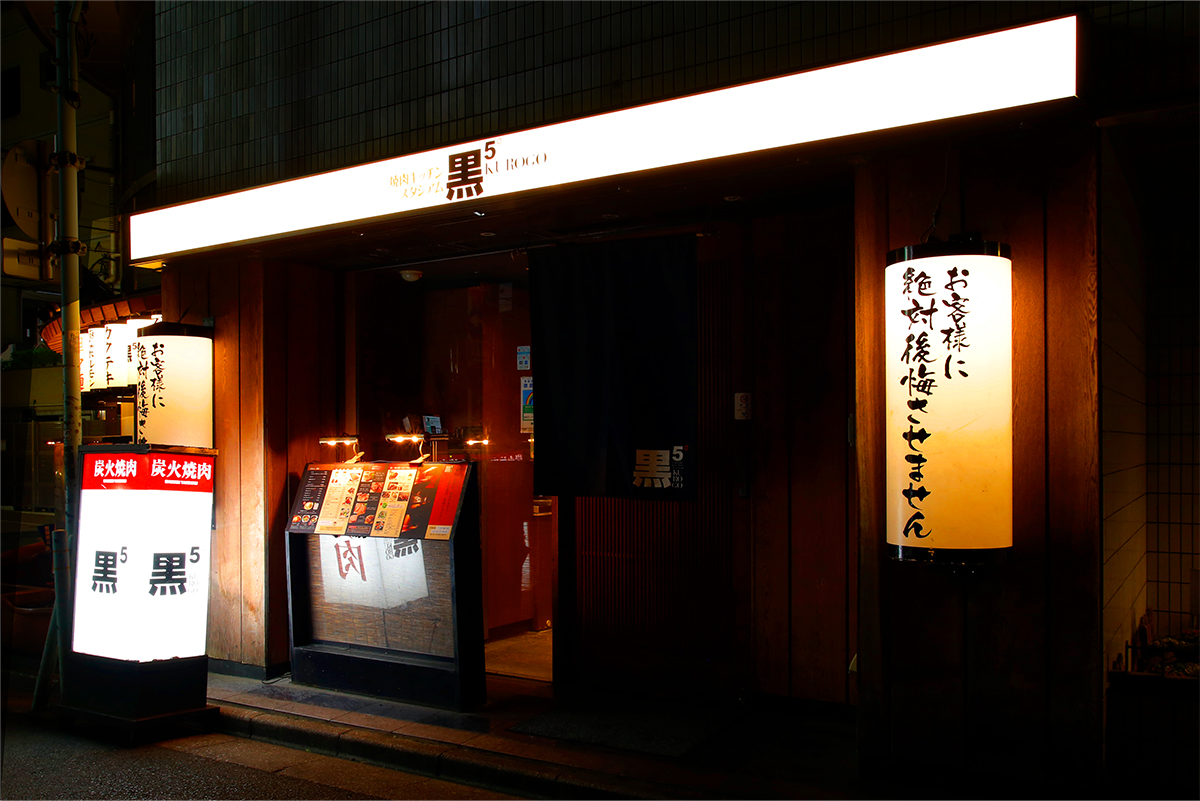
- Charcoal Yakiniku Kuro5 Honten
Nishi-Ikebukuro Bill 1F, 2-46-3 Nishi-Ikebukuro, Toshima-ku, Tokyo / 5 min walk from JR Ikebukuro Station - Charcoal Yakiniku Kuro5 Higashiguchi
Tsukiji Bill 1F, 1-42-16 Higashi-Ikebukuro, Toshima-ku, Tokyo / 3 min walk from JR Ikebukuro Station East Exit - Charcoal Yakiniku Kuro5 Kabukicho
Sankyo Akagawa Bill 1F, 2-21-4 Kabukicho, Shinjuku-ku, Tokyo

