



Table of Contents
- 1. Wagyu vs. Domestic Beef: The Crucial Difference in Yakiniku Culture
- 2. Japan’s Culinary Masterpiece: The Strict Definition and Pedigree of “Wagyu”
- 3. Not Actually a Breed? The Rules and Reality of “Domestic Beef” (Kokusan-gyu)
- 4. The Science of Taste: Lower Melting Point Fat and the Sweet “Wagyu Aroma”
- 5. Kuro5’s Golden Rule: The Incomparable Value of Fresh, “Unfrozen” Raw Wagyu
- 6. Only a Few Kilograms per Cattle: How Kuro5 Secures Rare Raw Cuts Stably
- 7. Meticulous Meat Selection and Tableside Grilling: Delivering Wagyu’s True Worth
- 8. Welcoming You Tonight with the Finest Raw Wagyu and Charcoal Fire
Wagyu vs. Domestic Beef: The Crucial Difference in Yakiniku Culture
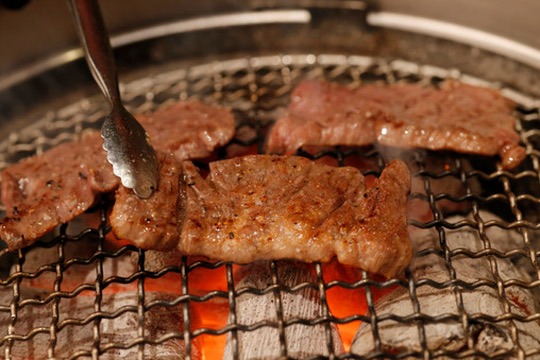
Hello everyone. This is Kuro5’s Sondo.
Grilling premium meat over wire mesh on a lively evening is an irreplaceable moment of bliss. When you look at yakiniku menus or supermarket meat counters in Japan, you will often spot terms like “Kuroge Wagyu” (Black Wagyu) and “Wagyu Kalbi” right next to descriptions like “Domestic Beef Loin” (国産牛ロース) or “Domestic Beef Tongue.”
“Wagyu and Domestic Beef are both raised in Japan, so they must be basically the same, right?”
“It is probably just a minor difference in labeling; there cannot be that much of a difference in taste.”
Many of our guests think this way initially. However, to put it simply, “Wagyu” and “Domestic Beef” are entirely different concepts in terms of origin, legal definitions, and meat quality. Understanding this boundary is the first and most important step to choosing a truly excellent yakiniku restaurant and finding your perfect slice of meat.
One is a bloodline classification refined over generations through Japanese breeding and husbandry. The other is a legal labeling definition focused purely on where the cattle spent the longest period of their lives. Between these two, there is an absolute gap in flavor depth, fat sweetness, and texture that is scientifically proven. Today, I would like to explain the differences between Wagyu and Domestic Beef, and share why Kuro5 is obsessed with serving fresh, never-frozen “raw Wagyu.”
Japan’s Culinary Masterpiece: The Strict Definition and Pedigree of “Wagyu”
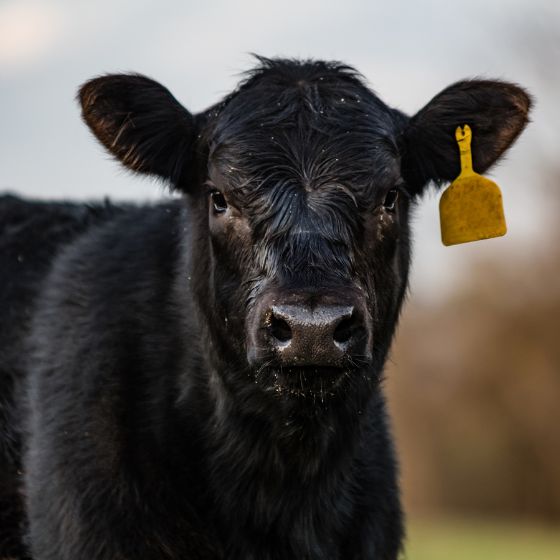
First, let us look at the strict definition of “Wagyu” (和牛). Wagyu does not simply mean “cattle raised in Japan.” It is a bloodline designation reserved exclusively for four native Japanese cattle breeds and their crossbreeds, refined over a long history of selective breeding:
- Japanese Black (黒毛和種 – Kuroge Washu): Accounting for over 90% of all Wagyu in Japan, this breed is famous for producing highly detailed, beautiful marbling (sashi). It features a melt-in-your-mouth texture and rich taste. Kuro5’s loin, harami, and tongue are sourced from this premium Japanese Black lineage.
- Japanese Brown (褐毛和種 – Akage Washu): Raised mainly in Kumamoto and Kochi prefectures, this breed is known for its deep, savory lean meat and clean, elegant fat profile.
- Japanese Shorthorn (日本短角種 – Nihon Tankaku Washu): Raised in the open pastures of northern Japan, this breed is high in amino acids and offers a healthy, rich beef flavor.
- Japanese Polled (無角和種 – Mukaku Washu): An extremely rare breed from Yamaguchi prefecture with no horns, noted for its tender meat and distinct deep flavor.
To prove their pedigree, every single Wagyu calf is assigned a unique 10-digit individual identification number at birth. Their parents, grandparents, birthdate, sex, and fattening farm are all registered in a strict national database. If a cow does not belong to these four bloodlines, it can legally never be labeled as “Wagyu,” even if it is born and raised in Japan. This meticulous pedigree management, combined with the dedicated care of Japanese farmers, creates the world-famous marbling and premium texture of Wagyu.
Not Actually a Breed? The Rules and Reality of “Domestic Beef” (Kokusan-gyu)
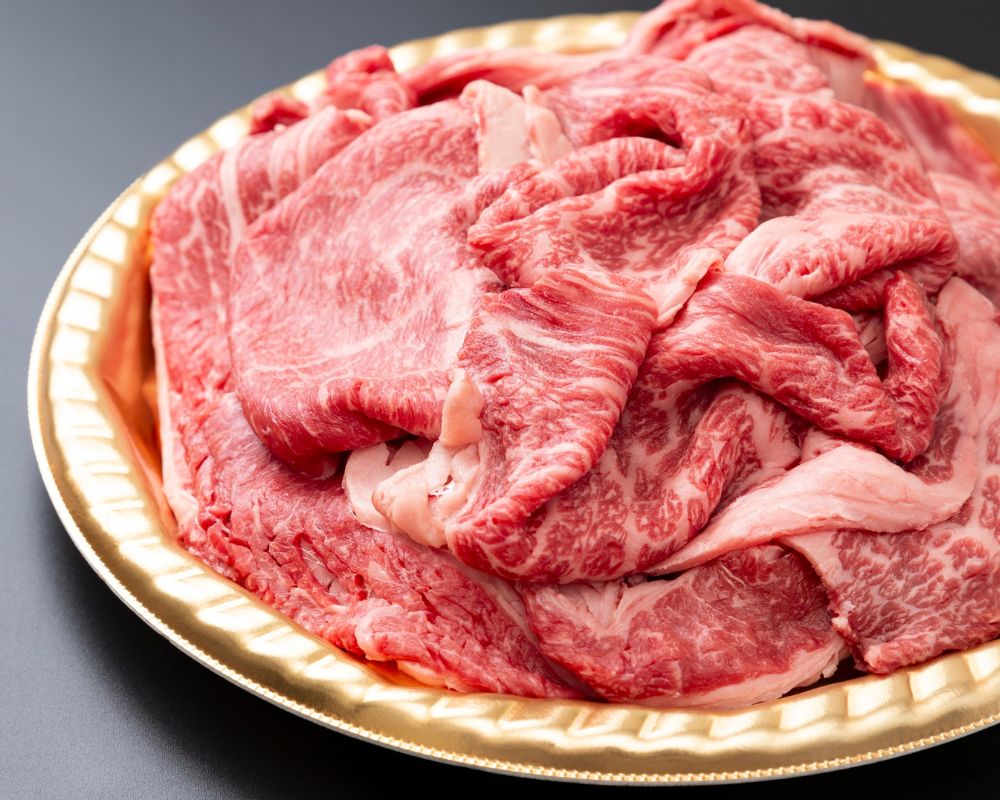
On the other hand, the term “Domestic Beef” (国産牛 – Kokusan-gyu) has no breed or bloodline restrictions whatsoever. Its definition is simple: “any cattle raised in Japan for the longest period of their lives, regardless of breed.”
This category includes a wide variety of cattle that do not meet Wagyu pedigree requirements, such as:
- Dairy Breeds (primarily Holstein): Male dairy cattle raised for beef, or female dairy cows that have finished their milking career. This meat is very lean and does not develop Wagyu-style marbling.
- Crossbreeds (F1): Born by crossing a dairy breed (like Holstein) with a Wagyu breed. They grow faster than pure Wagyu while inheriting some tenderness, making them a common choice for budget-friendly yakiniku chains.
- Foreign-Born Cattle raised in Japan: Cattle born in countries like Australia or the United States can be legally labeled as “Domestic Beef” if they are imported to Japan and fattened here for a period longer than they spent in their country of birth (typically over 3 months).
Because Domestic Beef lacks pedigree consistency, the quality, tenderness, and fat distribution vary wildly. While it serves a great role in providing affordable beef, it cannot match the delicate sweetness, rich aroma, and melting texture of Wagyu. This is why Kuro5 never compromises, choosing to serve pure Wagyu despite the extra cost and effort.
The Science of Taste: Lower Melting Point Fat and the Sweet “Wagyu Aroma”
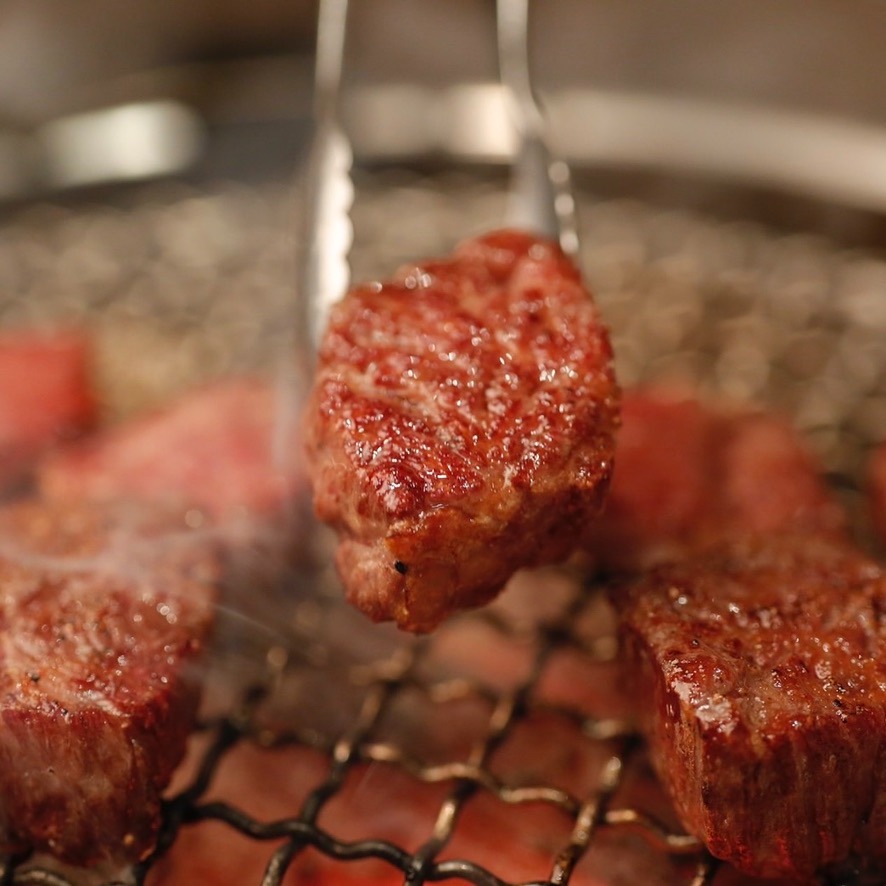
What makes the taste of Wagyu so distinct from domestic beef? The answer lies in the chemical composition of Wagyu fat and its unique aroma.
The first major difference is the “melting point” of the fat. While the fat of regular domestic beef (dairy breeds) melts between 35°C and 40°C, the fat of high-grade Wagyu (rich in monounsaturated fatty acids like oleic acid) melts at around 30°C—well below human body temperature. The moment you place a slice of Wagyu on your tongue, the fat dissolves into a silky liquid. This low melting point prevents the meat from feeling heavy or greasy, allowing it to digest smoothly while leaving only pure, sweet umami on the palate.
Furthermore, cooked Wagyu fat releases a unique sweet, buttery fragrance known as “Wagyu Aroma” (和牛香 – Wagyu-ko). This aroma consists of lactones, organic compounds that carry hints of coconut and peach. When the fat caramelizes on the grill, this sweet fragrance combines with the smoky char to create an incredibly rich sensory experience. This specific aroma is chemically absent in non-Wagyu breeds. The sweet scent rising from the grill is a natural gift unique to the Wagyu lineage.
Kuro5’s Golden Rule: The Incomparable Value of Fresh, “Unfrozen” Raw Wagyu
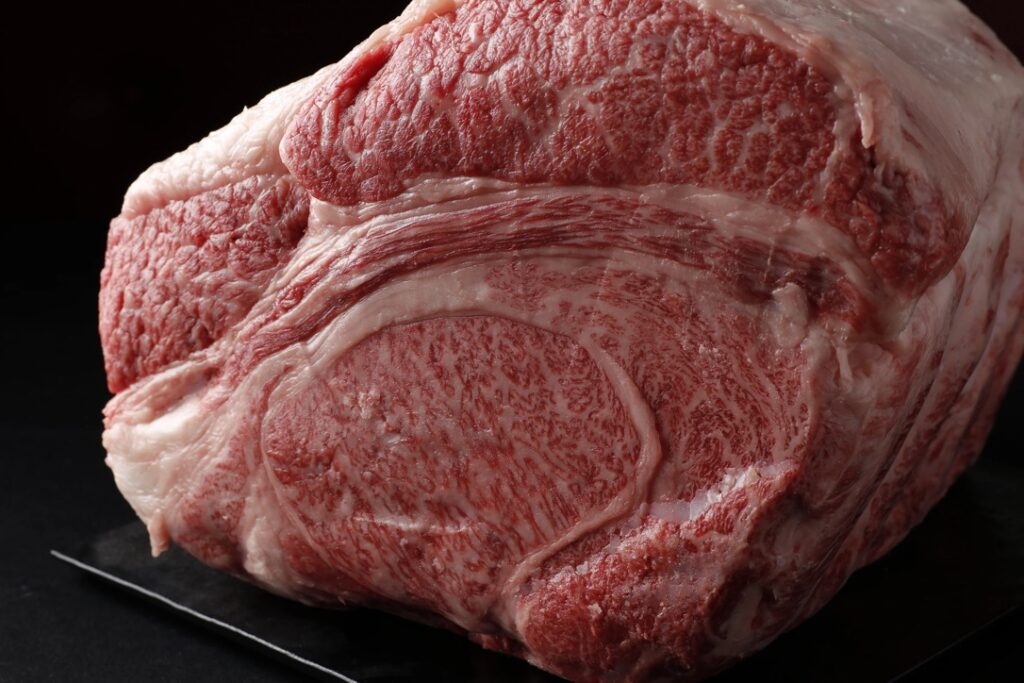
Pedigree alone is not enough to make Wagyu perfect. If the meat is stored or handled poorly, its flavor drops by half. Most restaurants and distributors freeze beef to simplify storage and extend shelf life. However, Kuro5 has a strict rule: we never freeze our main cuts. We source and serve “raw Wagyu” (生の和牛 – Nama-no-Wagyu) that has never been frozen.
When meat is frozen, the water inside turns into ice crystals that expand and rupture the delicate cell walls. Upon thawing, these damaged cells release “drip”—the nutrient-rich moisture containing the meat’s natural amino acids and minerals. Losing this drip makes the grilled meat dry, tough, and prone to gamey odors.
Because Kuro5’s raw Wagyu has never been frozen, its cellular structure remains completely intact. When cooked on the grill, all the sweet juices and umami are locked inside. The moment you take a bite, you experience a clean, tender snap, followed immediately by an explosion of pure, sweet Wagyu juices. This raw difference is a taste sensation that frozen beef can never replicate.
Only a Few Kilograms per Cattle: How Kuro5 Secures Rare Raw Cuts Stably
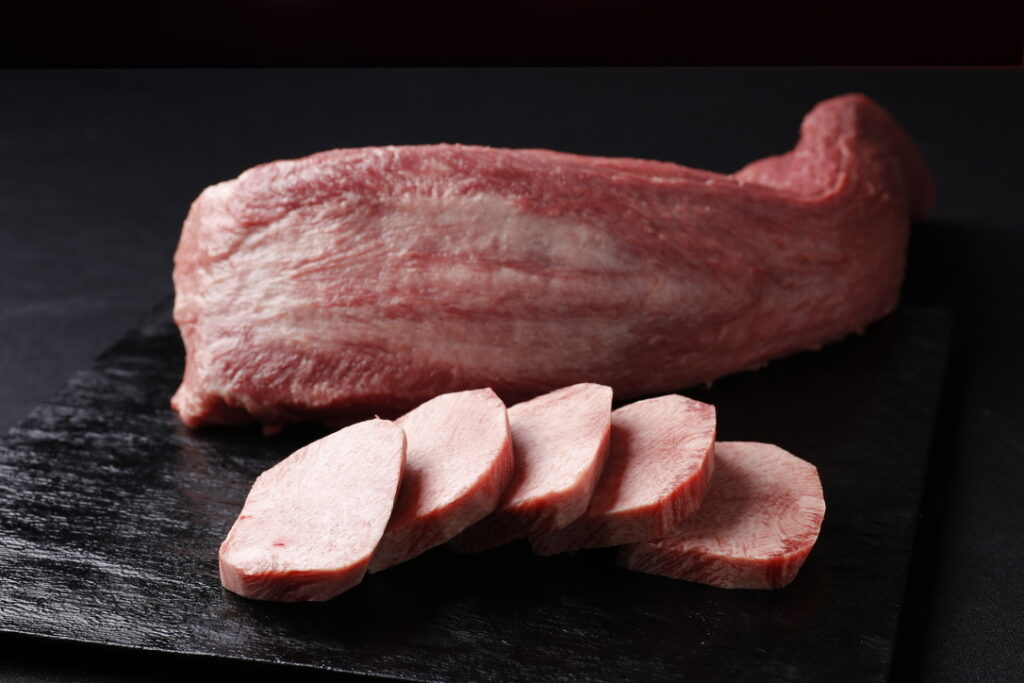
Serving unfrozen raw Wagyu consistently is a major challenge in the modern restaurant industry. Highly sought-after yakiniku cuts like tongue (タン), hanging tender/harami (ハラミ), and fresh liver (レバー) are organ meats (内臓肉 – naizou-niku). A single head of cattle yields only a few kilograms of these cuts. Sourcing them fresh and raw, without freezing, is incredibly difficult because domestic supply is extremely tight. Most yakiniku shops must rely on frozen imports.
How does Kuro5 manage to serve fresh, raw Wagyu tongue and harami daily at all locations?
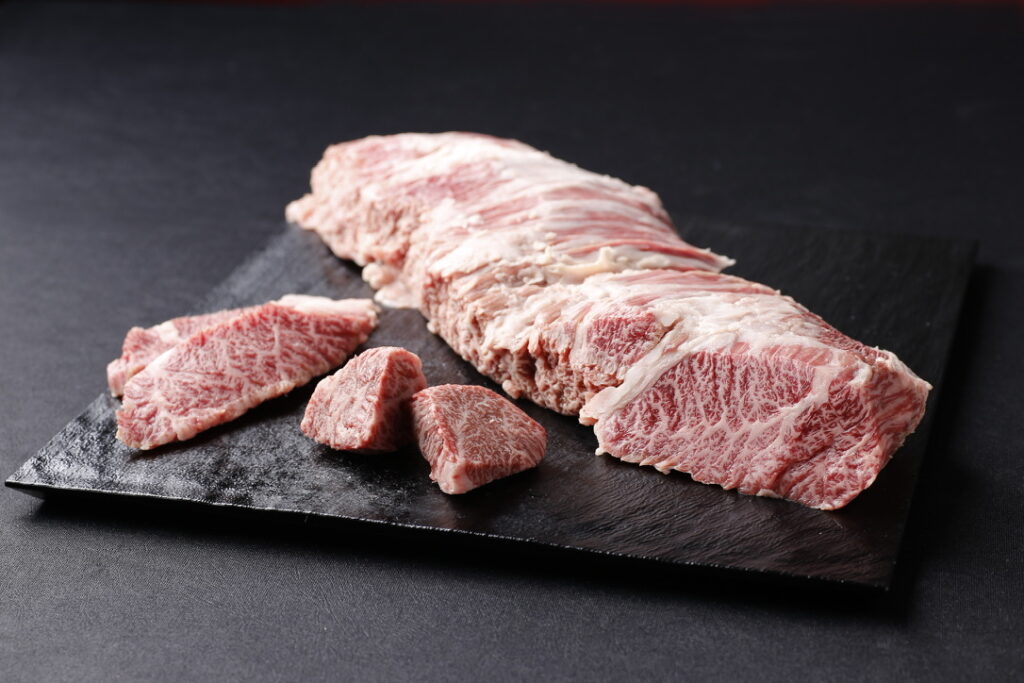
The secret lies in the strong “bonds of trust” built over many years with our meat wholesalers. Wholesalers treat rare raw cuts as premium items, carefully choosing which restaurants receive them. Since our founding, Kuro5 has maintained a policy of sincere trading, consistent ordering in both good times and bad, and paying fair value for quality. This face-to-face dedication has built a deep partnership. Today, wholesalers prioritize sending their finest raw Wagyu cuts to Kuro5. Every raw slice we serve is a testament to the trust between farmers, wholesalers, and our team.
Meticulous Meat Selection and Tableside Grilling: Delivering Wagyu’s True Worth
Our commitment extends to how we select our cuts and serve them at your table.
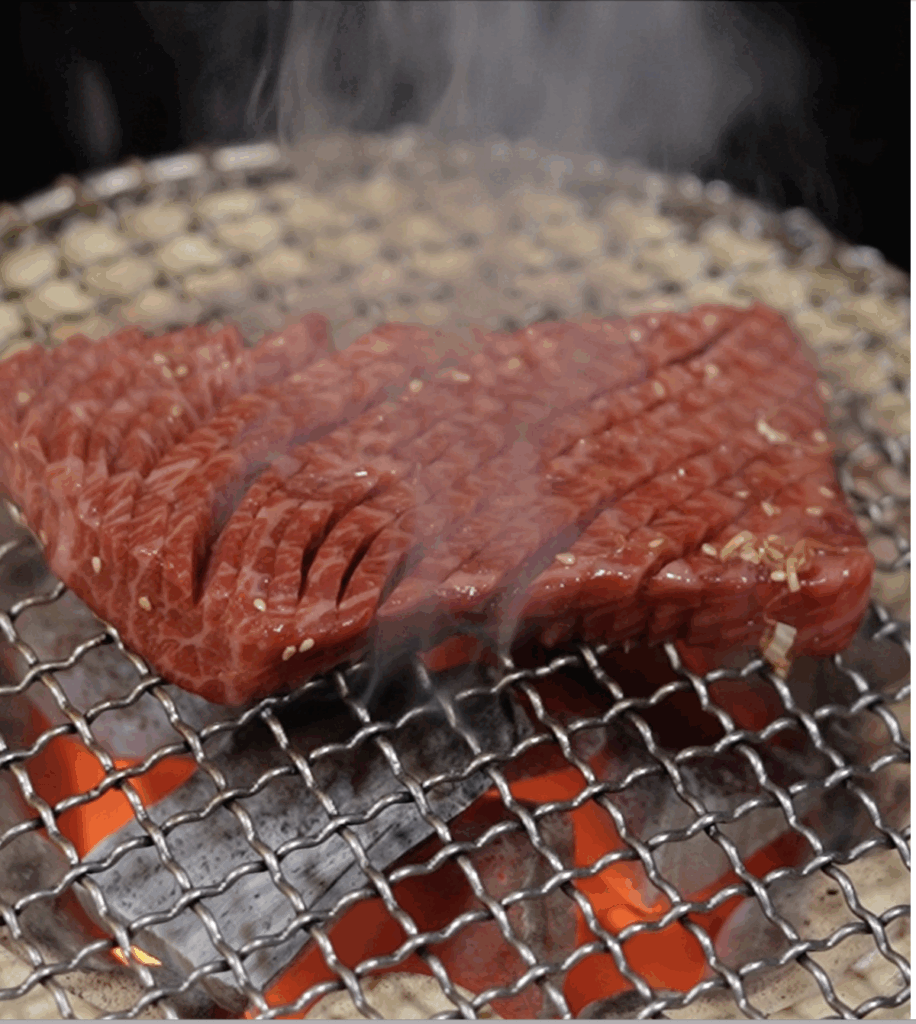
We do not compromise on meat selection. For our loin (ロース), we use “Shintama” (round), a lean cut from A5-grade Wagyu that offers an ideal balance of beef flavor and clean finish. For our kalbi (カルビ), we avoid heavy short rib or brisket (バラ肉) and instead select premium “Wagyu Ribeye” (リブロース), which yields an elegant, sweet, and clean fat profile.
To ensure this meticulously sourced raw Wagyu is cooked to perfection, we feature our tableside “Yaki-Bugyo” (grill master) service. Raw Wagyu is delicate; if left too long on the high heat of Binchotan charcoal, its fat will flare up and dry out the meat. Our trained staff grill each slice at your table, utilizing the intense far-infrared heat of Binchotan. By flipping the meat every 10 to 15 seconds, we lock the juices inside the muscle fibers, serving it to you at the exact millisecond it reaches its peak flavor.
Three Keys to Wagyu Quality and Kuro5’s Commitment
- Pedigree vs. Location: Wagyu is a bloodline classification of four native Japanese breeds, while Domestic Beef simply denotes where the cow was raised. The difference in tenderness and fat quality is rooted in genetic heritage.
- The Science of Wagyu Aroma and Fat: Wagyu fat melts below human body temperature (30°C) for a light, clean finish, releasing a sweet peach-and-coconut fragrance (Wagyu Aroma) when grilled.
- Strict “Raw” Quality Control: Kuro5 never freezes key cuts like Wagyu tongue and harami. Sourced fresh through deep wholesaler relationships and grilled tableside by our staff, we lock in every drop of sweet juice.
Welcoming You Tonight with the Finest Raw Wagyu and Charcoal Fire
Even a simple word on a menu carries a deep story of genetics, food science, and dedication. Yakiniku is a simple style of cooking, which means the quality of the raw ingredients and the heat source make all the difference. We choose Binchotan charcoal and unfrozen raw Wagyu because we want you to experience the true, uncompromised magic of Wagyu Yakiniku.
The science of dry charcoal heat, premium A5-grade Wagyu, and our tableside grilling work in harmony to bring you a dining experience that will make you smile from the very first bite. We look forward to serving you tonight.
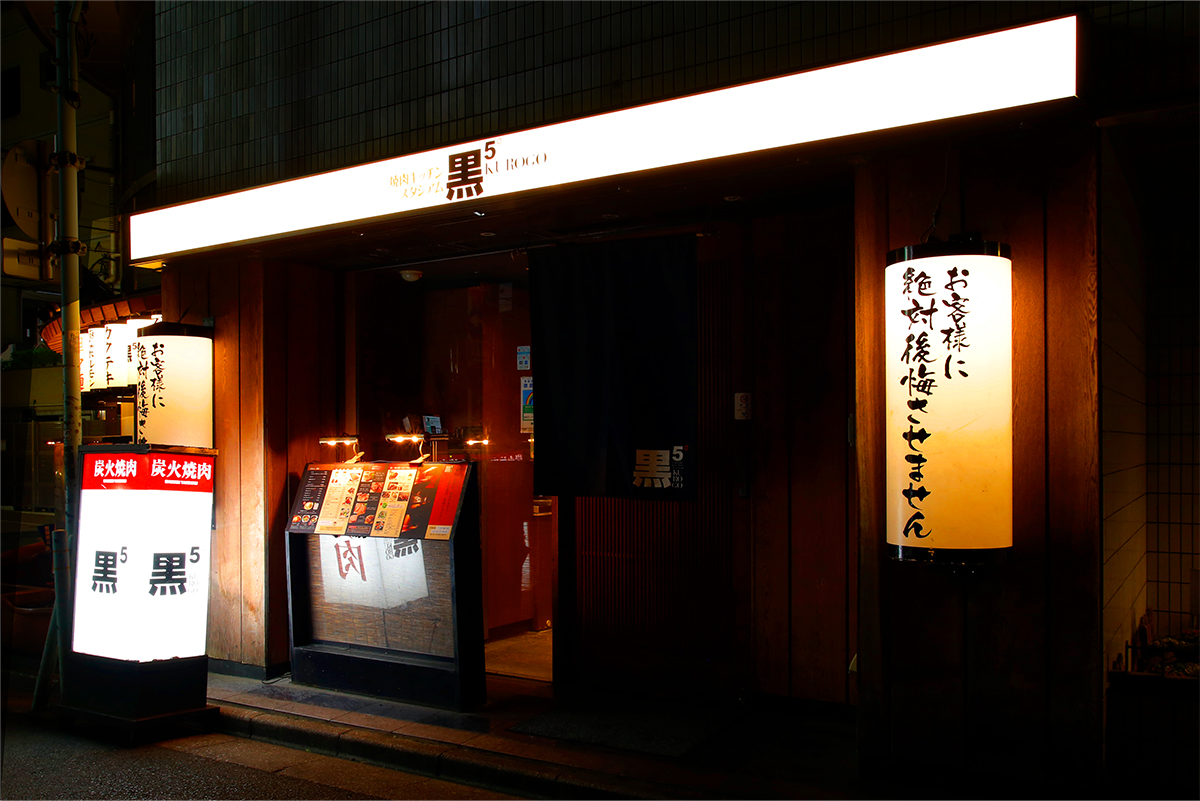
- Charcoal Yakiniku Kuro5 Honten
Nishi-Ikebukuro Bill 1F, 2-46-3 Nishi-Ikebukuro, Toshima-ku, Tokyo / 5 min walk from JR Ikebukuro Station - Charcoal Yakiniku Kuro5 Higashiguchi
Tsukiji Bill 1F, 1-42-16 Higashi-Ikebukuro, Toshima-ku, Tokyo / 3 min walk from JR Ikebukuro Station East Exit - Charcoal Yakiniku Kuro5 Kabukicho
Sankyo Akagawa Bill 1F, 2-21-4 Kabukicho, Shinjuku-ku, Tokyo

