



Table of Contents
- 1. Is the Image “A5 Rank is the Most Delicious” True? Common Doubts and Misconceptions
- 2. The Science of Wagyu Grading! The True Definition of “A, B, C” and “1 to 5”
- 3. Beyond the Grade! The Truth About “Fat Melting Point” and “Oleic Acid” Determining Deliciousness
- 4. Our Obsession with “Fresh, Never-Frozen” Meat Pulls Out 120% of Wagyu’s Potential
- 5. The Essence of Kuro5’s “Three Commitments”
- 6. Sourcing and Cutting Craftsmanship That Maximizes the Character of Each Cut
- 7. Enjoying Exquisite Meat at Its Best: The Value of the “Binchotan Charcoal Full-Attend Style”
- 8. Experience the True Value of Kuro5: Light, Delicious Yakiniku That Leaves You Smiling
1. Is the Image “A5 Rank is the Most Delicious” True? Common Doubts and Misconceptions
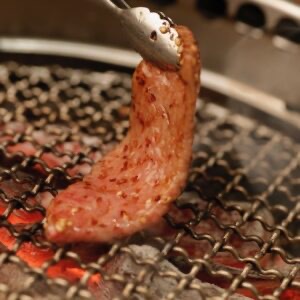
Hello everyone. This is Sondo from Kuro5.
When you open the menu at a yakiniku restaurant, or browse the meat section of a department store basement, doesn’t your eye automatically drift to the words “A5 Rank Black Wagyu”? You might unconsciously think, “Well, A5 rank must be the most delicious,” or “It makes sense that it’s expensive.”
Television food shows and social media are filled with catchy slogans like “Meltingly delicious premium A5 rank beef!” In modern Japan, the image that “A5 is the ultimate proof of delicious meat” is completely established. For a special day’s luxury or a dinner with important guests, it is only natural to want to choose A5 rank brand beef out of a desire to make a safe, high-quality choice.
However, as a meat professional who serves yakiniku to customers on the floor every single day, I must share a crucial truth with you.
Actually, the “A5” score in Wagyu grading does not directly represent the “taste” or “deliciousness” of the meat.
You might be surprised to hear this, wondering, “Why is it so expensive then?” or “Isn’t A5 supposed to taste the best?” Today, we will dissect the scientific truth behind the Wagyu grading system, explore what truly delicious yakiniku that doesn’t cause stomach heaviness is, and reveal the standards we use at Kuro5 to select and prepare our meat. By reading this article, your way of choosing yakiniku will change dramatically, and you will discover the true essence of meat flavor.
2. The Science of Wagyu Grading! The True Definition of “A, B, C” and “1 to 5”
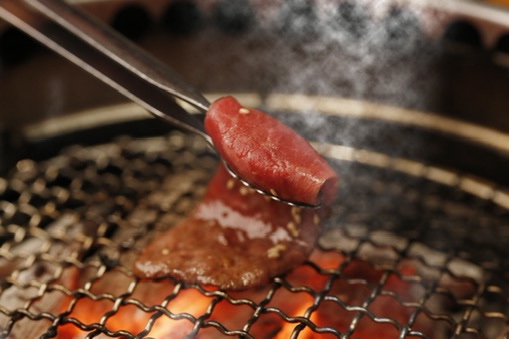
First, let’s look at how grades like “A5” or “A4” are decided. Wagyu grading in Japan is strictly determined by the Japan Meat Grading Association (JMGA) based on two combined criteria: an alphabetical “Yield Grade” and a numerical “Meat Quality Grade.”
Let’s look at the alphabetical “Yield Grade” (A, B, or C). This represents the ratio of usable meat (carcass) obtained from the cow after removing the bones, internal organs, and excess fat. A yield higher than average is graded “A,” standard is “B,” and below standard is “C.” In other words, this is an index of “production efficiency” or “yield size” for meat purveyors and farmers. It has nothing to do with the “taste” or “texture” experienced by the customer. Even if the meat is watery and lacks umami, it can still receive an “A” yield grade as long as the ratio of usable meat to bone is high.
Next is the numerical “Meat Quality Grade” (1 to 5). This is evaluated across five levels based on four criteria:
- Marbling (Beef Marbling Standard – BMS): The distribution of fat in the meat, evaluated on a 12-point scale.
- Color and Brightness (Beef Color Standard – BCS): The hue and luster of the red meat.
- Firmness and Texture: The fineness of the muscle fibers, texture, and tenderness.
- Fat Color and Quality (Beef Fat Standard – BFS): The whiteness and luster of the fat.
Each of these four categories is rated from 1 to 5, and the lowest score among the four determines the overall Meat Quality Grade. For example, even if the marbling is absolutely perfect (rating 5), if the meat color is slightly dull (rating 3), the final grade will be “3.” Within this system, the amount of marbling (BMS) carries massive weight. To secure a Meat Quality Grade of “5,” a BMS score between 8 and 12 is required, indicating a very dense, web-like distribution of fat.
Do you notice something missing here? Among all the evaluation criteria, there is not a single item measuring “amino acid content (strength of umami)” or “aroma (Wagyu fragrance).”
The grading system is purely a visual standard to facilitate smooth market trading, not a score guaranteeing flavor. The reason why “A5 does not always mean delicious” or why “too much marbling can cause stomach heaviness after a few bites” lies in these technical definitions.
3. Beyond the Grade! The Truth About “Fat Melting Point” and “Oleic Acid” Determining Deliciousness
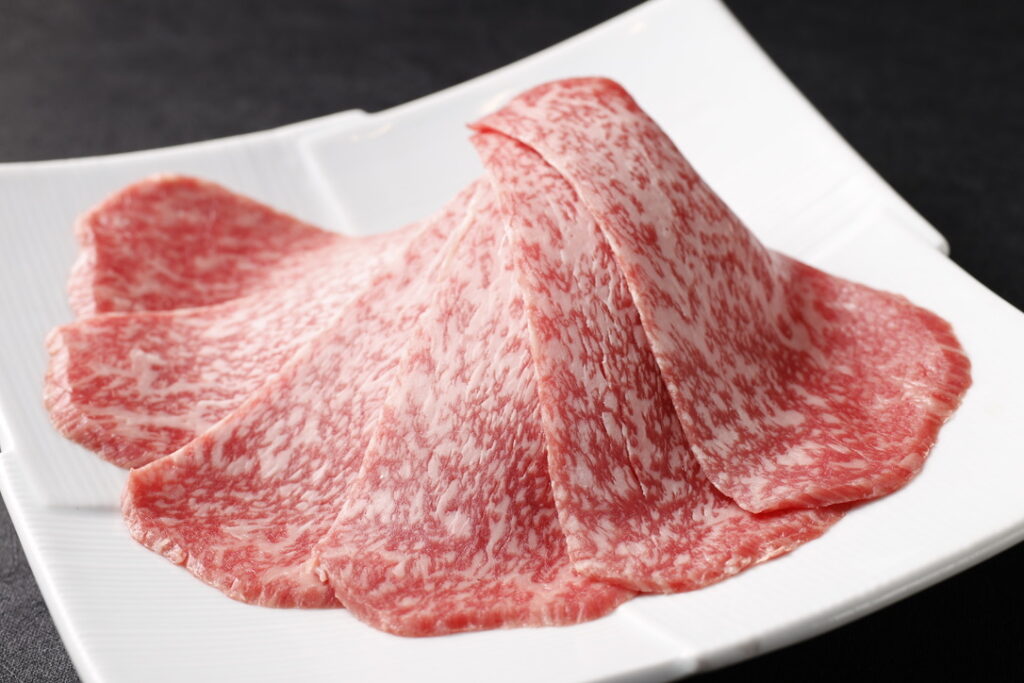
So, what actually determines the “true deliciousness” of meat? The key lies in the “oleic acid content” of the fat, and the resulting “fat melting point.”
The greatest characteristic of Japanese Black Wagyu and the reason it is celebrated worldwide is the extremely high ratio of oleic acid (an unsaturated fatty acid) in its marbling. Oleic acid, famous as the main component of olive oil, is known for health benefits such as lowering LDL cholesterol. In meat flavor, its crucial role is to dramatically lower the melting point of the fat.
While the fat melting point of standard imported beef or domestic crossbred beef is around 35°C to 40°C, the fat melting point of high-quality Black Wagyu is incredibly low, at about 16°C to 25°C—far below human body temperature. This low melting point is what creates the “meltingly tender texture” the moment the meat touches your tongue.
When you eat Wagyu with high-quality fat, the fat liquefies smoothly at body temperature, blending with the rich juices of the red meat. It tastes cleanly sweet without leaving a greasy residue. As the fat melts, it releases “Wagyu aroma” (Wagyu-ko), a sweet, coconut-like fragrance that drifts through the nose. This low-melting-point fat is the secret behind “light, non-greasy yakiniku” that never leaves you with stomach heaviness.
Conversely, even if the meat is rated “A5,” if the oleic acid ratio is low and the fat’s melting point is high, the fat will not melt completely in your mouth and will leave a sticky, greasy coating on your tongue. This is the direct cause of the heavy feeling you might get after leaving a restaurant. That is why meat professionals do not buy based on the “A5” paper label alone; we must inspect each beef carcass with our own eyes to evaluate the breeding environment and fat quality.
4. Our Obsession with “Fresh, Never-Frozen” Meat Pulls Out 120% of Wagyu’s Potential

Even if you source Wagyu with the finest fat quality, incorrect handling will ruin its potential in an instant. This is where Kuro5’s obsession with “fresh, never-frozen quality” from sourcing to serving comes into play.
Today, many standard yakiniku restaurants use meat that has been frozen for shipping and storage convenience. However, freezing meat turns the water inside the cells into sharp ice crystals, which expand and physically destroy the delicate cell walls from within.
When this meat is thawed, massive amounts of moisture and flavor escape as “drip” through the ruptured cell walls. This drip contains the amino acids, umami, and juices that give the meat its life. Once frozen and thawed, even an expensive A5 brand beef will turn out dry, tough, and, in the case of organ meats, develop an unpleasant metallic smell. Water lost once can never be recovered.
This is why Kuro5 insists on fresh, never-frozen Black Wagyu harami and tongue. The raw cell walls are completely intact. When cooked on the grill, the unbroken cell walls hold the melting oleic acid and rich meat juices inside. The explosive burst of juicy sweetness you experience with your first bite is only possible with fresh, never-frozen meat.
5. The Essence of Kuro5’s “Three Commitments”
Kuro5’s Absolute Sourcing and Serving Rules
- Sourcing by Fat Quality, Not Numbers: Rather than relying blindly on the “A5” brand label, we inspect the melting point of the fat (oleic acid ratio) and the depth of the red meat flavor.
- Obsession with Fresh, Never-Frozen Meat: We never freeze our meat from sourcing to serving, protecting the cell walls and preventing 100% of umami drip loss.
- “Full-Attend Grilling” to Protect Potential: To prevent customers from overcooking and drying out the meat, our trained staff grills everything perfectly over Binchotan charcoal.
6. Sourcing and Cutting Craftsmanship That Maximizes the Character of Each Cut
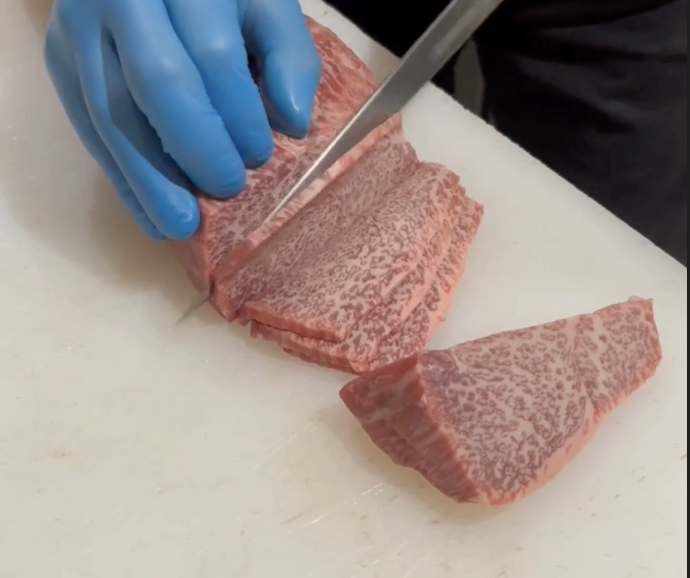
Once the meat’s potential is secured, how we portion and cut it makes all the difference. At Kuro5, we move beyond the generic categories of “standard loin” or “standard short rib” and tailor our cuts to the specific qualities of each part.
Here, let us share a very interesting historical background of the Japanese yakiniku industry. In fact, most “Loin” (Rosu) cuts served in yakiniku restaurants across Japan today are not actually loin (back muscle) cuts at all, but rather round/thigh (lean red meat) cuts. At Kuro5, what we serve as “Loin” is also the finest, leanest rare cut from the A5 Black Wagyu round, known as “Shintama” (Knuckle).
Originally, the English word “Loin” (from which “Rosu” is derived) referred to fatty, marbled back muscles like sirloin and ribeye. However, in the early days of Japanese yakiniku, imported lean back loins became popular as “Rosu,” leading Japanese consumers to associate “Rosu” with “lean, non-greasy red meat.” Later, when the BSE crisis hit in 2001, the industry rushed to shift to domestic Wagyu. Because premium Wagyu back loin was too expensive for standard menus, restaurants looked to the “Wagyu round” (thigh). It shared the same bright red appearance as imported loin and had a rich beefy flavor, marking the beginning of the “Loin = Thigh Meat” standard in Japanese yakiniku history.
Conversely, for our “Karubi” (traditionally belly/short rib), we avoid the heavy, greasy short rib meat and instead select the premium “Wagyu Ribeye” (Rib rosu). Yes, ribeye is actually the ultimate “loin” (back muscle) cut. Consequently, a fascinating reversal or **”naming twist”** occurs at Kuro5: we use round meat (Shintama) for our Loin, and a loin cut (Ribeye) for our Karubi. This is the ultimate proof of Kuro5’s commitment to optimizing the dining experience over rigid naming conventions, ensuring that our customers can enjoy marbled beef that never leaves them feeling heavy.
Since thigh meat like Shintama comes from active muscles, it has a natural tendency to be slightly tough. However, Kuro5’s craftsmen perform precise trimming down to the millimeter to remove fine gristle and membranes. This yields an incredibly smooth texture alongside the deep, iron-rich flavor of red meat.
In particular, our “Special Loin (Shinshin)” is sliced thin and seared on the grill using a technique called “rolling grill.” By rolling the meat while grilling, we prevent the juices from evaporating and lock in the rare tenderness. Serving it with a touch of wasabi delivers a culinary experience that surpasses any simple grade numbers.
Furthermore, serving ribeye as “Karubi” and thick-cutting its softest center section as “Otoko Ue Karubi” has become our signature dish, continuing to attract repeat customers.
7. Enjoying Exquisite Meat at Its Best: The Value of the “Binchotan Charcoal Full-Attend Style”
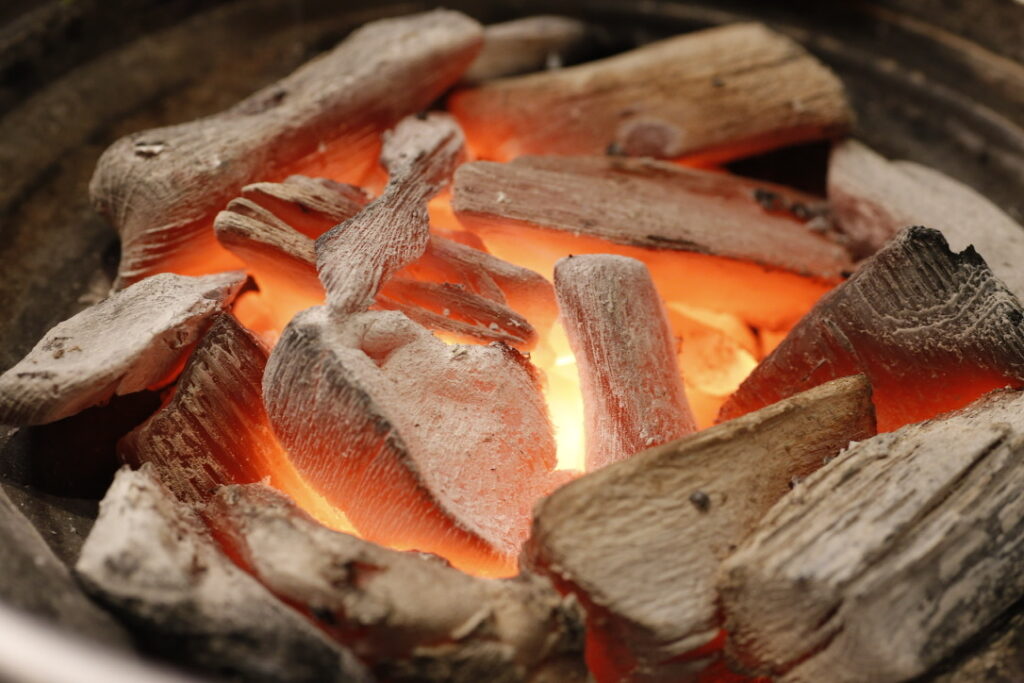
No matter how carefully we select fresh meat and apply precision prep, everything is lost if the customer leaves it on the grill too long or burns it. Overcooking dries out the meat, resulting in a loss of the customer’s valuable dining investment.
That is why Kuro5 has strictly maintained its “Full-Attend Style” (where staff grills the meat at your table) since our founding. We use “Binchotan charcoal,” which is notorious for being difficult to control but emits powerful far-infrared heat. This heat quickly sears the outside of the meat, creating a barrier that locks in the moisture (oleic acid and meat juices) inside.
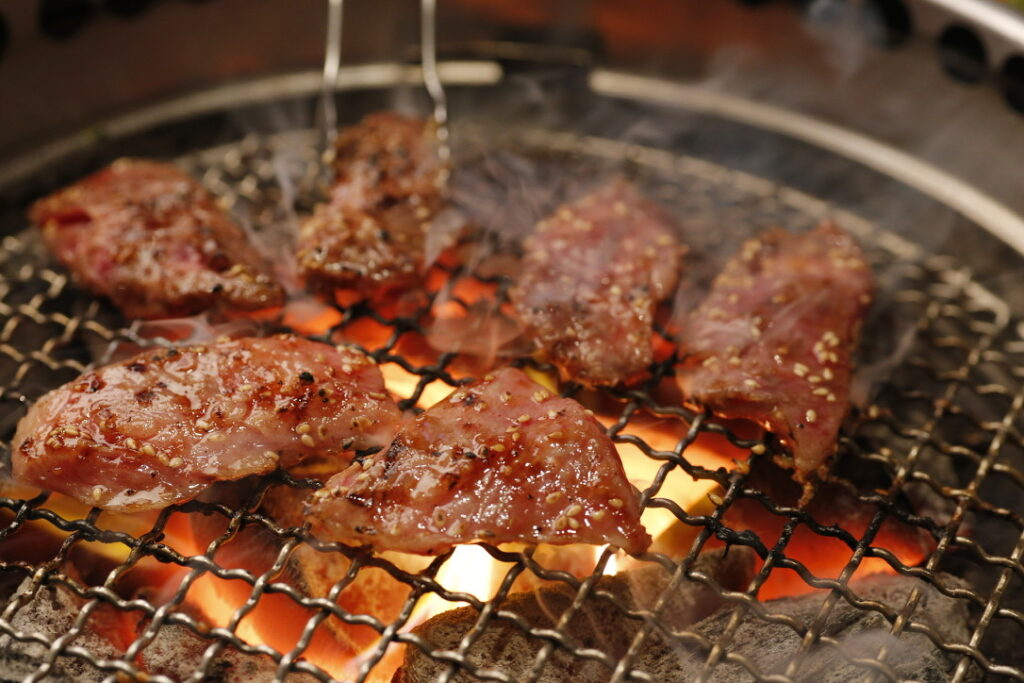
Our staff monitors the charcoal’s heat zone and applies a unique “reflux heating method,” flipping the meat every 10 to 15 seconds. This prevents the heat from applying only in one direction and stops the juices from rising and evaporating, gently and evenly raising the internal temperature. When placed on your plate, the meat is crispy on the outside and unbelievably tender and juicy on the inside. This is the true flavor of yakiniku when sourcing, prep, and grilling connect perfectly.
8. Experience the True Value of Kuro5: Light, Delicious Yakiniku That Leaves You Smiling
To the question, “Is A5 grade beef really the most delicious?” our answer is clear.
The numerical grade is just one visual reference. Truly delicious meat is born from the “low melting point of fat (oleic acid)” nurtured by pedigree and feed, the “freshness of cells” kept intact by never freezing, and the “knife work and professional grilling” that bring it all to life.
If you have ever eaten A5 beef only to find the grease too heavy to finish, we invite you to experience Kuro5. We promise a genuine Wagyu experience where the meat remains light and clean to the very last bite, releasing deep natural sweetness and aroma. Delivering a dining experience that surpasses the price tag is what Kuro5 defines as true cost performance.
Tonight, at our Honten, East Exit, and Kabukicho branches, we have prepared our signature fresh meats under the strict eyes of our professionals. With the Binchotan charcoal glowing hot, we look forward to welcoming you.
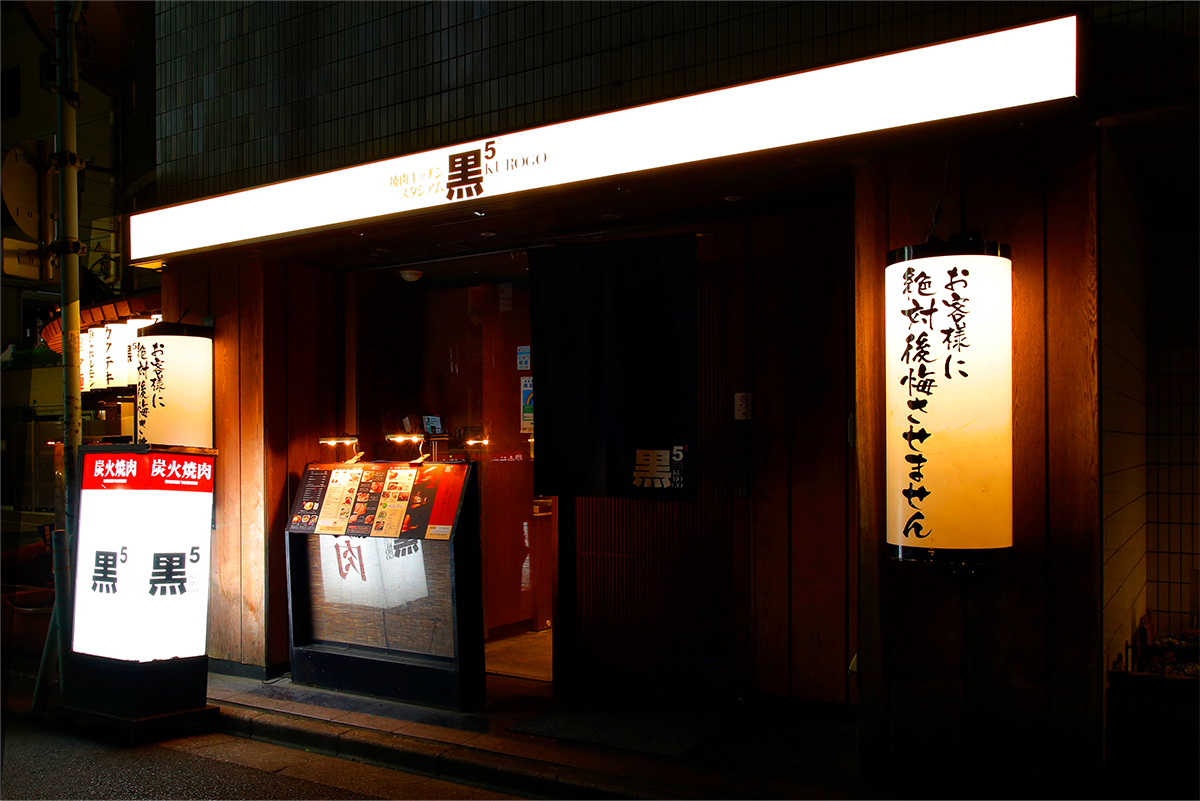
- Yakiniku Kuro5 Honten (Main Branch)
1F Nishi-Ikebukuro Bldg, 2-46-3 Ikebukuro, Toshima-ku, Tokyo / 5 min walk from JR Ikebukuro Station - Yakiniku Kuro5 Higashiguchi (East Exit Branch)
1F Tsukiji Bldg, 1-42-16 Higashi-Ikebukuro, Toshima-ku, Tokyo / 3 min walk from JR Ikebukuro Station East Exit - Yakiniku Kuro5 Kabukicho Branch
1F Sankyo Akagawa Bldg, 2-21-4 Kabukicho, Shinjuku-ku, Tokyo

