



Your Ikebukuro Yakiniku Dinner Should Always Start with Beef Tongue

When you decide, “Let’s have some delicious yakiniku in Ikebukuro today!” what is the first meat that comes to mind? While juicy kalbi (short rib) and flavorful harami (skirt steak) are tempting, the very first thing you want to put on the grill is undoubtedly “beef tongue” (Gyutan).
A toast with beer, followed by beef tongue with a squeeze of fresh lemon. That crisp bite and the umami that bursts out as you chew possess a magical power to blow away the day’s fatigue. Ikebukuro is one of Tokyo’s most competitive yakiniku battlegrounds, offering numerous chances to encounter incredible beef tongue.

However, did you know that the taste and texture of beef tongue change dramatically depending on the specific cut? Many people order “Premium Tongue” without knowing why, or struggle to find the perfect grilling time, especially for thick cuts.
In this article, to ensure you have the ultimate yakiniku dinner in Ikebukuro, we will thoroughly introduce the deep appeal of each part of the beef tongue, the absolute secrets to grilling it perfectly without fail, and key points for choosing the right restaurant. Reading this will undoubtedly elevate your yakiniku lifestyle to the next level!
The More You Know, The Better It Tastes! 4 Cuts of Beef Tongue and Their Charms
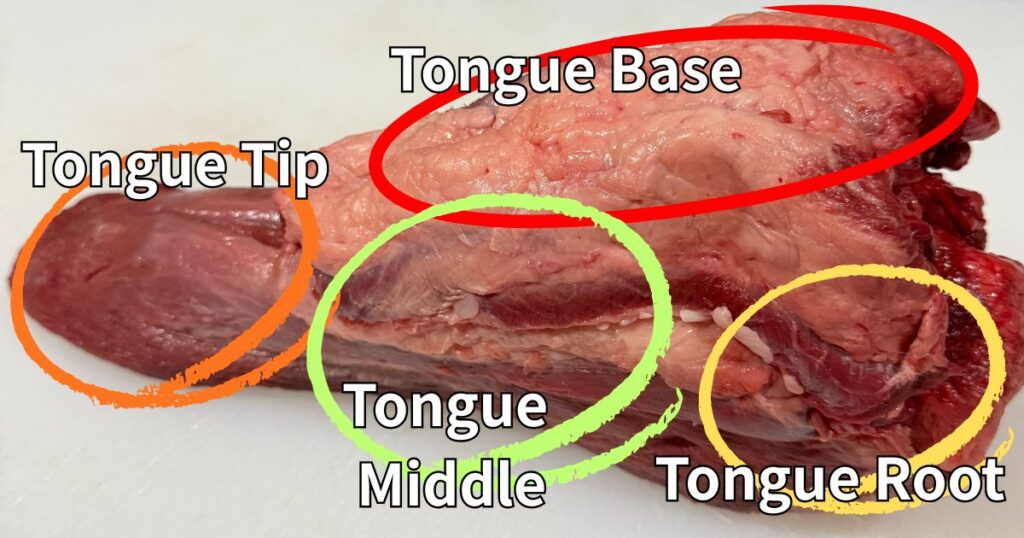
As the name suggests, beef tongue is the actual tongue of the cow. It’s a substantial cut, measuring about 50 centimeters in length and weighing between 1 to 1.5 kilograms. The meat quality changes significantly from the root to the tip due to differences in muscle movement. Here, we introduce the unique characteristics of the four distinct cuts of beef tongue.Tan-moto (Tongue Root / Core) This is the very base of the tongue. It moves the least, making it the most premium cut with abundant, beautifully marbled fat. Since only a tiny amount can be harvested from a single tongue, it is often served at yakiniku restaurants as “Special Tongue” or “Premium Thick-Cut Tongue.” It is incredibly tender, offering a superb, crisp texture that easily bites through even when sliced thick. Tan-naka (Middle Tongue) This is the middle section. When we casually eat “Tan-shio” (salted tongue), this is usually the part we are enjoying. It features a perfect balance of moderate fat and rich, lean meat umami. The classic way to enjoy it is sliced thin, lightly seared, and wrapped around a generous amount of salted green onions. Tan-saki (Tongue Tip) This is the tip of the tongue. Because the cow uses this part frequently while eating, the muscles are well-developed, resulting in less fat and a firm, chewy texture. Rather than grilling it as is, it is typically finely chopped and used in stews, curries, or ground meat dishes. The flavor of the meat itself is very concentrated and rich. Tan-shita (Under Tongue) This is the underside of the tongue. It is quite tough and has many tendons, so it is also often used in stews. However, with careful preparation and precise scoring by a skilled chef, it transforms into a connoisseur’s favorite, releasing deep umami with every chew.
Thickness Changes Everything! The Ultimate Secrets to “Raising” Your Beef Tongue on the Grill
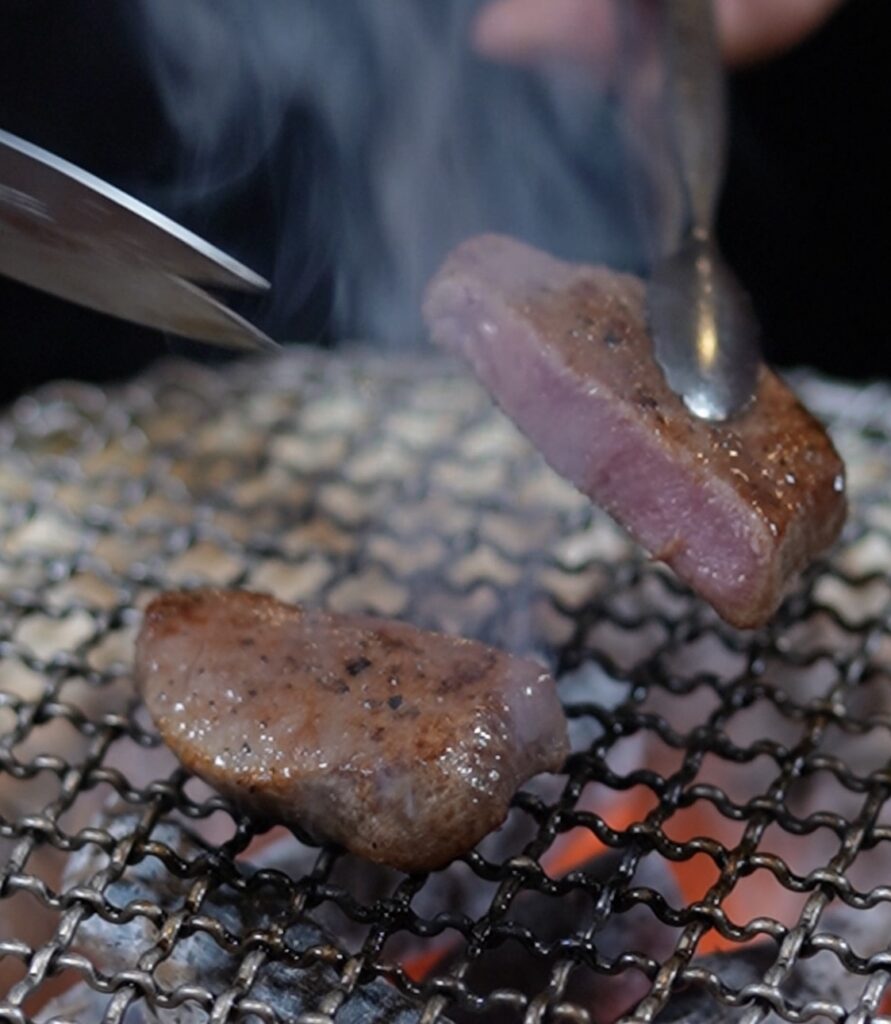
Yakiniku is “cooking” that begins the moment you place the meat on the grill. No matter how premium the meat is, getting the grilling technique wrong will cut the deliciousness in half. The “ideal heat” for beef tongue varies completely depending on the thickness of the cut. Here, we share professional grilling secrets divided into thin and thick cuts.
How to Grill Thin-Sliced Tan-shio Perfectly
Overcooking thin-sliced tongue is strictly prohibited! To retain its crisp texture and juiciness, it’s a battle of speed.
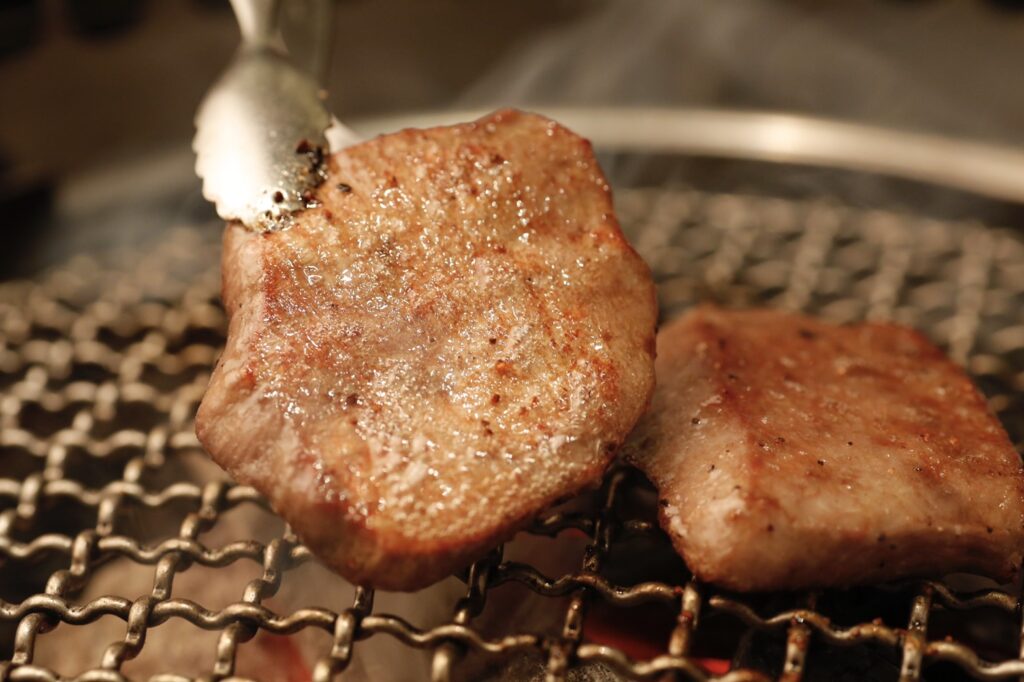
- Avoid the center of the grill: The center is too hot and will cause burning. Place the meat slightly toward the outside where the heat is stable.
- Wait for the meat juices to surface: Resist the urge to flip immediately. When the surface glistens with juices and the edges curl up slightly, it’s time to flip.
- Just a quick sear on the back: Once flipped, 5 to 10 seconds is enough. Overcooking makes it tough, so take it off while a hint of pink remains.
- Add green onions after grilling: If it comes with a green onion sauce (Negi-shio), do not grill the meat with the onions on it, as they will burn or fall through the grate. Grill the meat bare, then wrap the onions inside once it’s on your plate for the smartest and tastiest result.
The Professional Way to Grill Thick-Sliced Tongue (Tan-moto)
When grilling thick-sliced tongue, do you think, “First, sear the outside on high heat!”? Actually, that causes the inside to remain raw while the outside burns. The professional method is to “cook it slowly on medium heat, flipping it many times.”
- Start on medium heat: Do not use high heat. Place the thick-sliced tongue in an area with stable, medium heat. The key is to transfer the heat gradually without sudden temperature changes.
- Flip it frequently: There is an urban legend that “you should only flip yakiniku once,” but this does not apply to thick cuts. By rolling and flipping it every 10 to 15 seconds, heat penetrates evenly from both sides right to the center.
- Fry it in its own fat: As you carefully “raise” the meat by flipping it constantly, abundant fat melts out from within the tongue. As this natural fat sizzles on the grill, it practically deep-fries the surface, creating a perfectly crispy and savory exterior.
- Let it rest to settle the juices: Once the whole piece is nicely browned and plump, move it to the edge of the grill. Resting it for just a few seconds on your plate or the edge of the grill allows the juices to settle in the center, so umami bursts into your mouth the moment you take a bite.
Don’t Fail Your Date or Business Dinner! 3 Points for Choosing an Ikebukuro Yakiniku Restaurant
Ikebukuro is home to countless yakiniku restaurants, ranging from affordable chains to high-end spots perfect for anniversaries. If you are going out, you want to choose a place where you can enjoy the best beef tongue to your heart’s content. Here are three crucial points to check when selecting a restaurant.
1. Choose a restaurant that uses a “Charcoal Grill” (Sumibi)

The element that determines the taste of yakiniku is the “fire.” Gas roasters are convenient, but if you seek authentic deliciousness, “charcoal grilling” is highly recommended. High-quality Bincho charcoal emits strong far-infrared rays, quickly cooking the surface and locking in the umami. Furthermore, when the fat drips onto the charcoal, the rising smoke envelops the meat, adding an exquisite, savory, smoky aroma.
2. Do they serve “Chilled” (never-frozen) Wagyu Tongue?
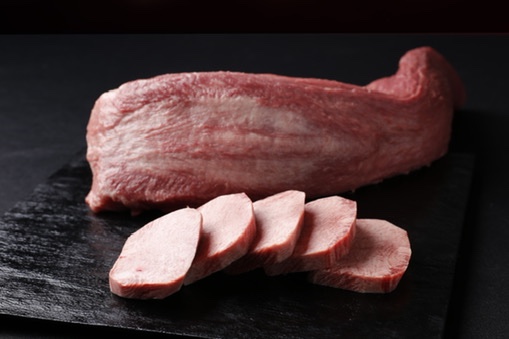
To reduce storage and transportation costs, the beef tongue served at many restaurants is imported and distributed in a deep-frozen state. However, when meat is frozen solid, the cell walls break during thawing, causing umami components to leak out as drip (meat juices).
If you want to experience “truly delicious beef tongue,” look for a restaurant that handles “Chilled Distribution” (fresh) tongue, which has never been frozen from the source to the restaurant. Meat transported while maintaining its freshness retains its moisture and umami perfectly. The smooth texture and elegant sweetness of fresh Wagyu tongue are simply in a league of their own.
3. Do they offer a “Full-Attendance” (staff grills for you) service?
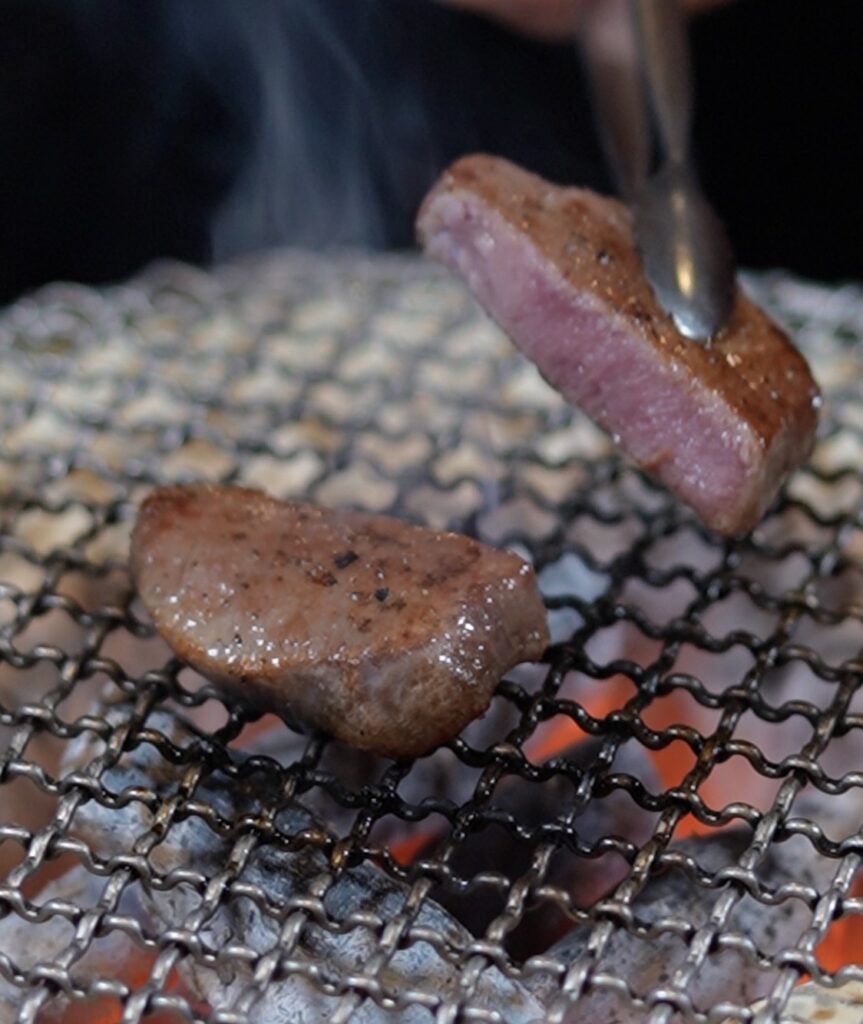
During a date, an important dinner, or entertaining clients, you want to avoid conversation stopping because you are too focused on grilling. This is especially true for thick-sliced tongue, which requires the professional skill of flipping it repeatedly. Recently, there has been an increase in yakiniku restaurants offering a “Full-Attendance” style, where skilled staff grill each piece of meat to perfection. Beef tongue grilled with a professional’s eye and technique tastes completely different from cooking it yourself.
Start with Beef Tongue for an Unforgettable Yakiniku Experience
How was it? Even the “beef tongue” you usually order casually can be appreciated much more deeply by knowing the characteristics of each cut and the professional secrets of slowly “raising” a thick cut on the grill. The satisfying crisp texture, the spreading juices, and the refreshing acidity of lemon… If that first bite is perfect, every moment that follows—from the kalbi and roast to the final cold noodles or soup—will begin to shine.
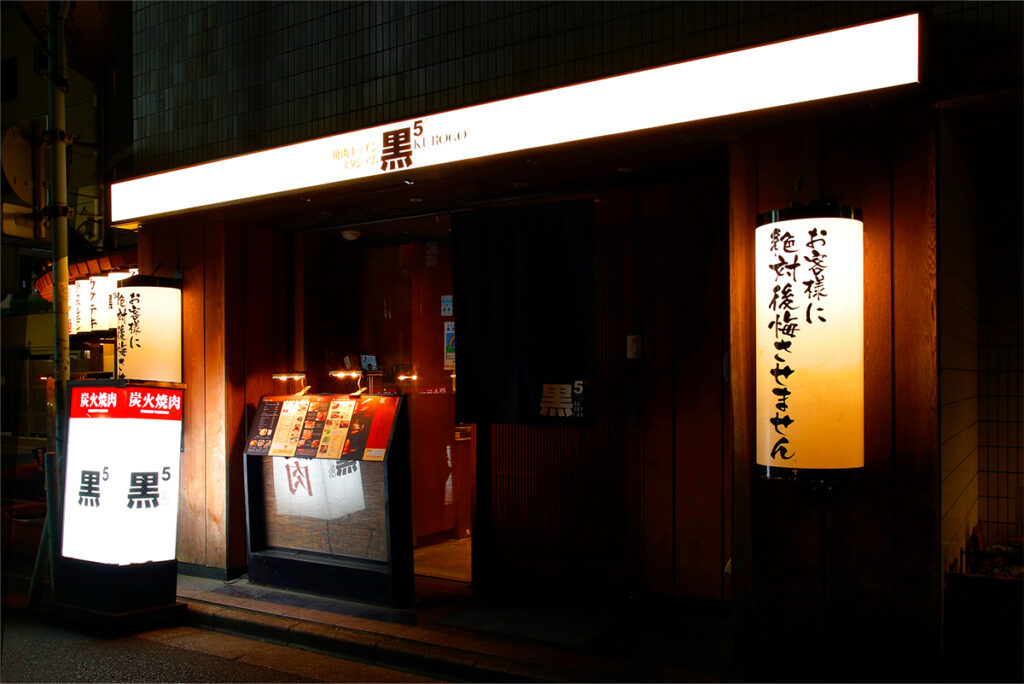
In a corner of the bustling city of Ikebukuro, enveloped by the warmth of charcoal, spending an evening sharing delicious meat with someone special. Please enjoy your ultimate yakiniku dinner this coming weekend.
Restaurant: Yakiniku Kuro5 Honten (Main Store) Address: 1F Cima 100 Bldg, 2-46-3 Ikebukuro, Toshima-ku, Tokyo 171-0014 Nearest Station: 5-minute walk from JR Ikebukuro Station West Exit Hours: 17:00–24:00 (L.O. 23:30) Closed: Open year-round
Restaurant: Yakiniku Kuro5 Ikebukuro Higashiguchi (East Exit) Address: 2F Need Bldg, 1-42-16 Higashiikebukuro, Toshima-ku, Tokyo 170-0013 Nearest Station: 5-minute walk from JR Ikebukuro Station East Exit Hours: 17:00–24:00 (L.O. 23:00) Closed: Open year-round
Restaurant: Yakiniku Kuro5 Kabukicho Address: 1F Sankei Bldg, 2-21-4 Kabukicho, Shinjuku-ku, Tokyo Nearest Station: 5-minute walk from Seibu Shinjuku Station / 7-minute walk from Shinjuku Sanchome Station Hours: 18:00–5:00 the next day (L.O. 4:00) Closed: Open year-round

