

The moment you open a Yakiniku menu, you are greeted by an array of appealing cut names. After ordering the classic Kalbi, Roast, and Tongue, you might sometimes feel excited to order something a bit more professional, like rare cuts.
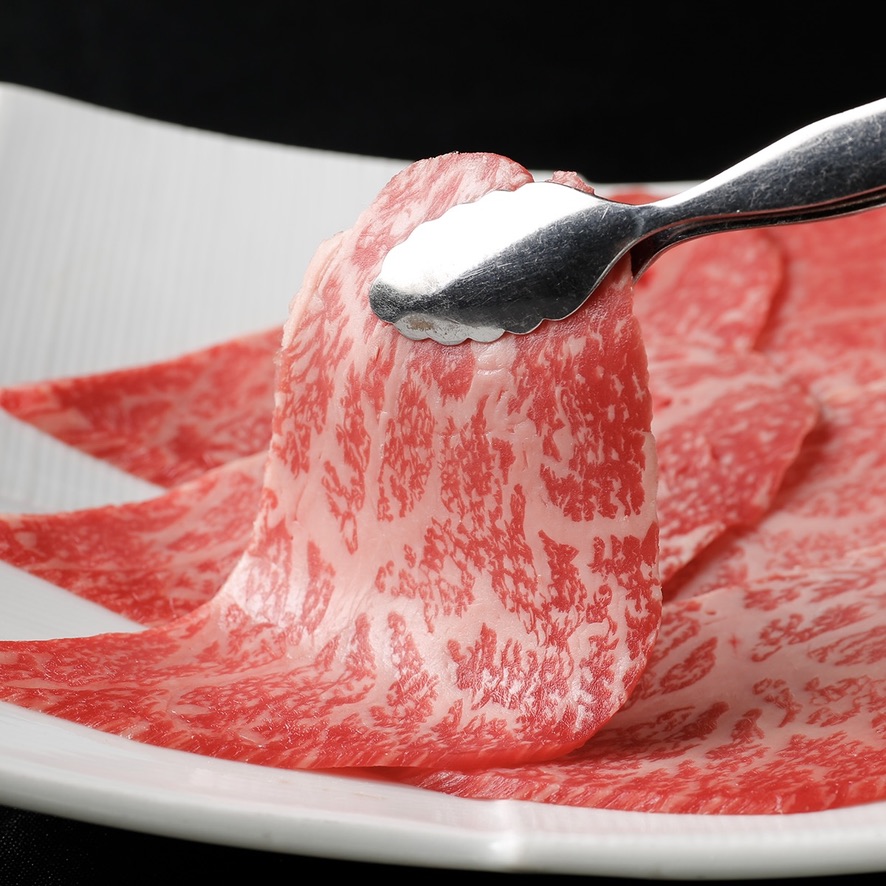
However, seeing unfamiliar names might leave you wondering about what part of the cow it is, whether it is fatty, or if it has a clean taste. Everyone has experienced this hesitation.
Today, we will shine a spotlight on the elite members of the highly popular Wagyu thigh meat category: Tomosankaku and Shinshin.
Although they belong to the same thigh meat category, these two are like brothers with completely different personalities. By deeply understanding their characteristics, you will be able to choose the perfect plate to match your mood for the day and the preferences of the friends gathered around the grill.
The Idea That Thigh Meat is Dry is Outdated! The Potential of Wagyu Thigh
What image comes to mind when you hear the word thigh meat? Some people might imagine a tough cut with little fat that is healthy but becomes slightly dry when overcooked. It is true that thigh meat from highly exercised imported beef often shows these tendencies strongly.
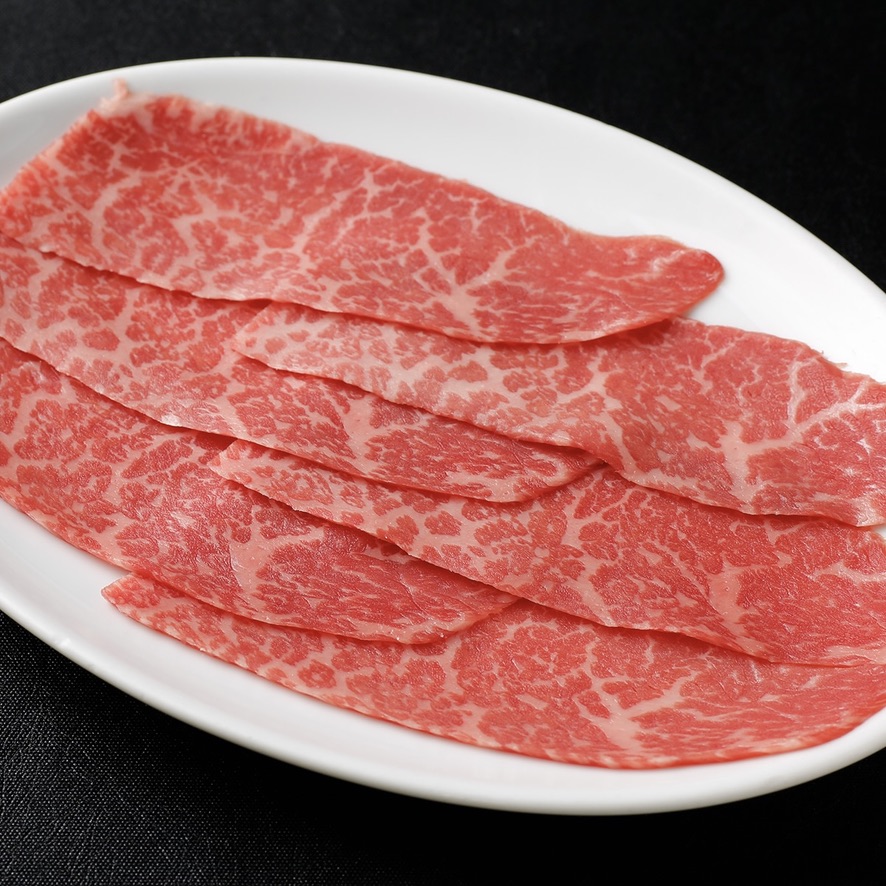
However, carefully raised Kuroge Wagyu thigh meat pleasantly overturns this common sense. Cows use their hind legs extensively to support their massive bodies. Precisely because it is a highly exercised part, the muscles accumulate a rich, inherent meat umami (amino acids).
When this is properly combined with the high quality fat (marbling) unique to Wagyu, it creates a wonderful flavor that goes beyond mere lean meat. Meat juices overflow the more you chew, along with the sweetness of fat that melts at a low temperature. Wagyu thigh meat is the cut where you can best enjoy this golden ratio of meat umami and sweet fat.
The Elite Marbled Thigh: Tomosankaku
First is Tomosankaku (Tri tip). Near the base of the cow’s hind legs, there is a large, round block of meat called Shintama (Knuckle), and this cut is carved from there. It earned its cute name, which means triangle, because of the beautiful triangular shape it takes when cut.
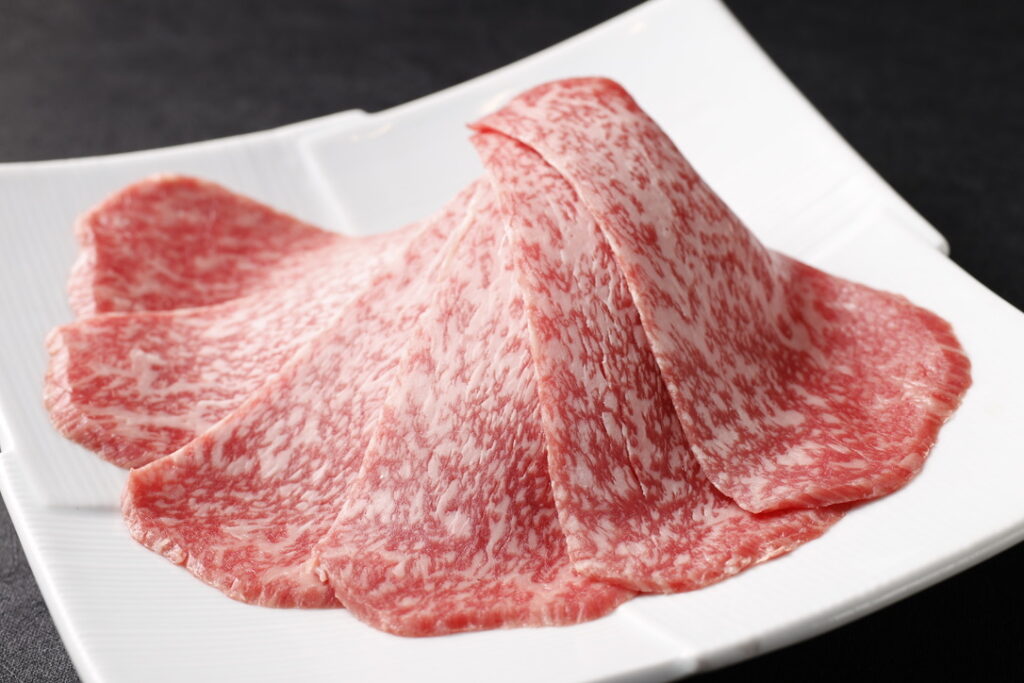
The greatest feature of Tomosankaku is its miraculous balance of having beautiful marbling despite being thigh meat. In a cow’s body, the thigh is a highly exercised area consisting mostly of lean meat, but the Tomosankaku part is special. It has a structure prone to marbling, carrying a rich fat content that rivals Kalbi.
When placed on the grill, the high quality fat melts with a light sizzling sound, filling the air with a savory aroma. When you put it in your mouth, the firm flavor of the lean meat and the sweet, melting fat spread throughout. It does not have the heaviness of Kalbi, nor does it lack the satisfaction of plain lean meat. It is truly a luxurious cut that offers the best of both worlds, making it an irresistible masterpiece for marbled meat lovers.
Silky Smooth Lean Meat: Shinshin
Next is Shinshin (Center of the Knuckle). Like Tomosankaku, this cut is also taken from the Shintama, but as the name suggests, it is the very core or center of the block. It is an extremely rare cut, with only a tiny amount obtainable from a single cow.
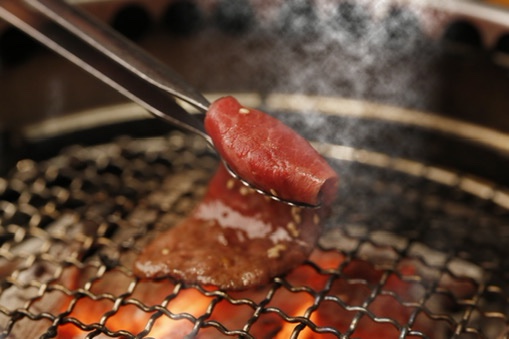
If Tomosankaku is the elite of marbling, Shinshin is undoubtedly the elite of lean meat. Among the thigh meats, this inner section experiences very little movement and load. As a result, the muscle fibers are incredibly fine, making it silky smooth and tender.
It has a breathtakingly beautiful deep red appearance. It has very little marbling, making it highly healthy, yet it is packed with the deep richness and amino acid umami unique to Wagyu. If you eat it after just quickly searing it, you can bite through it smoothly without applying much pressure, enjoying a refined meat flavor with no strong quirks. For those who are becoming less fond of greasy foods, or those who want to enjoy the pure taste of meat itself, this is a highly recommended cut.
A Professional Guide! How to Choose Between Tomosankaku and Shinshin
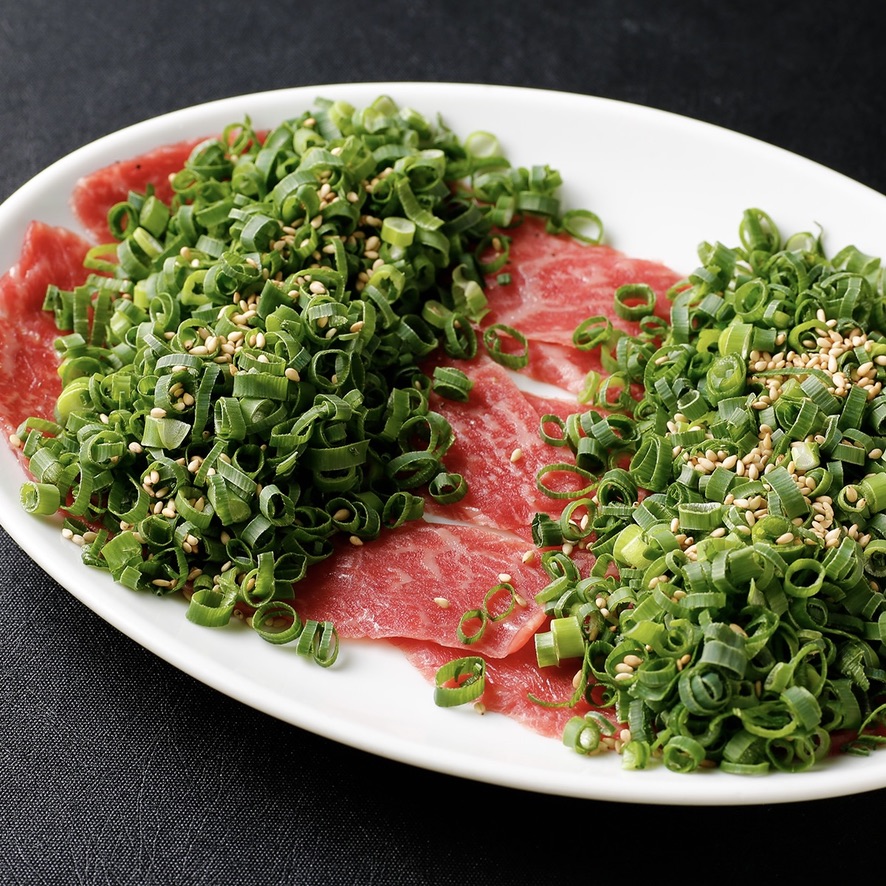
So, which one should you order at an actual Yakiniku restaurant? When in doubt, try choosing based on your mood or the scene of the day as follows.Recommended for those who want Tomosankaku: When you want a hearty meat meal today! When you want to fully enjoy the harmony of sweet fat and sauce with white rice. When you like Kalbi but want to experience a slightly more mature marbled flavor. It has a robustness that stands up well to a full bodied red wine. Recommended for those who want Shinshin: When you want to savor moist, high quality lean meat. When you want to enjoy the clean umami of the meat with salt or wasabi soy sauce as an accompaniment to alcohol. When you are looking for meat that can be eaten lightly even in the latter half of a course meal. It also pairs exceptionally well with cold beer or a crisp highball.
Drawing Out the Potential of Thigh Meat: Cutting Techniques and Binchotan Charcoal
Now, this is where the skill of chefs who have faced meat for many years truly shines. Thigh meat, especially finely textured lean meat like Shinshin, has a high moisture content and is very delicate. A single cut can completely change the texture and the way the umami spreads in your mouth.
Accurately assessing the direction of the meat fibers and adjusting the angle of the knife. Then, changing the thickness by millimeters depending on the marbling of the Tomosankaku and the tenderness of the Shinshin. This is the first step to drawing out the maximum potential of Wagyu thigh meat.
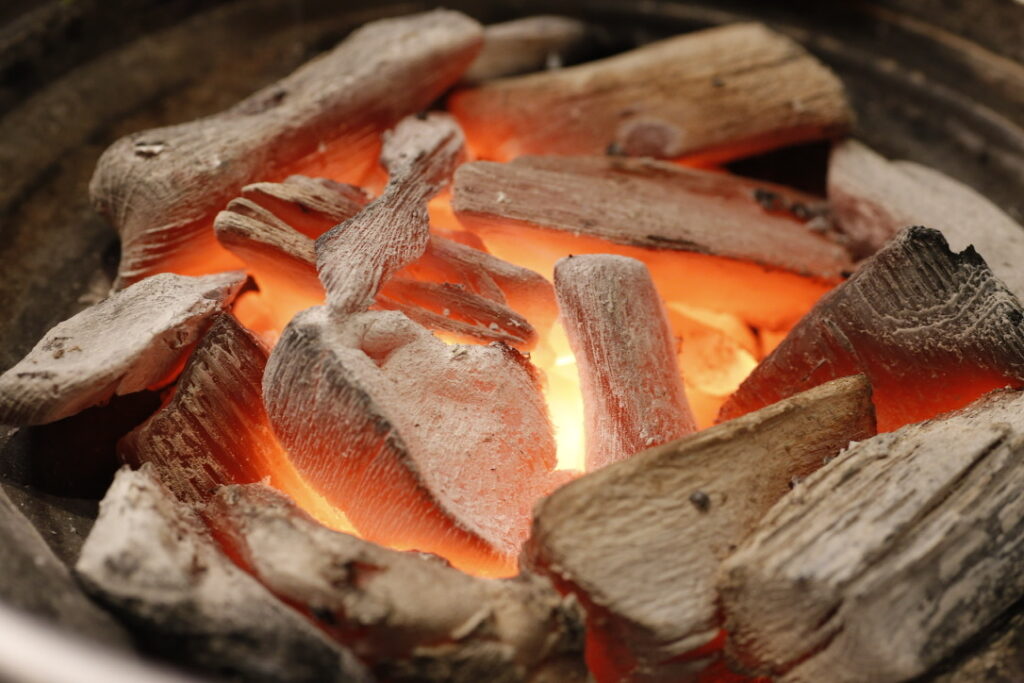
Finally, it is the grilling process that makes the potential of this delicately cut meat bloom. By rapidly searing the surface over the strong, close heat of high quality Binchotan charcoal, the meat is coated with a savory crust, preserving the moist, superb meat juices inside. The far infrared rays emitted by the charcoal lock in the rich umami of the thigh meat without letting it escape.
Deepening Your Knowledge Makes Yakiniku Even More Delicious
Tomosankaku and Shinshin. Although they are companions in the thigh meat family, one captivates with glamorous marbling, while the other competes with the modest umami of lean meat. By knowing the structure of the cow’s body and the role each part plays, the single slice of meat in front of you will surely feel more precious and delicious.
The next time you visit a Yakiniku restaurant, please try comparing these two rare cuts. Confirming for yourself the sweetness of Tomosankaku and the smoothness of Shinshin is one of the adult ways to enjoy Yakiniku.
If you want to taste ultimate Kalbi and Ribeye along with knowledge, head to Wagyu Yakiniku Kuro5
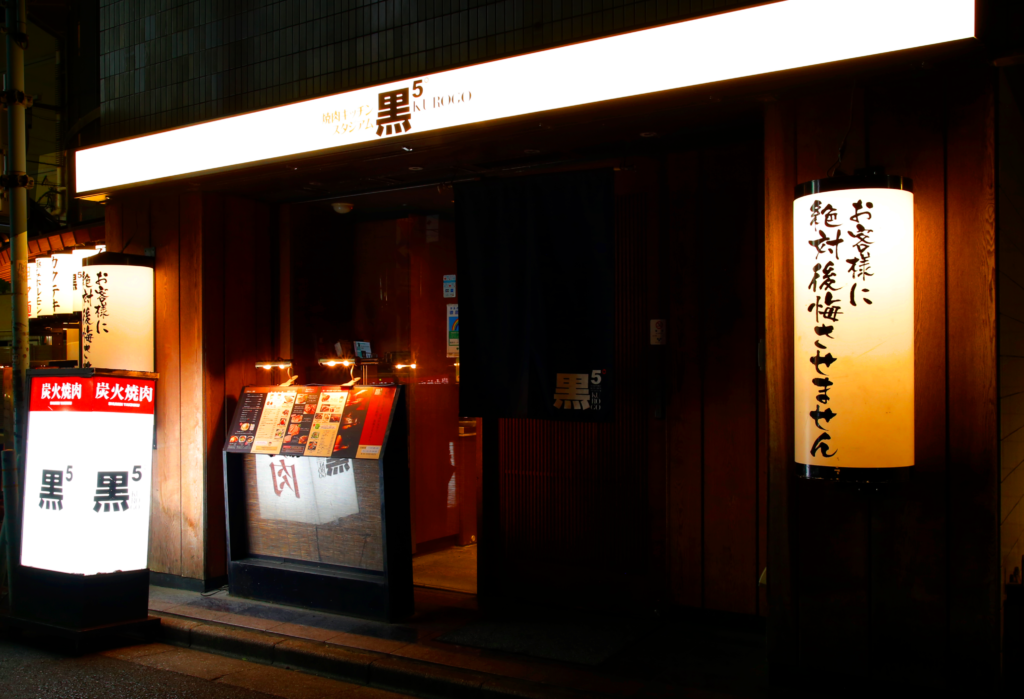
At Yakiniku Kuro5, we serve various cuts of carefully selected, highest grade Black Wagyu beef to everyone in their most delicious state. We adopt a “Full Attendance Style” where professional staff quietly execute perfect grilling right in front of the customers without interrupting conversations. Please experience with your own tongue the ultimate meat, bursting with meat juices and cloaked in the mellow aroma of Binchotan charcoal. We sincerely look forward to your visit.
Store Name: Yakiniku Kuro5 Main Store
Address: Cima 100 Bldg 1F, 2-46-3 Ikebukuro, Toshima-ku, Tokyo 171-0014
Nearest Station: 5 minute walk from JR Ikebukuro Station West Exit
Business Hours: 17:00 – 24:00 (L.O. 23:30)
Regular Holiday: Open year round
Store Name: Yakiniku Kuro5 Ikebukuro East Exit Store
Address: Need Bldg 2F, 1-42-16 Higashi-Ikebukuro, Toshima-ku, Tokyo 170-0013
Nearest Station: 5 minute walk from JR Ikebukuro Station East Exit
Business Hours: 17:00 – 24:00 (L.O. 23:00)
Regular Holiday: Open year round
Store Name: Yakiniku Kuro5 Kabukicho
Address: Sankei Bldg 1F, 2-21-4 Kabukicho, Shinjuku-ku, Tokyo
Nearest Station: 5 minute walk from Seibu-Shinjuku Station / 7 minute walk from Shinjuku-sanchome Station
Business Hours: 18:00 – 5:00 next day (L.O. 4:00)
Regular Holiday: Open year round

