



Picture yourself at a table in a Yakiniku restaurant. You’ve been indulging in premium Wagyu beef, and both your stomach and soul are feeling perfectly satisfied. As the meal winds down and you open the menu to decide on that final “finishing” dish, where do your eyes naturally wander?
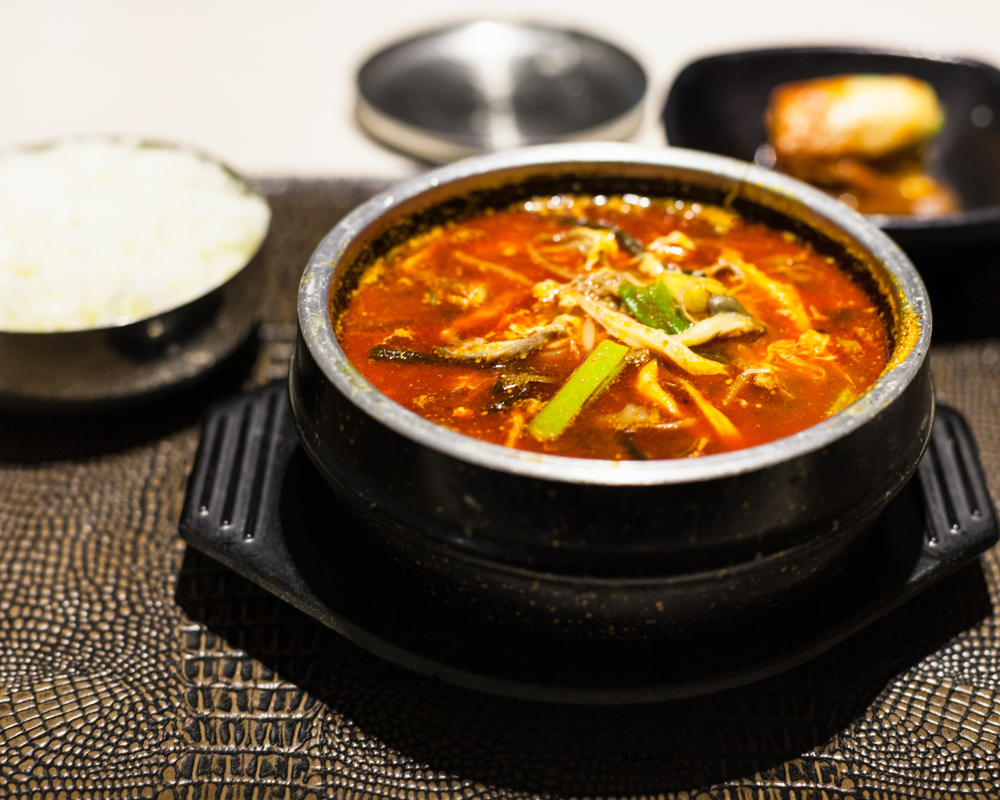
A refreshing bowl of cold noodles (Naengmyeon) is always a great choice, and the crispy rice from a stone-pot Bibimbap is hard to resist. However, many people simply cannot fight the temptation of that bright red, bubbling soup served in a hot stone bowl-a heat entirely different from the grill. Yes, we’re talking about the unsung hero of Yakiniku: the spicy and savory “Yukgaejang” (Spicy Beef Soup).
The aroma of sesame oil and garlic rises with the steam. Take one sip, and the stimulating heat of chili peppers gently tingles your tongue, immediately followed by an overwhelming wave of “Umami” from the melted beef and vegetables. Wiping a little sweat from your forehead while blowing on the hot ingredients before taking a bite-it’s safe to say this moment is the perfect climax to the Yakiniku entertainment experience.
Today, we will dive deep into the profound charm of “Yukgaejang” and dissect the secrets behind its deliciousness. Furthermore, we’ll share a behind-the-scenes story about a “kitchen revolution” that birthed our ultimate soup broth. For those thinking, “I absolutely need to eat this at home!”, we will also introduce the wonderful world of “Ready-to-Eat (Retort) Soups”-a magical item that captures the authentic taste of a specialized Yakiniku restaurant in a pouch.
What Exactly is Yukgaejang? Its Origins and History
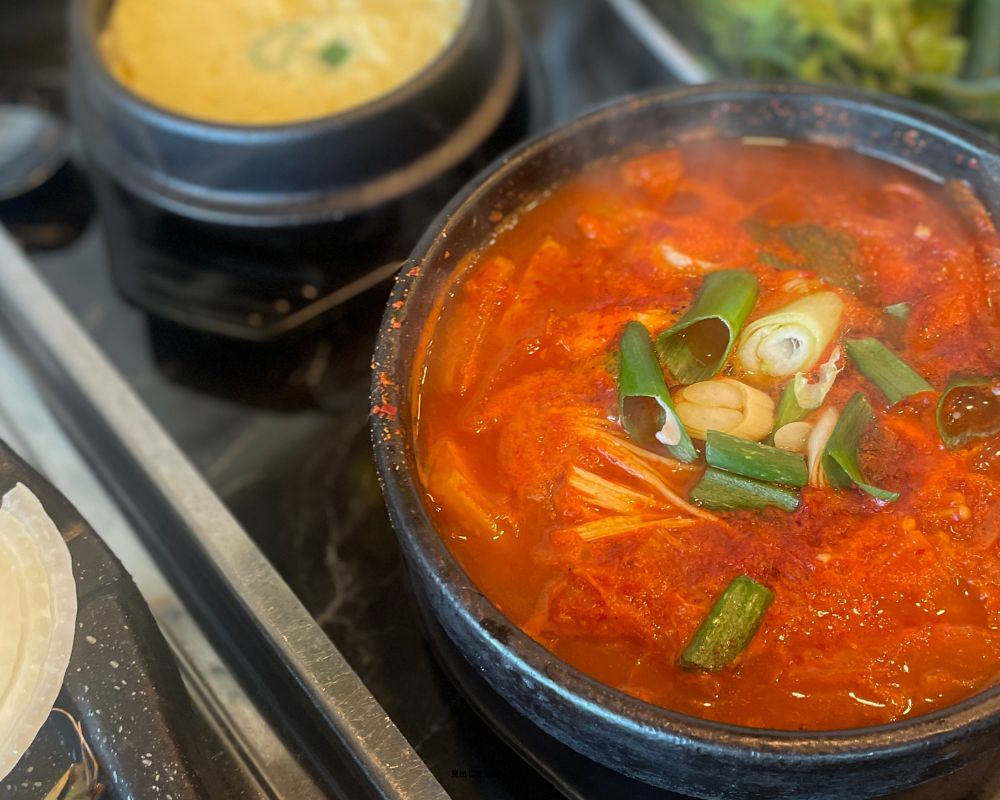
First of all, what kind of soup is “Yukgaejang”? Korean cuisine has many soups ending in “-jang” or “-tang,” which can be a bit confusing.
In Korean, “Yuk” refers to beef. Originally, “Gaejang” referred to a spicy soup boiled with dog meat. However, as times changed, using beef became the standard. Thus, the “Gaejang” made with “Yuk” (beef) came to be known as “Yukgaejang.”
Historically in Korea, it has been cherished as a nourishing meal to survive the harsh summer heat, or as a special dish served to welcome important guests. Yukgaejang, simmered slowly with a variety of ingredients, is not just a “spicy soup.” It is a “feast in a bowl,” packed tightly with nutrition and rich umami.
More Than Just Spicy: The 3 Elements That Create Yukgaejang’s “Umami”
You might think, “If it’s just a spicy soup, can’t I make it by mixing hot water with kimchi hot pot base or spicy bean paste?” However, authentic Yakiniku restaurant Yukgaejang does not have a simple flavor structure that can be easily replicated at home. There are three solid reasons why Yukgaejang shakes our senses so deeply.
1. A Kitchen Revolution: The “Ultimate Bone Broth”
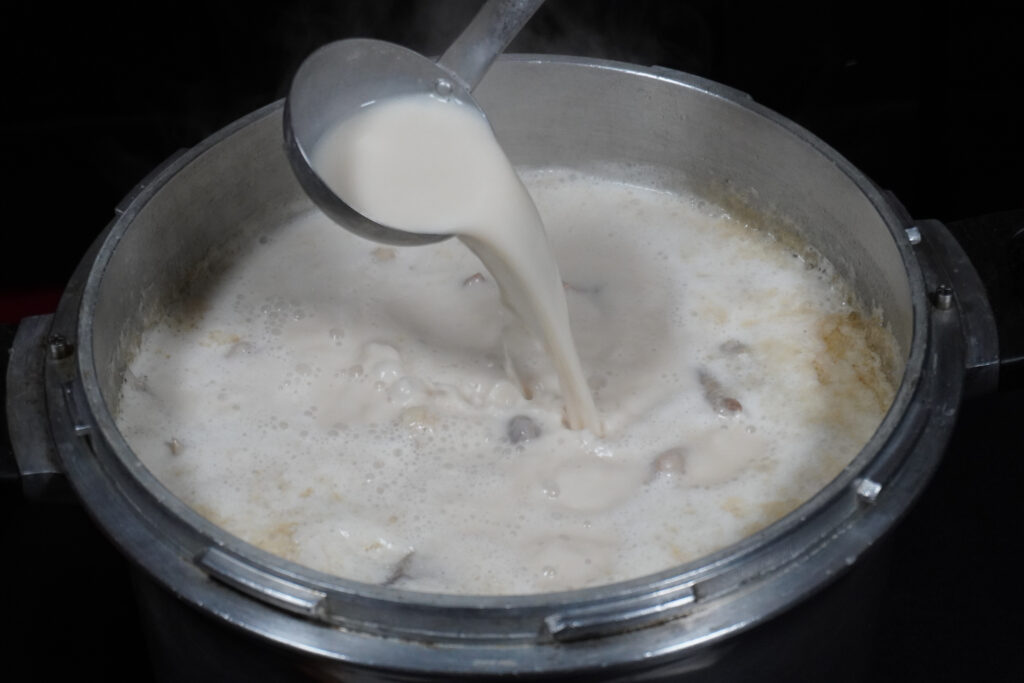
The biggest factor determining the deliciousness of Yukgaejang is the “base broth.” We never make Yukgaejang simply by dissolving seasonings in water. The foundation is a cloudy white soup made by boiling beef bones (marrow bones) over high heat for many hours. Actually, this beef bone soup is currently enjoying a massive boom in Western countries, where it’s known as “Bone Broth.”
By simmering it slowly for a long time, the collagen and amino acids inside the bones dissolve into the soup. It’s so rich in nutrients that top athletes drink it as an “IV drip in a cup” to condition their gut health and care for their skin and joints.
The base of the soups we serve is exactly this “Ultra-Rich Bone Broth.” About 10 years ago, a little revolution happened in our kitchen. An acquaintance introduced us to a “Pressure Stockpot” from Heiwa Leasing Co., Ltd.
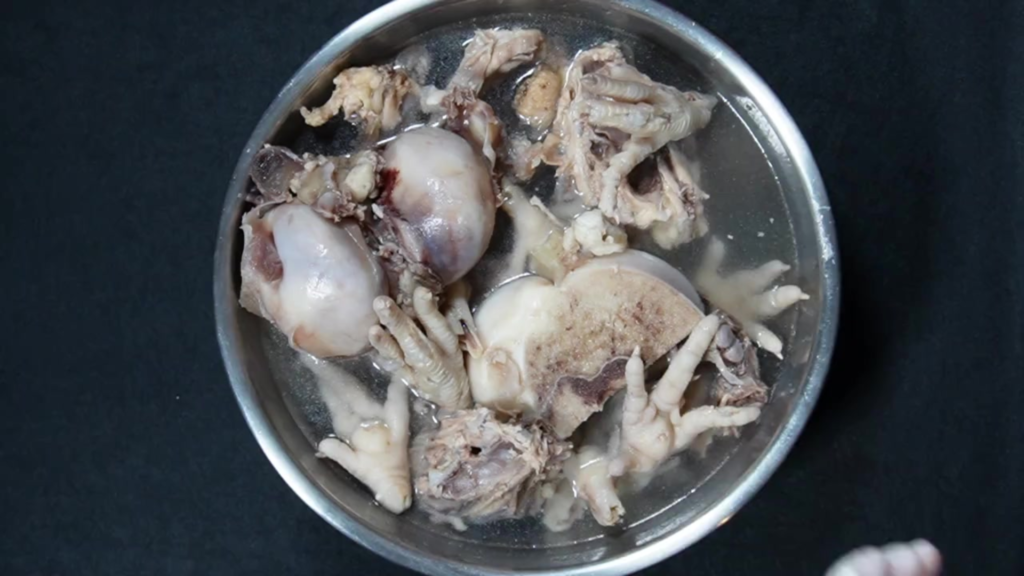
We were skeptical at first, but when we prepared beef marrow bones and chicken feet in this pressure pot, the kitchen went into an uproar. “This… is amazing!” all the staff gasped. By cooking under high pressure, the collagen and umami components completely melted out, creating a “deeper richness,” “viscosity,” and “concentration of umami” that was absolutely impossible to achieve with conventional pots. Moreover, it had a clear, pure taste without any off-flavors.
It was a true “pot revolution.” Since then, we changed our style to cook all our soups in this pressure stockpot.
In the past, to save money and effort, we had witnessed restaurants dissolving “coffee creamer” into regular soup to turn it white and serve it as “Gomtang” (white bone soup). Hearing the words “As long as it’s white, the customers are happy” left us dumbfounded, and that bitter experience became our starting point. That is exactly why we never cut corners; we risk our lives to create the rich bone broth that serves as our foundation. Thanks to this “overwhelming foundation of umami,” the flavor doesn’t break down even when adding lots of chili peppers, resulting in a magical Yukgaejang where you can feel a mellow richness behind the heat.
2. The High-Quality “Wagyu Trimmings” That Multiply the Flavor
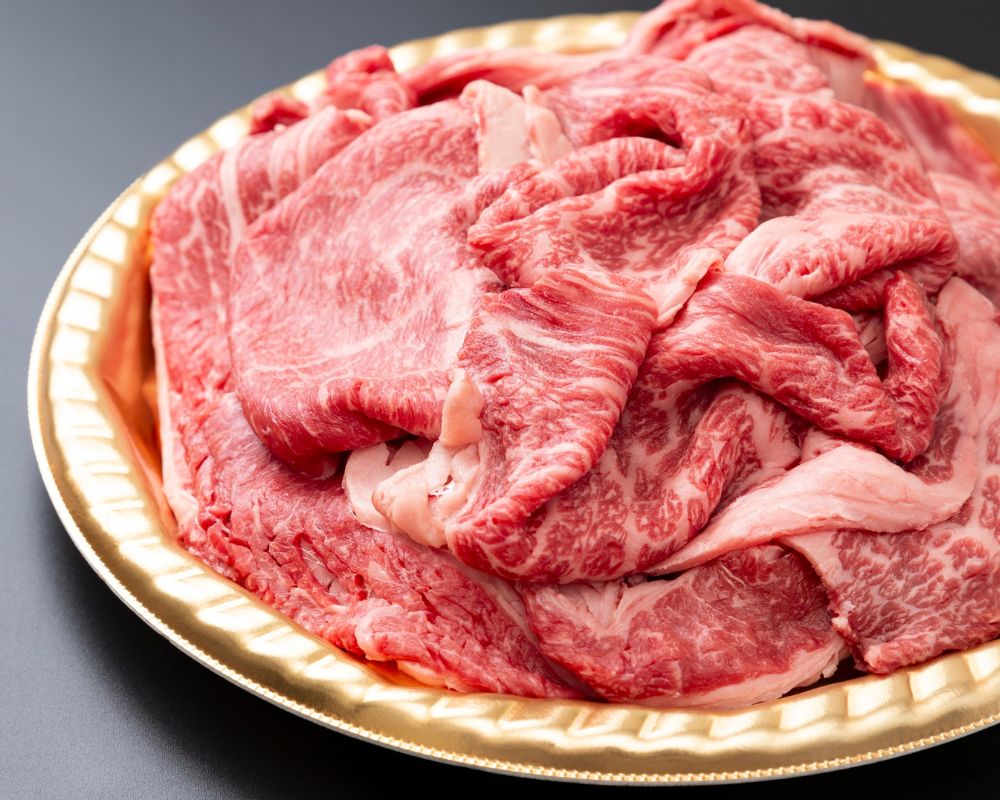
Another star of Yukgaejang is the abundant beef inside the soup. Actually, this is often the “trimmings” and “offcuts” produced when we prepare and shape premium blocks of Wagyu beef at the restaurant.
Even if these pieces aren’t the right shape to be served on a customer’s grill, the meat quality is undoubtedly top-tier Wagyu. By slowly simmering this Wagyu in our special bone broth, the sweet, high-quality fat and strong savory flavor unique to Wagyu melt into the entire soup. This creates a luxurious taste that store-bought soup bases can never imitate-a flavor only a Yakiniku restaurant can provide.
3. “Plenty of Vegetables” for Texture and Aroma
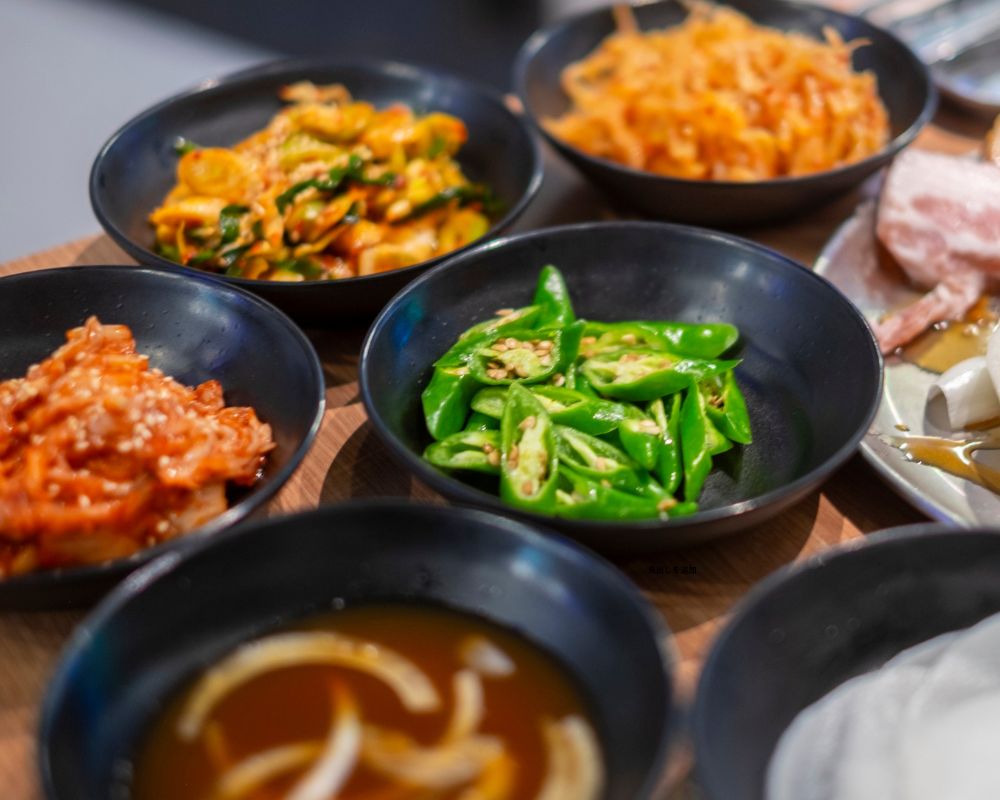
We cannot forget the vegetables that practically cover the entire bowl. Bean sprouts, bracken (fernbrake), green onions, and garlic chives are the standard.
The crunchy texture of bean sprouts, the unique chewiness of bracken, and the sweet, melt-in-your-mouth goodness of simmered green onions. These vegetables not only bring a complex rhythm of textures to the soup but their natural moisture and sweetness also play a role in mildly neutralizing the spiciness. The punch of the meat and the gentleness of the vegetables play a magnificent harmony in a single bowl.
How is it Different from “Kalbi Soup”?
On the soup menu at a Yakiniku restaurant, you’ll often see “Kalbi Soup” listed right next to Yukgaejang. Because they both look similarly bright red, we often hear customers struggling to choose between the two.

In truth, while they look similar, their characters are entirely different.
As mentioned earlier, Yukgaejang is the king of “spicy umami,” made by stir-frying shredded beef and plenty of vegetables with spicy miso (Gochujang and chili powder), then pouring in the rich bone broth to enjoy the harmony of all ingredients together.
On the other hand, Kalbi Soup features bone-in Kalbi (or large cuts of short rib) as the main ingredient, stewed until the meat itself falls apart. It focuses more on enjoying the “chunks of meat” rather than the vegetables, and the sweetness of the meat’s fat hits you more directly than the spiciness.
If you want the crunchy texture of vegetables and a spicy punch, go for Yukgaejang. If you want to bite into large chunks of meat and drown in the richness of the fat, choose Kalbi Soup. Pick your favorite depending on your mood that day!
The Dilemma: Craving Yukgaejang but Can’t Make it at Home
Having talked about the charm of Yukgaejang this much, you’re probably craving that spicy, savory soup right about now. Sometimes, not just after Yakiniku, but on a random weekday night or for a weekend lunch, you get the urge: “Ah, I just want to mix some rice into piping hot Yukgaejang and devour it!”
However, here we hit a massive wall. Yukgaejang is a dish with an incredibly high hurdle for home cooking.
Even if you utilize chicken bouillon powder and miso from the supermarket, it’s impossible to produce the richness of that “ultimate bone broth” extracted to its limits by a pressure stockpot. If you buy beef marrow bones to aim for authentic flavor, it will cost you an absurd amount of time and utility bills. Preparing several types of Namul (seasoned vegetables) is also a hassle.
“I want to eat it, but I can’t make it.” Having faced this dilemma, almost everyone has experienced settling for the spicy flavor of instant cup noodles instead.
Bring Professional Flavors to Your Table: “Ready-to-Eat (Retort) Soup” is the Answer
The ultimate method to solve this desperate desire to eat authentic Yukgaejang at home is to utilize the “Ready-to-Eat (Retort) Soup” seriously crafted by a specialized Yakiniku restaurant.
“Wait, retort pouches? Are they really delicious?” you might doubt. However, modern retort processing technology pairs exceptionally well with the soup born from our pressure stockpots.
The retort soups supervised and produced by uncompromising Yakiniku restaurants take the exact same “rich bone broth” base served in the restaurant, seal it in special packaging, and apply high-pressure heat sterilization. Because of this, while enabling long-term storage, the deep richness of the beef bone soup, the umami of the Wagyu, and the texture of the vegetables are perfectly locked inside.
A tired weekday night after work. Just warm it in hot water for a few minutes, or transfer it to a bowl and microwave it. With just that tiny bit of effort, your dining table instantly transforms into a table at a high-end Yakiniku restaurant. This overwhelming cost-performance and time-performance possess a charm you won’t be able to let go of once you experience it.
Ultimate Hacks for Retort Yukgaejang at Home
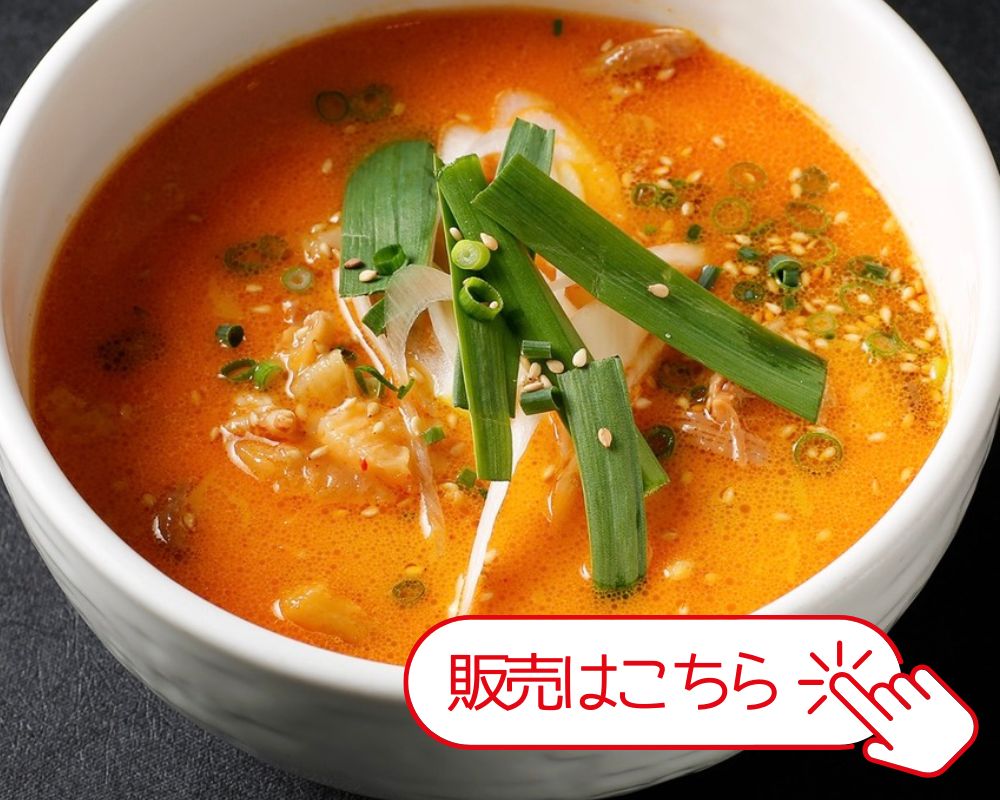
Once you get your hands on retort Yukgaejang soup, drinking it as-is is fantastic, but a huge benefit is that you can enjoy “limitless customizations” that you can only do at home. Here are some highly recommended ways to eat it that bring out the maximum potential of the retort pouch.
The Ultimate Classic: “Soft-Boiled Egg Yukgaejang Gukbap”
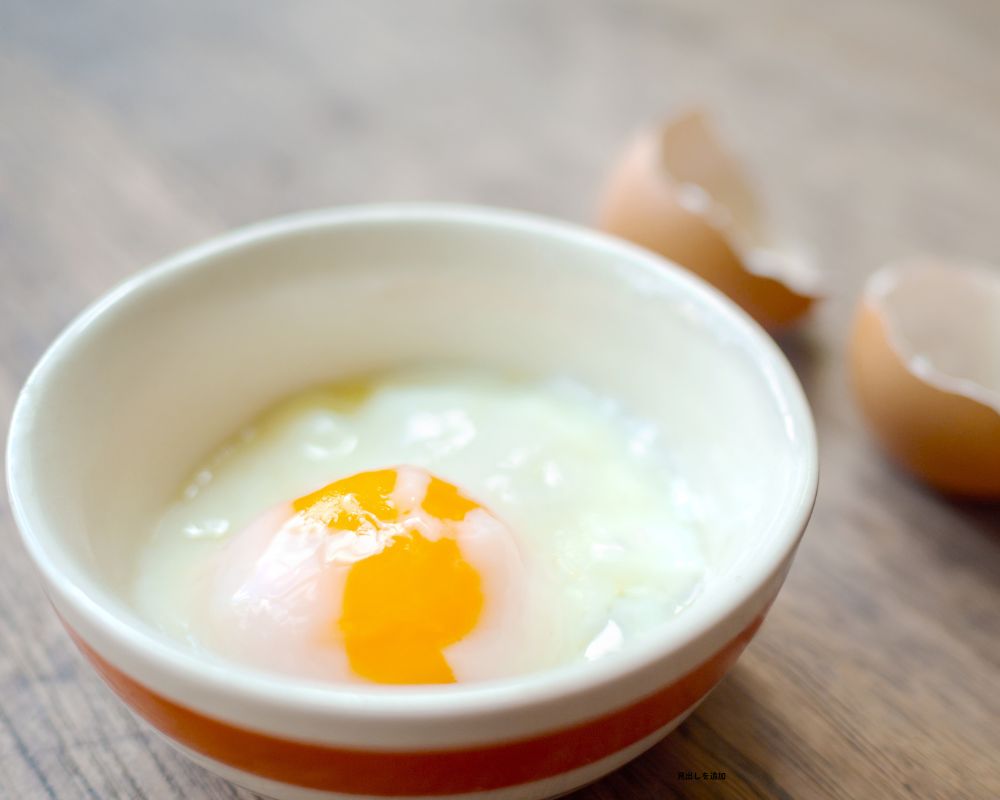
Pour the heated Yukgaejang soup generously over a bowl of piping hot white rice. This alone is a splendid Yukgaejang Gukbap (soup with rice), but try placing an “Onsen Tamago” (soft-boiled egg) or a poached egg on top.
Break the egg with your spoon, coat the rice with the rich bone broth and the runny yolk, and take a bite. The sharp heat of the chili is gently wrapped in the mellowness of the egg, creating a taste so good it will leave you speechless. The blissful act of “lifting the bowl to your mouth and slurping up the very last drop”-which might be too embarrassing to do at a restaurant-can be enjoyed at home without worrying about anyone watching.
Irresistibly Slurpable: “Spicy Yukgaejang Udon”
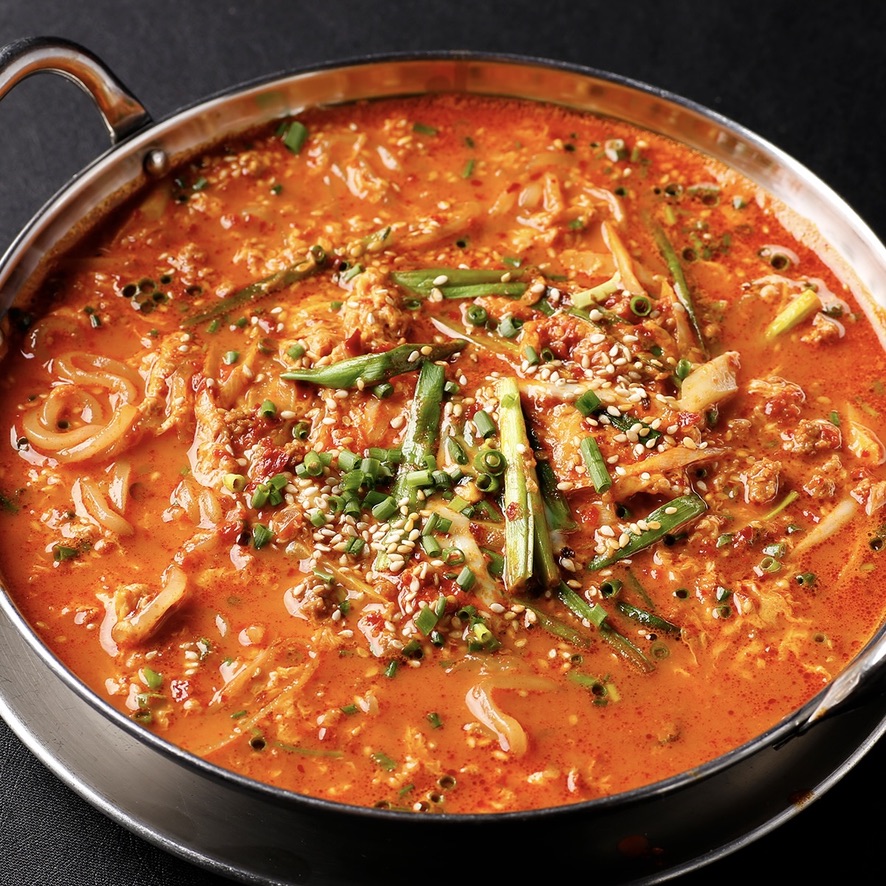
Quickly boil some frozen Udon noodles, put them in a bowl, and pour the boiling hot Yukgaejang soup over them. The collagen-rich soup and spiciness cling tightly to the udon noodles, completing an authentic spicy noodle dish in no time.
Add a drizzle of sesame oil and a sprinkle of white sesame seeds for even more aroma. It serves as an absolutely brilliant menu for a weekend lunch or as a finishing dish after some drinks.
A Mildly Sinful Treat: “Melted Cheese Yukgaejang”
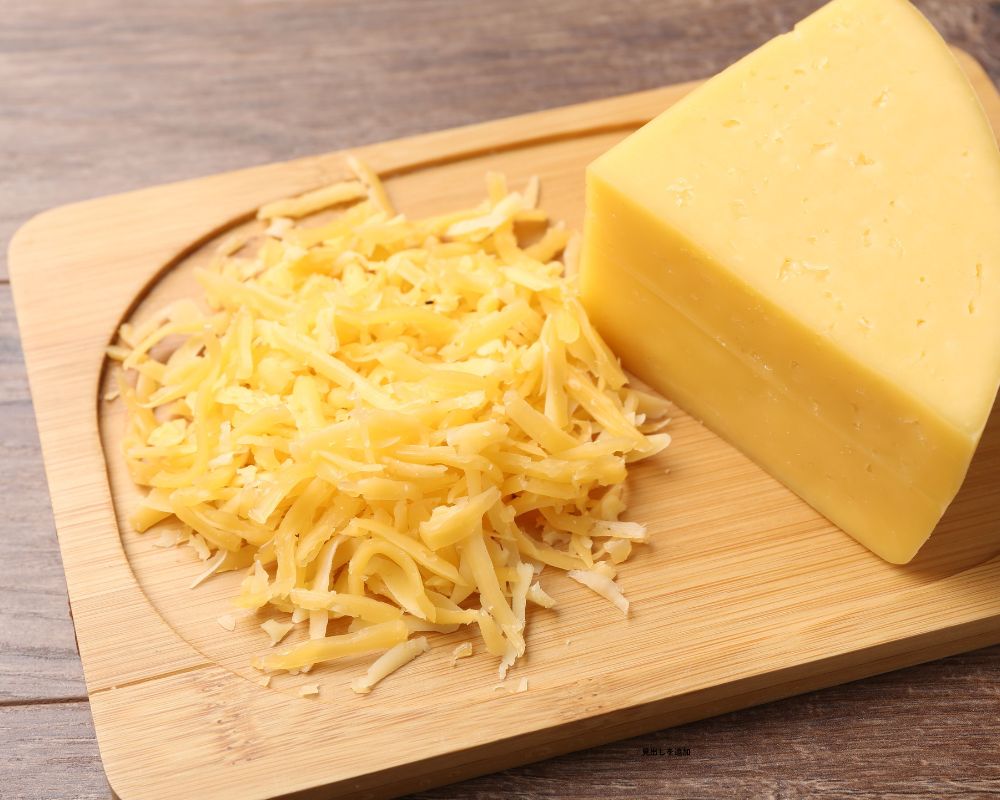
For those who say, “I like spicy food, but super spicy is a bit tough,” we recommend a cheese topping. Try adding a handful of melting pizza cheese to the heated soup.
The cheese melts from the heat, tangling with the ingredients and adding an intense richness and milky sweetness to the soup. If you throw in some rice cakes (Tteok), it becomes a junky, delightfully sinful taste like a Korean street food menu. It also pairs perfectly with beer or a highball.
Conclusion: Add a Little “Spicy Umami” to Your Daily Life
Yukgaejang is a soup that consolidates the wisdom and technique of a Yakiniku restaurant, the revolution of the pressure pot, and the umami of the ingredients into a single bowl. Did you enjoy learning about its profound charm and how to utilize retort pouches to enjoy it at home?
Savoring Yukgaejang as the perfect conclusion after premium Wagyu at the restaurant is exceptional. However, satisfying that sudden urge of “I want to eat that taste” that hits during a busy daily life through a retort soup is a smart and luxurious way to enjoy it, unique to modern times.
Next weekend, be sure to have an authentic bowl at our Yakiniku restaurant. And on a weekday night, enjoy a moment of bliss with the retort pouches you’ve stocked up on. Match it with your lifestyle, and enjoy a wonderful “Spicy Umami Life.”
Kuro 5’s Soulful Soups and Exquisite Meats
All the soups we serve at Kuro 5 are based on our homemade beef bone soup. This ultimate bone broth, where umami and collagen are drawn out to the absolute limit by the power of our pressure stockpots, is the crystalization of our uncompromising dedication-our “soul flavor.”
Naturally, we pour just as much passion into our main attraction: the highest quality A5-ranked Wagyu beef. To ensure you experience 120% of the deliciousness of our carefully selected meats, we stick to a “Full-Attendant Style” where our staff carefully grills each slice right in front of you, assessing the perfect heat of the Binchotan charcoal.
Exquisite meats and supreme soup simmered with time and passion. We are waiting, ready to satisfy your heart and stomach.
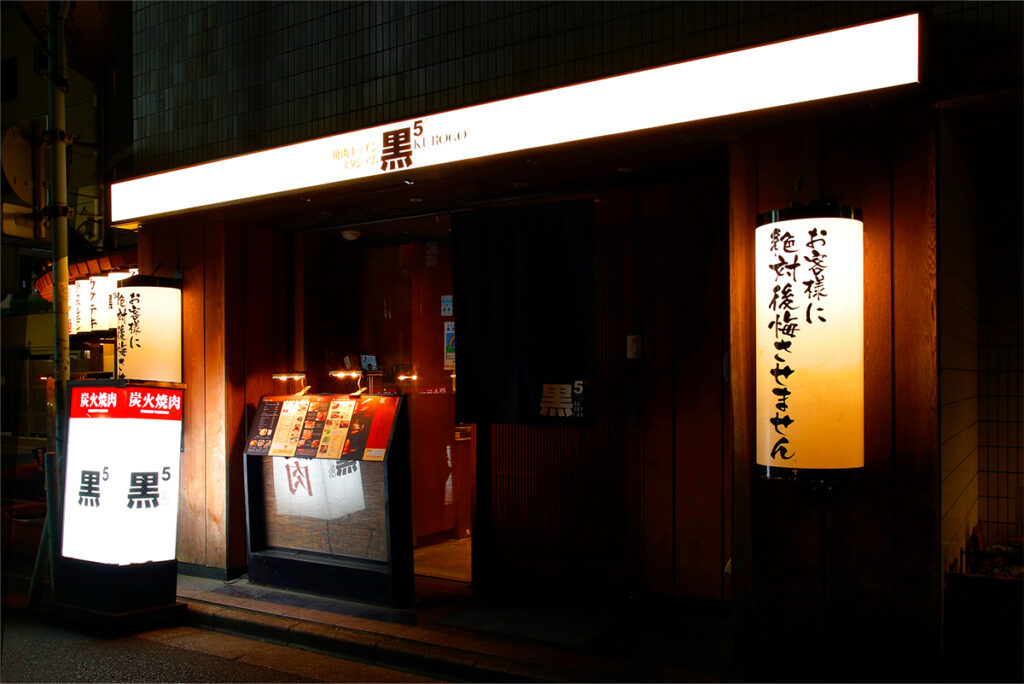
Name: Yakiniku Kuro 5 Main Store
Address: Shima 100 Bldg. 1F, 2-46-3 Ikebukuro, Toshima-ku, Tokyo 171-0014
Nearest Station: JR Ikebukuro Station West Exit, 5 min walk
Hours: 17:00 – 24:00 (L.O. 23:30)
Closed: Open all year round
Name: Yakiniku Kuro 5 Ikebukuro East Exit Store
Address: Need Bldg. 2F, 1-42-16 Higashi-Ikebukuro, Toshima-ku, Tokyo 170-0013
Nearest Station: JR Ikebukuro Station East Exit, 5 min walk
Hours: 17:00 – 24:00 (L.O. 23:00)
Closed: Open all year round
Name: Yakiniku Kuro 5 Kabukicho Store
Address: Sankei Bldg. 1F, 2-21-4 Kabukicho, Shinjuku-ku, Tokyo
Nearest Station: Seibu Shinjuku Station 5 min walk / Shinjuku Sanchome Station 7 min walk
Hours: 18:00 – 5:00 next day (L.O. 4:00)
Closed: Open all year round

