
When looking at a yakiniku restaurant menu, you may suddenly find the mysterious name “Tomosankaku” among standard items like kalbi, rosu, and harami. You might wonder, “What does triangle mean?” or “What part of the meat is this?” but end up ordering your usual favorites. Have you ever experienced this?
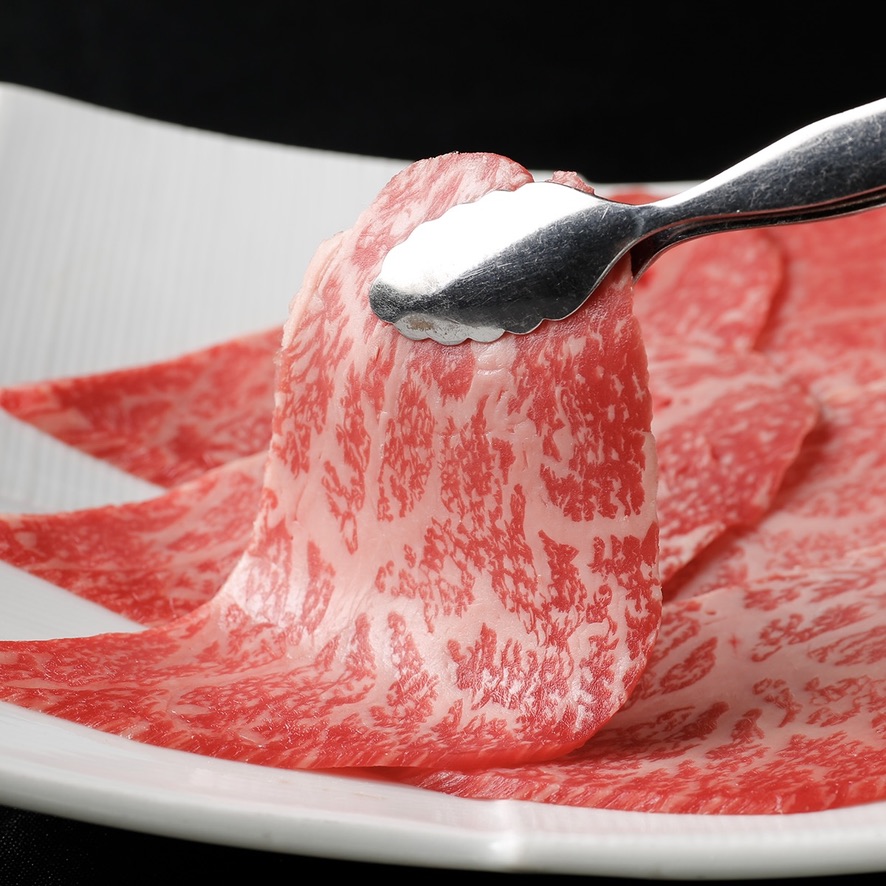
Actually, this Tomosankaku is a hidden star of yakiniku known to those in the know. Once you realize its charm, it is a cut with such magic that you will want to search for it on the menu and order it first next time. This time, to enjoy yakiniku even more deeply, we will carefully unravel everything from the true identity of Tomosankaku to the most delicious way to eat it.
The true identity of Tomosankaku is the maverick of thigh meat
Tomosankaku is a cut located on the lower side of the cow’s inner thigh. Classifying it, it is a part of thigh meat, which is representative of lean meat. Generally, when people hear thigh meat, many have an image of healthy meat with little fat and a bit tough. However, Tomosankaku vividly betrays that image in a good way.
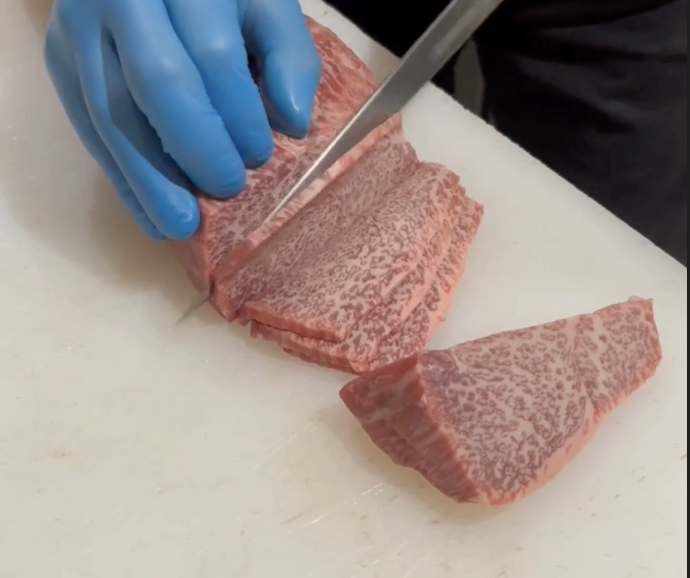
Cows are very heavy, so the leg muscles that support them develop strongly. The hind legs, in particular, generate propulsive force, so the muscle fibers tend to be thick and solid. However, Tomosankaku is located in an exquisite place around the joints of the pelvis, where direct strong loads are less likely to be applied. Therefore, while storing the powerful umami unique to thigh meat, the muscle fibers are kept fine, and it has the special property of easily developing surprisingly beautiful marbling. It can be said to be an existence like an elite born by sudden mutation within the thigh meat family.
Overwhelming rarity where only a few kilograms can be taken from one cow
The origin of the name is because the shape of the block meat when cut out is a triangle. In yakiniku restaurants in the Kansai area, it is sometimes called Hiuchi because its shape resembles a flint.
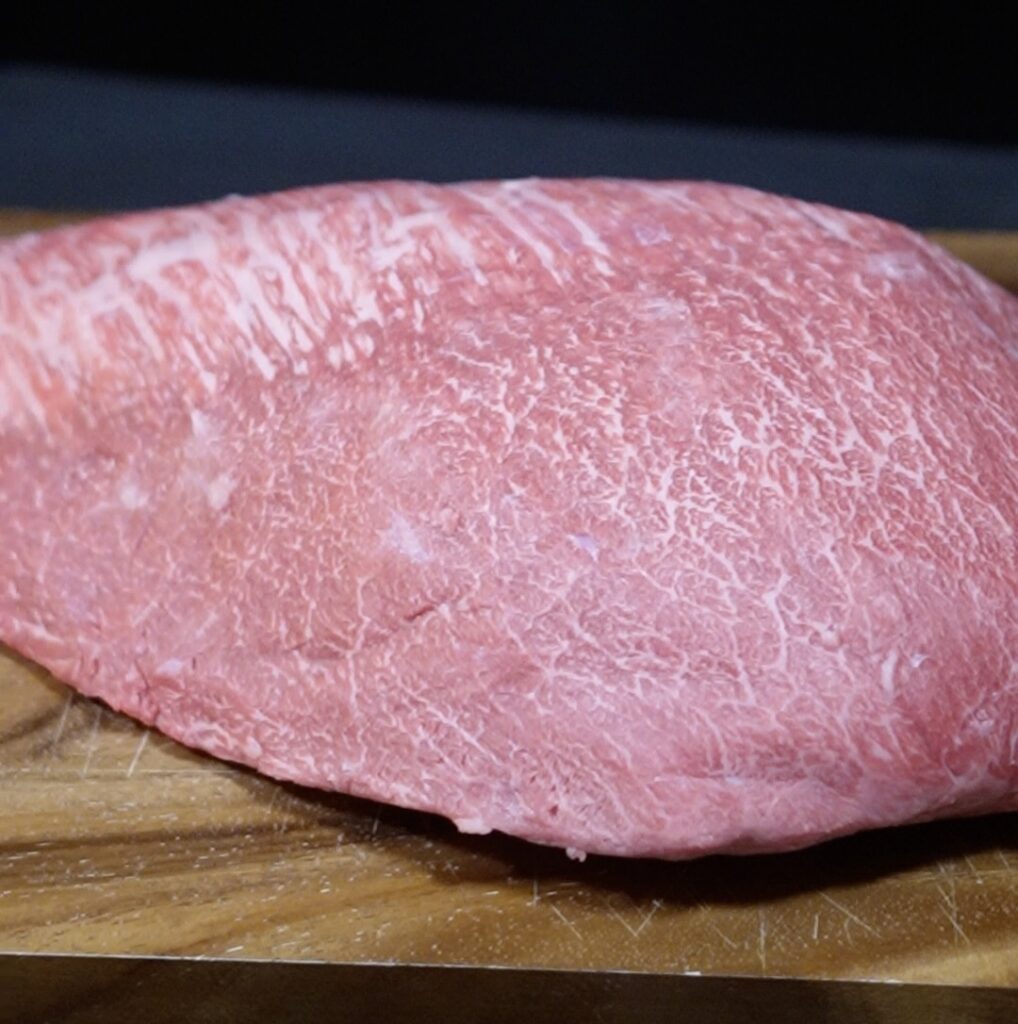
This Tomosankaku, incredibly, only about 2 to 3 kilograms can be taken from one cow weighing about 600 to 700 kilograms. In terms of percentage, it is an extremely rare cut that accounts for only a few percent of the total. Therefore, it is not always available at every yakiniku restaurant, and it is a rare character that you can only encounter at restaurants with particular preferences or those that carefully select and purchase wagyu beef by the cut.
Why does Tomosankaku impress the connoisseurs? Its charm and characteristics
There is a clear reason why yakiniku connoisseurs all love Tomosankaku. It boils down to the point that it takes the best parts of both lean meat and marbled meat.
The golden ratio of the powerful umami of lean meat and the sweetness of fat
The sweetness of the fat in belly meat like kalbi stimulates the brain intensely, but eating a lot can make you feel a bit heavy. On the other hand, if you only have refreshing lean meat, you might feel that the juicy punch of fat unique to yakiniku is a bit lacking.
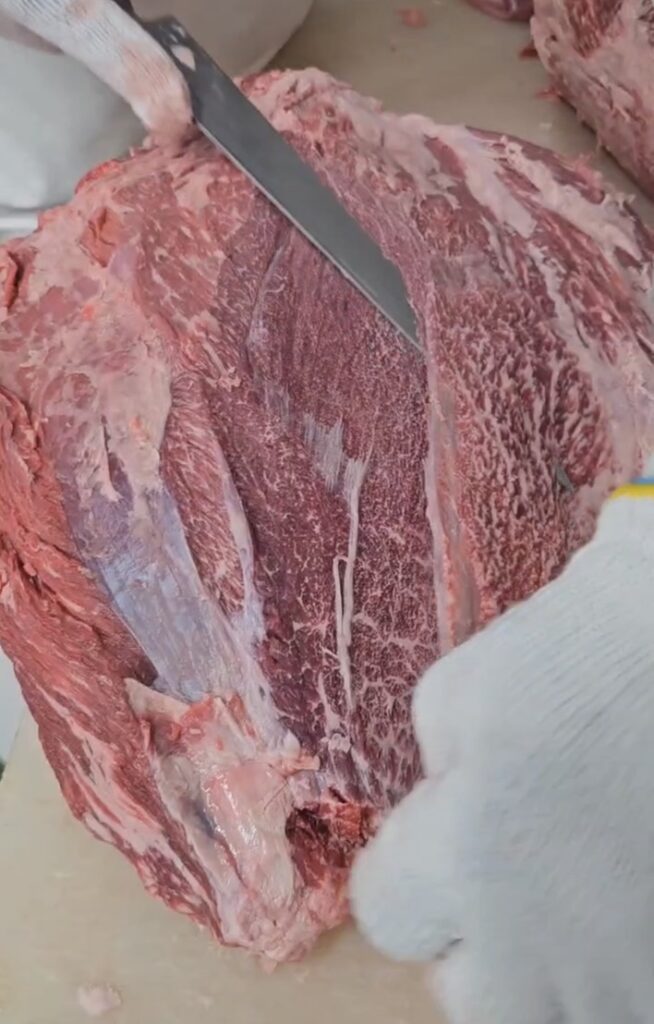
Tomosankaku perfectly satisfies both of these desires. While the richness and umami of lean meat derived from thigh meat form a solid base, the finely interspersed marbling melts with heat, adding high quality sweetness of fat. This golden ratio, where the umami of lean meat and the sweetness of fat coexist evenly at five to five, is the biggest reason it captivates many yakiniku fans.
The reason it is not heavy despite having plenty of fat
Some people might worry, “But if it has marbling, won’t it end up causing an upset stomach like kalbi?” This is the amazing part about Tomosankaku.

The fat of Tomosankaku has a relatively low melting point, and it has a crispness that makes it melt and disappear the moment it enters your mouth. Therefore, even if it looks pure white with marbling, when you actually eat it, it is surprisingly light and the aftertaste is not heavy. You can fully enjoy the elegant aroma of fat unique to wagyu beef while firmly tasting the meat juices of lean meat, making it a great success both as the first dish and as an accent in the middle of a course.
Getting to know the friends of Shintama to which Tomosankaku belongs
Let’s deepen our knowledge of meat a little bit here. Tomosankaku is a part of a large chunk called Shintama within the cow’s thigh meat. Shintama is a round, spherical cut that is further divided into four finer cuts by the hands of craftsmen. Each has a completely different personality, so knowing the differences will make choosing from the menu at a yakiniku restaurant dramatically more fun.Shinshin This is the cut in the center of Shintama. As the name suggests, it is the core of the core. It has less fat, but it has no sinew and is characterized by being extremely soft with a smooth texture. It is perfect when you want to eat elegant lean meat. Kamenoko It was named because the pattern of the cross section resembles a turtle’s shell. It has the least amount of fat in Shintama, and it is a cut that makes you feel the original iron and umami of the meat directly, saying “This is lean meat!” Since it becomes tough if overcooked, eating it slightly rare is how the experts enjoy it. Shintama Kaburi This is the cap like part that covers Shintama. It is slightly sinewy, but because the meat flavor is strong, it is a cut often used for stewed dishes and minced meat. Tomosankaku And finally, the star of this time, Tomosankaku. Among these four Shintama brothers, it has overwhelmingly the most marbling and is the richest and most gorgeous star player.
In this way, even for meat cut from the same thigh meat (Shintama), there is a gradation of taste, from Kamenoko, which is the ultimate in lean meat, to Tomosankaku, which is the ultimate in marbling. Yakiniku restaurants with particular preferences serve these cuts separately, so comparing them is also the most luxurious experience.
The best way to grill and eat to bring out 120 percent of the deliciousness of Tomosankaku
Even a superb cut will change its taste greatly depending on how it is grilled. We will share the secrets to maximizing the potential of Tomosankaku.
Strictly no overcooking! Lightly searing is the correct way to heat it
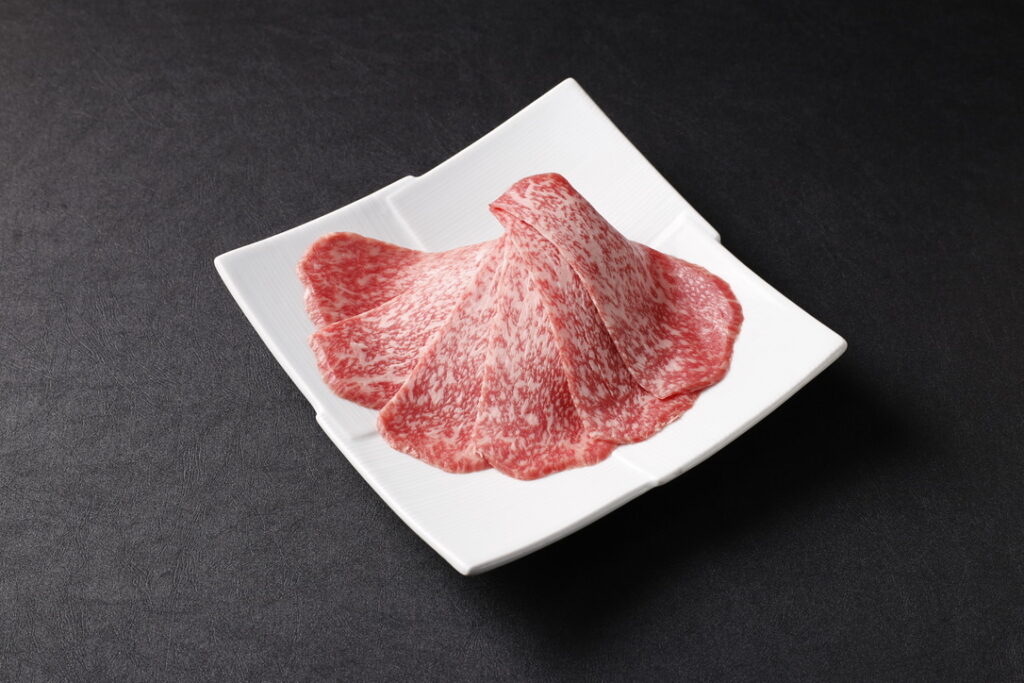
Tomosankaku is a cut that is often served sliced rather thinly rather than thickly. This is because the most delicious way to eat it is to quickly melt the fine marbling fat and carry it to your mouth before the meat becomes tough.
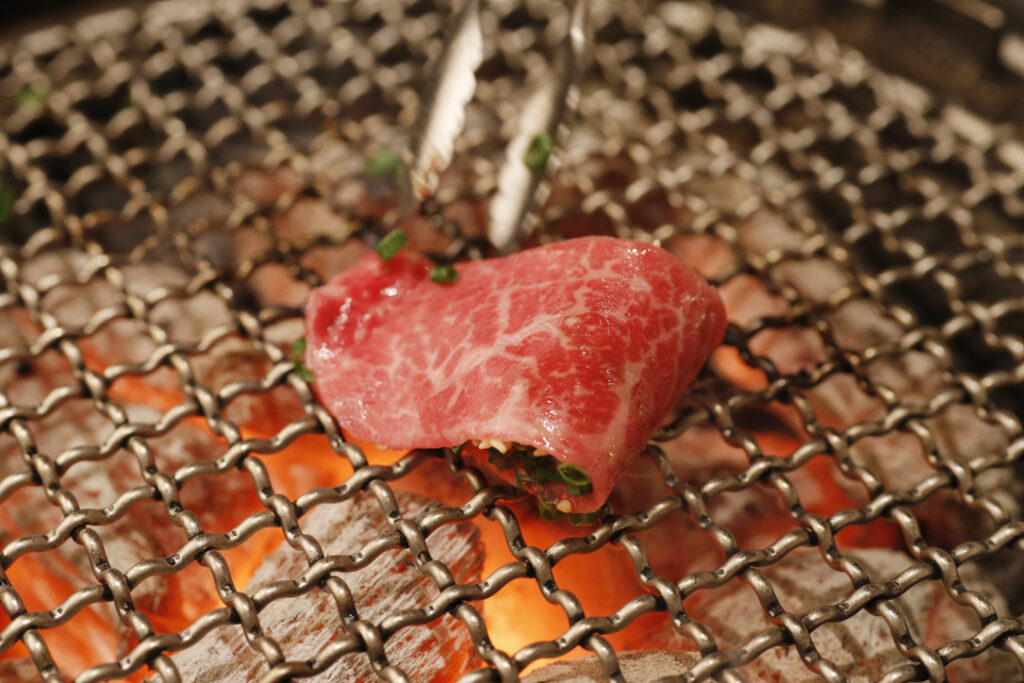
Once you place it on the grill, you must never take your eyes off it. When the fat starts to seep out gradually from one side, flip it immediately. For the reverse side, just a few seconds until the color changes is sufficient. Taking it off the grill when you think, “Is it a bit rare?” is the secret to tasting the melting texture without letting the meat fibers harden.
Enjoy the sweetness of the meat simply with salt
First, please try eating it simply with salt. The original umami of the meat that Tomosankaku has and the sweetness of the high quality fat will be transmitted directly to your tongue. Squeezing just a little bit of lemon or adding a small amount of wasabi to your liking will further enhance the sweetness of the fat and bring a refreshing finish to your mouth. If you are pairing it with alcohol, a crisp dry white wine or a strongly carbonated lemon sour is recommended, as they will wash away the fat beautifully.
A moment of bliss in Sukiyaki style (Sauce and Egg)
And the other strongest way to eat Tomosankaku is with sauce. You coat the Tomosankaku, which has been fragrant grilled with a slightly sweet special sauce, and pass it through a rich beaten egg yolk before carrying it to your mouth.
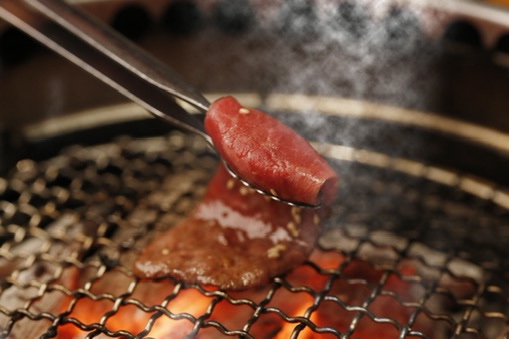
The moment when the burnt aroma of the sweet and spicy sauce, the overflowing meat juices of Tomosankaku, and the mildness of the egg surge together in a trinity is a deliciousness that leaves you literally speechless. Of course, if you bounce it on warm white rice in this state and eat it, it can be declared that there is no greater happiness than this.
Experience premium Tomosankaku at Kurogo
We want to convey the profound charm of wagyu beef to our customers without leaving anything out. At Yakiniku Kurogo, we pour extraordinary passion into purchasing and serving rare cuts based on this desire.
At Kurogo, in order to have you enjoy rare cuts of wagyu beef, including Tomosankaku, in the best condition, we have adopted a full attendant style (Yaki Bugyo style) where the staff grills the meat right in front of the customers.
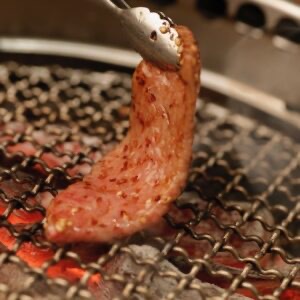
For a cut like Tomosankaku, where the balance between the melting of fat and the softness of lean meat is crucial, the seconds of heating determine the taste. The staff at Kurogo controls the intense far infrared rays emitted by Binchotan charcoal and never misses the ultimate moment when the marbling of the meat melts most deliciously. Customers do not need to hold tongs; they can just enjoy conversation and wait for the meat to be grilled to its most delicious state.
The Sukiyaki style of eating, where Tomosankaku passed through Kurogo’s special sweet and spicy sauce is fragrantly grilled over a charcoal fire and served with wasabi as an accent, has received overwhelming support from our regular customers. In addition, we can also propose experiences that increase the resolution of wagyu beef while enjoying the differences from other Shintama cuts such as Shinshin and Kamenoko.
For your next yakiniku, please try choosing Tomosankaku, which has a golden ratio of lean meat and fat that is slightly different from usual, as the main star. I am sure the world of yakiniku will expand even further.
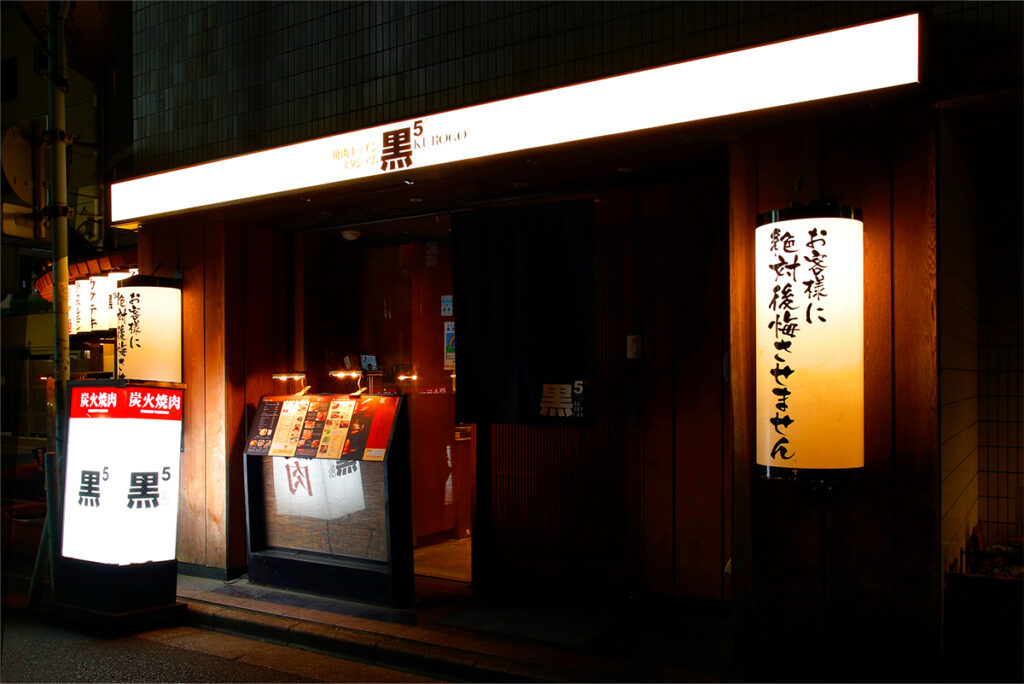
Store Name: Yakiniku Kurogo Honten
Address: Cima 100 Bldg 1F, 2-46-3 Ikebukuro, Toshima-ku, Tokyo 171-0014
Nearest Station: 5 minutes walk from JR Ikebukuro Station West Exit
Business Hours: 17:00 to 24:00 (L.O. 23:30)
Closed: Open year round
Store Name: Yakiniku Kurogo Ikebukuro Higashiguchi Store
Address: Need Bldg 2F, 1-42-16 Higashi Ikebukuro, Toshima-ku, Tokyo 170-0013
Nearest Station: 5 minutes walk from JR Ikebukuro Station East Exit
Business Hours: 17:00 to 24:00 (L.O. 23:00)
Closed: Open year round
Store Name: Yakiniku Kurogo Kabukicho
Address: Sankei Bldg 1F, 2-21-4 Kabukicho, Shinjuku-ku, Tokyo
Nearest Station: 5 minutes walk from Seibu Shinjuku Station / 7 minutes walk from Shinjuku Sanchome Station
Business Hours: 18:00 to 5:00 the next day (L.O. 4:00)
Closed: Open year round

