
You’re sitting at a Yakiniku restaurant, you’ve picked out the cuts of meat you want to eat, and then the server asks that inevitable question: “How would you like that seasoned? Salt or Tare (sauce)?”
If you’ve ever hesitated and just nervously replied, “I’ll leave it to the chef,” you’re not alone. Of course, trusting the professionals is never a bad idea. But understanding the unique characteristics of each meat cut and the role of its seasoning can dramatically transform your Yakiniku experience from a simple meal into a fascinating culinary adventure.
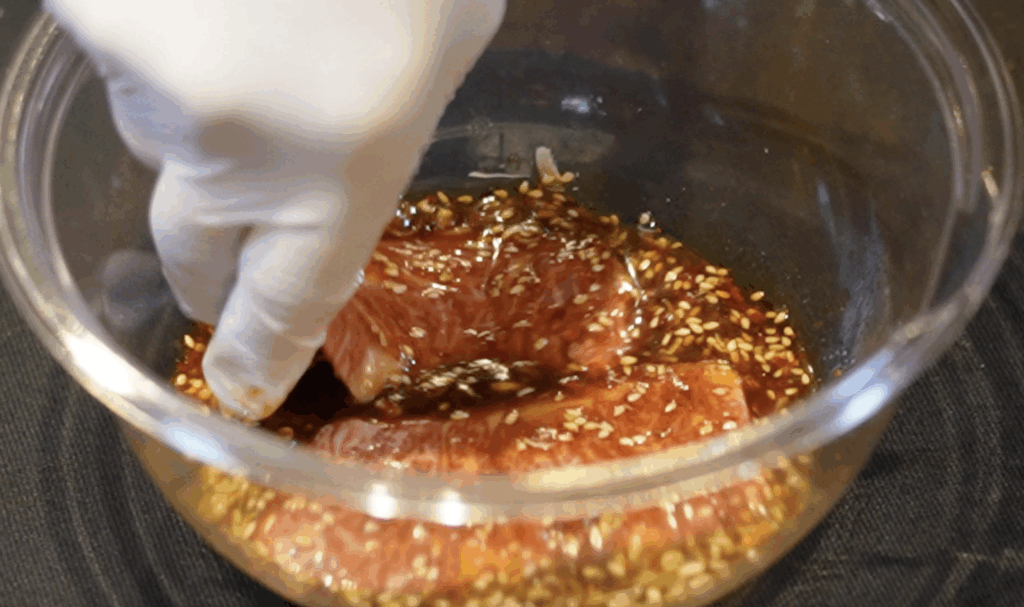
Salt (Shio), Sauce (Tare), and Miso. These three pillars of Japanese Yakiniku seasoning are not just random flavor options; they are backed by history, science, and the art of bringing out the absolute best in every slice of meat. Today, let’s dive into the history of Yakiniku flavors and explore the “perfect match” for popular Wagyu cuts like Tongue, Harami, and Tomosankaku.
The History of Yakiniku Seasonings: Why is Japanese BBQ a “Tare” Culture?
Nowadays, it’s a common belief among foodies that “high-quality meat should be eaten with salt.” However, if we look back at the roots of Japanese Yakiniku, it is overwhelmingly a culture of Tare and Miso.
Post-War Horumon and the Birth of “Momi-Dare” (Marinade)
The origins of modern Japanese Yakiniku trace back to the post-war era, where “Horumon-yaki” (grilled offal) was sold at black markets. Back then, refrigeration and prep techniques weren’t as advanced as they are today, meaning offal had a distinct, strong odor. To mask this smell and make the meat delicious, chefs came up with the brilliant idea of marinating it in a rich mixture of garlic, ginger, green onions, soy sauce, and miso.

When this marinade-known as “momi-dare”-soaked into the meat and hit the charcoal grill, it created a mouthwatering, savory char. In other words, Japanese Yakiniku was born from the technique of “making meat delicious with sauce.”
The Rise of “Shio” (Salt) and High-Quality Wagyu
As time went on, the quality of Wagyu beef improved drastically, and advancements in refrigeration meant meat was fresher than ever. The need to “mask the smell” disappeared. Meat entered a new phase where the pure, natural umami and sweetness of the beef could be celebrated. This is when “Salt” took the stage.
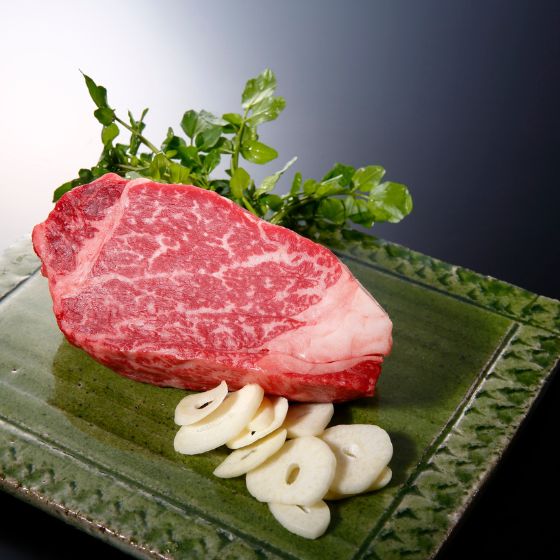
By the 1980s, alongside the premium Yakiniku boom, the idea that “true connoisseurs eat good meat with salt” spread across Japan. Today, we enjoy a highly refined Yakiniku culture where salt, tare, and miso are carefully selected depending on the personality of each specific cut.
Cut-by-Cut Guide! The “Perfect Answer” for Salt, Tare, and Miso
Now that we know the history, let’s get to the fun part. What is the “correct” seasoning for each cut? Let’s look at the science and secrets behind the pairings.
[Tongue] The Undisputed King of Salt

Beef Tongue (Gyutan) is usually the opening act of a Yakiniku feast, and here, “Salt” is the undisputed champion. The crisp, snappy texture and unique earthy flavor of the tongue are best enhanced by simple salt. Squeezing a bit of fresh lemon over it after grilling cleanses the palate, perfectly preparing you for the richer meats to come.
However, as a pro tip: the tougher, flavor-packed parts near the root or under the tongue are incredible when marinated in Miso and grilled slowly. It’s the ultimate companion for a cold beer.
[Lean Meat (Tomosankaku, Shinshin)] The Magic of “Tare x Wasabi”
Cuts from around the thigh, like Tomosankaku and Shinshin, feature delicate marbling but maintain the elegant, clean taste characteristic of lean meat.
You might think, “It’s premium meat, so I should use salt!” But actually, Yakiniku pros highly recommend “Tare.” For instance, premium loins made from these cuts are almost always served with Tare unless requested otherwise.
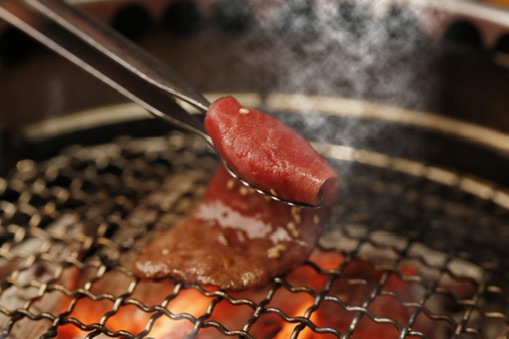
Why? Because when our carefully crafted marinade soaks into the clean lean meat, and you top the grilled slice with a tiny dab of fresh Wasabi… magic happens. It creates a fluffy sweetness and savory aroma that tastes remarkably like premium grilled Conger Eel (Anago). Once you discover this unexpected flavor profile, there’s no going back.
[Marbled Meat (Ribeye, Kalbi)] The Synergy of Sweet Fat and Savory Tare
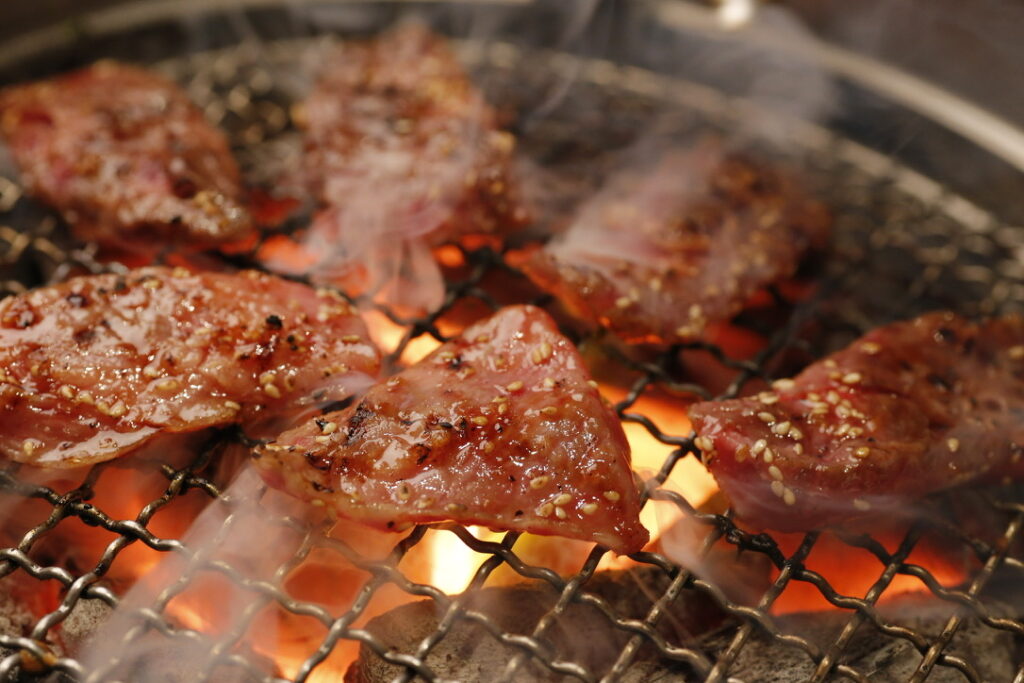
For the stars of the show-highly marbled cuts like Ribeye and Kalbi-we strongly advocate for “Tare.”
When the premium fat of Wagyu melts and drips onto the charcoal, it creates smoke that envelops the meat. During this process, the sugars and amino acids in the Tare react to the heat (the Maillard reaction), producing an unbelievably appetizing roasted aroma.
If you’re worried that the fat might be “too heavy,” Tare is exactly what you need. The savory profile of the sauce cuts through the richness, tying the flavors together so smoothly that you can enjoy it without feeling overwhelmed.
[Harami & Sagari (Skirt Steak)] The Answer Changes with the Cut
Despite looking like lean red meat, Harami and Sagari (Skirt Steak) are actually part of the diaphragm, making them classified as offal. The “perfect answer” here changes dramatically depending on how the meat is cut.
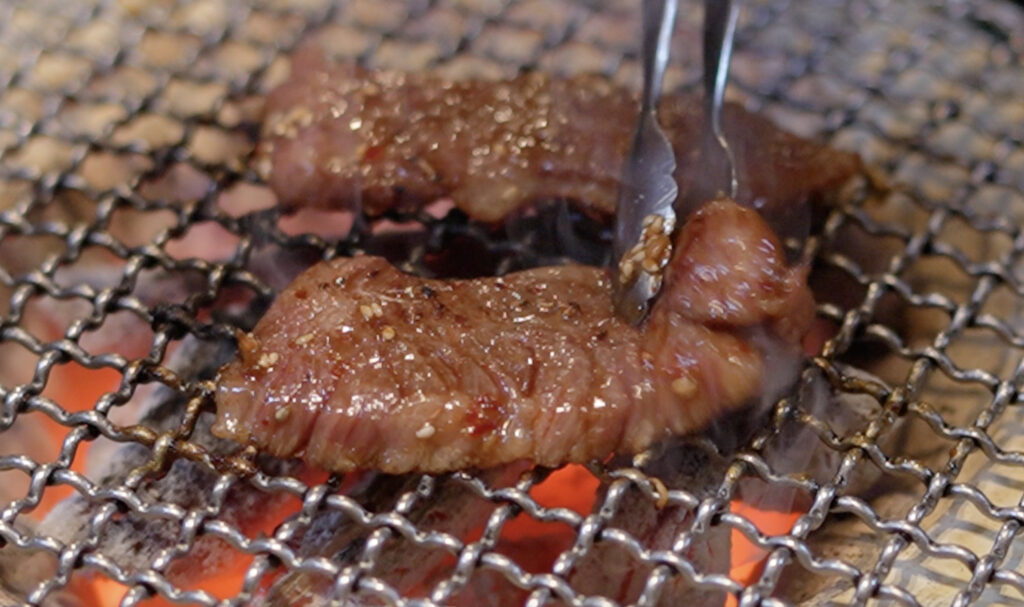
If you’re eating “Diced (Thick-cut) Harami,” where you want to bite into a dynamic chunk of meat, “Salt” is the way to go to directly experience its wild, juicy nature.
However, for standard thin-sliced Yakiniku cuts, “Tare” is king. Harami has thick muscle fibers that hold a massive amount of meat juice. We marinate it in Tare with a touch of Miso added for extra depth. When you bite into it, the explosion of meat juices combining with the deep, rich miso-tare is the absolute peak of the Yakiniku experience.
[Horumon (Intestines)] Charred Miso or Punchy Salt?

For fatty intestines like Shimacho (Large Intestine) and Gyara (Fourth Stomach), a rich, deep “Miso” marinade is the ultimate partner.
The intense fat of Horumon needs a strong flavor so it doesn’t taste bland. More importantly, when the Miso slightly chars on the grill, it acts as a bitter, savory spice that perfectly tightens the sweetness of the fat.
But what if you’re in the mood for something lighter? Then a punchy “Salt marinade”-loaded with sesame oil, black pepper, and garlic-is the winning ticket. It’s an aggressively delicious flavor that will make you want to drink endlessly.
The “Magic of Prep”: The Hidden Two Types of Tare
We’ve talked about choosing Salt, Tare, or Miso, but there’s one more crucial secret. In authentic Yakiniku restaurants, there are actually two types of Tare.
The first is the “Momi-dare” (marinade) massaged into the meat before serving. The second is the “Tsuke-dare” (dipping sauce) you dip the grilled meat into at your table.
Dedicated Yakiniku chefs adjust the recipe of the Momi-dare based on the fat content and fiber thickness of each specific cut. Do we add more sweetness? Do we tighten the meat with salt? Do we add miso for depth? This invisible prep work is where a Yakiniku restaurant truly shows its skill.
So, the next time you’re torn between Salt or Tare, simply ask your server, “Which do you recommend for this cut?” Behind their answer lies hours of dedication and the “perfect answer” crafted by artisans who handle meat every single day.
Experience the Best Wagyu in Ikebukuro & Kabukicho
“I wonder which seasoning and grilling method will make this meat taste the best?”
If you ever feel a bit anxious about grilling premium meat perfectly, leave it to us.
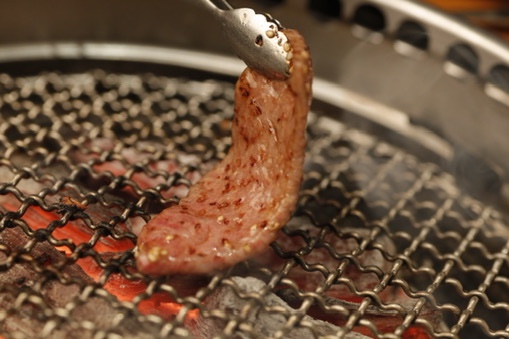
Located in Ikebukuro and Kabukicho, Yakiniku Kuro5 is intensely passionate not only about the quality of our selected Wagyu but also about the optimized prep and seasoning for every single cut.
Above all, our signature feature is the “Full-Attendant Style.” Our trained staff will grill your meat for you right at your table. We read the heat of the Bincho charcoal, analyze the meat’s fibers and fat, and serve it to your plate at the exact second it reaches peak deliciousness-whether it’s seasoned with salt, tare, or miso.
“Taste with knowledge, enjoy with professional skill.”
We invite you to experience this blissful Yakiniku journey at Kuro5. Our team is looking forward to welcoming you!
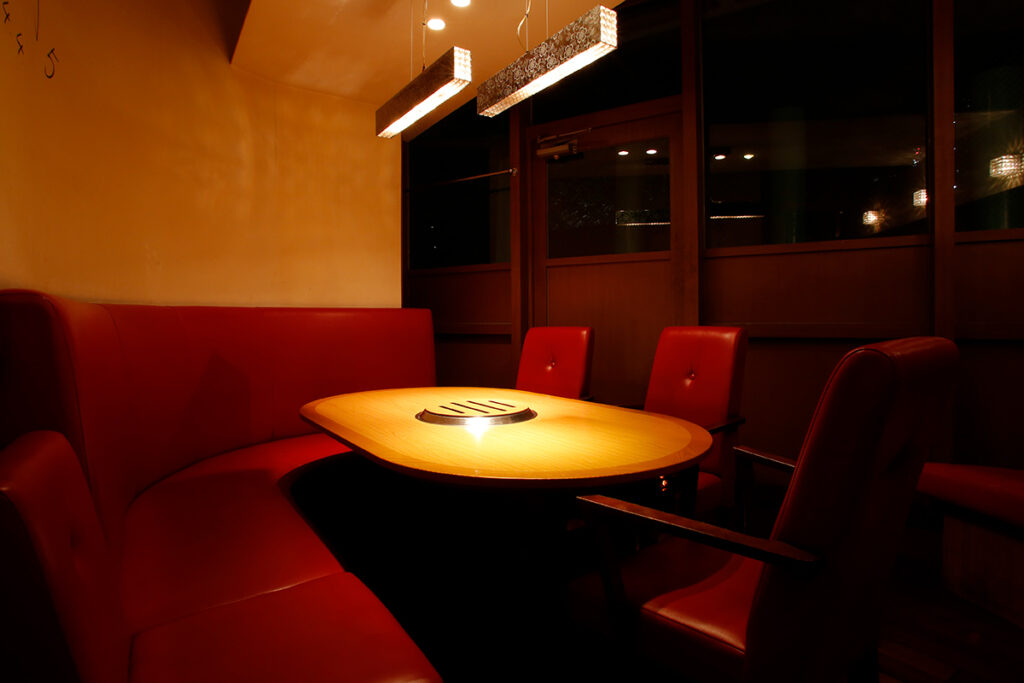
Store Information
Store: Yakiniku Kuro5 Honten (Ikebukuro West)
Address: Seama 100 Bldg. 1F, 2-46-3 Ikebukuro, Toshima-ku, Tokyo
Nearest Station: 5 min walk from JR Ikebukuro Station (West Exit)
Hours: 17:00 – 24:00 (L.O. 23:30)
Closed: Open year-round
Store: Yakiniku Kuro5 Ikebukuro East
Address: Need Bldg. 2F, 1-42-16 Higashi-Ikebukuro, Toshima-ku, Tokyo
Nearest Station: 5 min walk from JR Ikebukuro Station (East Exit)
Hours: 17:00 – 24:00 (L.O. 23:00)
Closed: Open year-round
Store: Yakiniku Kuro5 Kabukicho
Address: Sankei Bldg. 1F, 2-21-4 Kabukicho, Shinjuku-ku, Tokyo
Nearest Station: 5 min walk from Seibu-Shinjuku Station / 7 min walk from Shinjuku-sanchome Station
Hours: 18:00 – 5:00 next day (L.O. 4:00)
Closed: Open year-round

