



Table of Contents
- 1. Yakiniku Begins with Tongue: Understanding the Boundary Between Wagyu and Imported Tongue
- 2. Elite Tenderness and Aroma: The Science Behind Why Wagyu Tongue Reigns Supreme
- 3. A Wholesaler’s Trust: The Rarity and Sourcing Secrets of Wagyu Tongue
- 4. The Value of Never-Frozen “Raw” Wagyu: Thick-Cut Tongue Base vs. Tongue Underside
- 5. Mastering Imported Tongue: Kuro5’s Odor-Eliminating “Gurumuki” Prep Method
- 6. Kuro5’s Latest Evolution: Three Reasons We Love Premium Australian Tongue
- 7. A Ten-Second Duel: Grilling to Perfection Under Binchotan’s Infrared Heat
- 8. Welcoming You Tonight with the Finest Hand-Prepped Tongue and Charcoal Fire
Yakiniku Begins with Tongue: Understanding the Boundary Between Wagyu and Imported Tongue
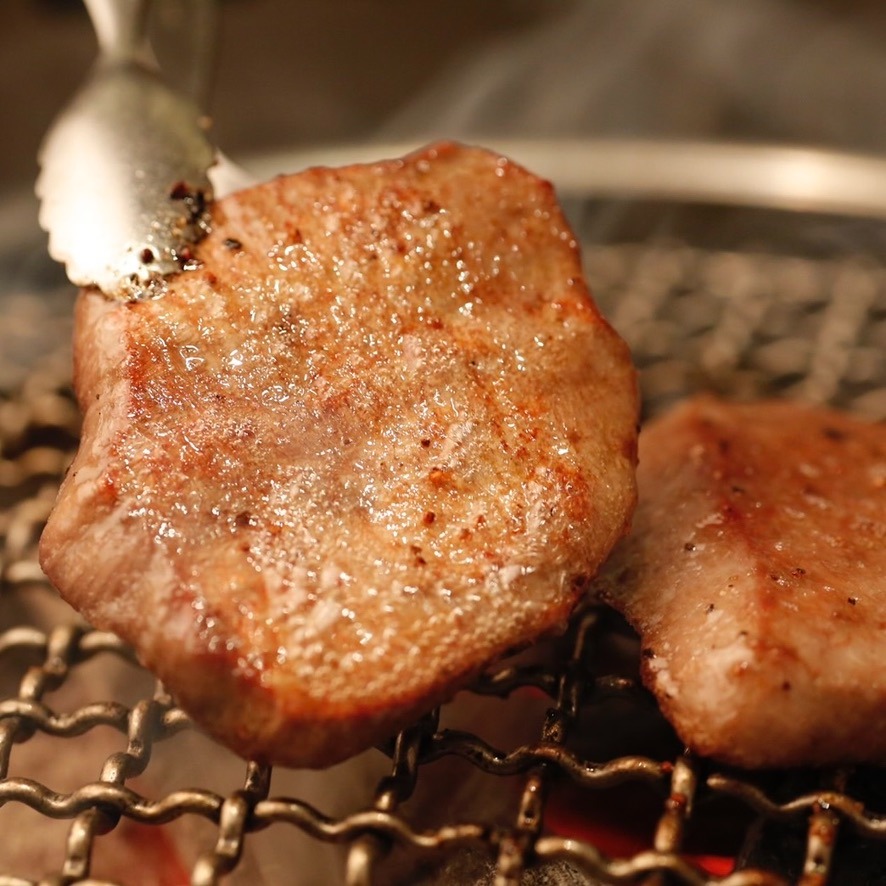
Hello everyone. This is Kuro5’s Sondo.
Upon taking your seat at a yakiniku restaurant, is your very first order almost always: “Let’s start with a draft beer and tongue salt (tan-shio)”? Placing a slice of hot, grilled tongue on your tongue with a splash of fresh lemon is the perfect opening act for a yakiniku dinner, elevating your appetite and setting a blissful tone for the evening.
While tongue is a universal favorite, you will often notice different options on yakiniku menus, such as “Kuroge Wagyu Tongue Shio,” “Jo-Tan Shio” (premium tongue), and the more budget-friendly “Nami-Tan Shio” (regular tongue). Currently, the beef tongue served in Japanese yakiniku restaurants is broadly divided into two categories: “Wagyu Tongue” from native Japanese Black cattle, and “Imported Tongue” sourced from countries like the United States and Australia.
“They are both beef tongues, so there cannot be that much of a difference in taste, right?”
“As long as you put salt, sauce, or lemon on it, they should taste basically the same.”
Many of our guests might assume this. In reality, however, these two types of tongue feature entirely different muscle fiber structures, fat distributions, and cooking aromas. Today, we will look deep into the world of beef tongue, exploring the defining differences between Wagyu and imported tongues, Kuro5’s obsession with serving never-frozen “raw Wagyu tongue,” and the secrets behind the high-quality “Australian tongue” that we have recently introduced with great success.
Elite Tenderness and Aroma: The Science Behind Why Wagyu Tongue Reigns Supreme
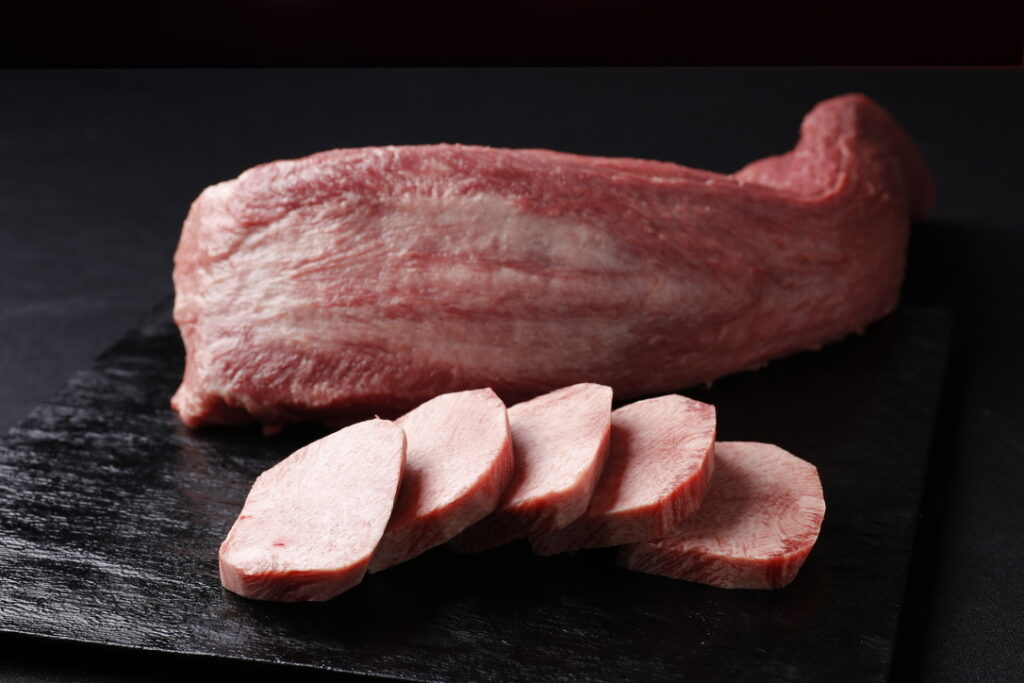
Let us begin with “Wagyu Tongue” (和牛タン), the absolute pinnacle of yakiniku cuts. The primary reasons Wagyu tongue sits at the peak of the culinary world are its incomparable tenderness and the distinct quality of its fat.
Wagyu cattle are genetically bred to develop fine, intricate marbling (sashi) throughout their muscle tissues, and this applies even to the tongue—a highly active muscle that would normally be tough in other breeds. The muscle fibers in Wagyu tongue are exceptionally fine, with tiny networks of sweet fat dispersed evenly. As a result, even when cut into thick steaks, the tongue is incredibly tender and yields easily to a gentle bite. The unique combination of a crisp snap and a soft, melting center is a sensation exclusive to Wagyu tongue.
Furthermore, heating Wagyu fat releases a sweet, coconut-and-peach-like fragrance known as “Wagyu Aroma” (和牛香 – Wagyu-ko). This sweet aroma combines with the char of the charcoal grill to coat the meat in a rich, buttery layer of flavor. When eaten simply with a touch of salt or lemon, it offers a clean, robust, and deep umami with zero off-flavors. This elite flavor profile, rooted in Japanese breeding heritage, is the scientific reason Wagyu tongue is considered the absolute best.
A Wholesaler’s Trust: The Rarity and Sourcing Secrets of Wagyu Tongue
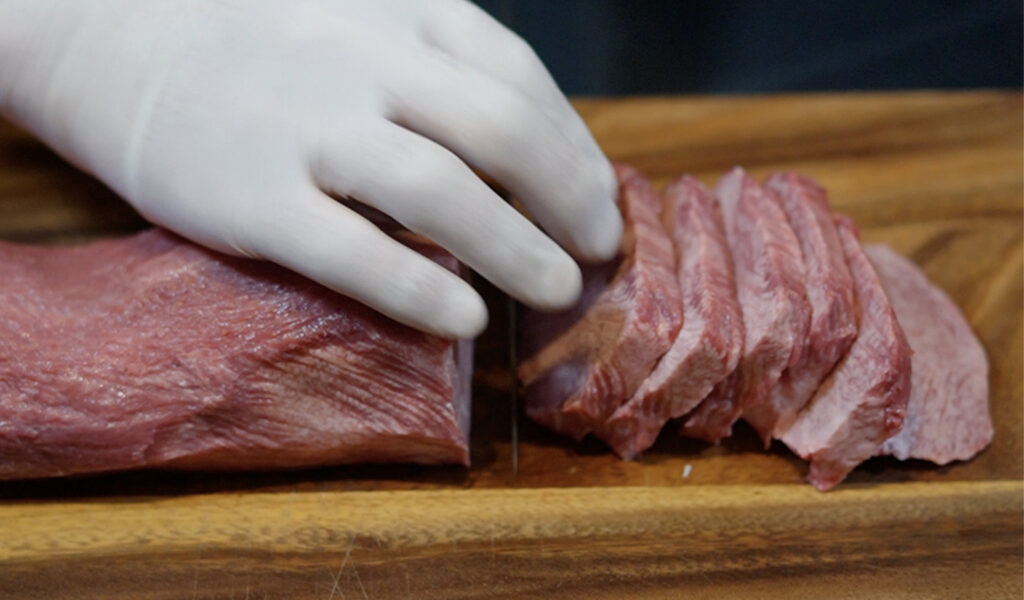
Despite its popularity, Wagyu tongue is one of the hardest cuts to source in the entire meat industry. A single head of cattle yields only one tongue (weighing about 1.0kg to 1.5kg), and only the tender base and middle parts are suitable for premium yakiniku. Consequently, the domestic supply of Wagyu tongue is extremely scarce compared to the massive demand in Japan.
Moreover, organ meats like tongue are low-margin items for meat wholesalers. Because of this, wholesalers do not sell rare Wagyu tongues to just any restaurant. They prioritize sending them to establishments that buy whole carcasses (枝肉 – edaniku) regularly and have established a long-term relationship of trust. Sourcing Wagyu tongue consistently is a badge of honor for a yakiniku restaurant, proving its commitment, volume, and partnership with the meat industry.
Thanks to the deep trust we have built with our wholesalers over many years, Kuro5 secures a stable supply of two fresh Wagyu tongues per store every single day. The raw Wagyu tongue we serve at your table represents the shared dedication of the farmers, the wholesalers, and our kitchen team.
The Value of Never-Frozen “Raw” Wagyu: Thick-Cut Tongue Base vs. Tongue Underside
Our commitment to Wagyu tongue goes beyond sourcing. We manage our inventory strictly to ensure that our Wagyu tongue is never frozen, serving it completely fresh and raw (“生の和牛タン”).
Freezing meat turns its water content into expanding ice crystals that puncture and destroy the cellular walls. During thawing, these damaged cells release “drip”—the moisture carrying the meat’s precious amino acids and umami. Frozen and thawed tongue loses its juiciness, becomes tough, and develops a metallic, gamey smell. Because Kuro5’s raw Wagyu tongue has never been frozen, its cellular structure remains perfectly intact, locking in every drop of sweet juice. When grilled, it retains its natural moisture, delivering a clean, tender bite and a burst of pure Wagyu flavor.
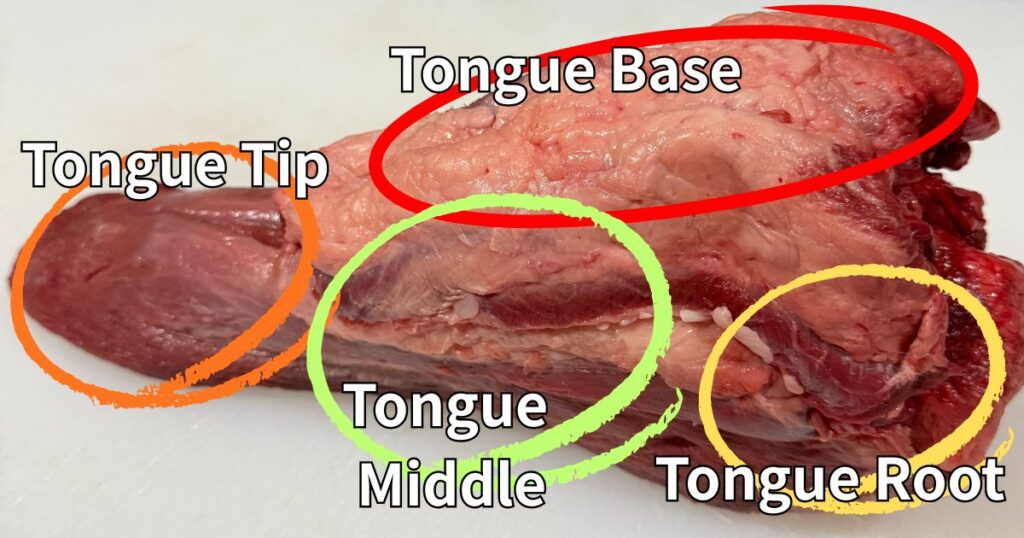
Furthermore, we carve the Wagyu tongue carefully to match the characteristics of each section:
- Tongue Base (特選タン塩 – Tokusen Tan Shio): The root section of the tongue that moves the least. It is the most tender part and contains the highest concentration of beautiful marbling. Kuro5 uses only the center core of this root 15cm section, serving it in thick, luxurious slices that release an explosion of sweet, buttery juices.
- Tongue Underside (タン下 – Tan-shita): The bottom section of the tongue. In imported beef, this section is muscular, tough, and has a strong iron smell from blood vessels, making it unsuitable for grilling. However, Wagyu is different. The tongue underside of raw Wagyu tongue offers a pleasant, crunchy texture and a deep, savory meat flavor. We hand-prep this cut with precision, offering it as a hidden delicacy for true yakiniku enthusiasts.
Mastering Imported Tongue: Kuro5’s Odor-Eliminating “Gurumuki” Prep Method
While Wagyu tongue is the ultimate luxury, imported tongue (from the US and Australia) supports over 90% of the Japanese yakiniku market. Imported tongue features lean muscle structure and a firm, satisfying chew. When sliced thin and topped with green onions and sesame oil salt, the clean bite of imported tongue is the perfect match for the classic Japanese yakiniku style.
However, imported tongue has a major drawback: during long ocean shipping, blood tends to pool inside the muscle tissue, creating a strong “drip odor” (blood smell). If a kitchen does not prep the meat correctly, the tongue will taste gamey and unappealing.
Kuro5 completely eliminates this issue through our professional prep technique. For our regular tongue (並タン塩 – Nami-Tan Shio), we select only the well-marbled center core (タン中 – Tan-chu) of premium imported tongue. We then perform a process called “Gurumuki” (丸剥き), hand-trimming away all the tough outer red meat and blood vessels where odor accumulates. This process trims away nearly half of the original tongue, leaving behind only the clean, tender core. This meticulous hand-crafting ensures that our regular tongue has zero gamey odor and offers a clean, crisp bite.
Kuro5’s Latest Evolution: Three Reasons We Love Premium Australian Tongue
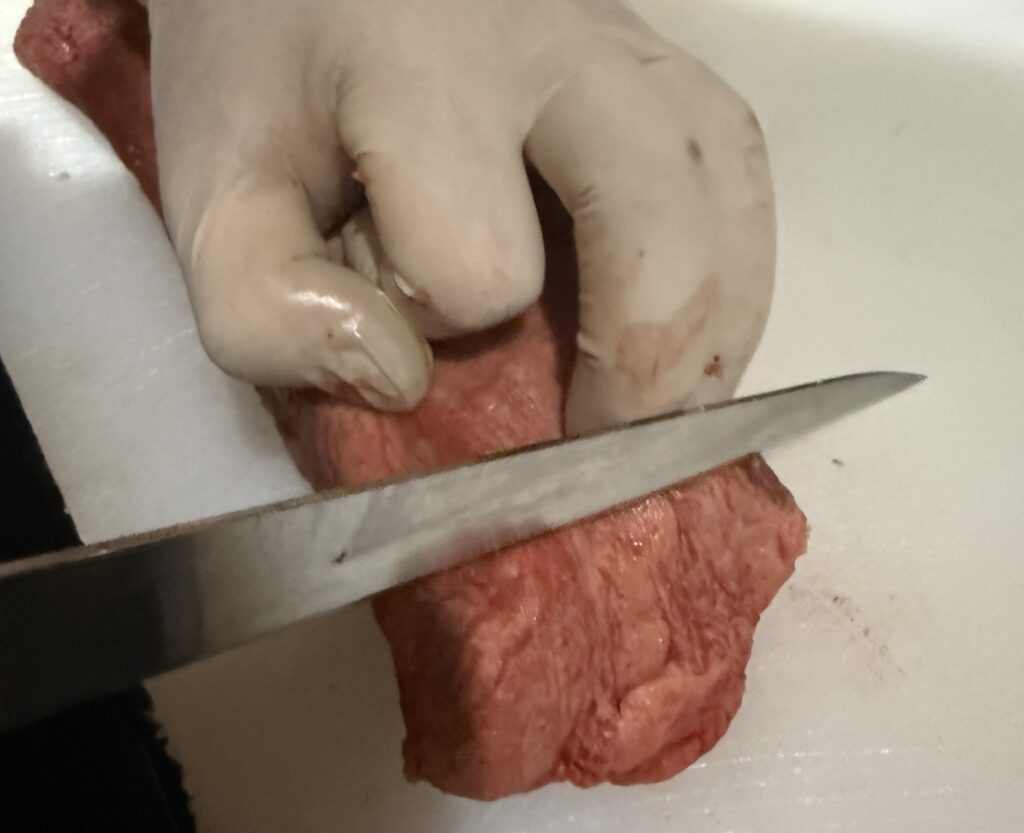
We would like to share our latest evolution in sourcing. Traditionally, high-end yakiniku shops in Japan have favored American grain-fed beef tongue because of its high fat content. However, Kuro5 has recently started using high-quality “Australian Tongue” alongside our other premium selections.
Why has Kuro5 embraced Australian tongue? Our kitchen and service staff were genuinely impressed by three clear qualities during our kitchen tastings:
- Exceptionally Clean Fat Aroma: When grilled, the fat of our selected Australian tongue releases a very clean, light, and sweet aroma with zero off-flavors, highlighting the natural beef taste.
- Light, Non-Greasy Fat Profile: Compared to American tongue, the fat is much lighter and cleaner. It does not feel heavy on the stomach, allowing you to enjoy your meal from start to finish without feeling weighed down.
- Fine, Tender Meat Quality: Due to strict livestock management and breeding improvements in Australia, the meat fibers are remarkably fine, resulting in a tender, juicy texture that shines after our “Gurumuki” trimming process.
- Excellent Overall Meat Quality: The meat quality is consistently tender and fine-grained, showing how far premium Australian beef has evolved.
The old image of Australian beef being tough and lean does not apply to our premium selection. Instead, it offers the perfect balance of great aroma, light fat, and tenderness that modern yakiniku diners love. We are proud to feature this new selection at Kuro5.
The Secret of Constant Flipping: Grilling to Perfection Under Binchotan’s Infrared Heat
Even with the finest raw Wagyu tongue or perfectly trimmed imported tongue, the final step is the grill. Tongue loses moisture quickly; if left too long on the grate, the fibers contract, making it tough and rubbery. The key is how to grill the tongue without letting its delicious natural juices escape.
To guarantee the best experience, Kuro5’s staff grill each slice of tongue at your table in our signature tableside service.
Binchotan charcoal emits dry, intense heat with zero water vapor, sending powerful far-infrared waves directly to the meat. Especially when cooking the thick-sliced root part (Tokusen Tan Shio), we place the meat on the stable, medium heat zone of the grill and flip it every 10 seconds, repeating this process multiple times to cook it slowly. This constant flipping prevents the surface from burning, while Binchotan’s dry heat makes the exterior crispy and caramelized. At the same time, the far-infrared waves warm the interior to a plump, juicy finish, sealing all the savory juices inside. Taking our time to patiently cook the meat is Kuro5’s ultimate secret to unlocking 120% of the raw Wagyu tongue’s natural potential.
This professional heat control keeps the juices sealed inside the cells, delivering a burst of hot, sweet flavor and elite tenderness that is simply unforgettable.
Three Keys to Kuro5’s Premium Beef Tongue
- Elite Wagyu Texture and Fragrance: Highly detailed marbling and fine muscle fibers make Wagyu tongue melt-in-your-mouth tender, releasing the sweet “Wagyu Aroma” upon cooking.
- Odor-Free “Gurumuki” Prep: We trim away nearly half of the imported tongue, removing all tough outer red meat and blood vessels to ensure a clean, odorless bite for our regular tongue.
- The Australian Advantage: We select premium Australian tongue for its clean fat aroma, light and digestible fat profile, and fine, tender muscle texture.
Welcoming You Tonight with the Finest Hand-Prepped Tongue and Charcoal Fire
Even a simple plate of tongue salt reveals the philosophy, prep technique, and sourcing standards of a yakiniku restaurant. Kuro5 invests the extra effort to source raw Wagyu tongue, perform the “Gurumuki” trim on imported cuts, and select premium Australian tongue because we want the very first bite of your meal to make you smile with delight.
The sweetness of Wagyu, the clean aroma of Australian beef, the precise hand-carving of our kitchen, and the intense heat of Binchotan charcoal work in harmony to redefine what beef tongue can be.
Tonight, at our Ikebukuro Honten, Ikebukuro East Exit, and Shinjuku Kabukicho locations, we have our glowing Binchotan fires ready and our finest prepped tongues waiting. We look forward to welcoming you and serving you the perfect bite.
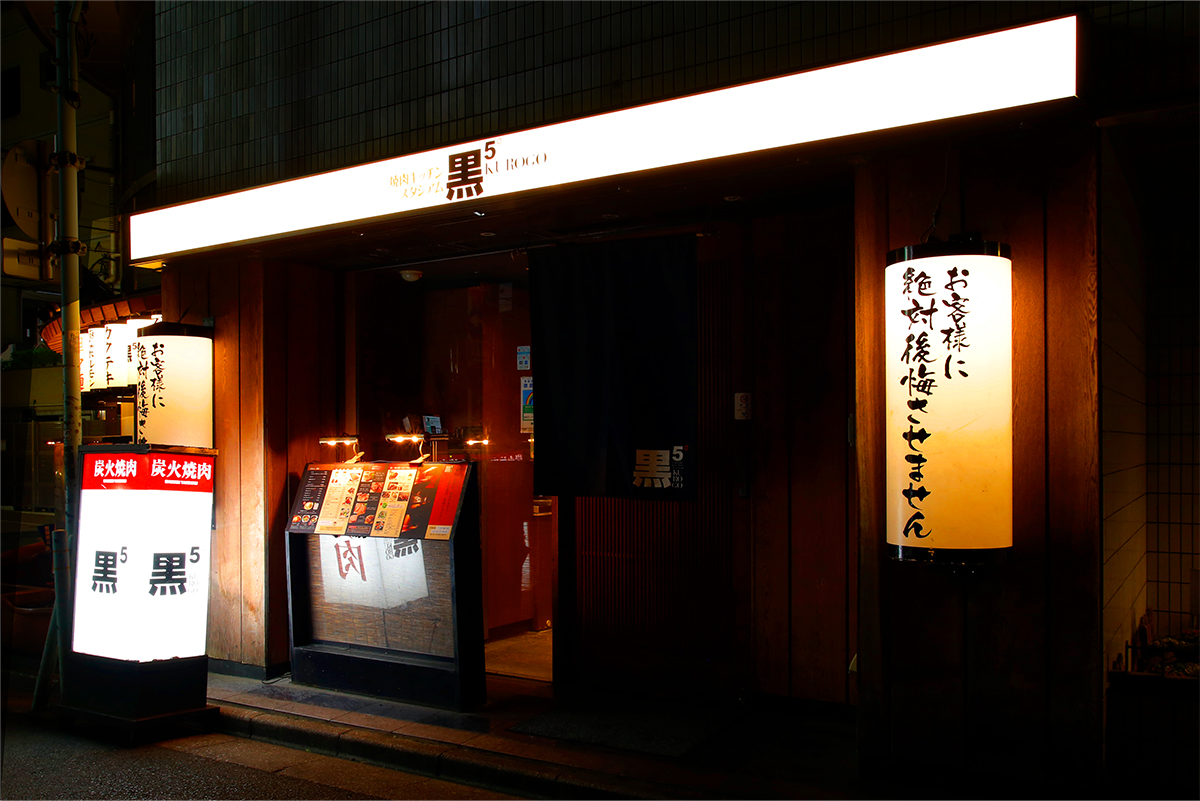
- Charcoal Yakiniku Kuro5 Honten
Nishi-Ikebukuro Bill 1F, 2-46-3 Nishi-Ikebukuro, Toshima-ku, Tokyo / 5 min walk from JR Ikebukuro Station - Charcoal Yakiniku Kuro5 Higashiguchi
Tsukiji Bill 1F, 1-42-16 Higashi-Ikebukuro, Toshima-ku, Tokyo / 3 min walk from JR Ikebukuro Station East Exit - Charcoal Yakiniku Kuro5 Kabukicho
Sankyo Akagawa Bill 1F, 2-21-4 Kabukicho, Shinjuku-ku, Tokyo

