

When you look at a Yakiniku menu, words like “Thick-Cut Premium Tongue” or “Thinly Sliced Premium Rosu (Loin)” often catch your eye. Just imagining the sizzling sound and the savory aroma rising from the grill is enough to make your stomach rumble.

But have you ever wondered:
“Why are some meats cut thick, while others are sliced paper-thin?”
“Wouldn’t it be more luxurious and delicious if everything were cut thick like a steak?”
In fact, a common mistake people make at home is buying expensive Wagyu beef from the supermarket and cutting it thickly “as a treat,” only to find it unexpectedly tough and hard to chew.
In the world of Yakiniku, the “thickness” of the meat is never decided randomly. It is the ultimate “optimal solution” calculated by professionals, balancing the meat’s muscle fibers, the melting point of its fat, and the texture when you take a bite.
Today, we will dive deep into the delicious magic hidden in the “thickness” of the meat. Knowing this will make your next Yakiniku experience a hundred times more enjoyable!
Calculated to Perfection: The 3 Criteria for Determining Meat Thickness
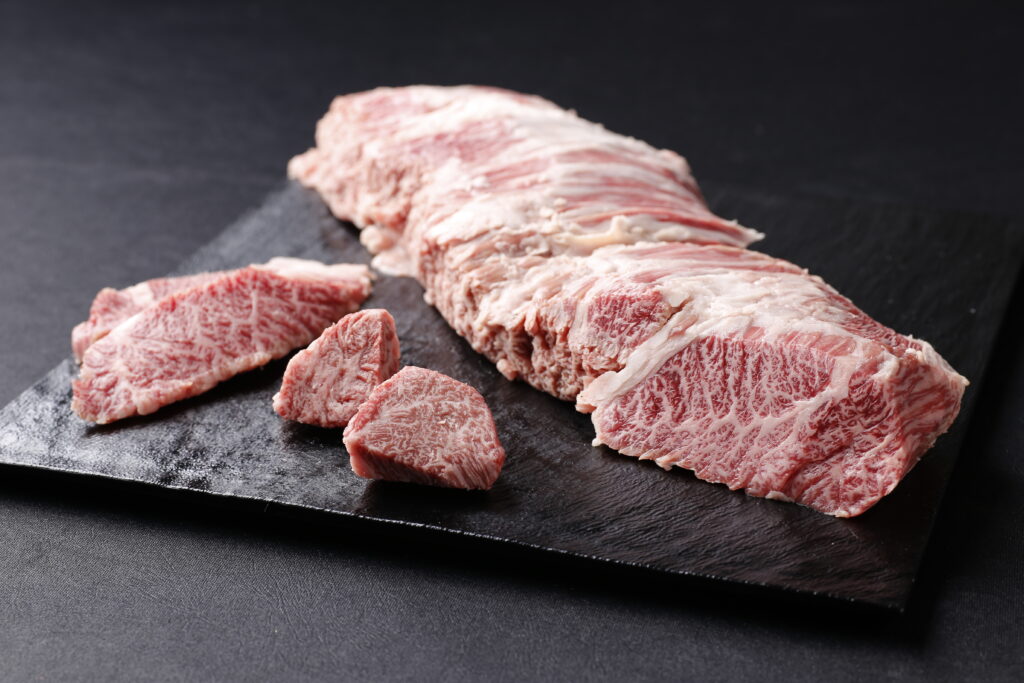
In the kitchen of an authentic Yakiniku restaurant, artisans carefully assess the condition of the meat that day and adjust the thickness down to the millimeter. Their decisions are based primarily on the following three elements:
- Thickness and direction of muscle fibers (How easy it is to bite through)
- Amount and melting point of fat (Ensuring the fat doesn’t feel too heavy)
- Moisture and meat juices (How to lock in the umami)
Even meat from the same cow has different “personalities.” Parts that are moved frequently develop thicker, tougher fibers, while less-used muscles remain tender. The art of cutting is about giving each piece of meat the perfect “outfit” (thickness) to make it taste its absolute best.
Let’s look at the specific differences between meats best suited for “thick cuts” and those that shine as “thin cuts.”
The Thrill of the Bite: The Ultimate “Thick-Cut” Meats
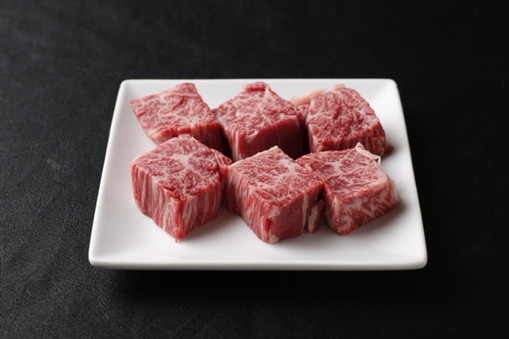
The true charm of a “thick cut” lies in the overwhelming satisfaction and the explosion of juicy flavors in your mouth. The most representative cuts for this are “Beef Tongue” (Tan) and “Harami” (Outside Skirt).
The Secret of Thick-Cut Premium Tongue
The beef tongue gets tougher towards the tip because it moves a lot, but towards the root (Tan-moto), it becomes incredibly marbled and tender.
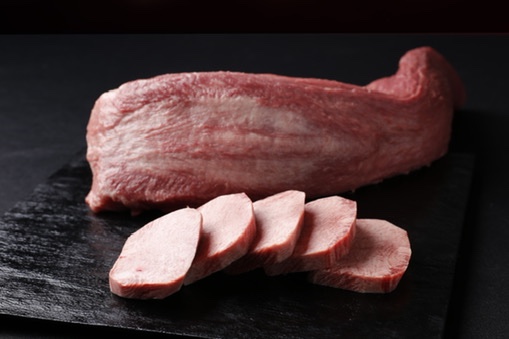
Cutting only the best core part of this “tongue root” thickly is the royal standard. Why? Because the fine fibers of the tongue root possess a miraculous quality: even when cut thick and grilled until the outside is crispy and fragrant, the inside remains crisp yet effortlessly tender to bite through.
The moment you bite into a thick piece of tongue, the contrast between the savory exterior and the piping hot juices bursting inside provides the ultimate culinary entertainment that only a thick cut can deliver.
Why Harami Demands a Thick Cut
Harami is another cut that shows its true worth when cut thick. Although it looks like lean meat, Harami is actually the diaphragm muscle (classified as offal). It is characterized by thick fibers and a high moisture (meat juice) content.

If you were to slice Harami paper-thin, all that precious moisture would drip down into the grill the moment it hit the heat, leaving you with a dry, papery texture.
That is why the ideal Harami is cut into thick blocks of about 2 to 3 centimeters. This thickness acts as a breakwater for the juices. By rolling it continuously on the grill and slowly cooking it to the center, the fibers gently loosen, resulting in an astonishingly moist and tender texture.
【Connoisseur’s Secret】 Enjoying Premium Tongue and Harami as “Thin Cuts”

Up to this point, we have explained why thick cuts are the supreme choice for Tongue and Harami. However, there is actually a “secret trick” loved by Yakiniku pros and connoisseurs: deliberately cutting premium Harami and Tongue Root thinly and searing them rare.
Take premium Wagyu tongue root, for example. Slice it thinly and give it a quick, crispy sear on the grill. Despite being thin, the moment you chew, an unbelievable amount of juicy umami overflows, offering a light, snappy texture completely different from a thick cut.
The same goes for Harami. When you take thinly sliced premium Wagyu Harami, sear it very briefly to a rare finish, and pop it into your mouth, the sweetness of the melted fat and the rich depth of the lean meat hit your taste buds instantly.
At “Yakiniku Kuro 5,” we generally serve these cuts in the classic thick style that we believe offers the best experience. However, if you request it in advance when making a reservation, we are more than happy to accommodate this special “thin-cut” request. If you are used to the usual thick cuts, please try asking for this connoisseur’s style next time!
Thin is Magic! The Brilliant World of Thinly Sliced Wagyu
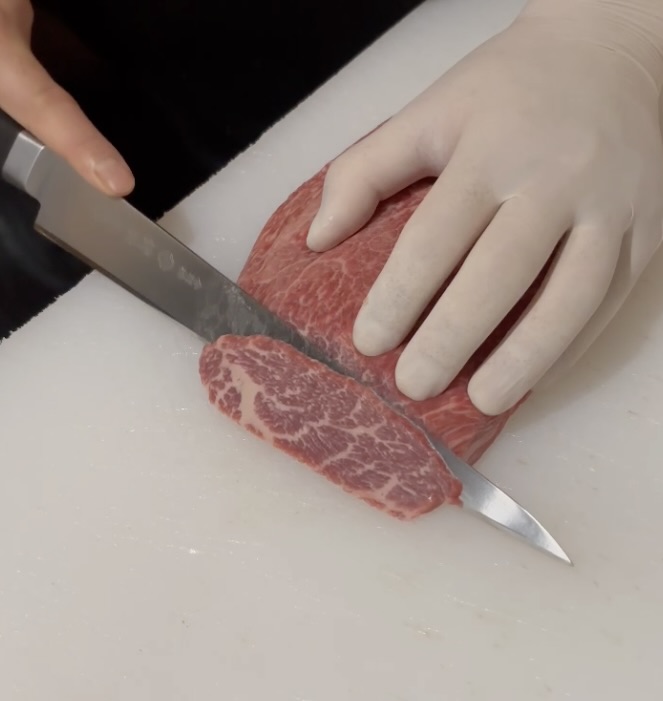
On the other hand, the fascinating thing about Wagyu is that “thicker” doesn’t always mean “better.” Especially when it comes to high-quality Wagyu “Lean Meat” or “Rosu” (Loin), a deliberate thin cut creates astonishing magic.
The Talent of Wagyu: A “Low Melting Point”
The fat (marbling) in Wagyu beef has a remarkably lower “melting point” compared to foreign beef. Because it melts at a temperature lower than human body heat, it provides a heavenly, melt-in-your-mouth sensation the moment you eat it.
But what happens if you cut these heavily marbled pieces thickly like a steak for Yakiniku? The sheer volume of the fat takes over, and after just a few pieces, you might feel too full or heavy in the stomach.
The Optimal Solution: “Ultra-Thin Cut x Rolling Grill”
Consider “Shinshin,” a rare, incredibly tender cut from the center of the thigh with delicate marbling.
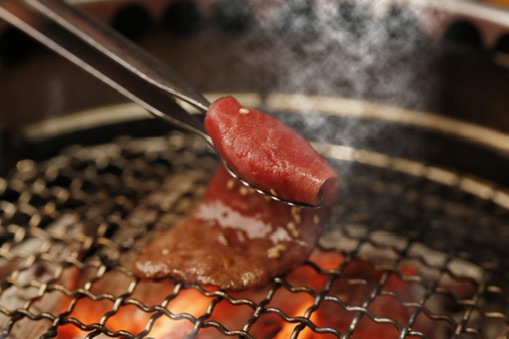
We deliberately slice this down to the millimeter. Then, instead of laying it flat on the grill, we roll it into a tube shape and lightly sear it. Slicing it thinly allows the heat to penetrate instantly, melting the delicate Wagyu fat into its most delicious state. By rolling it, we create layers, so even though it is thin, it provides a fluffy, “mille-feuille-like” volume in your mouth.
Take it off the grill, dip it in our special sauce with a touch of wasabi, and you barely need any jaw strength. It melts softly on your tongue, sending the deep umami of the lean meat and the sweetness of the fat straight to your brain. This is the “Magic of Thin Cuts” that allows adults to enjoy Wagyu to the very end without feeling heavy.
The Artisan Skill of “Hidden Scoring”
Once you understand the difference between thick and thin cuts, another detail becomes intriguing: the fine slits made on the surface of the meat, known as “Hidden Scoring” (Kakushi-bocho).
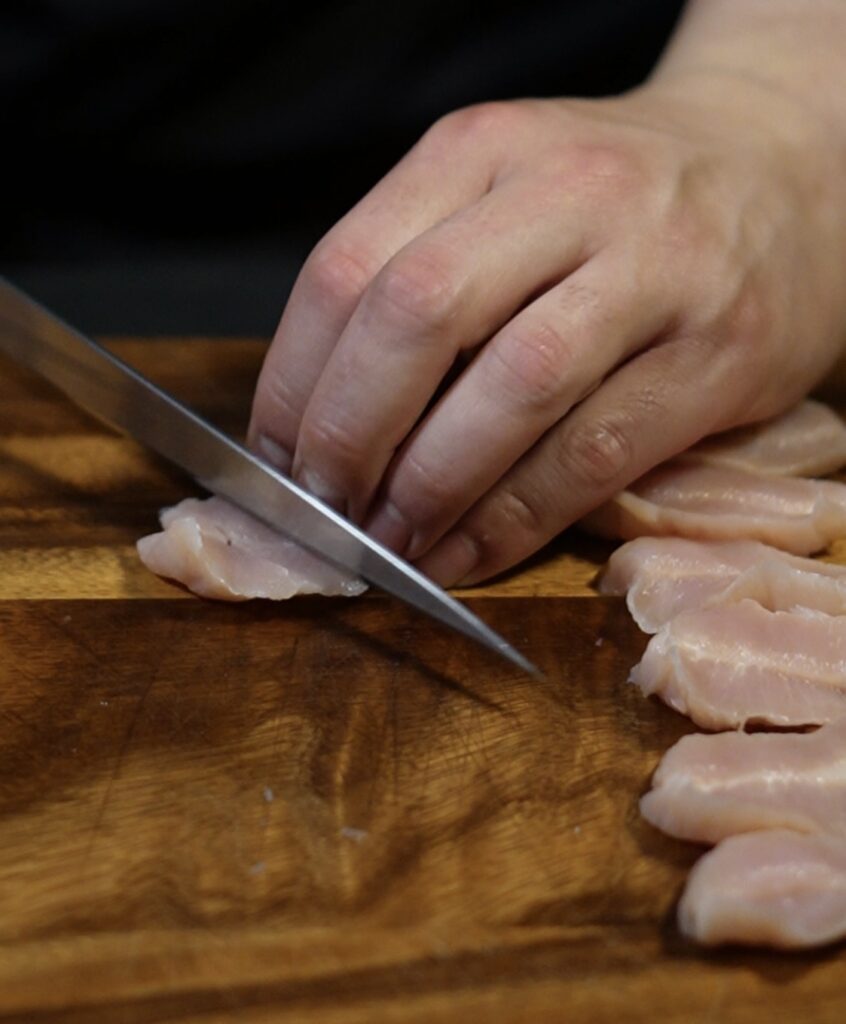
Particularly for thick cuts or slightly chewy parts, professional chefs almost always score the meat with a knife. This isn’t just to make it look pretty.
- It cuts the fibers, making the meat tender and easier to bite through.
- It prevents the meat from shrinking and curling up while grilling.
- It allows the salt or marinade to penetrate deeply into the center of the meat.
“Thick yet tender,” “Richly seasoned all the way through.” The delight we take for granted at authentic Yakiniku restaurants is actually backed by these meticulous artisan cutting techniques and an obsession with every single millimeter of thickness.
The Yakiniku Grill is a Mini Science Lab
What did you think?
“Thick-cut tongue” is thick to create an explosion of meat juices, while “Thin-sliced Rosu” is the ultimate thinness meticulously calculated to perfectly melt Wagyu fat.
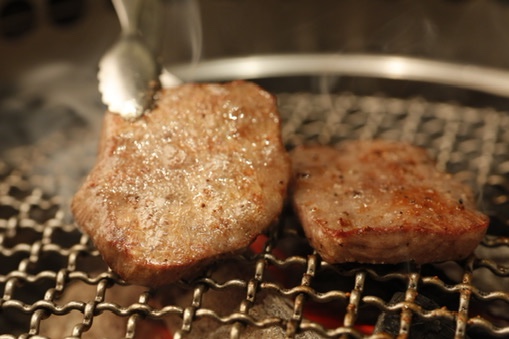
The next time you visit a Yakiniku restaurant, please pay attention to the “thickness” of the meat served on your plate.
“This Harami is thick, so I’ll cook it slowly,” or “This thinly sliced meat just needs a quick sear.” Thinking this way turns the grill into a mini science lab, making your usual Yakiniku experience many times more delicious and fun.
And if you ever find yourself thinking, “I have no idea how to grill this specific meat best!”—leave it to the meat professionals without hesitation.
Experience Authentic Wagyu with Full-Attendant Grilling at “Yakiniku Kuro 5”
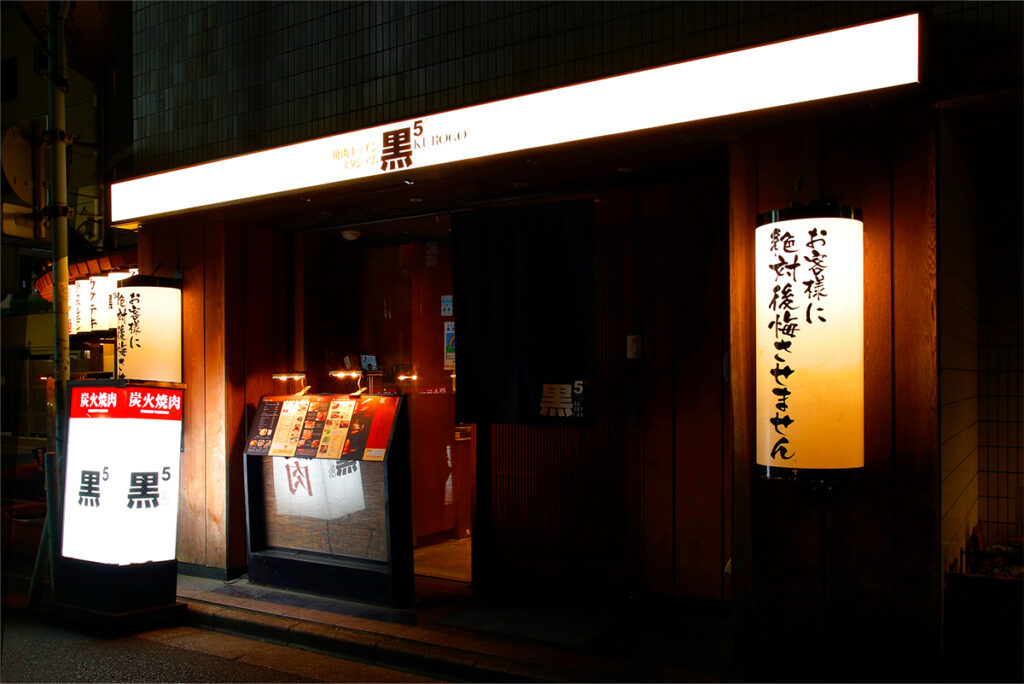
At our authentic Wagyu Yakiniku restaurants, our staff will grill each specific cut to its perfect doneness right in front of you, using our “Full-Attendant (Yaki-Bugyo) Style.” And of course, leave it to us if you want to try the “Secret Thin-Cut” upon request!
To experience the true, hidden potential of premium Wagyu beef, please come and visit one of our nearby stores.
Store Name: Yakiniku Kuro 5 Main Store (Honten)
Address: 1F Cima 100 Bldg, 2-46-3 Ikebukuro, Toshima-ku, Tokyo 171-0014
Nearest Station: 5-minute walk from JR Ikebukuro Station West Exit
Business Hours: 17:00–24:00 (L.O. 23:30)
Closed: Open year-round
Store Name: Yakiniku Kuro 5 Ikebukuro East Exit Store
Address: 2F Need Bldg, 1-42-16 Higashi-Ikebukuro, Toshima-ku, Tokyo 170-0013
Nearest Station: 5-minute walk from JR Ikebukuro Station East Exit
Business Hours: 17:00–24:00 (L.O. 23:00)
Closed: Open year-round
Store Name: Yakiniku Kuro 5 Kabukicho Store
Address: 1F Sankei Bldg, 2-21-4 Kabukicho, Shinjuku-ku, Tokyo
Nearest Station: 5-minute walk from Seibu Shinjuku Station / 7-minute walk from Shinjuku Sanchome Station
Business Hours: 18:00–5:00 the next day (L.O. 4:00)
Closed: Open year-round

