


There’s always that one “grill master” who glares at you and insists, “Don’t touch the meat too much! You should only flip it once!”
Meanwhile, you might be holding back your tongs, secretly thinking, “If I don’t flip it, it’s going to burn. Flipping it more often must make it juicier.”
So, what is the right way to grill meat perfectly? Is it the “flip once” rule, or the “flip multiple times” approach?
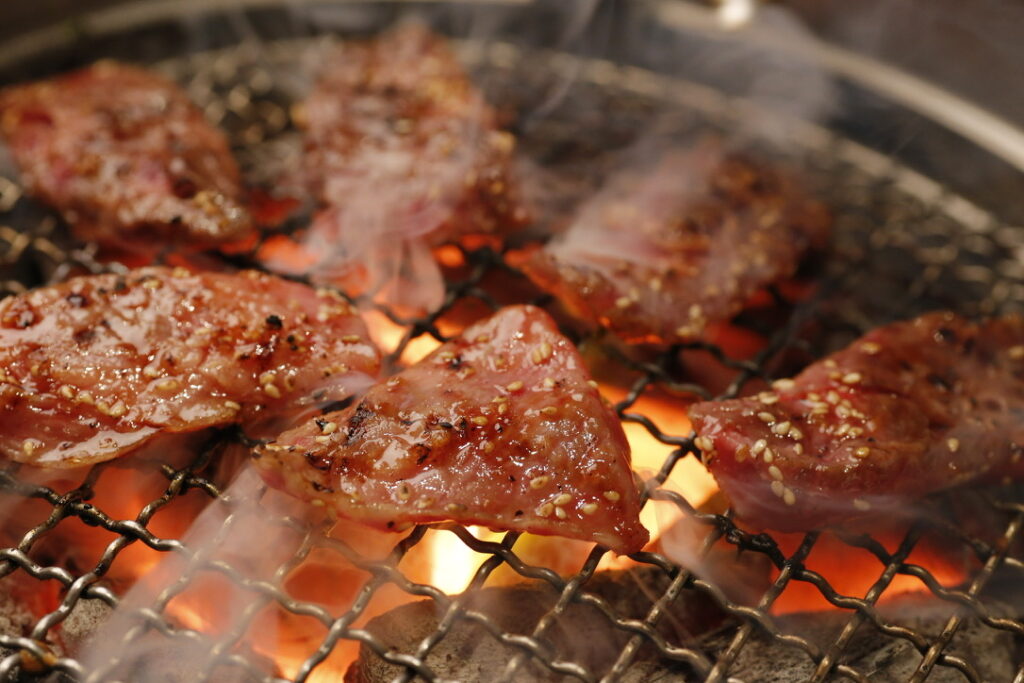
This isn’t just a matter of preference or tradition. When we break down the thickness of the meat, the characteristics of the grill, and the mechanics of heat transfer, there is a clear, “scientific answer.”
Today, from the perspective of professionals who have spent years perfecting the art of grilling Wagyu beef, we will reveal the truth about how many times you should flip your Yakiniku and the golden rules for a flawless grilling experience.
The Truth Behind the “Only Flip Once” Myth
First, let’s address the long-held belief that you shouldn’t touch the meat and should only flip it once. To put it simply, this theory isn’t entirely wrong. However, the “conditions” where this rule applies are completely different from Yakiniku.
The Theory of “Sealing in the Juices”
The logic behind the “flip once” camp goes like this:
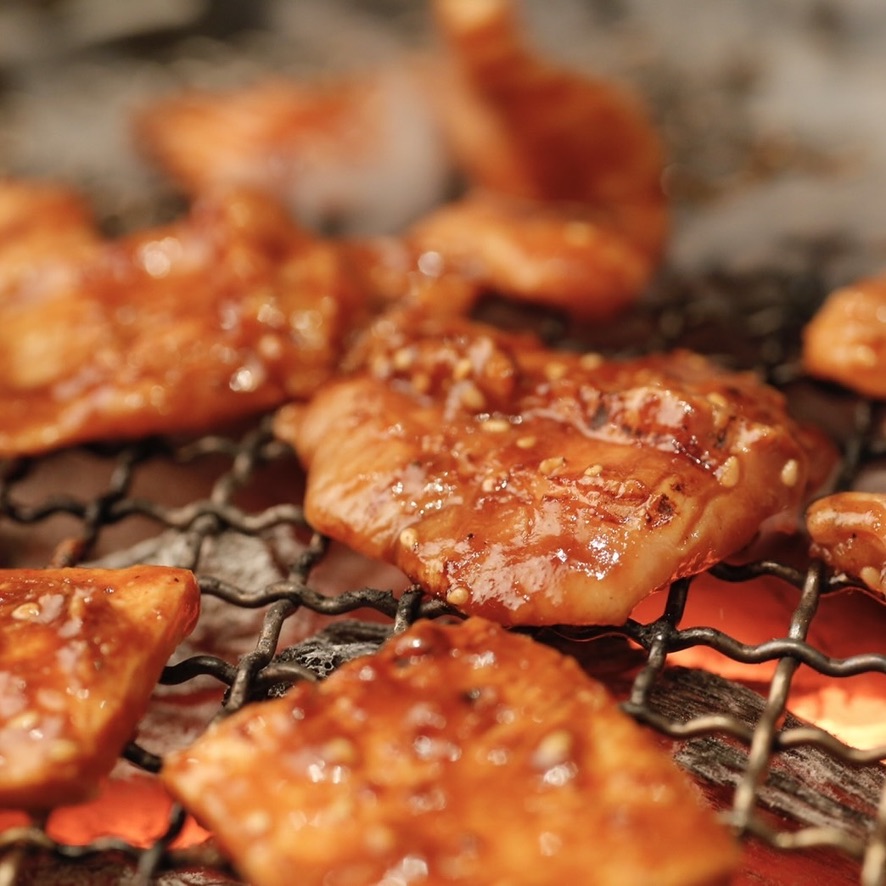
- Sear the surface quickly over high heat to create a crust, locking the juices (umami) inside.
- Constantly flipping and poking the meat causes stress, making it lose moisture and fat, resulting in dry meat.
This sounds very logical. The idea of searing the surface to prevent the loss of umami is a common phrase heard on cooking shows.
This Rule Only Applies to “Teppanyaki” Steaks!
However, there is a crucial oversight here. The “flip once” method only truly shines when cooking thick cuts of steak on a flat iron griddle (Teppan) or in a frying pan.

Imagine cooking a thick steak on a Teppan. The greatest advantage of Teppanyaki is that after searing the surface, you can cover it with a “lid” to trap the steam. This creates a “steaming effect” filled with moisture, allowing the heat to gently penetrate the center of the meat. That is why searing one side well and flipping it only once is the best approach for a perfect steak.
But what about our beloved “Yakiniku”?
A Yakiniku grill (a wire mesh gridiron) has no lid. Furthermore, intense heat rises from the bottom, and all the steam is sucked up by the exhaust duct above. In an environment where retaining heat and moisture through steaming is physically impossible, what happens if you leave one side cooking for too long? The moisture on the surface evaporates rapidly, the precious meat juices disappear, and the meat simply dries out and becomes tough.

For Yakiniku Grilling, “Flipping Multiple Times” is the Right Answer!
Now that we know the rules of Teppanyaki don’t apply to Yakiniku, let’s get to the main point. For lidless gridiron grilling—Yakiniku—flipping the meat “multiple times” is the absolute right answer for a delicious result.
Flipping Circulates Heat in Lidless Grilling
The thickness of the meat served at Yakiniku restaurants, such as Kalbi (short rib), Roast, or Harami (skirt steak), varies slightly by cut, but it is usually sliced to about “5 to 8 millimeters.” Imagine leaving meat of this perfect thickness on a grill that reaches hundreds of degrees Celsius.
The bottom side exposed to the fire will quickly start to burn, while the top side remains cold and rapidly dries out.
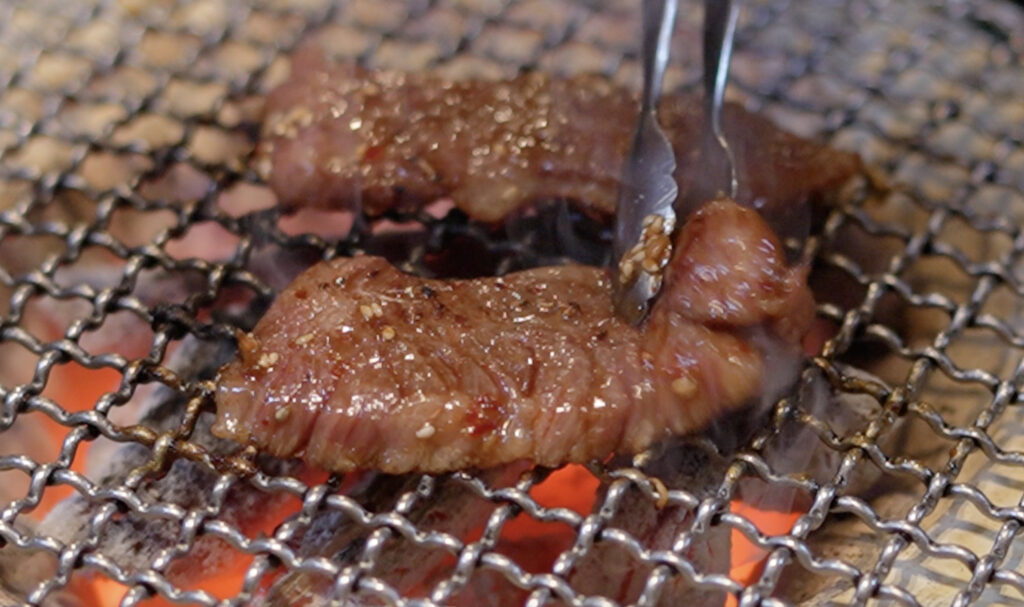
This is where the action of “flipping multiple times” becomes crucial.
By turning the meat frequently, you can apply heat to both sides alternately and evenly. In other words, the act of flipping itself simulates a “slow, gentle steaming effect” on a lidless Yakiniku grill. You could say that the number of flips serves as a replacement for the “lid” used in Teppanyaki.
The Scientific Superiority of “Multiple Flips”
The idea that “flipping multiple times makes it tastier” isn’t just an intuitive feeling. In fact, experiments in culinary science studies (such as those in the journal *Meat Science*) have proven its superiority. Improved Moisture Retention Data shows that meat flipped frequently during grilling retains a significantly higher percentage of “moisture (meat juices)” after cooking compared to meat flipped only once. Elimination of Uneven Cooking and Protection of Fibers By distributing the temperature across the entire piece of meat with each flip, rather than concentrating the heat on one side, you prevent the meat fibers from shrinking due to sudden temperature changes (which causes toughness), resulting in an even and perfect cook.

The proteins in meat shrink tightly when exposed to sudden heat, squeezing out the juices. Delivering “gentle heat” gradually to the inside by flipping the meat multiple times is the essential requirement for juicy Yakiniku.
The “Golden Rhythm” for the Perfect Yakiniku
Now that you understand the logic, let’s move on to the practical application. When you actually hold the tongs in front of the grill, when should you flip the meat? Here are the “rhythms and rules of grilling” practiced by professionals.
The Ideal Tempo is “Every 10 to 15 Seconds”
The ideal rhythm when grilling meat spread out on the mesh is to flip it every “10 to 15 seconds.”

First, gently place the meat on the best spot of the hot grill. After a few seconds, when the edges of the meat slightly shrink and a faint browning appears on the surface, don’t hesitate to make your first flip.
From then on, slowly count “10 or 15 seconds” in your head, and continue to flip the meat rhythmically and lightly.
The Crucial Point: Flip “Before” the Surface Dries
There is a clear reason for this short “10 to 15 second” span.
It is to flip the meat “before the top-facing surface dries out.”
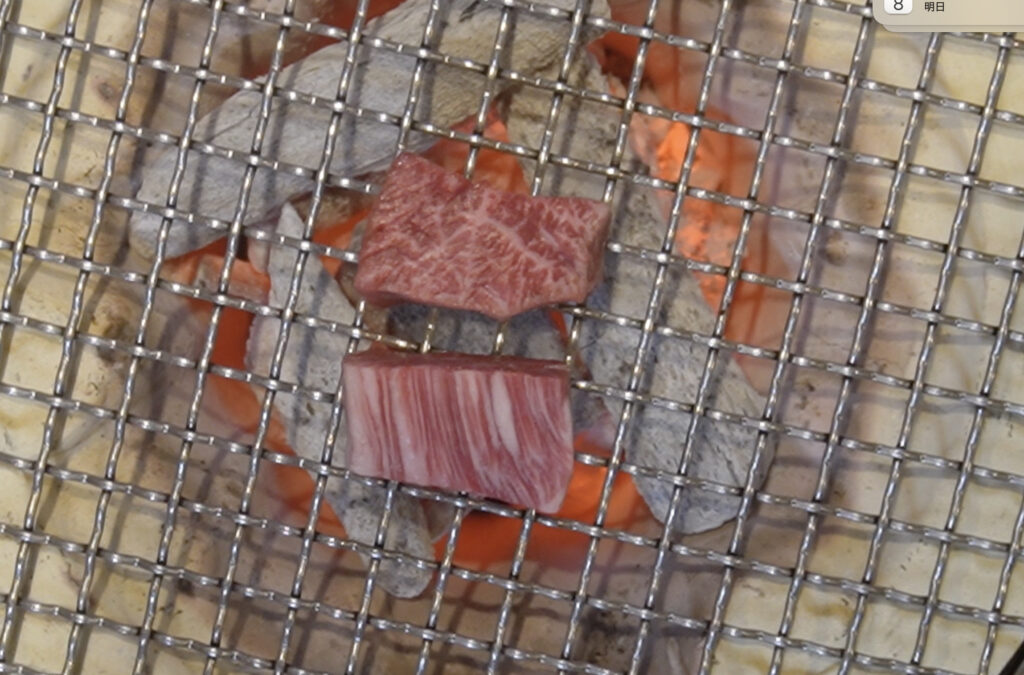
When you place meat on the grill, the heat from below pushes the internal moisture (juices) upwards, causing it to bead on the surface like sweat. This “meat sweat” is the umami-packed juice itself.
If you leave it for even a few seconds at this point, the precious juices will evaporate in the heat. If you wait until it dries to flip it, it’s too late. It’s the same as dropping your meat juices through the grill.
Right before the juices gently bead on the surface and dry up—that exact moment—flip it over quickly. By doing so, the rising juices are pushed back into the center of the meat, causing the umami with nowhere to escape to swell the meat from the inside. By repeating this at a 10 to 15-second tempo, you create the ultimate texture that bursts with juiciness the moment you bite into it.
Learning from the Artisans: Binchotan Charcoal and Masterful Technique
We’ve explained the importance of flipping the meat frequently, but that doesn’t mean you should just mess around with the meat haphazardly. To minimize damage to the meat while maximizing its umami, the “grilling environment” and “technique” are key.
A Grilling Technique So “Quiet” the Meat Doesn’t Notice
At our “Yakiniku Kurogo” restaurants, we offer a full-service style where our dedicated staff carefully grills each piece of meat right in front of the customer.
Naturally, we control the heat by flipping the meat frequently, about every 10 seconds, adjusting to the characteristics of the cut—from thick blocks to ultra-thin slices.

In doing so, we have a philosophy we value above all else. That is, “grill with such quiet handling that the meat itself doesn’t realize it’s being grilled.”
Even though we flip it multiple times, pressing it against the grill, forcefully pulling it, or squeezing it too hard with the tongs will destroy the meat’s delicate fibers.
Almost as if gently stroking the meat, we flip it rhythmically and lightly, observing the meat’s resistance and how the fat is melting with our fingertips and eyes. While customers enjoy their conversation, we quietly continue to flip the meat without drawing attention. This “quiet and careful handling” is the ultimate secret to achieving a finish that is fragrant on the outside and surprisingly tender on the inside.
The Magic of “Aroma and Umami” Brought Out by Binchotan Charcoal
And what creates an overwhelming synergy with this “multiple flip” method is the “Binchotan” (premium white charcoal) that Kurogo is absolutely uncompromising about.
Standard gas roasters apply heat directly to the surface, making it easy to burn and requiring strict heat control.
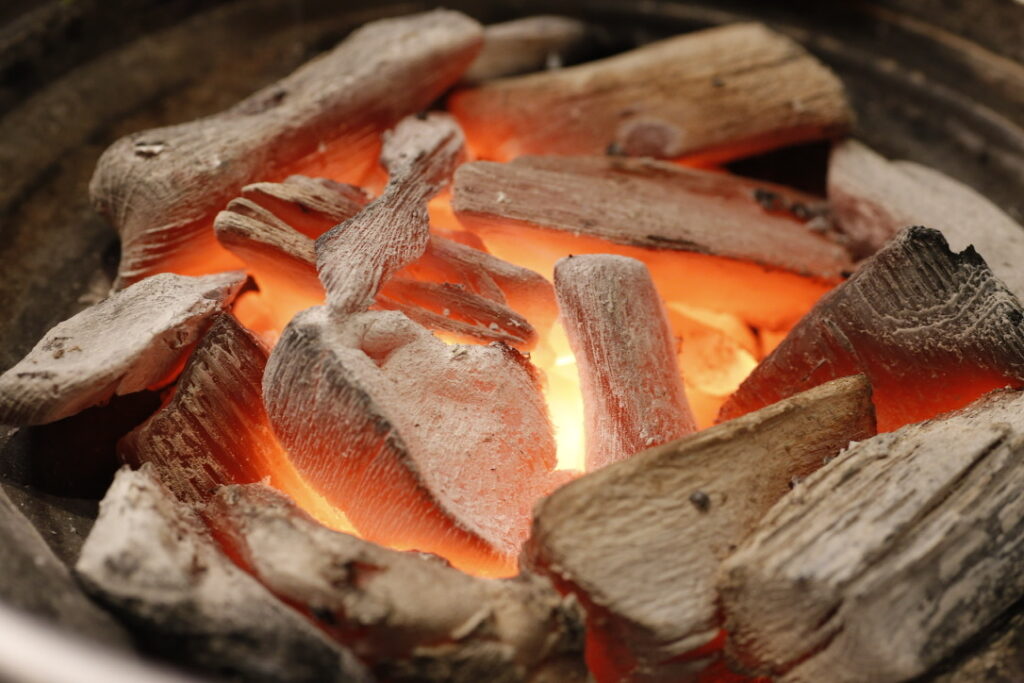
On the other hand, the powerful “far-infrared rays” emitted by Binchotan deliver heat gently in waves not only to the surface but deep into the center of the meat. Over the gentle heat of the Binchotan, flip the meat quietly and multiple times every 10 to 15 seconds. The far-infrared effect activates the internal umami, while simultaneously, the high-quality Wagyu fat that drips onto the charcoal turns into smoke, enveloping the meat in an exquisite “smoky aroma.”
When the scientifically backed theory of “flipping multiple times,” the natural power of Binchotan charcoal, and the masterful touch of an artisan who loves meat come together, Yakiniku transcends a mere meal and is elevated into a moving culinary experience.
Conclusion: Flip with Confidence “Multiple Times” at Your Next Yakiniku
What do you think? For those of you whose tongs have hesitated because you were told “You can only flip the meat once!”, you don’t need to doubt yourself anymore starting today.
Steak and Yakiniku are different. In Yakiniku, which is lidless gridiron grilling, “gently flipping the meat multiple times every 10 to 15 seconds before it dries” is the absolute scientific answer to locking in the juices and cooking it to plump, juicy perfection.
The next time you visit a Yakiniku restaurant, please remember this “Golden Rhythm.” Carefully observe the expression of the meat in front of you, and flip it quickly before the surface moisture escapes. We hope you thoroughly enjoy the magical experience of transforming your usual meat into something incredibly delicious, all through your own tong-handling skills.
Of course, on days when you feel, “I’m still a bit nervous about grilling it myself…” or “Today I just want to focus purely on eating,” please leave it to our professional grill masters. We await your visit, ready with premium Wagyu, Binchotan charcoal, and our quiet, masterful grilling techniques.
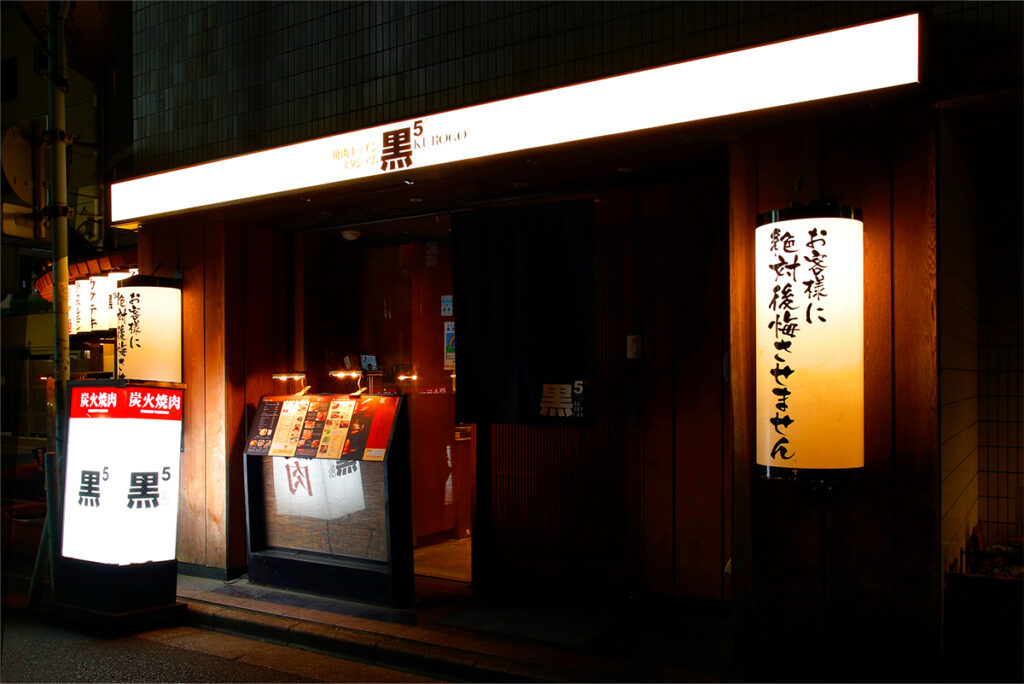
Restaurant: Yakiniku Kurogo Honten (Main Store)
Address: Shima 100 Bldg. 1F, 2-46-3 Ikebukuro, Toshima-ku, Tokyo 171-0014
Nearest Station: 5-minute walk from JR Ikebukuro Station West Exit
Hours: 17:00 – 24:00 (L.O. 23:30)
Closed: Open year-round
Restaurant: Yakiniku Kurogo Ikebukuro Higashiguchi (East Exit)
Address: Need Bldg. 2F, 1-42-16 Higashi-Ikebukuro, Toshima-ku, Tokyo 170-0013
Nearest Station: 5-minute walk from JR Ikebukuro Station East Exit
Hours: 17:00 – 24:00 (L.O. 23:00)
Closed: Open year-round
Restaurant: Yakiniku Kurogo Kabukicho
Address: Sankei Bldg. 1F, 2-21-4 Kabukicho, Shinjuku-ku, Tokyo
Nearest Station: 5-minute walk from Seibu-Shinjuku Station / 7-minute walk from Shinjuku-sanchome Station
Hours: 18:00 – 5:00 the next day (L.O. 4:00)
Closed: Open year-round

