
Have You Ever Encountered the Ultimate Loin that Shatters the Stereotype that “Loin is Dry”?
Hello everyone. This is Kuro5’s Sondo.
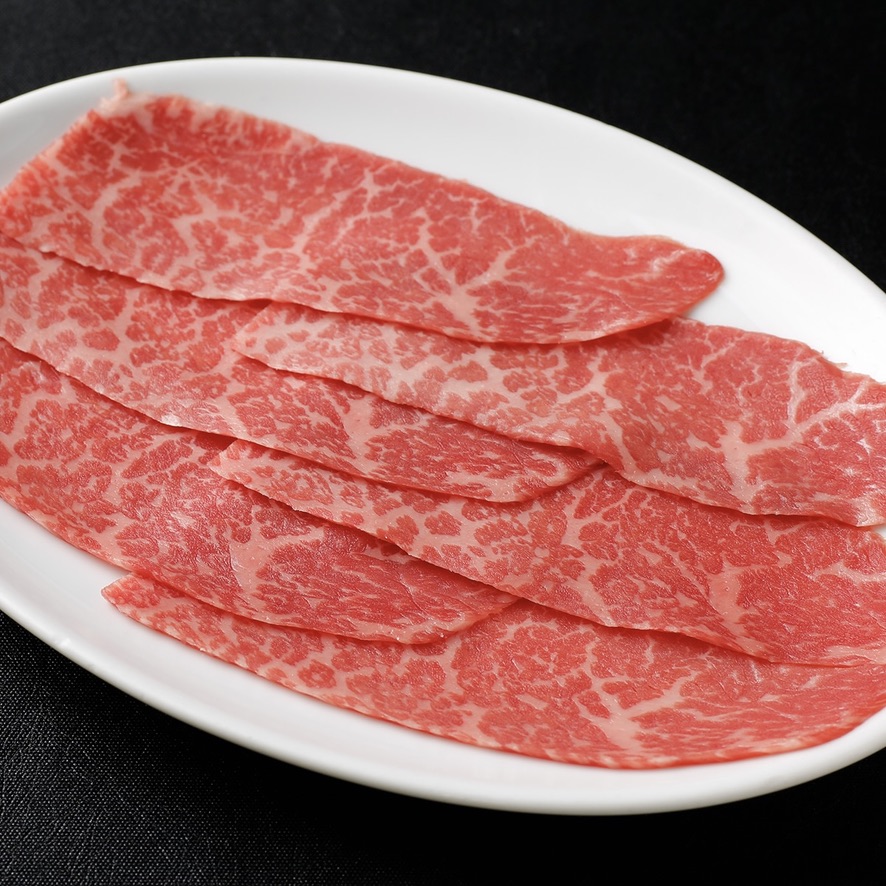
In Japanese yakiniku culture, the two absolute giants of popularity alongside “karbi” (short rib) are undoubtedly “loin” (ro-su). While short ribs are loved for their rich fat and sweetness, loin is adored for the pure, clean beef aroma and elegant umami of lean meat, especially by mature gourmands. In recent years, with the rise of health consciousness and the desire to enjoy meat lightly, the popularity of loin has soared to new heights.
Table of Contents
- 1. Have You Ever Encountered the Ultimate Loin that Shatters the Stereotype that “Loin is Dry”?
- 2. The Unveiling of “Shinshin”: The Miracle Cut Hidden in the Center of the Round
- 3. The Rolling Technique (Rolling Grill) that Layers the Flavors on the Grill
- 4. Why Roll It? The Thermodynamic and Texture Benefits of the Rolling Technique
- 5. The Miracle Juiciness Achievable Only with Raw, Never-Frozen Loin
- 6. Experience the Golden Moment Finished Tableside by Our Staff at Kuro5
However, when ordering loin at a yakiniku restaurant, you might have felt that “it is a bit dry” or “if cooked even slightly too long, it immediately becomes tough and loses its flavor.” Indeed, standard loin is lean and loses moisture quickly. Even a tiny mistake in cooking time can turn the slice into a dry, rubbery texture in an instant. This makes loin a highly delicate cut to grill.
At Kuro5, we wanted to break the stereotype that loin has to be dry. Since our founding, we have continued to offer a special loin cut. That is “Shinshin,” the most tender core of domestic Wagyu round beef, combined with “rolling grill,” a unique tableside technique where our staff cook the meat right in front of our guests. Today, we will explain why Kuro5’s loin is surprisingly moist and tender, releasing a rich juice like a premium meat beverage the moment you bite into it.
The Unveiling of “Shinshin”: The Miracle Cut Hidden in the Center of the Round
While Shinshin is our signature loin cut, do you know where it is located on the cattle and why it is so tender? Shinshin is located in the center core of “Shintama” (knuckle/round), a large round-shaped block of hind leg beef.
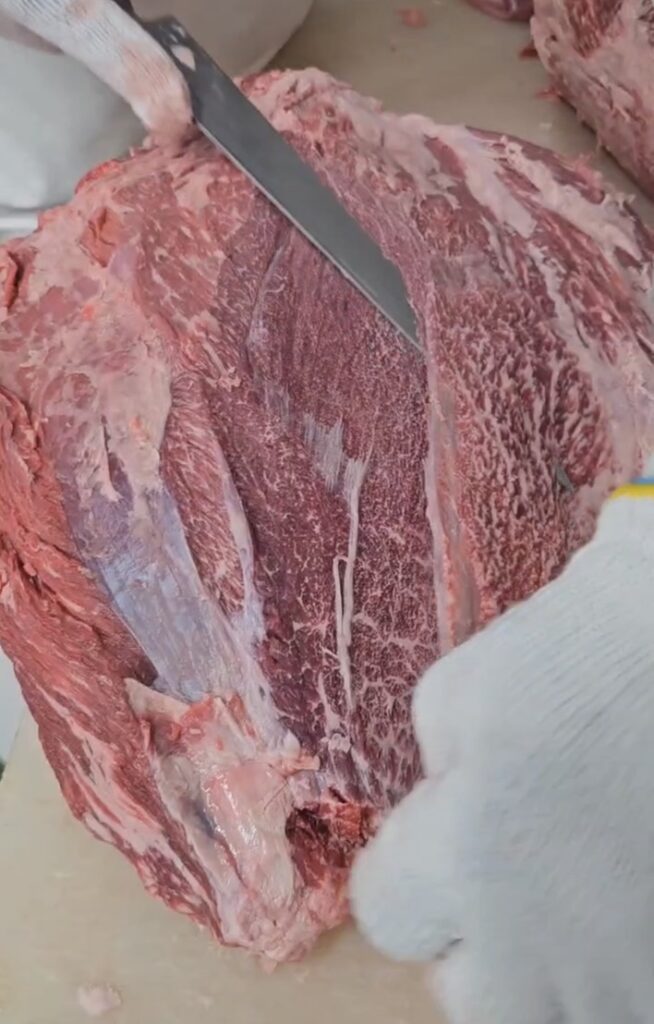
Because the round is an active leg muscle, it is generally associated with lean, low-fat, and somewhat fibrous, tough meat. Indeed, the outer muscles of Shintama and other parts of the round are often used for stewing or roast beef, as they are a bit too tough to grill directly for yakiniku. However, as you slice deeper into the Shintama block, you find a core muscle that is completely surrounded and protected from movement by other outer muscles. This is the miracle center core of Shintama: “Shinshin.”
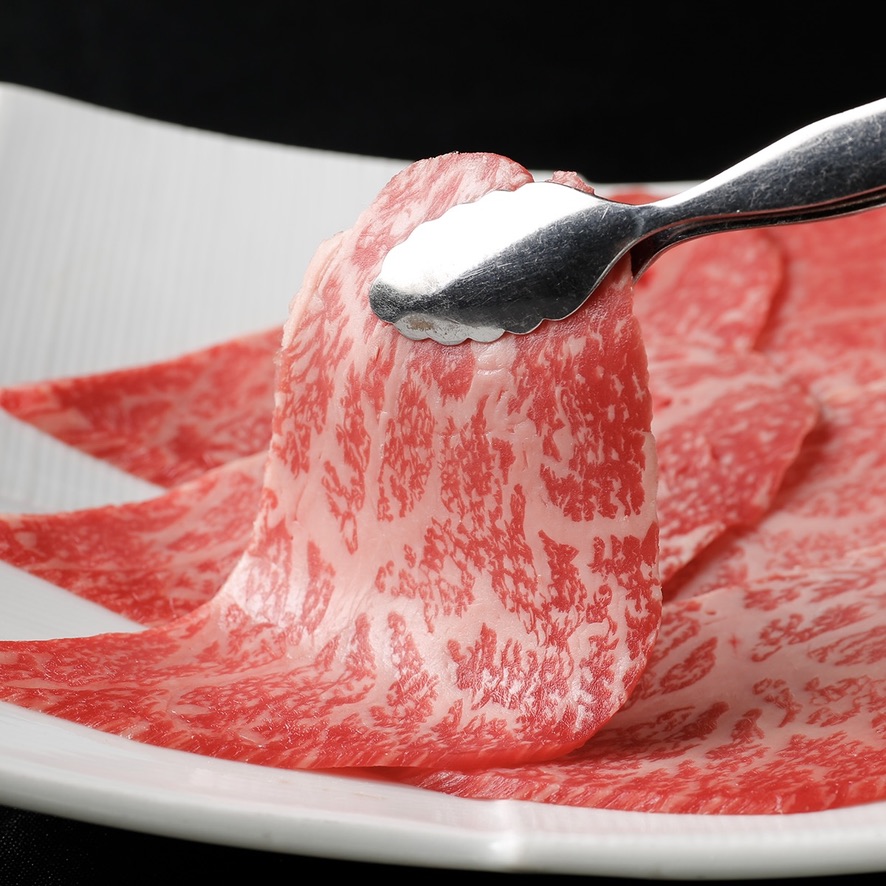
Despite being part of the round, Shinshin has incredibly fine muscle fibers, behaving almost like silk, and is completely free of tough gristle. Furthermore, premium domestic black Wagyu (Kuroge Wagyu) Shinshin features a very delicate, snowflake-like marbling (sashi). The fat in Shinshin is not the heavy, greasy fat of short ribs or sirloin, but a pure, light fat that begins to melt at body temperature. When you chew it, you experience the deep beefy aroma of lean meat along with a melting texture. It is a perfect hybrid of lean beef and marbling, making it the supreme champion of Wagyu loin.
Here, let us share a fascinating piece of history regarding the term “loin” in the Japanese yakiniku industry. The word loin (called “ro-su” in Japanese, which originates from the English word “roast”) historically refers to prime cuts along the back of the cattle: chuck loin, ribeye, and sirloin. Because of this, traditional loin cuts are characterized by rich, heavy marbling, just like the sirloin steak used in high-end Western dining or premium sukiyaki.
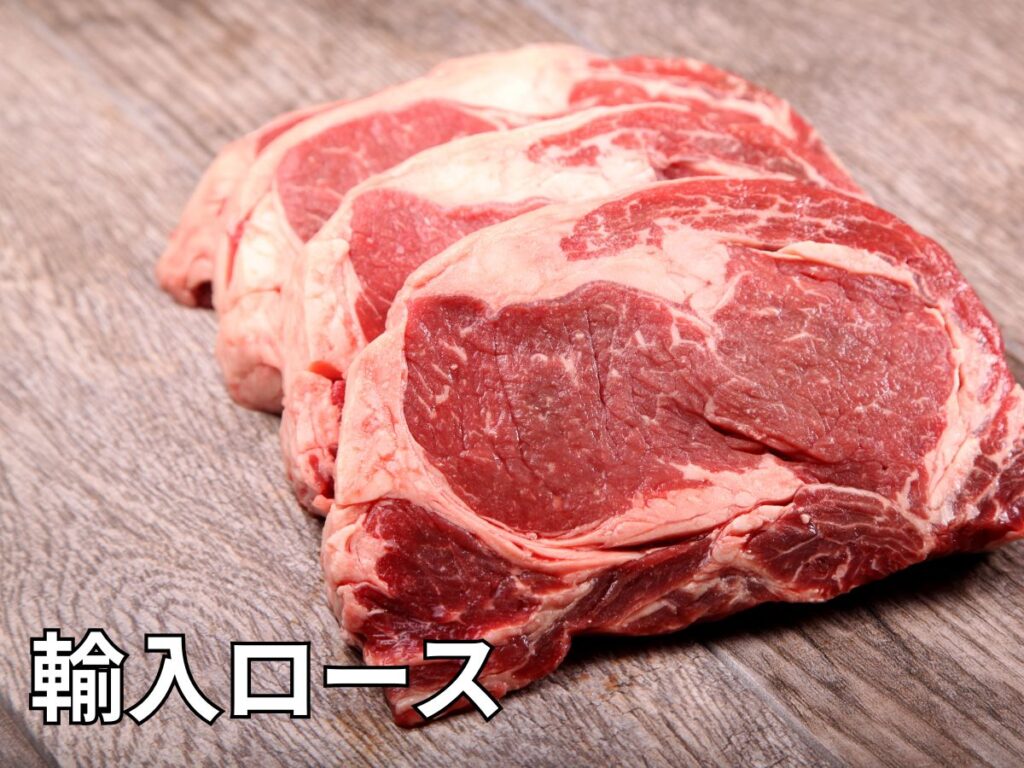
So why did “loin” become associated with “lean, less-fatty beef” in typical Japanese yakiniku restaurants? This is a historical remnant of the post-war era when imported beef became widely available. During the Showa yakiniku boom, many popular restaurants relied heavily on affordable imported beef. Unlike domestic Wagyu, imported sirloin and chuck cuts were very lean and carried almost no marbling. When Japanese customers ordered “loin” at these restaurants, they got used to eating lean, low-fat beef and came to identify the word loin with healthy, lean meat.
Over time, as consumer preferences diversified, the expectation that “ordering loin means enjoying lean, non-greasy beef to balance the heavy fat of short ribs” became deeply rooted. To satisfy this consumer demand, Japanese yakiniku restaurants continued to serve lean round cuts (from the hind leg/thigh area) under the name “loin” instead of using the actually fatty back cuts. This is the origin of the unique convention of “loin = lean beef” in Japanese yakiniku.
However, simply serving standard round cuts as loin often results in a dry, fibrous texture when grilled. That is why Kuro5 went a step further: we select “Shinshin”—the most tender core of the round that possesses both elegant leanness and fine marbling—and utilize our professional tableside grilling technique to unlock its ultimate flavor.
The Rolling Technique (Rolling Grill) that Layers the Flavors on the Grill
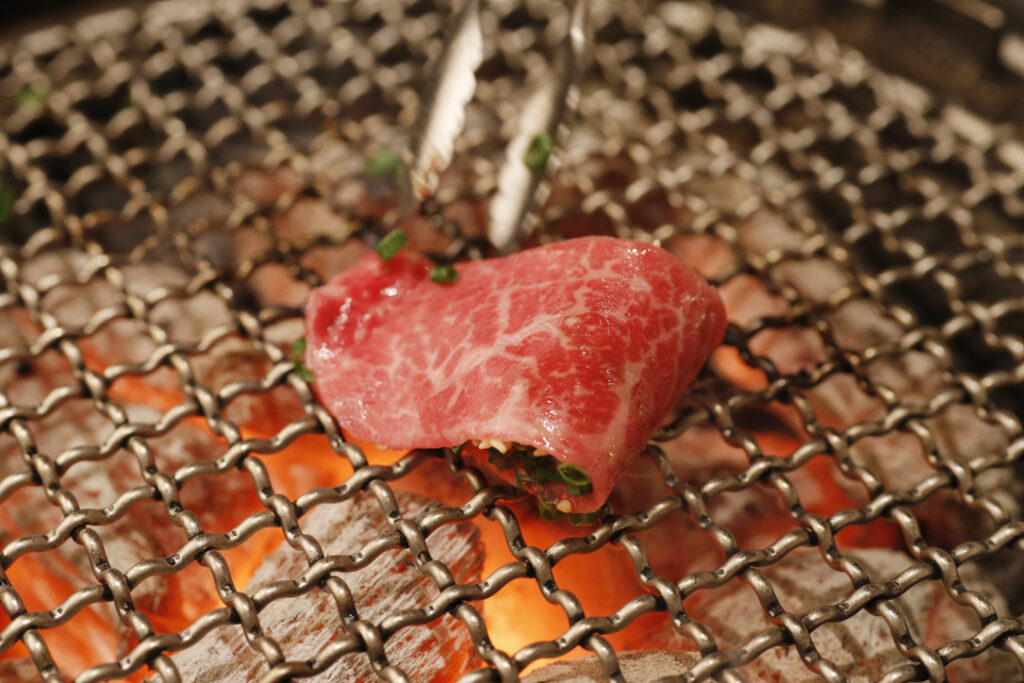
No matter how excellent the Shinshin we source, whether its potential is fully realized depends entirely on how it is grilled. Because Shinshin is finely marbled and lean, if you grill it flat on the net for too long, the precious fat and moisture will drip down into the charcoal, leaving the meat dry. To prevent this, Kuro5’s professional grillers use the tableside “rolling grill” technique.
The process of the rolling grill is both dynamic and delicate. First, the fresh, thinly sliced raw Shinshin is spread carefully over the glowing Binchotan charcoal on the七輪 (shichirin/clay stove) grill. The intense far-infrared rays of the charcoal heat the bottom of the meat instantly, and the moment a light sheen of moisture rises to the surface, the staff gently grasp the edge of the slice with tongs. Instead of flipping it over, they roll the thin slice into a cylinder, sliding it across the net.
By rolling it into a cylindrical shape and gently rolling it over the net, we apply heat evenly to the outer surface. Throughout this process, the meat remains rolled. Our staff evaluate the elasticity of the meat, the color changes, and the sound of sizzling fat, catching the exact second the core reaches a perfect medium-rare, and immediately serve it onto your plate. Unlike flat grilling, this tableside rolling technique is the craftsman’s touch that makes Kuro5’s loin unique.
Why Roll It? The Thermodynamic and Texture Benefits of the Rolling Technique
So, why must we roll and spin the Shinshin instead of just flipping it flat? There are clear scientific reasons for this technique, which control both heat conduction and meat juice dynamics. Here are the three main benefits:
Benefit 1: Steam Effect that Locks in Moisture and Fat
Grilling a thin slice of meat flat on both sides causes the moisture to evaporate rapidly from the heated surface. However, by rolling the slice, the outer layers form a protective shield that traps the internal steam and melting fats. The interior of the roll is not grilled by direct heat; instead, it is cooked gently by its own internal juices and fats in a “steam-bake” process. This prevents the moisture from escaping into the air, keeping the meat incredibly juicy and tender.
Benefit 2: Gentle Heat Penetration to Keep it Tender
Beef proteins begin to contract and harden rapidly once they exceed 60 to 65 degrees Celsius. Searing flat meat on a hot grill instantly pushes the surface temperature past this limit, creating a tough outer layer. In contrast, during a rolling grill, only a small part of the rolled cylinder touches the hot net at any given moment, and because it is rolled constantly, there is no localized overheating. The heat travels slowly and gently through the layers of rolled meat toward the center. This prevents rapid contraction of the fibers, keeping the silk-like texture of Shinshin intact.
Benefit 3: Multi-Layered Fusion of Sauce and Fat
As the Shinshin is rolled, the secret homemade marinade on the surface and the melting fats are folded and trapped within the layers of the cylinder. Rolling the meat keeps the sauce and fat from escaping, blending them together inside the slice. When you take a bite, the beef’s flavor, the richness of the sauce, and the sweet Wagyu fat do not taste separate; they hit your palate as a single, perfectly integrated explosion of flavor.
The Miracle Juiciness Achievable Only with Raw, Never-Frozen Loin
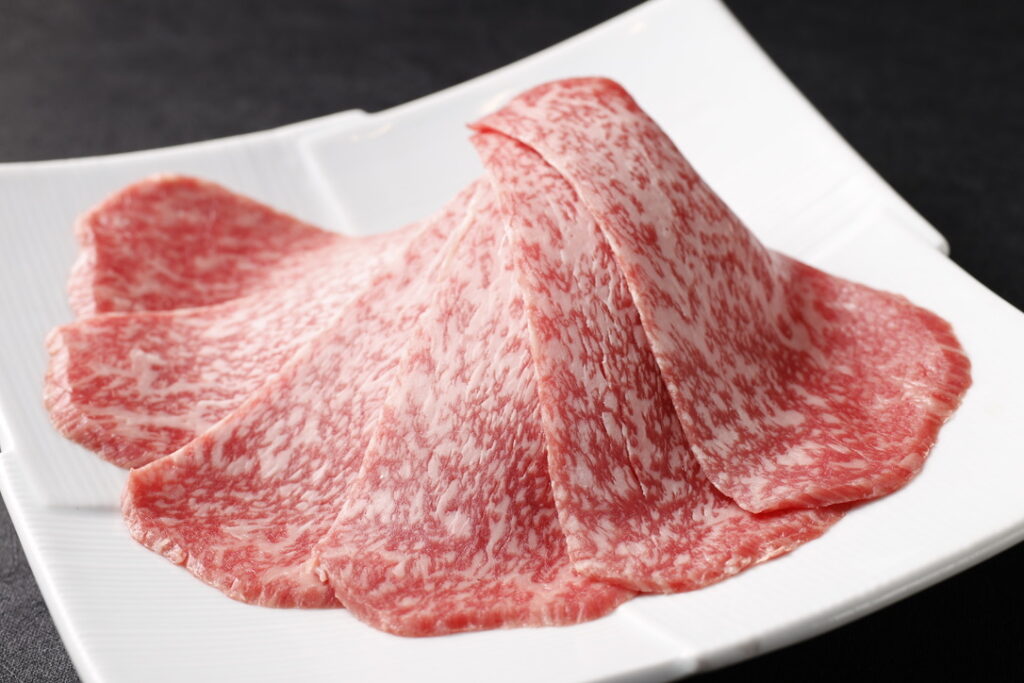
There is an absolute requirement to make this rolling grill technique successful: the Shinshin must be “raw” and never frozen.
Frozen meat has damaged cell walls, causing it to lose its natural moisture as drip. If you roll and grill meat that has already dried out, there is not enough internal moisture to create the “steam-bake” effect, resulting in a tough, poorly heated piece of beef. Furthermore, frozen beef loses its natural elasticity, making it difficult to roll neatly on the grill, causing it to unfold and collapse.
Kuro5’s Shinshin is always handled in a fresh, chilled state, so the muscle fibers remain highly elastic and flexible. The moment the meat is placed on the grill and begins to contract slightly from the heat, the staff guide it with tongs, and the slice rolls beautifully into a perfect cylinder. Because the cell membranes are fully protected, the rolled interior retains its maximum moisture, which is released only when you bite into it. Sourcing and grilling technique are linked together in a single loop.
Experience the Golden Moment Finished Tableside by Our Staff at Kuro5
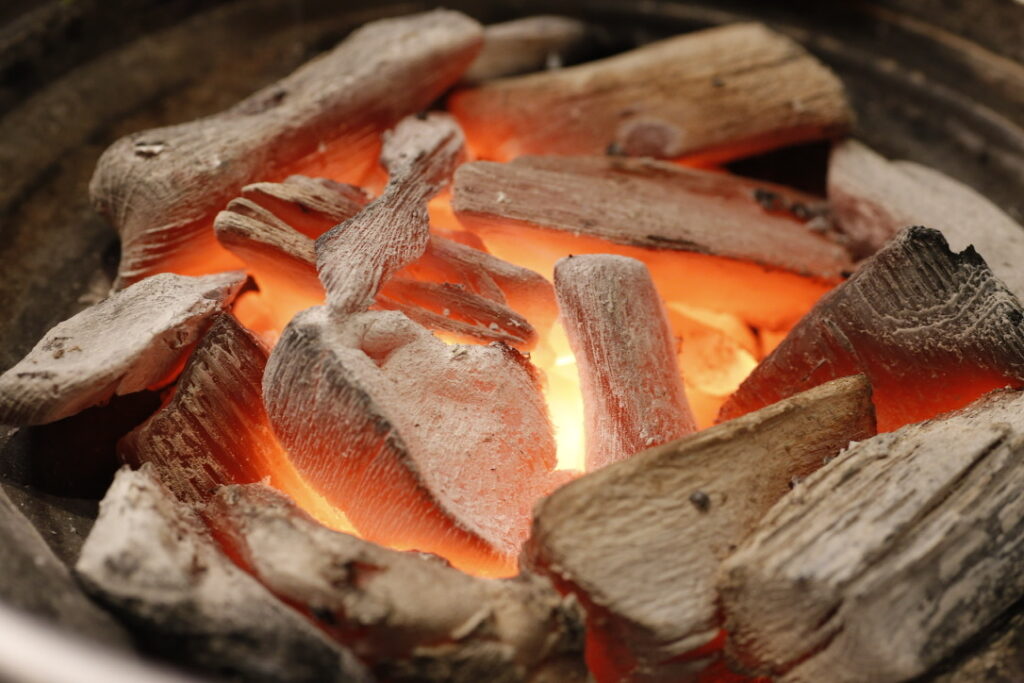
Rolling thin Shinshin while catching the exact moment the interior reaches its sweetest, most melting temperature requires high skill and training, as the fire and meat thickness differ every day. We want our guests to enjoy this fast, beautiful performance visually, and simply eat the loin the moment it is served on their plates.
Many of our guests tell us, “I thought loin was always dry,” or “I couldn’t believe round beef could melt so juicily.” Every time we hear this, we are proud of our commitment to sourcing and technique. What Kuro5 wants to deliver is not just a filling dinner, but the emotional moment created by our preparation and grilling.
Tonight, at our Ikebukuro Honten, Ikebukuro East Exit, and Shinjuku Kabukicho locations, we have our beautiful raw Shinshin and glowing Binchotan charcoal ready. We invite you to experience the ultimate rolling loin at Kuro5. Let us make your special evening unforgettable with our finest hospitality and flavor.
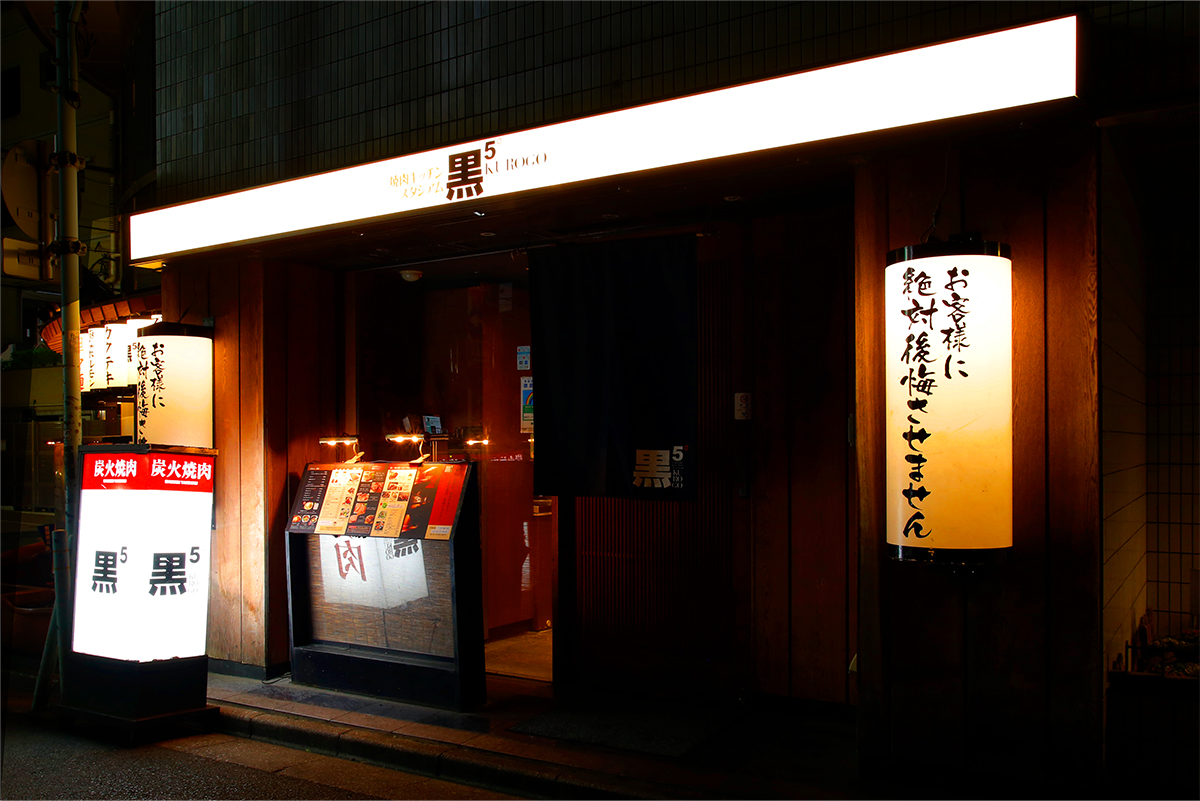
- Charcoal Yakiniku Kuro5 Honten
Nishi-Ikebukuro Bill 1F, 2-46-3 Nishi-Ikebukuro, Toshima-ku, Tokyo / 5 min walk from JR Ikebukuro Station - Charcoal Yakiniku Kuro5 Higashiguchi
Tsukiji Bill 1F, 1-42-16 Higashi-Ikebukuro, Toshima-ku, Tokyo / 3 min walk from JR Ikebukuro Station East Exit - Charcoal Yakiniku Kuro5 Kabukicho
Sankyo Akagawa Bill 1F, 2-21-4 Kabukicho, Shinjuku-ku, Tokyo

