



Table of Contents
- 1. Beyond Restaurant Limits: The Luxury of Slow-Simmered Homemade Ox Tail Soup
- 2. Step 1: Parboiling from Cold Water and Meticulous Blood Vessel Cleaning
- 3. Staub Cast-Iron Pot and Purified Water: Unlocking the Pure Potential of Ox Tail
- 4. The Golden Routine: Why We Repeat the Simmer, Rest, and Degrease Cycle 5 Times
- 5. Chef’s Secret Weapon: The Pot Cozy for Overnight Low-Temperature Extraction
- 6. Zero Aromatic Vegetables: The Pure Art of Simmering Quality Beef Tail Alone
- 7. Hakata Salt Alone: Achieving Extraordinary Richness with Just a Pinch of Sea Salt
- 8. Drinkable Beauty Serum: Collagen, Gelatin, and Essential Amino Acids in Ox Tail
- 9. Timeline Summary: The Step-by-Step Home Ox Tail Soup Extraction Guide
- 10. Conclusion: After Home Cooking, Experience Charcoal-Grilled Wagyu at Kuro5
Hello everyone, this is Sondo from Kuro5.
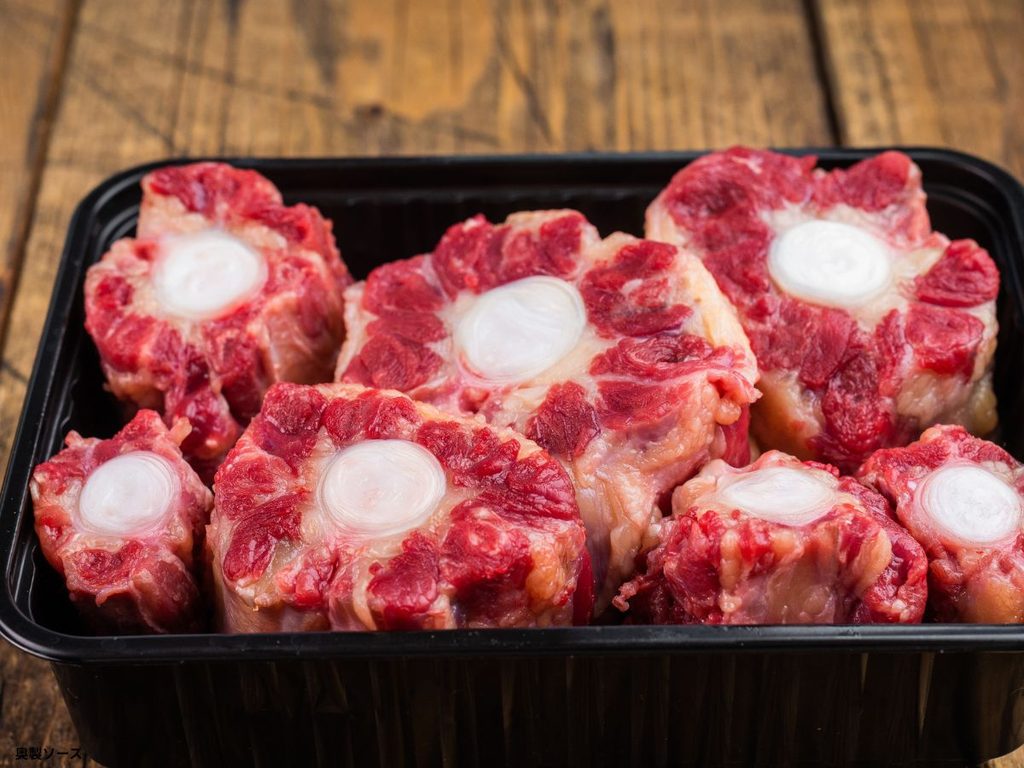
Among all the soup items served in yakiniku restaurants, ox tail soup (Gomtang soup) remains one of the most beloved dishes, celebrated for its profound depth, rich gelatinous texture, and soothing warmth. Slow-simmered ox tail meat becomes so tender that it effortlessly falls off the bone, while the rich broth extracted from bone marrow and connective tissue warms you to the core. However, did you know that taking your time to prepare ox tail soup at home can yield a broth that is even cleaner, purer, and more concentrated than what most restaurant kitchens can offer?
In a commercial restaurant kitchen, prep schedules and service demands necessitate cooking within fixed time windows. At home, however, you have the ultimate luxury: time. You can dedicate an entire weekend to simmering, resting, degreasing, and thermal-insulating the broth until it achieves absolute perfection. Today, I would like to share my personal recipe for crafting the ultimate ox tail soup at home using a heavy cast-iron Staub pot, a fabric pot cozy, and nothing more than quality ox tail, purified water, and natural Hakata salt—without using any aromatic vegetables.
1. Beyond Restaurant Limits: The Luxury of Slow-Simmered Homemade Ox Tail Soup
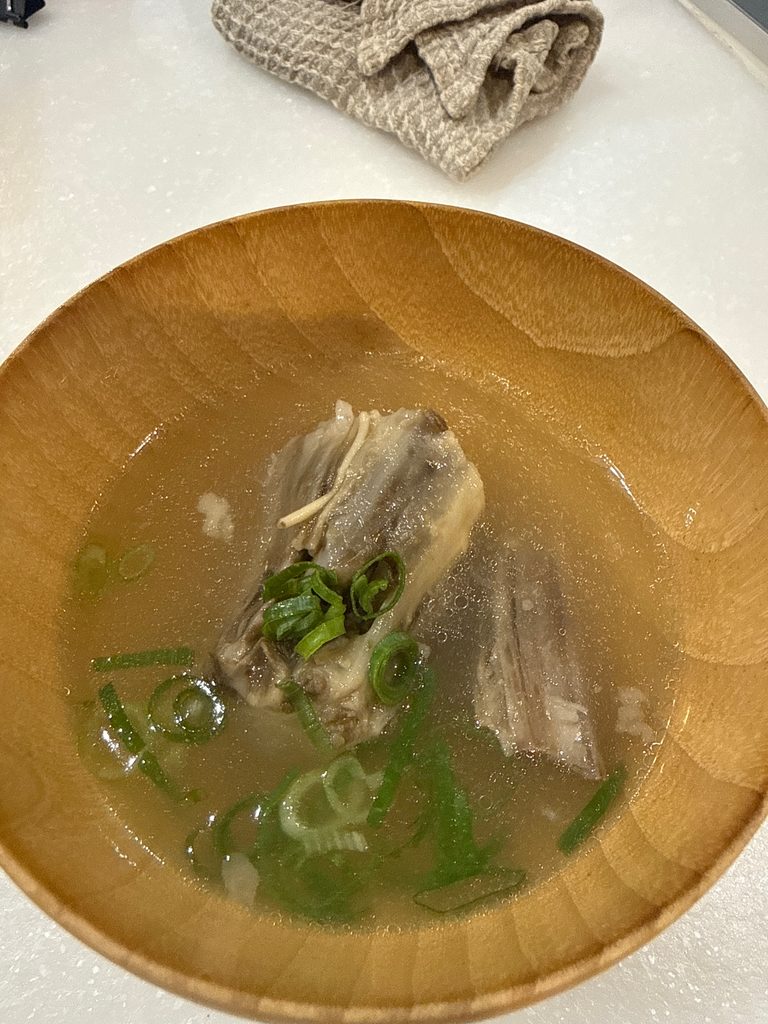
The secret to an exceptional ox tail soup lies in one crucial principle: how thoroughly you can eliminate impurities, excess surface fat, and blood, while extracting pure collagen and rich umami.
The ox tail is a hard-working muscle composed of dense red meat, marrow-rich bones, gelatinous tendons, and a substantial layer of fat. If you boil it rapidly over high heat, the melted fat will emulsify with the boiling water, turning the broth cloudy, heavy, and greasy. While cloudy broths have their own charm, if you wish to savor the noble sweetness and pristine depth of beef tail, you should aim for a crystal-clear, golden broth.
Taking the time on your day off to simmer gently, cool, skim away the fat, and let the pot rest overnight produces a broth of unparalleled purity that cannot be replicated under rushed restaurant conditions.
2. Step 1: Parboiling from Cold Water and Meticulous Blood Vessel Cleaning
Once you bring home fresh, high-quality ox tail from the butcher, the first and most critical preparation step is parboiling from cold water followed by meticulous blood vessel cleaning.
While many home cooks plunge meat directly into boiling water, with beef tail you must always start with a generous volume of cold water. Gradually heating the water from room temperature allows trapped blood, impurities, and bone dust deep inside the marrow to expand and naturally push out to the surface.
Bring the pot to a vigorous boil and maintain it for approximately 10 minutes. A thick layer of brown scum and foam will rise to the surface; skim off as much as possible. After 10 minutes, discard all the boiling water and transfer the tail pieces to a colander.
Now comes the artisan work: under cool running water, gently wash away all scum residue clinging to the meat with your fingers. Carefully inspect the bone cuts and meat crevices, using tweezers, kitchen paper, or your fingertips to remove dark blood clots and large blood vessels embedded in the connective tissue. Removing these blood vessels completely is the essential foundation that ensures the soup will have zero gamey odor without needing ginger, garlic, or scallions later.
3. Staub Cast-Iron Pot and Purified Water: Unlocking the Pure Potential of Ox Tail
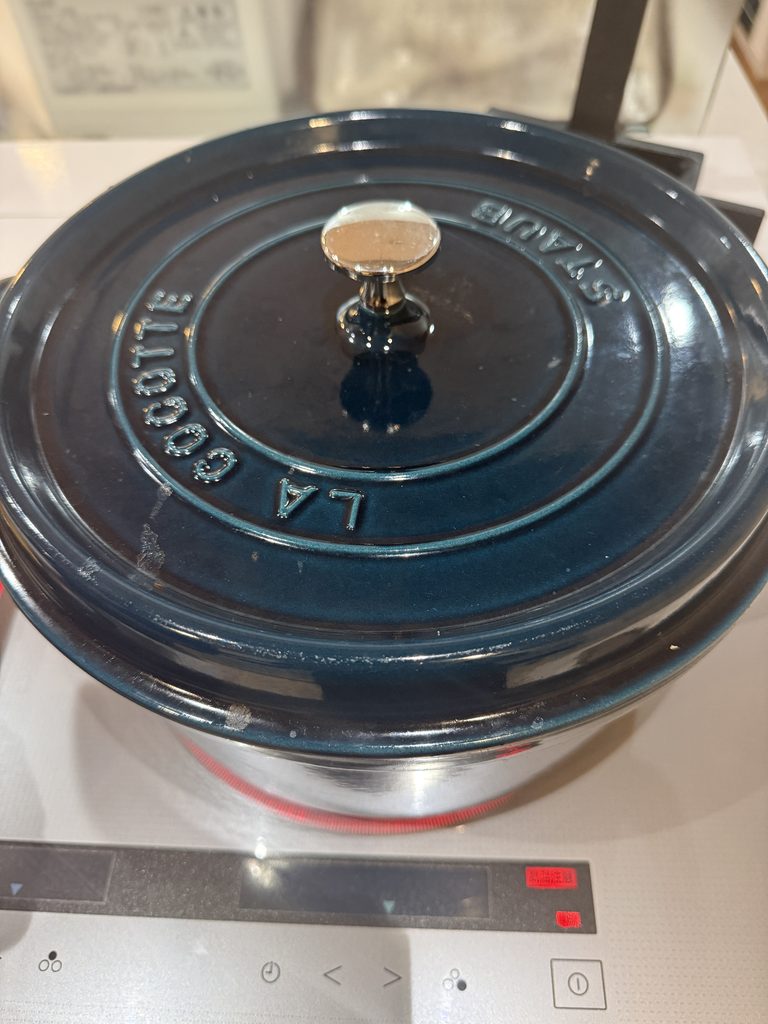
For the long extraction process, I strongly recommend using a heavy French cast-iron enameled pot, such as a Staub pot.
A Staub pot features thick cast iron that provides exceptional heat retention and gentle, uniform heat distribution. Furthermore, the specialized spikes (picots) beneath its heavy lid create a continuous “aroma rain” effect, where evaporated moisture condenses and drops back evenly across the ingredients. This prevents excess evaporation and maintains a gentle, steady internal convection even on the lowest stove flame.
Always use purified water (or soft mineral water) free of chlorine odors. Delicate bone broths absorb the character of the water directly. Arrange the cleaned tail pieces inside the Staub pot and pour in enough purified water to submerge them completely.
4. The Golden Routine: Why We Repeat the Simmer, Rest, and Degrease Cycle 5 Times
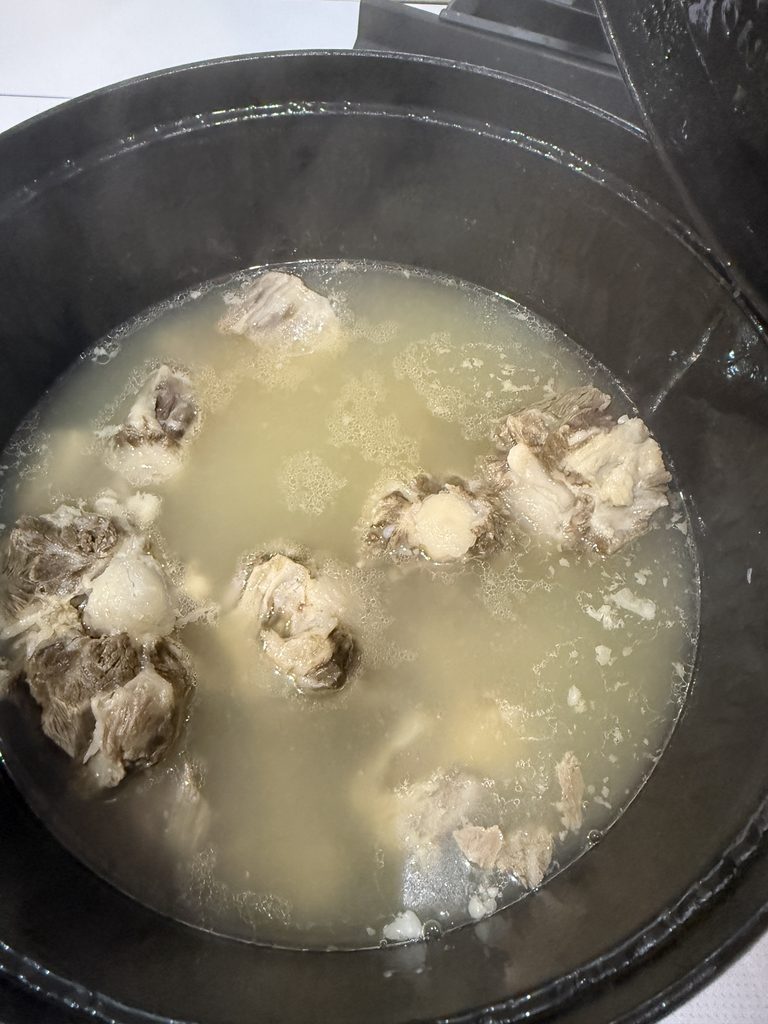
This is the cornerstone of my homemade ox tail soup technique: the multi-stage degreasing routine.
Cover the Staub pot and place it over the lowest possible heat, maintaining a gentle simmer just below a rolling boil for 2 hours. Steam should barely whisper from the lid.
After 2 hours, turn off the heat completely. Leave the pot covered and undisturbed to rest for about 1 hour. As the temperature drops slightly, the rendered beef tallow separates naturally due to its lower density and floats to the top, forming a distinct golden layer.
After 1 hour, open the lid and use a ladle or fat-absorbing sheets to skim away every drop of floating oil. Once the surface is clean, resume low-heat simmering for another 1 to 2 hours, turn off the heat to rest for an hour, and skim again. Repeat this cycle of simmering, resting, and degreasing approximately 5 times throughout the day.
Why go to such lengths? Beef tallow has a high melting point; leaving it in the broth coats your palate and dulls the delicate taste of natural collagen. Removing the fat gradually in stages refines the broth into a pristine, golden elixir without making it cloudy or greasy.
5. Chef’s Secret Weapon: The Pot Cozy for Overnight Low-Temperature Extraction
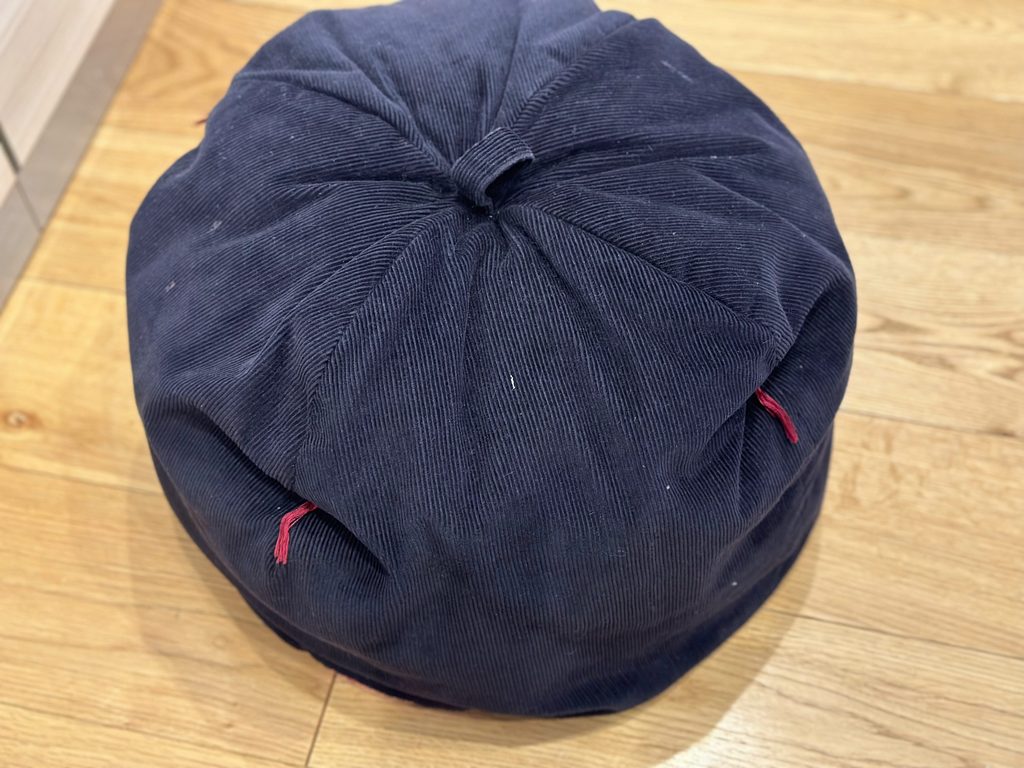
By the time you complete five degreasing cycles, more than half a day has passed and the meat is already tender. For the final stage before going to bed, we introduce an indispensable tool: the fabric pot cozy (Nabe-boushi).
A pot cozy is a thick, insulated fabric dome designed to cover a hot cooking pot completely, functioning like a giant thermal thermos (if unavailable, wrap the pot in multiple layers of thick bath towels or blankets). Bring the pot to a final rolling boil after the fifth skim, remove it from the stove, cover it immediately with the pot cozy, and let it rest overnight.
The combination of Staub’s cast-iron thermal mass and the pot cozy’s insulation maintains a gentle temperature of 60°C to 70°C for hours. This is the optimal temperature zone for tough collagen in tendons and cartilage to dissolve into liquid gelatin. Unlike direct flame heating, thermal retention prevents the liquid from boiling away or the meat from breaking apart, producing meat that slips effortlessly off the bone while retaining its clean shape.
The next morning, remove the pot cozy. A solid white layer of remaining fat will have formed on the cool surface. Peel away this solid fat layer completely, bring the soup to a gentle boil one last time, and you will be greeted by a crystal-clear, shimmering broth of pure beauty.
6. Zero Aromatic Vegetables: The Pure Art of Simmering Quality Beef Tail Alone

Most conventional cookbooks recommend adding large quantities of green onions, ginger, garlic, onions, celery, and sake when making ox tail soup. In my recipe, however, we add zero aromatic vegetables and zero cooking wine.
Aromatics are traditionally used to mask unpleasant gamey odors. However, when you perform meticulous cold-water parboiling, thorough blood vessel removal, and five degreasing cycles, high-quality beef tail will have no unpleasant smell whatsoever.
Adding strong aromatics like onions and ginger imparts heavy vegetable flavors that obscure the delicate, sweet Wagyu beef aroma and the pure, milky essence of the bone marrow. By eliminating unnecessary additions, we practice the art of subtraction, celebrating the unadulterated flavor of pure beef.
7. Hakata Salt Alone: Achieving Extraordinary Richness with Just a Pinch of Sea Salt
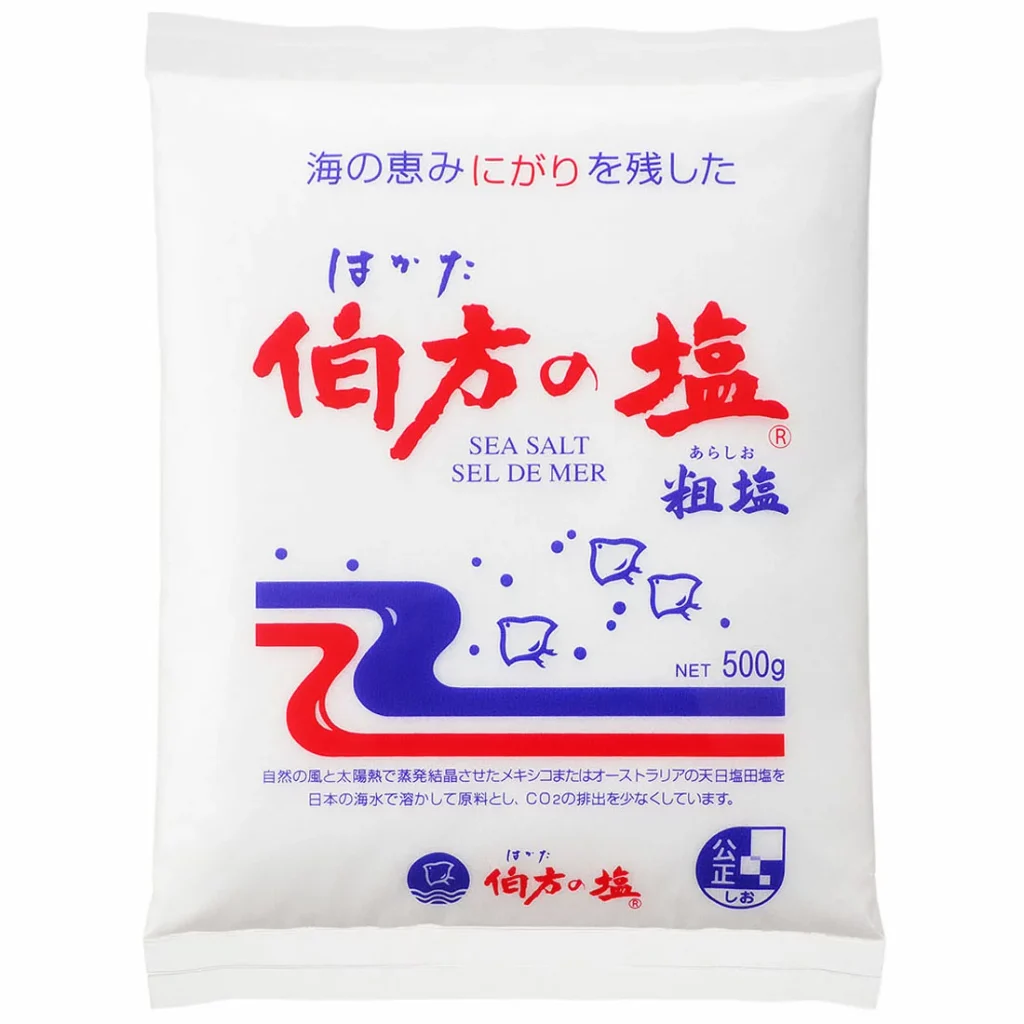
Seasoning this masterpiece is equally minimalist. No soy sauce, no mirin, and no MSG. The only seasoning you need is natural Hakata Salt (Hakata no Shio).
Hakata Salt is a natural sea salt crafted in Japan, retaining a balanced blend of essential minerals such as magnesium and calcium alongside sodium chloride. These natural minerals provide a gentle sweetness and mild salinity that harmonize seamlessly with beef gelatin.
Ladle the piping hot soup into a bowl and add just a tiny pinch of Hakata salt. Instantly, the natural umami compounds of the ox tail awaken, filling your mouth with incredible sweetness, rich body, and clean depth. Garnish with a sprinkle of freshly ground black pepper or finely sliced white scallions for a bowl that rivals the finest dining establishments.
8. Drinkable Beauty Serum: Collagen, Gelatin, and Essential Amino Acids in Ox Tail
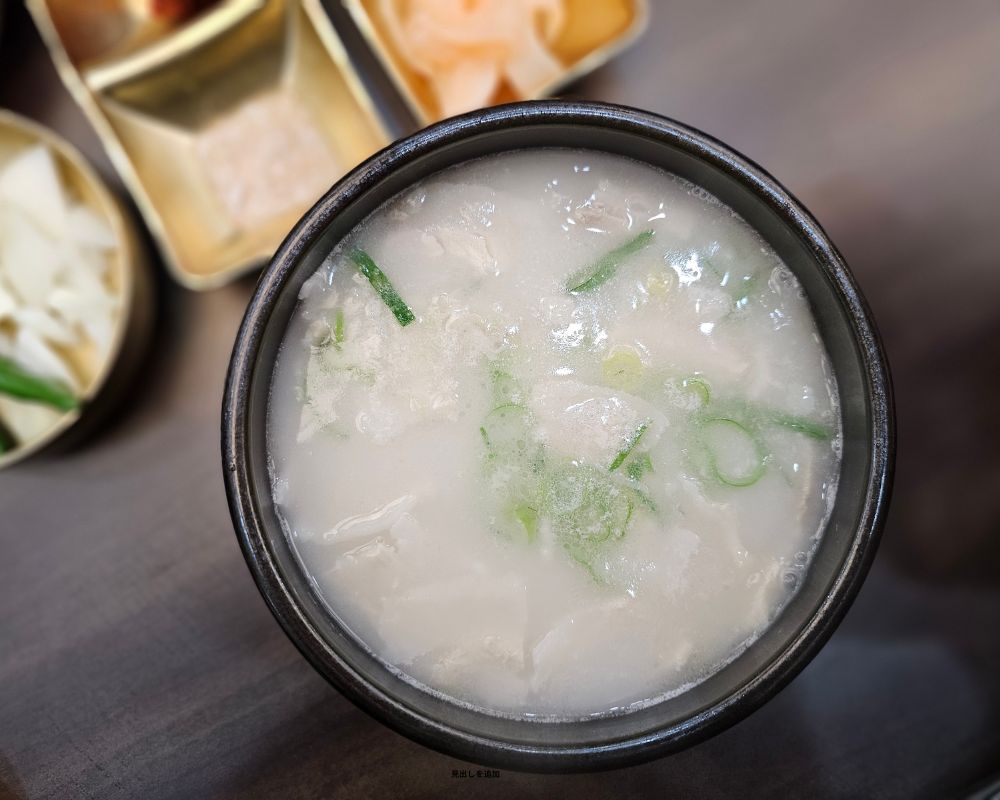
Beyond its extraordinary flavor, slow-extracted ox tail soup is a nutritional powerhouse often referred to as “drinkable beauty serum.”
Ox tail is rich in natural collagen and gelatin. Through prolonged thermal extraction, the collagen breaks down into easily absorbable peptides that support skin hydration, elasticity, and joint health.
Furthermore, bone marrow infuses the broth with bioavailable calcium, magnesium, iron, and restorative amino acids that strengthen immunity and support muscle recovery. Because all heavy fat has been eliminated, the broth is gentle on the digestive system, making it an ideal restorative meal after a strenuous day or during illness.
9. Timeline Summary: The Step-by-Step Home Ox Tail Soup Extraction Guide
Sondo’s Authentic Home Ox Tail Soup Timeline
1. Parboiling & Vessel Cleaning (Approx. 30 min):
- Start ox tail in cold water, boil vigorously for 10 minutes to expel impurities, then drain.
- Rinse under cool water and thoroughly remove all blood clots and visible blood vessels from crevices.
2. Staub Simmering & 5 Degreasing Cycles (Approx. 15 hours):
- Place tail pieces in a Staub pot with purified water and simmer on the lowest heat for 2 hours.
- Turn off heat and let rest for 1 hour, then skim away all floating fat. Repeat this cycle 5 times total.
3. Overnight Insulation in Pot Cozy (Approx. 8-10 hours):
- After the 5th skim, bring to a boil, wrap the Staub pot in a fabric pot cozy, and rest overnight.
- Next morning, remove the solid white fat layer on top and bring to a gentle boil.
4. Minimalist Seasoning & Serving:
- No aromatic vegetables required. Season in the bowl with a single pinch of Hakata Salt.
- Enjoy the melt-in-your-mouth tender meat in the broth, or dip it in ponzu or Kuro5 Tare.
10. Conclusion: After Home Cooking, Experience Charcoal-Grilled Wagyu at Kuro5
Slow-simmering an authentic ox tail soup at home is a deeply rewarding culinary journey. Through patient preparation, precise heat management with Staub and a pot cozy, and repetitive degreasing, you can create a golden broth of unmatched clarity seasoned solely with pure sea salt.
While taking the time to nurture a homemade soup on your day off is wonderful, whenever you wish to enjoy prime cuts of A5 Black Wagyu grilled to perfection over roaring Binchotan charcoal without any kitchen prep, we warmly invite you to visit Kuro5.
At Kuro5, our team provides full-attend tableside grilling, ensuring every single cut is served at its peak texture and flavor. We invite you to visit Kuro5 Honten, Higashiguchi, or Kabukicho to enjoy an unforgettable dining experience with us. We look forward to welcoming you.
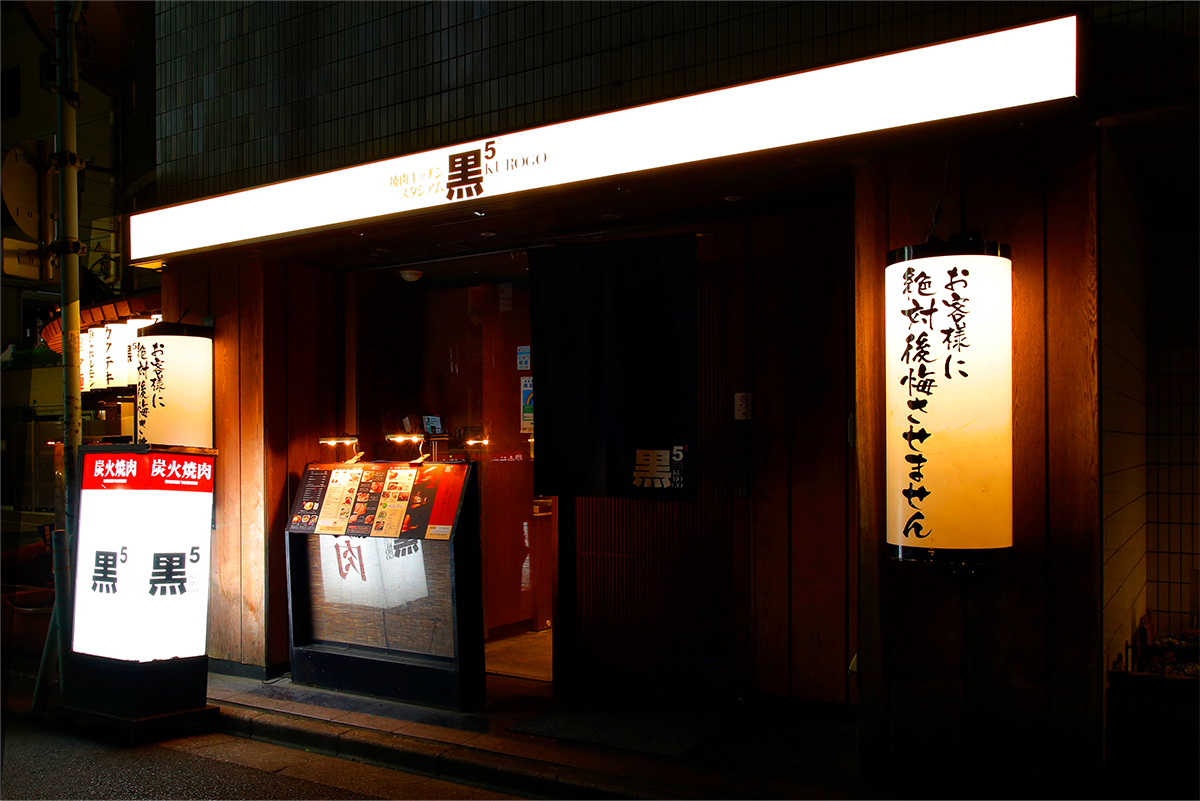
- Charcoal Yakiniku Kuro5 Honten
1F Nishi-Ikebukuro Bldg, 2-46-3 Nishi-Ikebukuro, Toshima-ku, Tokyo / 5 min walk from JR Ikebukuro Station - Charcoal Yakiniku Kuro5 Higashiguchi
1F Tsukiji Bldg, 1-42-16 Higashi-Ikebukuro, Toshima-ku, Tokyo / 3 min walk from JR Ikebukuro Station East Exit - Charcoal Yakiniku Kuro5 Kabukicho
1F Sankyo Akagawa Bldg, 2-21-4 Kabukicho, Shinjuku-ku, Tokyo

