



Table of Contents
- 1. Beef Tendon Series Part 2: The Magic of Our Family’s Favorite Tendon Mapo
- 2. Step 1: The Essential Foundation — Parboiling, Cold Water Hand-Washing & Staub Simmering
- 3. Step 2: High-Protein & Gut Health — 90% Lean Ground Chicken × Blended Mushroom Paste
- 4. Step 3: Aromatic Awakening — Sautéing Fresh Ginger, Garlic, and Gochujang
- 5. Step 4: The Soul of Collagen — Chilling, Complete Defatting & Jiggly Broth Jelly
- 6. Step 5: Tender Tendon & Sweet Paprika — Miso Seasoning and Silky Glaze
- 7. The Ultimate Weeknight Savior: Batch Freezing & Instant Microwave Reheating
- 8. Endless Menu Possibilities: Mapo Tofu, Mapo Eggplant & Rich Jajangmyeon
- 9. The Science of Recovery: High Protein, Zero Greasiness & Tendon-Protecting Collagen
- 10. Conclusion & Wagyu Yakiniku Kuro5 Store Directory
Hello everyone. I am Sondo, manager of Wagyu Yakiniku Kuro5.
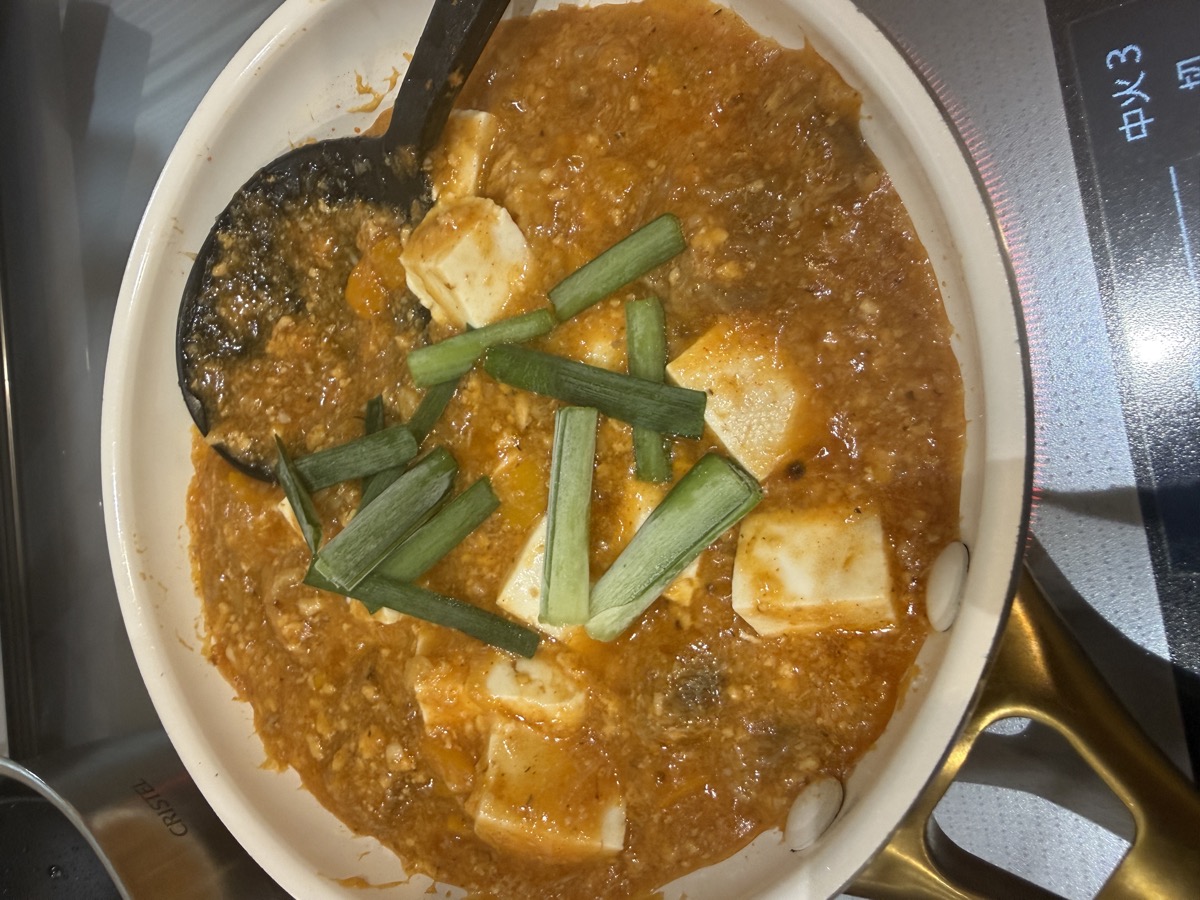
Following our previous article on the incredible depth of beef tendon broth, we received an overwhelmingly warm response from readers worldwide! Hearing comments like, “This completely changed how I look at beef tendon,” and “I immediately bought tendon at the supermarket to simmer at home,” has brought immense joy to everyone here at Kuro5.
In response to popular demand, I am thrilled to present Part 2 of our Beef Tendon Series! Today’s centerpiece is the undisputed reigning champion of my own family dinner table: “Ultimate Beef Tendon Mapo Tofu (Versatile Mapo Meat Miso)”.
Standard Mapo Tofu is traditionally prepared by browning ground pork in cooking oil, seasoning it with Doubanjiang (chili bean paste), Tianmianjiang (sweet bean sauce), and generous amounts of artificial seasoning. While tasty, it often leaves a greasy, heavy feeling in the stomach. For parents mindful of clean eating, or those cooking for children and young athletes, standard takeout-style mapo can be overly oily and nutritionally unbalanced.
The tendon mapo recipe I have perfected over the years completely reinvents this classic dish.
At its heart is a 100% pure, jiggly beef tendon collagen jelly and melt-in-your-mouth braised tendon pieces extracted through hours of gentle simmering in a cast-iron Staub pot. We pair this with ultra-lean, high-protein ground chicken breast (90% lean meat) and a nutritional powerhouse puree made from three blended mushrooms (maitake, shimeji, enoki).
Infused with Korean fermented gochujang, freshly grated ginger, garlic, colorful sweet mini paprika, wholesome miso, and a light potato starch slurry, this base transforms into an extraordinarily rich, multi-layered meat miso that transcends everyday home cooking.
Best of all, this meat miso is tailor-made for batch freezing. Once prepared in quantity and portioned into containers, a quick reheat in the microwave instantly restores its freshly simmered, silky gloss without any water separation. Ladle it over silken tofu for luxurious Mapo Tofu, toss it with pan-fried eggplants for juicy Mapo Eggplant, or spoon it over noodles for an unforgettable bowl of Jajangmyeon (Zhajiangmian). It is truly a culinary lifesaver for busy households.
Below, I walk through each step with detailed photographs straight from my kitchen!
1. Beef Tendon Series Part 2: The Magic of Our Family’s Favorite Tendon Mapo
In the yakiniku business, the restaurant reaches its peak from late afternoon into the midnight hours. Because of this schedule, weekday dinners at home need to be prepared swiftly, yet never compromise on nutrition, wholesome flavor, or restaurant-level quality.
Whenever time is scarce and hungry family members arrive home, this Staub-simmered beef tendon mapo base comes to our rescue time and again.
You might wonder: “Beef tendon in Mapo Tofu?” While unexpected, tendon and spicy miso make a match made in heaven that easily surpasses ordinary ground pork. The natural gelatin in beef tendon creates a velvety richness that gently softens the sharp heat of chili and gochujang. The tender, melting texture of slow-cooked tendon delivers a luxurious mouthfeel that makes standard mapo tofu pale in comparison.
Furthermore, my household prioritizes joint health, sports recovery for my son, and gut wellness for the whole family. By eliminating heavy animal grease and packing the recipe with dietary fiber, vitamins, and minerals, this dish serves as wholesome, restorative recovery cuisine that replenishes the body naturally.
2. Step 1: The Essential Foundation — Parboiling, Cold Water Hand-Washing & Staub Simmering
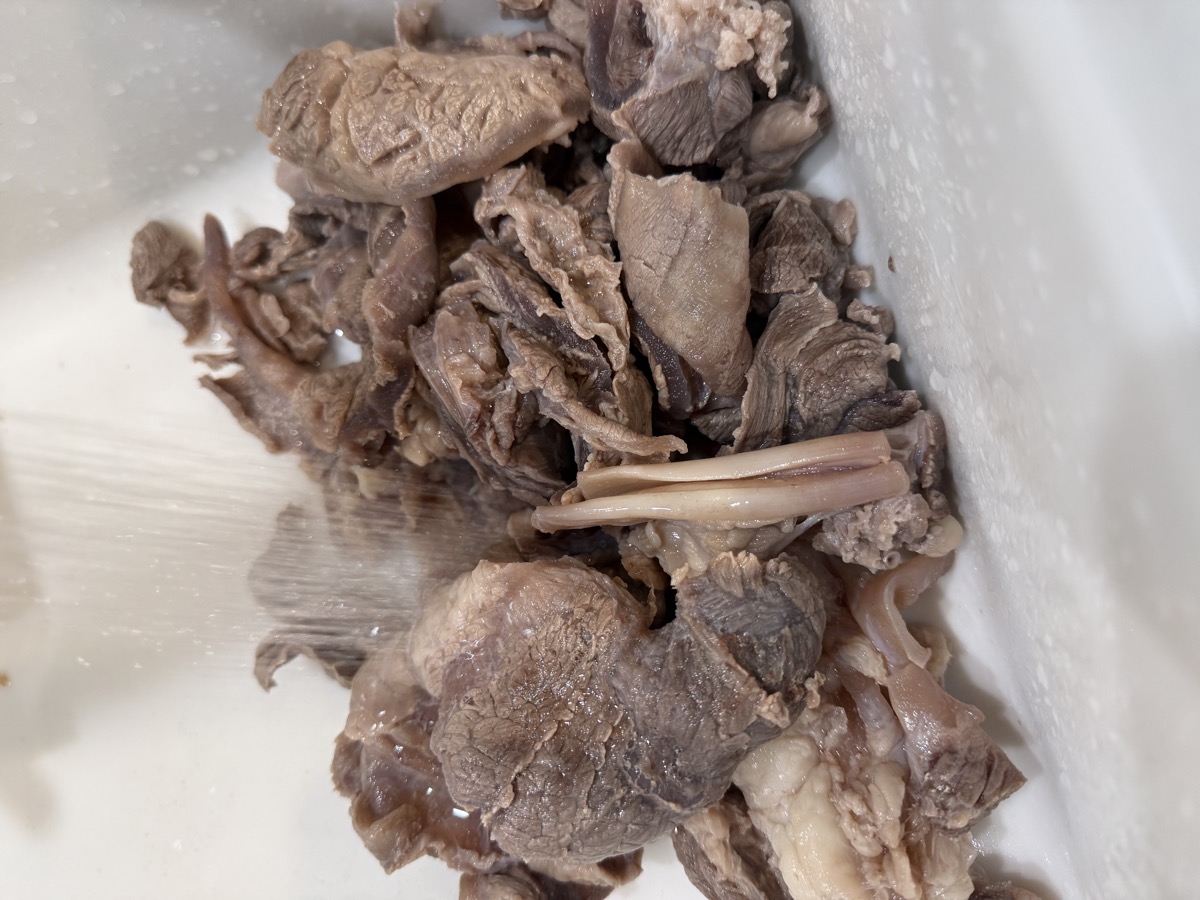
The single most crucial secret to pristine beef tendon cuisine is the initial cleaning ritual: parboiling, thorough skimming, and cold-water hand scrubbing. Skimping on this stage leaves unwanted gaminess and oxidation, no matter how exquisite your seasonings may be.
Place fresh beef tendon into a large pot filled with plenty of cold water and bring it to a rolling boil over medium-high heat. As it heats up, dense brown foam, clotted blood, and oxidized surface fats will bubble vigorously to the top. Keep it at a strong boil for 5 to 8 minutes, allowing the tendon to completely release internal impurities.
Once parboiled, drain the boiling water straight down the sink. Place the tendon in a colander and vigorously scrub each piece between both hands under brisk running cold tap water, as pictured above. Feel with your fingertips to remove any congealed scum, stubborn blood spots, or bits of yellowed fat lodged in the crevices of the connective tissues. Clean and scour the boiling pot with soap until it squeaks, starting completely fresh.
Cut the cleaned tendon into comfortable bite-sized portions, place them into your Staub cast-iron pot, and cover generously with fresh water. Place the heavy lid on, turn the heat to the lowest setting, and let it simmer gently for 5 to 6 hours. Thanks to the Staub pot’s tight seal and self-basting aroma-rain lid, virtually zero moisture escapes. Tough collagen transforms into tender, melting delicacies, yielding a clear, concentrated golden tendon broth.
3. Step 2: High-Protein & Gut Health — 90% Lean Ground Chicken × Blended Mushroom Paste
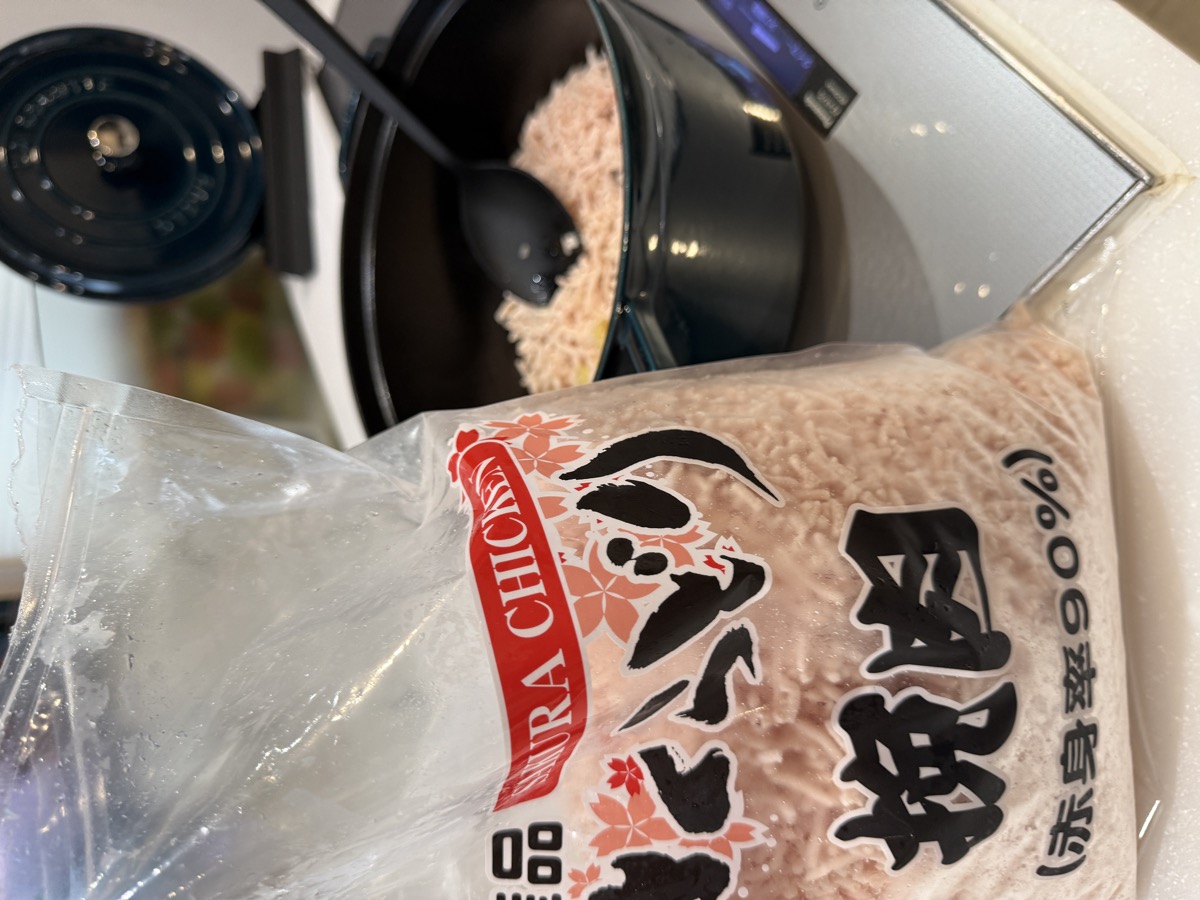
While the beef tendon finishes its gentle simmer, we prepare the savory base. My ingredient of choice is high-grade lean ground chicken (90% lean breast meat).
Because slow-cooked beef tendon already supplies generous gelatin and richness, using heavy pork or beef mince would overload the dish with fat. By selecting 90% lean ground chicken, we keep total lipid levels remarkably low while supplying the clean, high-density protein required for athletic recovery and growing children.
Begin by sautéing a generous mound of finely diced yellow onions with the ground chicken in the Staub pot over medium-low heat. Stir until the onions turn translucent and release their natural, aromatic sweetness.
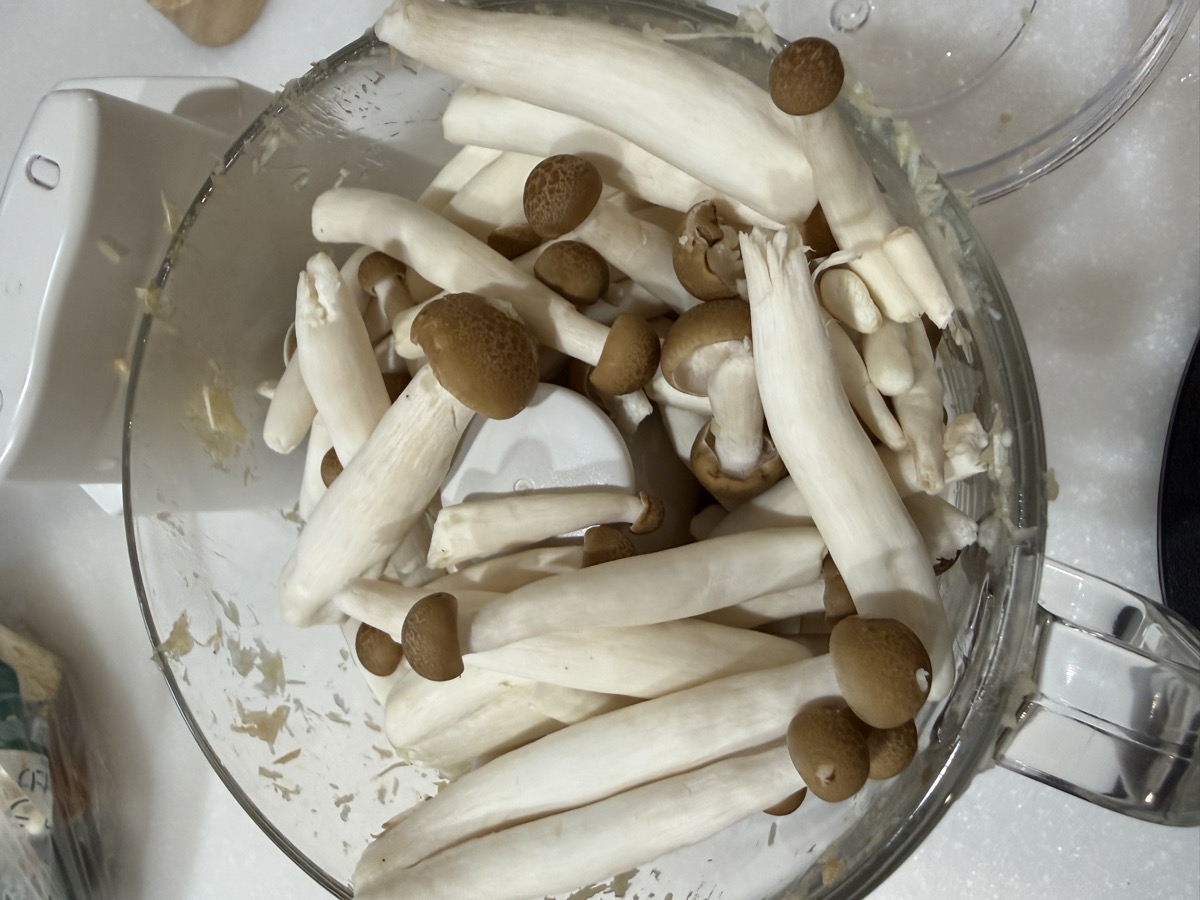
Now comes the signature Kuro5 secret: a triple-mushroom blend of maitake, shimeji, and enoki designed specifically for gut health and immunity boost.
Instead of chopping the mushrooms by hand, process them in a blender or food processor into a fine puree. Blending ruptures the tough chitin cell walls of the fungi, allowing rich guanylic acid (the prized “third umami”), beta-glucans, and prebiotic dietary fiber to seamlessly infuse the sauce. Even children who normally shy away from mushroom textures enjoy every spoonful without ever noticing!
4. Step 3: Aromatic Awakening — Sautéing Fresh Ginger, Garlic, and Gochujang
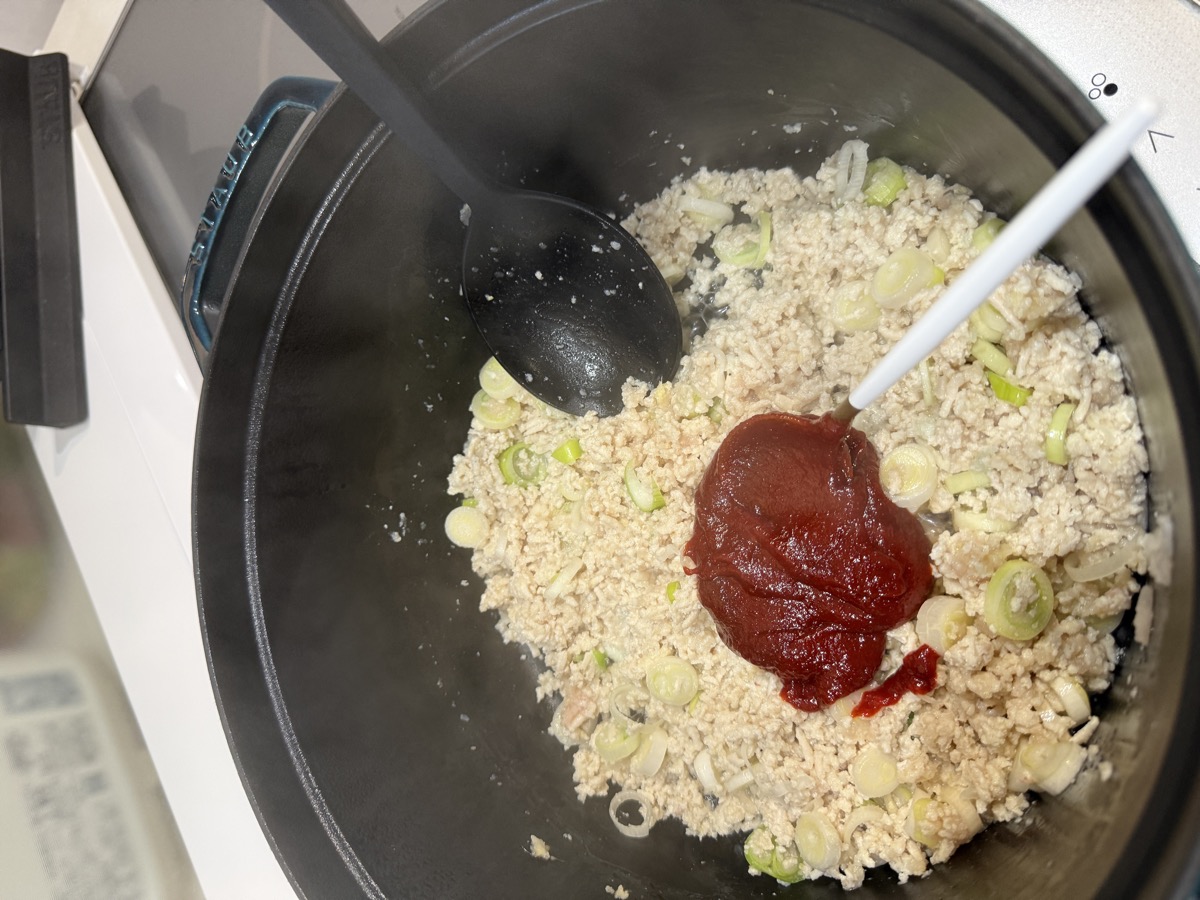
Once the chicken, onions, and mushroom puree have softened, we introduce the vibrant aromatic engine of the recipe.
Add generous amounts of freshly grated ginger, freshly grated garlic, and authentic Korean fermented gochujang. As pictured above, do not be shy with the proportions — add hearty, heaped spoonfuls.
Take care to thoroughly sauté the gochujang together with the aromatics over medium heat. Fermented chili pastes and miso benefit immensely from direct contact with heat; roasting them lightly in the pot mellows the sharp raw pungency and unleashes deep, caramelized notes and mouthwatering aromas that fill the entire kitchen.
5. Step 4: The Soul of Collagen — Chilling, Complete Defatting & Jiggly Broth Jelly
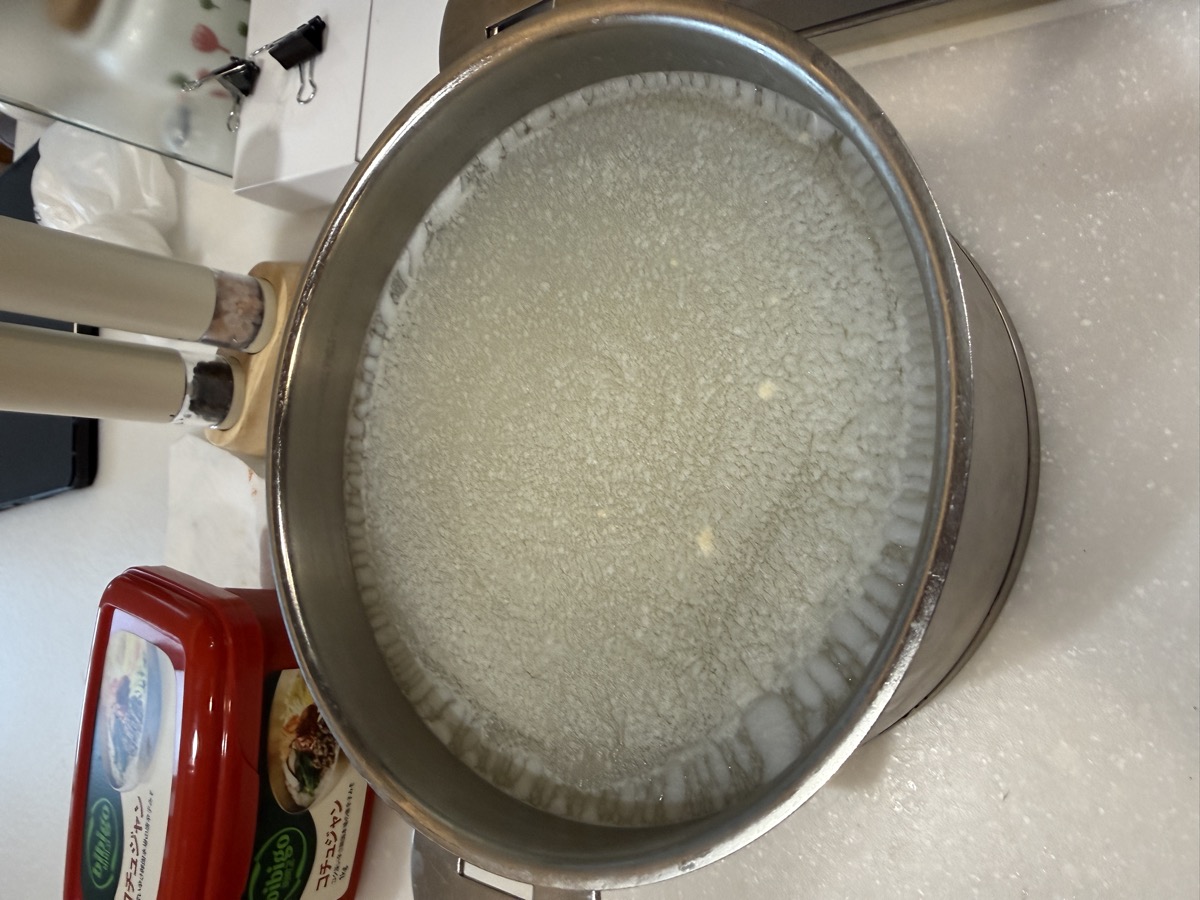
Now comes the stage where our beef tendon broth enters the pot. However, pouring hot broth straight into the aromatics is a rookie mistake. True professional prep requires one essential step.
As captured in the photo above, chill the simmered beef tendon broth in the refrigerator overnight.
As the broth cools thoroughly, all the suspended tallow floats to the surface and hardens into a solid, chalk-white crust. By simply breaking this sheet with a spoon and lifting it away, you completely discard the greasy animal fats that cause heaviness and indigestion. What remains underneath is pure nutrition.
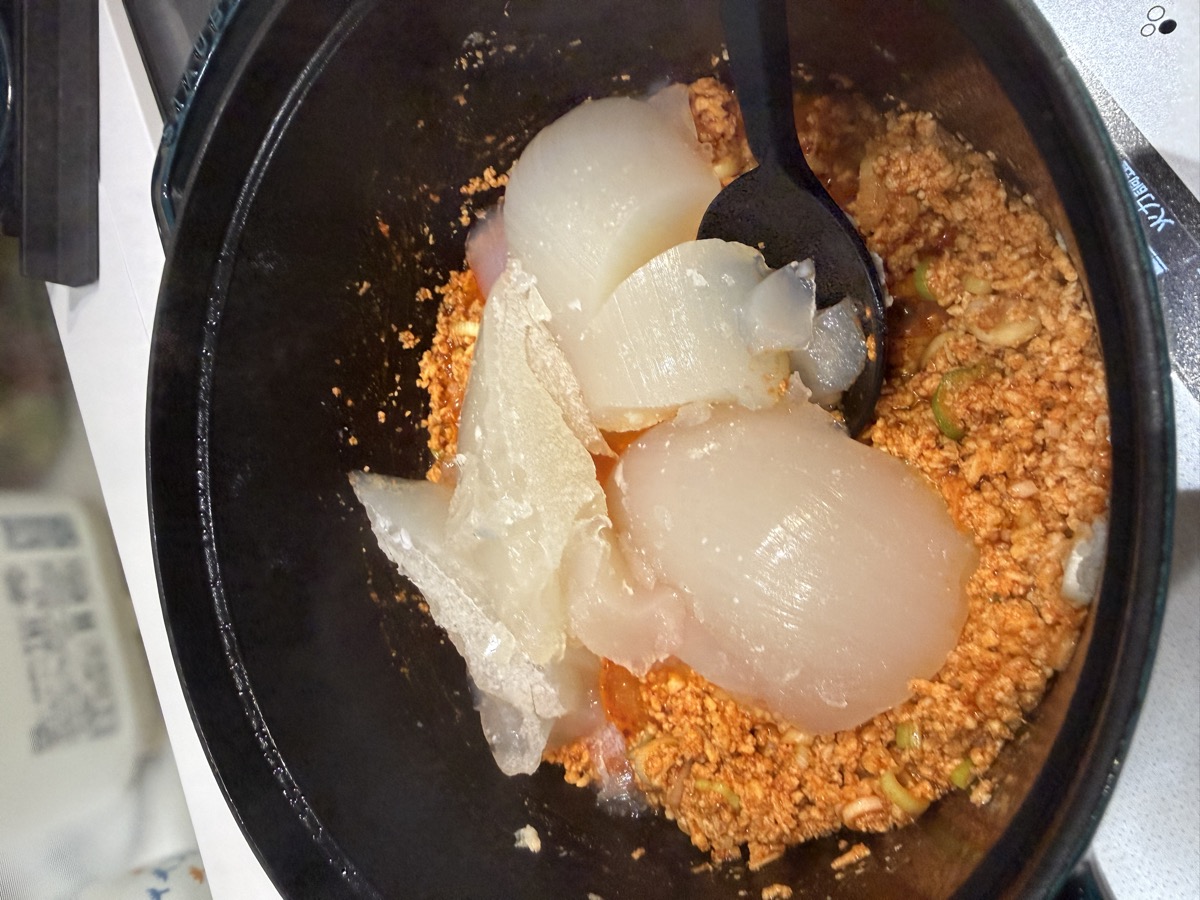
Beneath the fat cap lies a crystal-clear, bouncy block of 100% natural collagen gelatin, resembling a giant polished gemstone. Not a single gram of powdered gelatin was added; this structural firmness is achieved solely through the natural collagen extracted from the tendon tissues.
Scoop generous, glistening wobbles of this collagen jelly straight into the warm Staub pot. With a gentle sizzle, the firm jelly melts rapidly into a golden, rich broth that seamlessly bonds with the sautéed aromatics and fermented seasonings. It is an exhilarating sight that brings a smile to any chef’s face.
6. Step 5: Tender Tendon & Sweet Paprika — Miso Seasoning and Silky Glaze
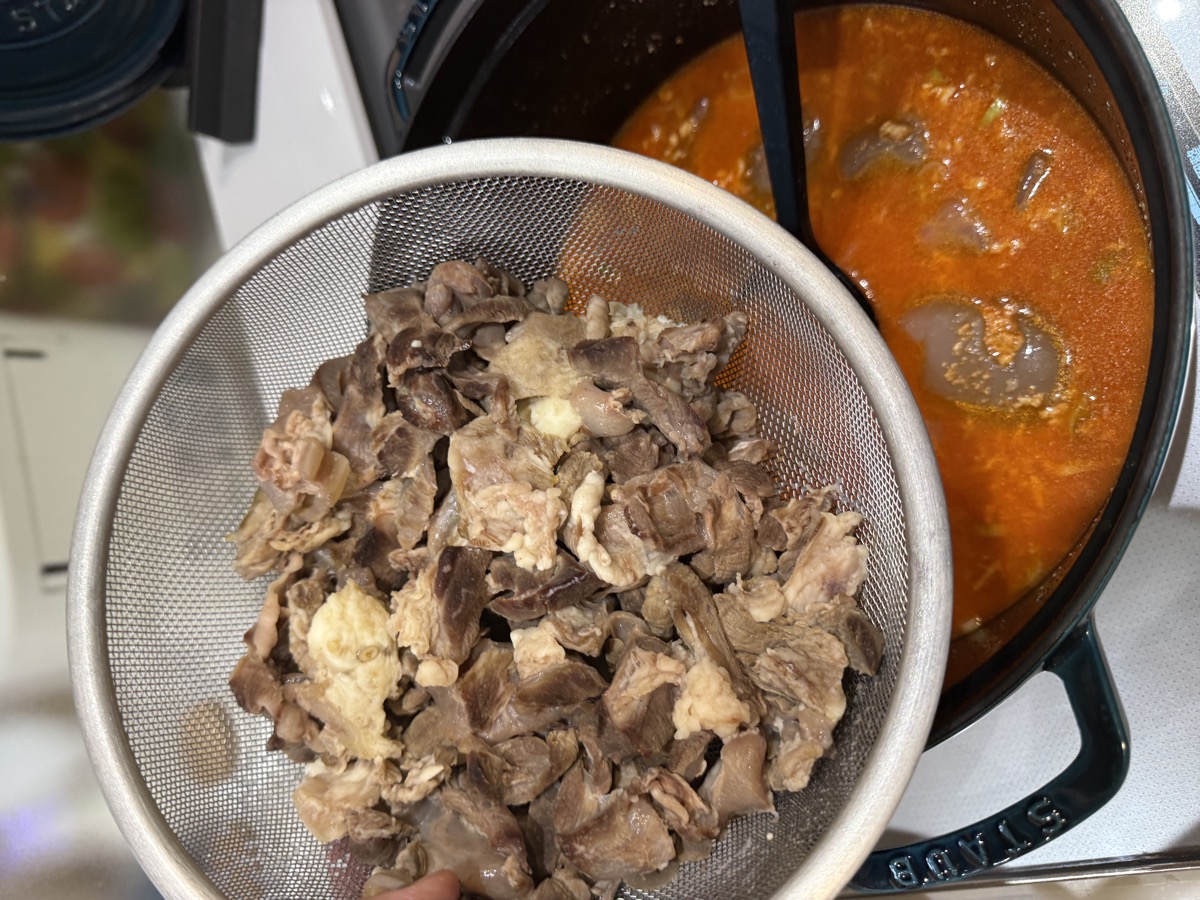
Once the collagen broth liquefies, add in the braised beef tendon pieces. Tenderized through 6 hours of low-heat simmer, the tendon fibers eagerly soak up the spiced broth, ensuring incredible juiciness with every bite.
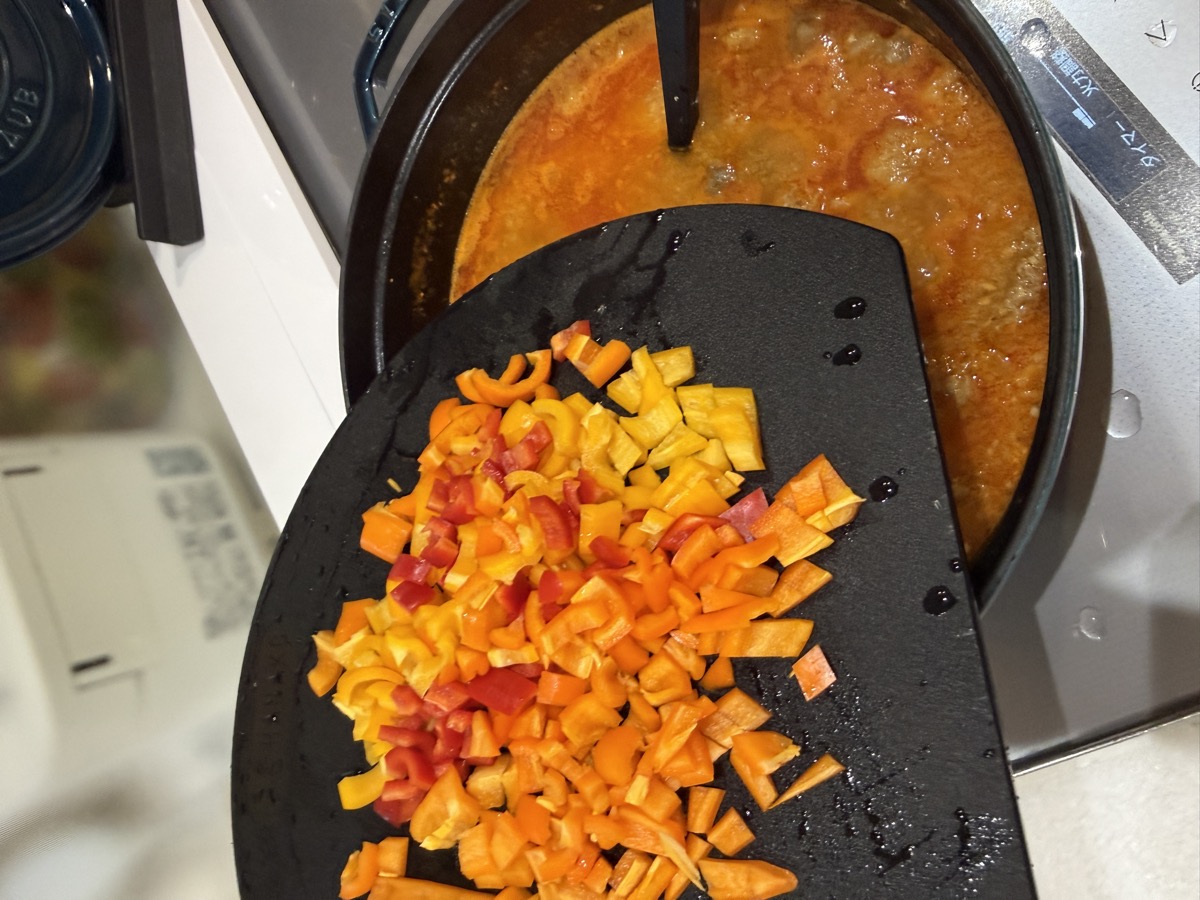
Next, toss in diced red and yellow sweet mini paprika. While mapo dishes frequently look monotonously brown or red, the sunny pops of yellow and crimson bring lively contrast to the dinner table. Paprika is also loaded with heat-stable vitamin C and beta-carotene, giving an exceptional boost to skin recovery and cellular defense.
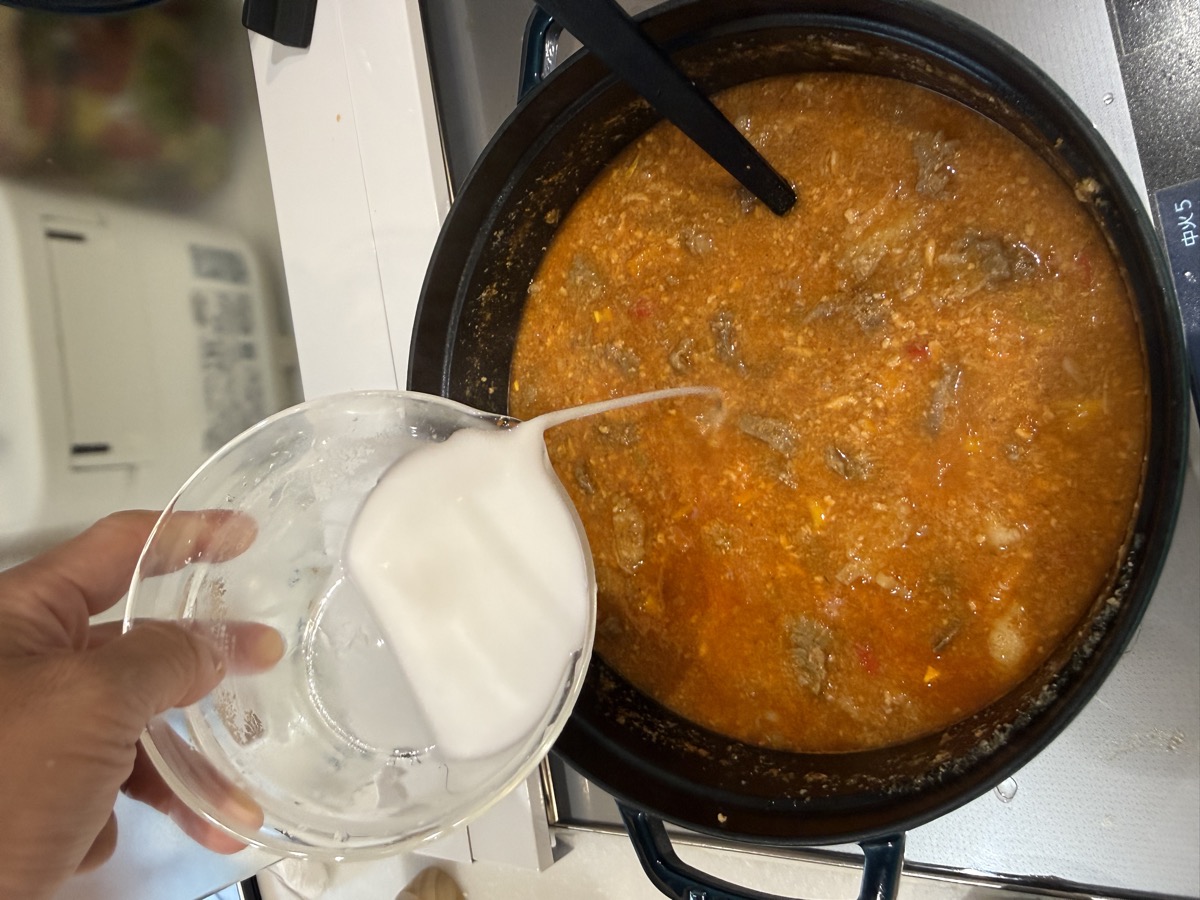
With all ingredients united, dissolve in your favorite miso (red or blended miso) to round out the savory foundation. The amino acids and fermented depth of miso provide an exquisite counterbalance to the piquant gochujang and rich beef tendon.
Lower the flame and drizzle in a katakuriko (potato starch) slurry in a thin, continuous stream while folding gently with a spatula from the bottom. Bring it back to a gentle bubbling boil for one minute. Cooking the starch thoroughly removes any raw powder taste and yields a gorgeous, glossy, mirror-like sheen across the sauce.
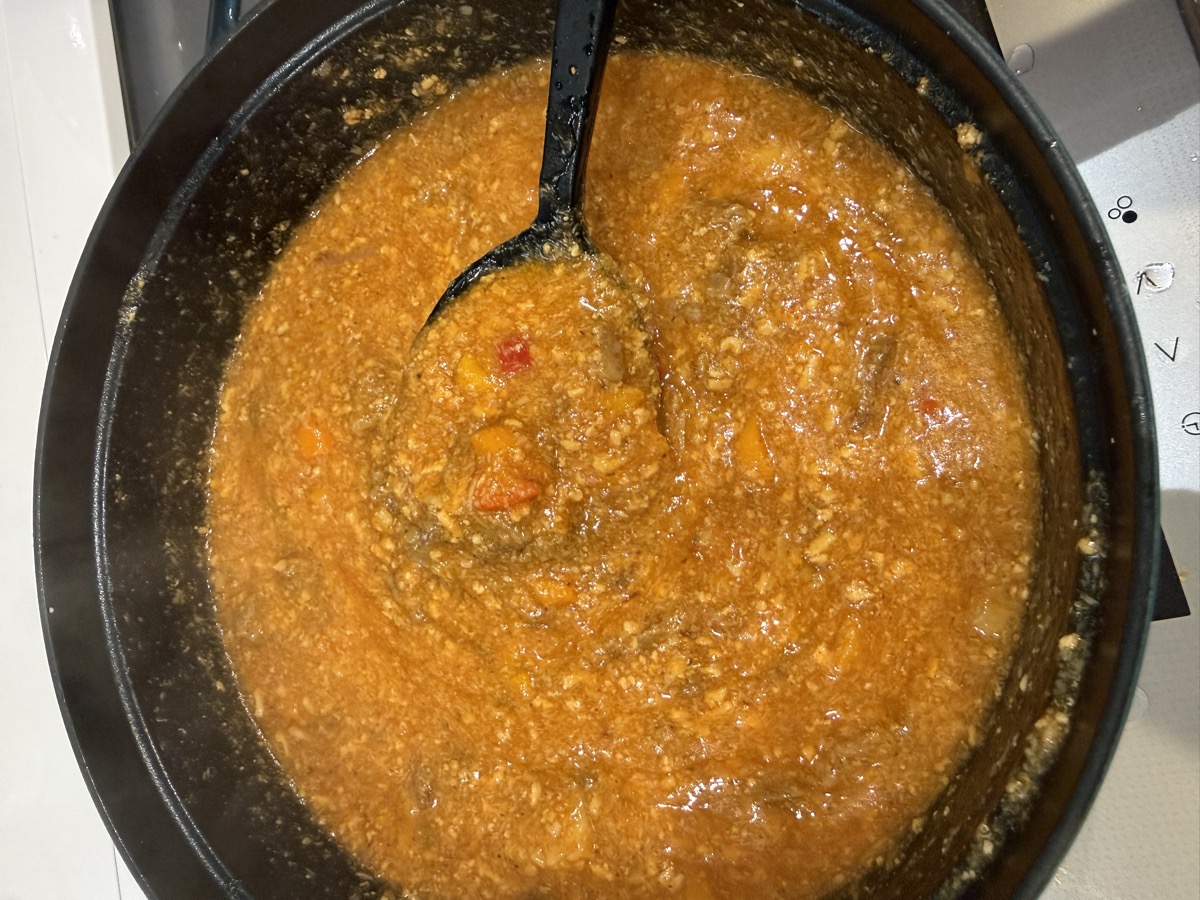
Look at that magnificent pot! Our Ultimate Beef Tendon Mapo Meat Miso is now complete!
The inosinic acid from the beef tendon, guanylic acid from the blended mushrooms, glutamic acid from onions and paprika, and complex amino acids from fermented miso and gochujang all converge in harmony. Without using a single pinch of artificial MSG, a single spoonful offers remarkable savoriness and an unforgettable, clean finish.
7. The Ultimate Weeknight Savior: Batch Freezing & Instant Microwave Reheating
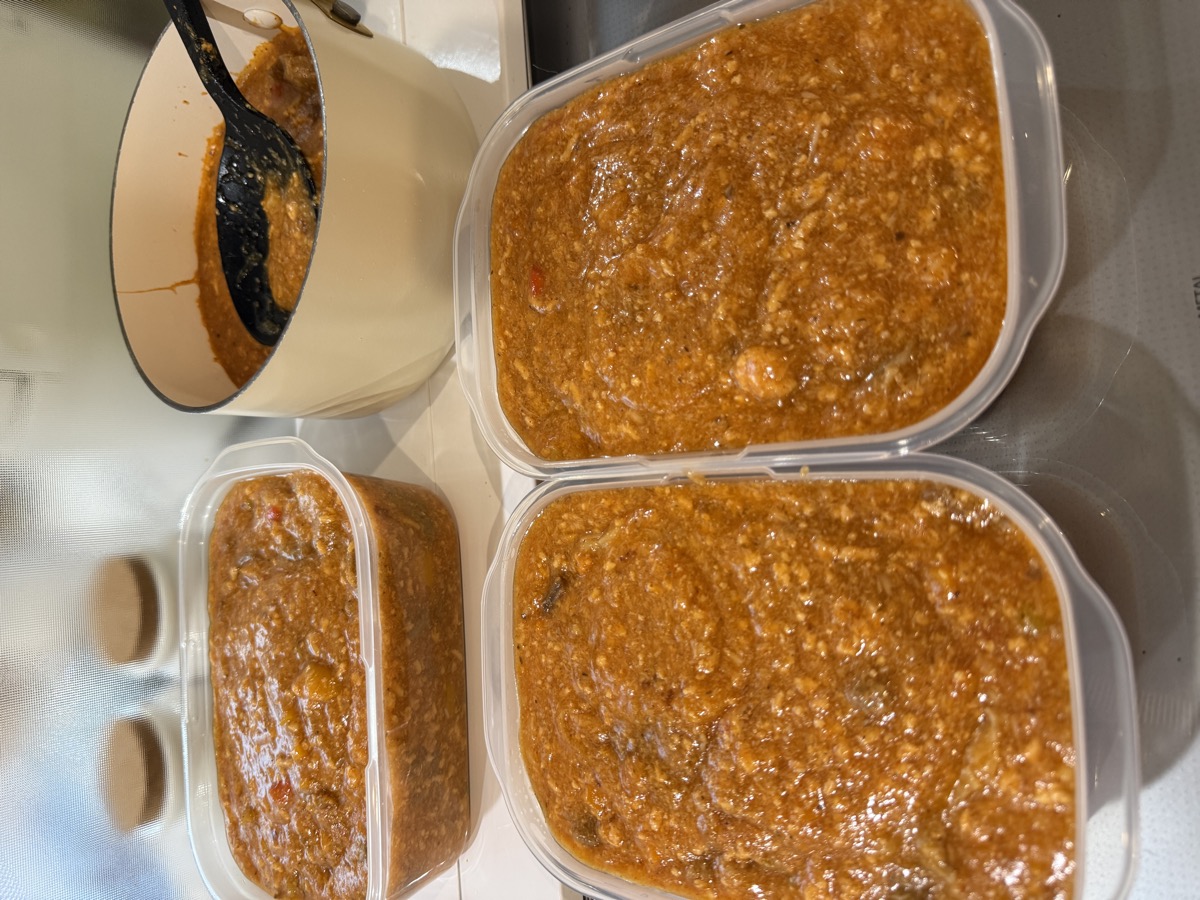
The greatest real-world strength of this tendon mapo recipe is its exceptional suitability for bulk freezer meal-prep.
Once cooled to room temperature, ladle the meat miso into clean, heat-resistant storage containers (Tupperware or Ziploc containers) as shown above. Seal the lids tightly and freeze. It stays at peak flavor and quality for over a month in the freezer.
You might wonder: “Doesn’t starch-thickened sauce turn watery and separate upon thawing?” With ordinary starch sauces that is often true, but with this recipe, you never have to worry!
The high-density natural beef tendon gelatin binds water molecules firmly within its molecular mesh. When you pull a frozen container from the freezer, crack the lid slightly, and reheat it in the microwave for a few minutes, the sauce transforms right back into its original glossy, luscious, velvety texture as if fresh from the pot.
On busy evenings when fatigue sets in, having this stock on hand means a restaurant-quality meal is ready in five short minutes. It relieves dinnertime pressure and brings peace of mind to any busy family.
8. Endless Menu Possibilities: Mapo Tofu, Mapo Eggplant & Rich Jajangmyeon
Beyond convenience, this master batch serves as a versatile culinary foundation for an exciting variety of dinner favorites.
Variation 1: The Crown Jewel — “Ultimate Beef Tendon Mapo Tofu”
The classic standard. Warm a portion of tendon mapo base in a skillet, add cubes of gently parboiled tofu (silken or firm according to preference), and simmer gently for 2 to 3 minutes so the tofu absorbs the savory glaze. Garnish with chopped scallions and serve.
Scoop a heaping spoonful over steaming Japanese rice: the tender tendon, silky tofu, and fragrant ginger-scented sauce create a rice bowl experience so sensational, seconds and thirds are guaranteed.
Variation 2: Meltingly Tender “Beef Tendon Mapo Eggplant”
Cut Japanese eggplants into bite-sized wedges and pan-fry them in fragrant sesame oil until golden and tender. Pour in the warmed mapo meat miso and toss briskly. The spongy eggplant absorbs the rich collagen sauce like a dream, bursting with succulent flavor with every bite.
Variation 3: Irresistible Noodle Perfection — “Rich Beef Tendon Jajangmyeon (Zhajiangmian)”
A huge hit with kids and adults alike for weekend lunches. Cook Chinese egg noodles or ramen, rinse and drain (served chilled or warm), and top with julienned cucumber and scallions. Ladle a generous crown of hot tendon meat miso directly on top.
Toss everything together with chopsticks so each noodle strand is coated in the glossy sauce. The crunchy cucumber, finely minced mushrooms, tender chicken, and chewy tendon create a vibrant contrast that rivals the finest Chinese noodle houses.
Variation 4: Flavor-Soaked “Beef Tendon Mapo Harusame (Glass Noodles)”
Simmer softened mung bean glass noodles directly in the mapo base. The glass noodles absorb every drop of concentrated beef tendon broth, making it a stellar side dish for lunchboxes or an evening drink accompaniment.
9. The Science of Recovery: High Protein, Zero Greasiness & Tendon-Protecting Collagen
The meticulous care invested into this recipe is rooted in my combined perspective as a professional culinary chef and a dedicated father focused on evidence-based athletic nutrition.
- 1. Natural Collagen for Tendon and Ligament Health: High-impact athletics and intense training place severe strain on connective tissues. Tendons and ligaments are notoriously slow to repair once strained. Consuming real food-derived collagen supports elasticity and robust joint integrity.
- 2. 90% Lean Chicken + Defatted Tendon: Unlike conventional pork-heavy mapo sauces, our combination of parboiled and chilled defatted tendon with 90% lean ground chicken keeps lipids at a minimum while delivering dense, high-biological-value protein for muscular recovery.
- 3. Prebiotic Gut Defense via Blended Mushrooms: Maitake, shimeji, and enoki are packed with beta-glucans and insoluble dietary fibers that nourish beneficial gut flora. Pureeing the mushrooms breaks down tough cell walls, maximizing nutrient absorption without bloating.
- 4. Metabolic Fire from Ginger, Garlic & Capsaicin: Generous gingerols, shogaols, allicin, and capsaicin boost core circulation, raise body temperature, and accelerate the clearance of metabolic fatigue after intense physical exertion.
True healthy eating is never about restrictive diets or joyless sacrifices. It is about crafting meals so profoundly delicious that every bite satisfies your soul while naturally fortifying your body from within.
10. Conclusion & Wagyu Yakiniku Kuro5 Store Directory
Beef tendon may appear tough and intimidating at first glance, but with sound culinary logic, thorough cleaning, and the slow, steady convection of a cast-iron Staub pot, it transforms into an unbeatable secret weapon for home cooking.
Having a freezer stocked with this versatile mapo base will transform your weekday evenings into stress-free gourmet experiences. I encourage you to set aside a relaxed weekend afternoon, simmer your Staub pot, and discover the wonder of beef tendon cooking for yourself!
And whenever you crave the ultimate charcoal-grilled beef experience, we welcome you to visit us at Wagyu Yakiniku Kuro5 in Tokyo. Come experience our artisanal charcoal flame techniques, world-class Kuroge Wagyu cuts, and our signature 8-hour slow-simmered Gomtang broth.
Our dedicated teams at Ikebukuro Honten, Ikebukuro East Exit, and Shinjuku Kabukicho look forward to welcoming you with warm smiles and glowing charcoal!
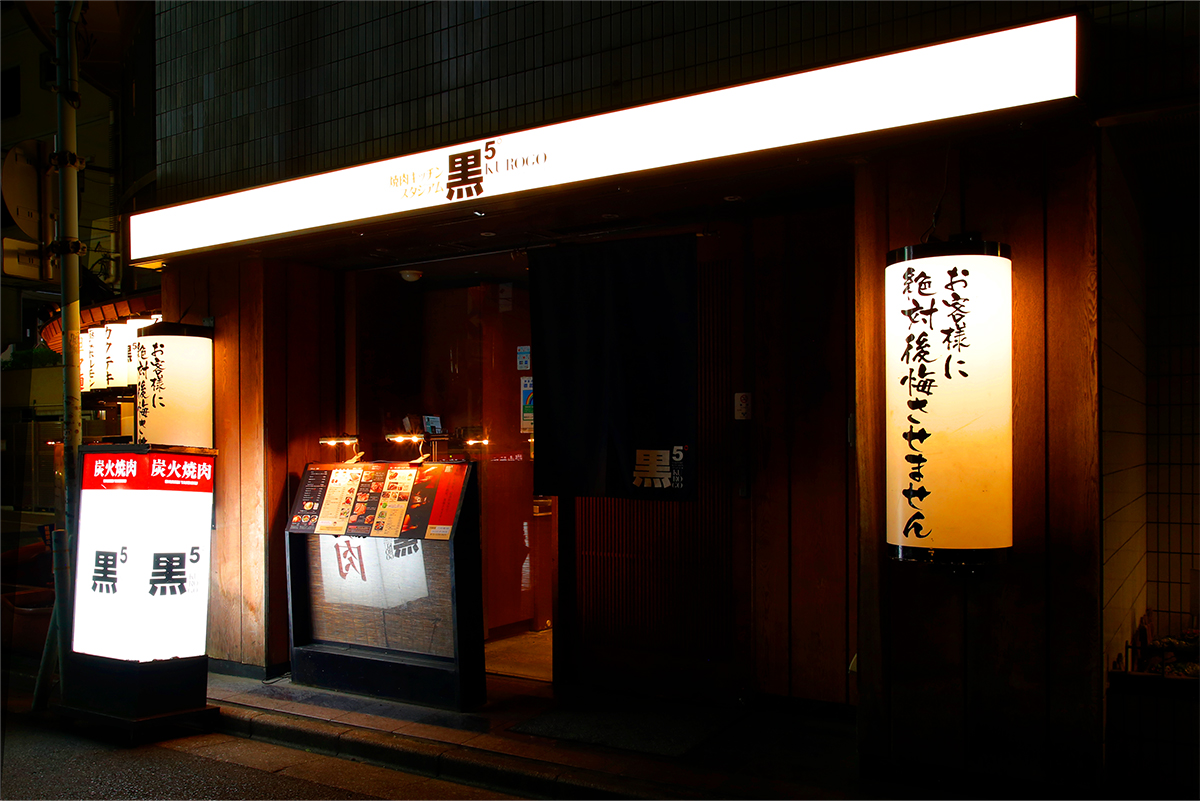
【Wagyu Yakiniku Kuro5 Store Directory】
■ Wagyu Yakiniku Kuro5 Ikebukuro Honten (Main Store)
- ・Address: 1F Nishi-Ikebukuro Bldg., 2-46-3 Ikebukuro, Toshima-ku, Tokyo
- ・Access: 5-min walk from JR / Metro Ikebukuro Station
- ・Hours: 17:00 – 24:00 (L.O. 23:00)
- ・Open: 7 days a week
■ Wagyu Yakiniku Kuro5 Ikebukuro East Exit
- ・Address: 1F Tsukiji Bldg., 1-42-16 Higashi-Ikebukuro, Toshima-ku, Tokyo
- ・Access: 3-min walk from JR Ikebukuro Station (East Exit)
- ・Hours: 17:00 – 24:00 (L.O. 23:00)
- ・Open: 7 days a week
■ Wagyu Yakiniku Kuro5 Shinjuku Kabukicho
- ・Address: 1F Sankyo Akagawa Bldg., 2-21-4 Kabukicho, Shinjuku-ku, Tokyo
- ・Access: 3-min walk from Seibu-Shinjuku Station
- ・Hours: 17:00 – 5:00 next morning (L.O. 4:00)
- ・Open: 7 days a week

